
The Abridged version:
- The Sacramento region’s urban farms movement took shape in the early 2000s, a growth spurt prompted in part by approval of front yard gardens inside the Sacramento city limits in 2007.
- More and more farms popped up to meet the needs of a diverse and disadvantaged population, spreading to Yolo County.
- Part two of Abridged’s urban farming series tallies the successes — and foreshadows the challenges.
Missed part one? Read it here: How Soil Born Farms reshaped Sacramento’s food ecosystem
The mid-aughts was an era in Sacramento when green lawns reigned supreme and folks had differing views on what constituted neighborhood blight.
Efforts to convince elected officials of the importance of making it easier for people to tear out grass and instead grow their own food in their front yards sprang from several different neighborhoods. But it was an uphill battle.
“Some of the earliest efforts were reacting to a moment in time where city and county policies felt really restrictive,” said Paul Towers, of the Sacramento Food Policy Council and executive director of Community Alliance with Family Farmers. “This is long before Sacramento proclaimed itself ‘America’s Farm-to-Fork Capital.’”
“Lots of folks felt like the ways they wanted to grow food or raise animals for their families were in conflict with local laws and, in fact, weren’t being supported or honored or celebrated in the ways that they did in their own communities,” Towers said.
Their first success came in 2007 when the Sacramento City Council voted to allow front yard vegetable gardens. Later, as a small crew of urban farming pioneers cultivated their land, something bigger was shaking loose. More people began experimenting with the role of urban agriculture to meet different social, economic and environmental goals.
Farms meet needs of diverse population
Fatima Malik founded the Del Paso Heights Growers’ Alliance in 2013. The following year, she started graduate school in San Jose to study public health, which reinforced the need for her project to address disparate health outcomes in her hometown neighborhood. (An immigrant, Malik has called Sacramento her home since the early 1990s.) She had recognized a lack of access to health-promoting amenities like parks and green spaces in communities of color.
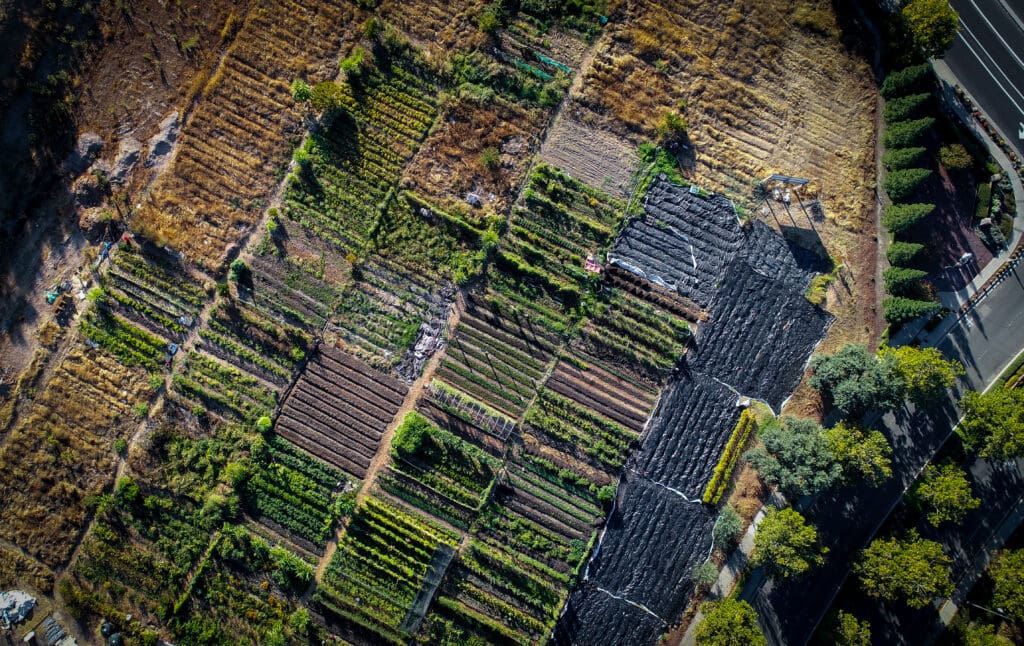
The alliance launched by planting 122 trees at a local park. They also established Root Cellar Community Garden in a vacant lot, expanded the operation and maintenance of various community gardens and helped start other gardens, over time patch-working “a bunch of little parcels in the urban environment,” Malik said.
“That’s how we got started, and it was really to just meet the needs of diverse populations in disadvantaged communities,” Malik said. “For me, it was about how do we beautify the neighborhood? How do we increase the production and consumption of fruits and vegetables among low-income populations?”
The alliance, now a nonprofit, also runs the Suga’ Cane Community Garden, True Beginnings Orchard and has plots at the International Garden of Many Colors in North Sacramento, a city-owned site of dozens of mostly immigrant families gardening the land.
Sign Up for the Morning Newsletter
The Abridged morning newsletter lands in your inbox every weekday morning with the latest news from the Sacramento region.
2015 law provided tax benefits
Meanwhile, in 2015, the city of Sacramento passed its urban agriculture ordinance. The city’s Urban Agriculture Incentive Zone provides property tax benefits to encourage owners of blighted or vacant parcels to allow their land to become farms. The incentive program has three participants. In 2017, Sacramento County launched its urban ag ordinance. Nineteen permits (each valid for one year) have since been issued to 13 unique addresses.
One of the original permit holders in Sacramento County was Chanowk Yisrael, who with his wife, Judith, created an urban farm homestead in 2007 on one-half acre in South Oak Park and have since expanded and grown their business to multiple locations. Among other values, the founders promote racial equity and justice.
In 2018, building on West Sacramento’s urban agriculture program, Nelson Hawkins established WeGrow Urban Farm on Cummins Way in the working class Broderick neighborhood on the north side of town. But the West Sacramento Housing Development Corp., which owns the land, informed him it was eventually intended to be razed for a development of affordable housing. In response, he cofounded the Black farmer-led Ujamaa Farmer Collective, which secured a large grant to acquire 22 acres of farmland near Woodland.
Three Sisters Gardens formed in West Sacramento
In May 2014, Center for Land-Based Learning, based in Yolo County, launched the West Sacramento Urban Farm Program at Fifth and C streets. The center is a nonprofit organization committed to building up the next generation of farmers.
“CLBL put in thousands of hours, brought many volunteers and tours to the site and connected with the community, including hosting an on-site farm stand,” said Mary Kimball, the CEO of Center for Land-Based Learning. “It was the first of what became six urban farm sites in West Sacramento and served as a wonderful physical and visual representation of how urban farms can transform a community.”
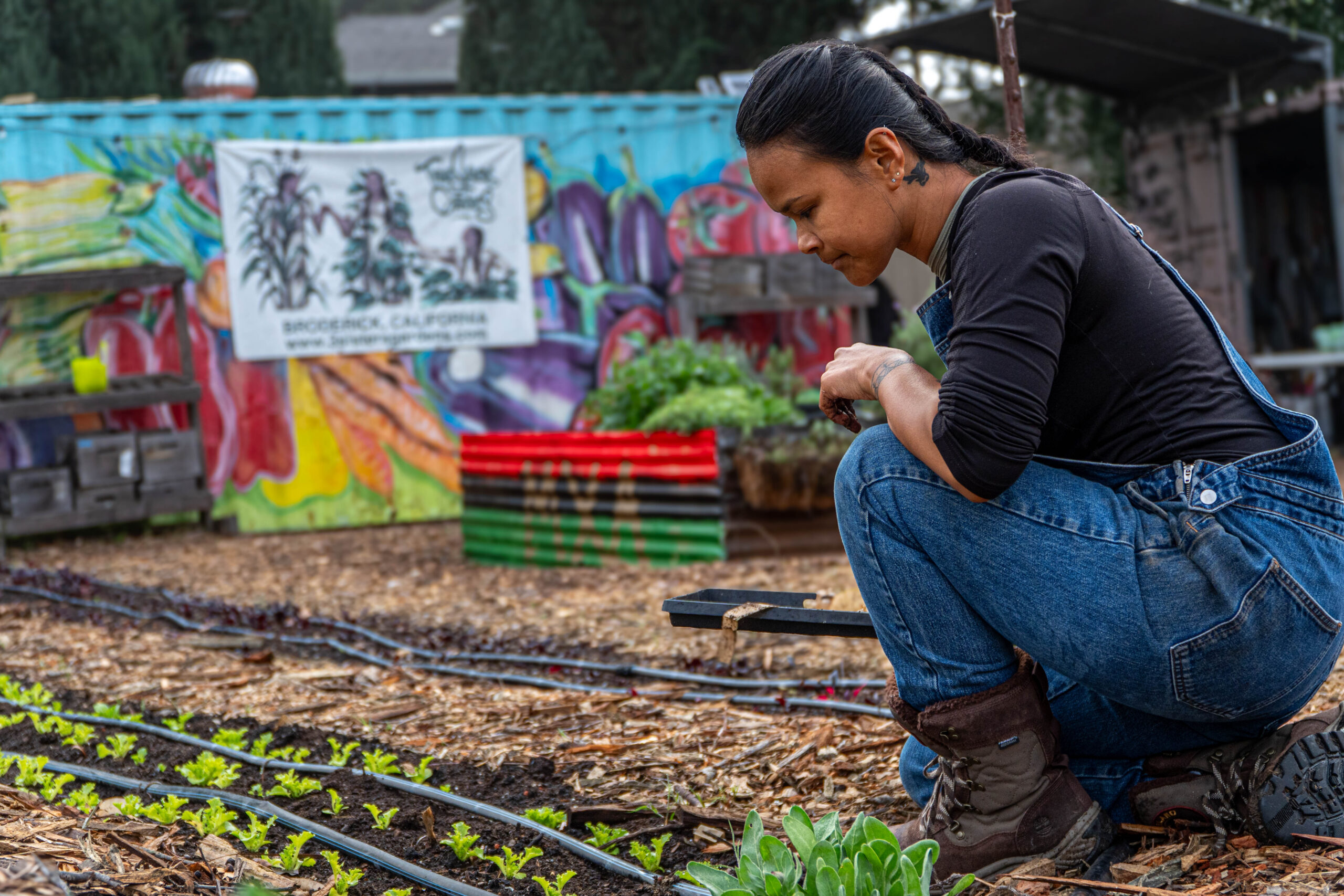
About a year or so ago, the center turned the Fifth and C site over to Three Sisters Gardens, which had been leasing and managing the site for the previous five years. Three Sisters now operates four small farms in the city. Alfred Melbourne started the nonprofit in 2018 by guerrilla gardening another small vacant plot in the Broderick neighborhood. The “OG farm,” with its 19 garden beds and flowers to attract beneficial pollinators, remains Melbourne’s favorite. Nearby, the farm at the corner of Fifth and C streets acts as the organization’s central hub.
Combating ‘school-to-prison’
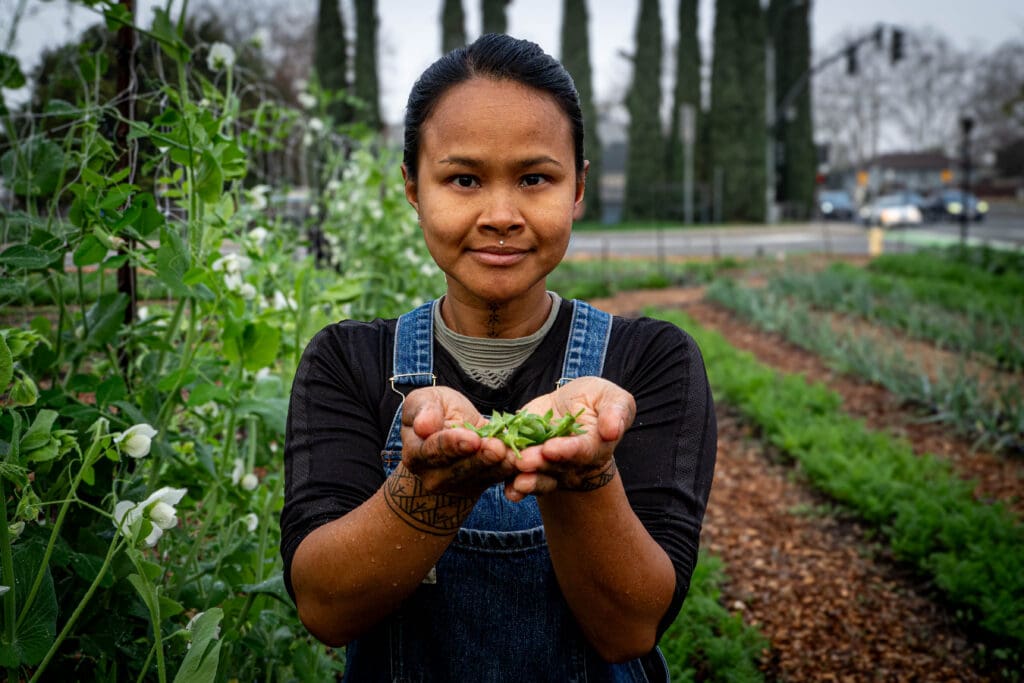
Melbourne wants to combat the school-to-prison pipeline, while helping kids eat healthy, nutritional food to perform better in school with fewer behavioral problems. Three Sisters offers training and skill shares for youth and community members.
Last year, the nonprofit distributed 40,000 pounds of food and employed 18 people. It also graduated 37 youth through an internship program. “We really want to support the at-potential, high-promise youth,” Melbourne said. “Give them every chance possible to thrive, not just survive.”
Self-sovereignty is central to Three Sisters’ ethos, which became even more critical when the federal government threatened to cut Supplemental Nutrition Assistance Program benefits during the shutdown last fall. “That’s why for us, we don’t want to count on somebody else to feed us,” Melbourne said. “If we can transform these unused, vacant lots and turn them into thriving urban farms, it’s in our best interest.”
Financial pressures limit growth
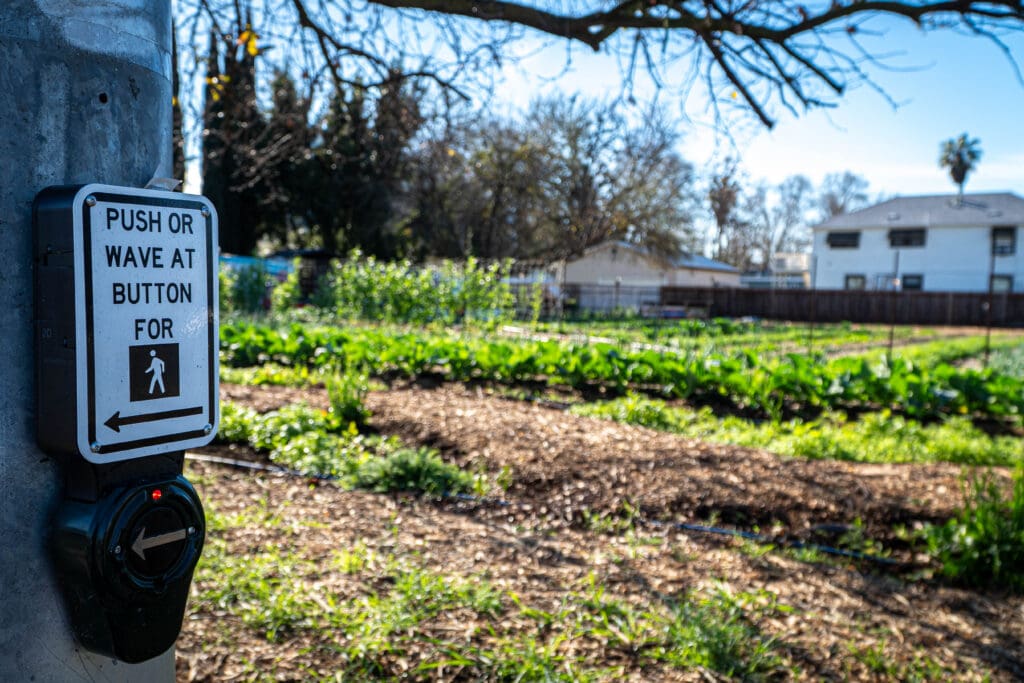
But in a big way Three Sisters is stuck. Its hub site is on city of West Sacramento-owned land on a month-to-month lease. That instability impedes plans to build a small classroom, to put all their storage needs in one place and create a cohesive atmosphere. It has architectural renderings but can’t go any further without extending the lease to a minimum of five years.
“Now we get to a point where our City Council is in a position where they can really help us and make this easier, and they’re not. … We’re at like 1,300 signatures now for our petition to extend the lease, but they will not budge,” said Melbourne, standing at the farm on a blustery winter morning as cars speed past. He says he feels confused and disappointed in the lack of city support. He furrows his brow as he speaks, his hands shoved into the pockets of his jacket.
While Three Sisters, which grounds itself in Indigenous practices and values, receives significant funding from Yocha Dehe Wintun Nation, financial sustainability also remains out of reach for Melbourne, who feels pulled in different directions, all the time, just to keep things afloat.
“What if we can stop having to work from a place of panic, or always in need, and work from a place of comfort and support?” he said. “That would really change the game for us. We can finally just take a breath and enjoy what it is that we have, instead of always having to fight for it. I feel that totally and completely deep within me — that it seems like always having to be producing, producing. You know, rest is revolutionary. We need to be able to rest also.”
Seeds of Solidarity grows for immigrants, refugees
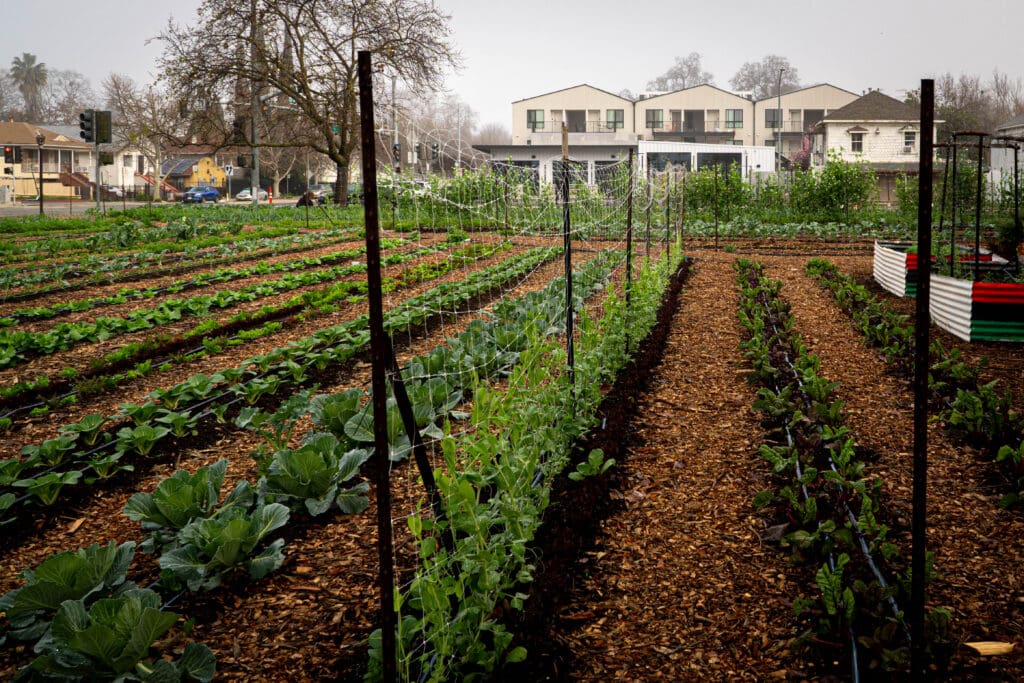
Seeds of Solidarity, the urban farm program of NorCal Resist, a mutual aid organization, had cared for a small parcel of state-owned land in West Sacramento since 2020 and signed another 5-year lease in late 2024.
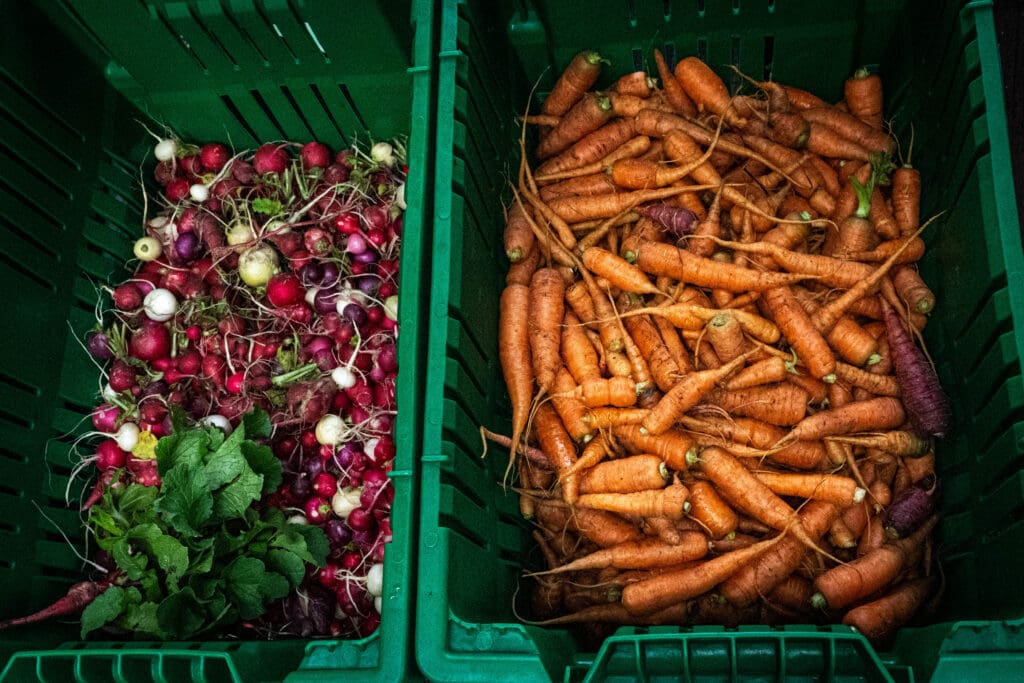
Food is provided for free to anyone who communicates a need, through NorCal Resist’s food distribution network, which also includes dry goods and shelf-stable goods, and serves about 5,500 individual families annually. Last year, Seeds of Solidarity grew over 9,000 pounds of food (almost double what it grew the previous year) on less than one acre of land for a total of about 23,000 pounds since its start. It grows primarily for immigrant and refugee populations.
“The biggest success is the amount of food that we’ve grown for our community — full stop,” said co-founder Kelsey Brewer, whose professional work is as an agroecologist and soil scientist for the state of California. He has farmed for the last 18 years, the last nine of which have been as an urban farmer in West Sacramento.
“A lot of the communities that we serve range anywhere from Central and South American to Afghan and Central Asian to Ukrainian to lots of different types of food cultures,” Brewer said.
The community-operated farm averages over 50 people per regularly held volunteer day, way more labor than they actually need. “So many people in this political era are looking for a place (where) they can be effective and have a positive impact for their community, and feel some kind of sense of optimism for what we’re capable of doing together,” Brewer said. “Our program provides that for people.”
But despite the successes, land instability threatens its progress.
Next week: Sacramento’s growing urban farms movement faces ongoing challenges.
Sena Christian is a veteran journalist and freelance writer from Sacramento. She teaches journalism at Sacramento City College.