
The Abridged version:
- Seven bills making their way through the Legislature would change rules for e-bikes and e-motos.
- A handful of the bills came in response to a report released by the Mineta Transportation Institute in San Jose that identified potential loopholes in existing law.
- The bills were proposed before last week’s fatal e-bike crash in Davis, and lawmakers and experts cautioned that distinctions between classes of e-bikes are important when thinking about new regulations.
Citing near misses, traumatic injuries and fatal crashes, state lawmakers have introduced a flurry of bills to regulate e-bikes and e-motos in recent weeks.
Seven bills are making their way through the Legislature this session, each proposing new rules and safety precautions. All were filed before last week’s fatal crash in Davis, in which 60-year-old Julie Veress died in a collision with an e-bike rider.
The e-bike rider was a minor. Police have yet to release details about the type of e-bike involved. Veress was using a traditional bicycle.
Lawmakers say the state needs new regulations to prevent future accidents.
“I feel like it’s one week after another we’re seeing these tragedies,” said Assemblymember Rebecca Bauer-Kahan, D-San Ramon, who wrote a bill that would require certain classes of e-bike to register with the DMV and get license plates.
Sign Up for the Yolo County Newsletter
Stay in-the-know on all things Yolo! Weekly email with stories and insights from Yolo County reporter Daniel Hennessy.
But lawmakers and experts caution that not all e-bikes are created equal, and existing laws regulate the higher-powered classes.
“I think we need to find the fine line between making sure that these e-bikes are being used safely and responsibly, and also not squashing this growing movement and this new technology and all the promises it holds,” said Nico Fauchier-Magnan, board member of Bike Davis, a bicycle advocacy group based in Davis.
Different classes of e-bikes
E-bikes, which don’t need to be registered and can be operated like traditional bicycles, are categorized into three different classes based on power and top speed.
Class one e-bikes are pedal assisted only and stop providing power when the bike reaches 20 miles per hour. Class two bikes also stop providing assistance at 20 miles per hour but can be equipped with a throttle, which allows the rider to control the power to the motor. Finally, class three bikes are pedal assisted only but stop providing power at 28 miles per hour and riders must be 16 or older.
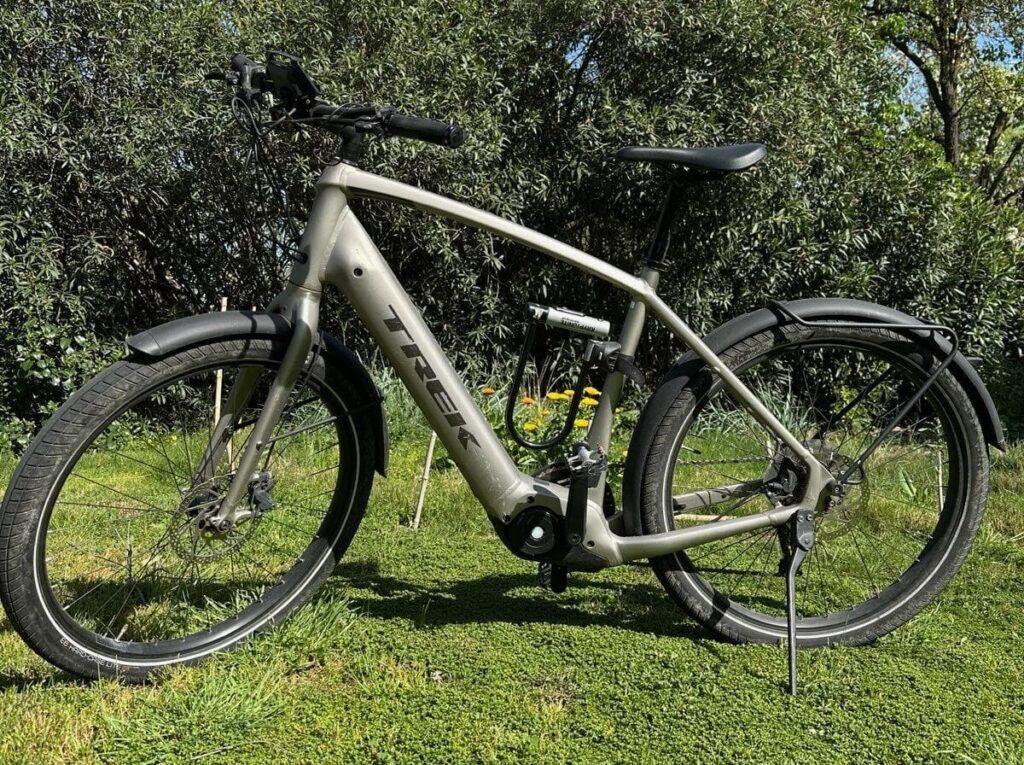
Regardless of class, all legal e-bike motors in California must be less than 750 watts, which is equivalent to one horsepower.
Robbie Williams, another Bike Davis board member, said that those particular restrictions are unique to the United States.
“We’re quite an outlier when it comes to how powerful we allow e-bikes to be that are sort of unregistered and unlicensed,” he said. “Ours can be 750 watts, whereas in Europe it’s 250, China it’s 400 and Japan it’s 250.”
Williams also said that the 20 miles per hour speed limit in the U.S. is higher than in most of those countries, where the speed limit is usually 16 miles per hour or lower.
But Williams and Fauchier-Magnan said the real challenges arise when it comes to e-bikes that have been modified illegally to reach speeds that more closely resemble motorcycles than bikes.
“There’s a whole sector of the market which is basically like, ‘buy this, download the app, and then you have a motorcycle’,” Williams said.
Mineta Transportation Institute report
Many of the issues identified by Williams and Fauchier-Magnan were raised in a report from the San Jose-based Mineta Transportation Institute that was commissioned by the Legislature and released at the end of 2025.
The report cautioned legal e-bike accidents can cause more serious injuries but remain rare when compared to pedal bicycles. It also pointed to the proliferation of illegal e-bikes or motos as a major driver of safety issues.
“Counts of electric two-wheelers parked at a dozen northern California middle and high schools found that almost 90% may not meet the standards for legal electric bicycles. Some of these devices have as much as eight times more power than legal limits,” said a press release announcing the report.
Authors of the study said that these overpowered bikes are often sold to customers with limited information about power and speed. In other words, people could be buying and riding illegal bikes without knowing it.
Bills propose new rules
A handful of lawmakers submitted bills this session that directly relate to the findings in the Mineta report. They have all made it to the transportation committees in either the Assembly or Senate, but hearings haven’t yet been scheduled.
Assemblymember Lori D. Wilson, D-Suisun City, chair of the Assembly’s transportation committee, said that she was waiting on the release of the Mineta report to guide new bills related to e-bikes.
“Now that it’s finally out, I wanted to make sure that, as chair, I put my stamp of approval on bills that line up with the Mineta Institute,” she said. “We’ve done a lot of things in this space already, and I think it’s more about enforcement than about making it more illegal.”
To that end, Wilson submitted a bill that incorporates many of the recommendations made by the Mineta Institute.
If passed, Assembly Bill 2346 would require manufacturers and retailers to clearly disclose the power and top speed of the e-bike they are selling, as well as provide customers with relevant laws and regulations. It would also allow local jurisdictions to adopt speed limits for bikes, set a statewide limit of 15 miles per hour for people under 15 years of age and cap the speed limit on sidewalks at 5 miles per hour.
Different approaches proposed
The Assembly Transportation Committee will consider Wilson’s bill and five others, all of which take a slightly different approach to the issue.
Bauer-Kahan’s Assembly Bill 1492 would require class two and three e-bikes to register with the DMV and get license plates. She said this would provide more opportunities for safety education and allow law enforcement to avoid having to chase individuals breaking the law or riding recklessly on e-bikes.
In addition, Assembly Bill 1557, submitted by Assemblymember Diane Papan, D-San Mateo, would set the peak maximum power for e-bikes at 750 watts instead of the continuous power. That means e-bikes could reach that amount of power in a short burst but couldn’t sustain it over time. As it stands, bikes that can sustain that amount of power are legal.
Alongside these is Assembly Bill 1569 from Assemblymember Laurie Davies, R-Oceanside, that would require e-bike education for kids who park their bikes at school, Assembly Bill 1614 from Assemblymember Diane Dixon, R-Newport Beach, that clarifies bike seat requirements on bike paths and Assembly Bill 2595 from Papan that would establish a pilot program in San Mateo that would prohibit a person under 12 years old from operating a class one or two e-bike.
Finally, in the state Senate, Senate Bill 1167 from Sen. Catherine Blakespear, D-Encinitas, would prevent manufacturers from labeling a vehicle as an e-bike if it doesn’t meet state requirements.
Getting it right
Hearings for these bills have not yet been set, but members of the Assembly’s transportation committee are paying close attention.
Assemblymember Cecilia Aguiar-Curry, D-Winters, who sits on the committee and whose district includes Davis, said that the Legislature needs to think about public safety while considering the needs of those who use bike paths.
“We owe it to our neighbors to get this right,” she said.
Daniel Hennessy joins Abridged from the California Local News Fellowship. He’s a reporter covering Yolo County.