


The Abridged version:
- Isolation has many causes and affects all age groups.
- The physical and mental health consequences are significant.
- You can get help in the Sacramento region.
When Dr. Vivek Murthy released his report naming isolation as an epidemic, I knew exactly what he was talking about.
For 22 years, I held a job that included me as part of the loneliness epidemic. I worked odd hours, arriving at work at 3 a.m., and spent six hours a day alone in a 7-by-8-foot room. I maintained that routine for one-third of my life.
And yet, as regional host of NPR’s Morning Edition in Sacramento, I had to sound as if I was uniquely connected to everyone who heard my voice.
The former surgeon general’s report on loneliness was published in 2023. Murthy fine-tuned the theme in “My Parting Prescription for America,” released in January 2025. Loneliness and social isolation are major problems in our culture, and they are not limited to an age group. They affect teens and college students, as well as people over 60. Murthy’s report points out that “the rate of loneliness among young adults has increased every year between 1976 and 2019.”
Health conditions or social experiences may lead to isolation and loneliness. The Centers for Disease Control says these include:
- Having a mental or physical challenge, such as a chronic disease or condition, psychiatric or depressive condition.
- Long-term disability.
- Being marginalized or discriminated against.
- Having limited or no access to resources, such as living in rural areas or limited transportation.
- Language barriers.
- Being a victim of violence or abuse.
- Facing a divorce, unemployment or the loss of a loved one.
Loneliness can be life threatening
The effects of loneliness can be life-threatening. On Page 1 of the surgeon general’s report, we find: “The physical health consequences of poor or insufficient connection – a 29% increased risk of heart disease, a 32% increased risk of stroke, and a 50% increased risk of developing dementia. Increased risk of premature death by more than 60%.”
There are mental health challenges, too. The risk of developing depression is more than double among people who report feeling isolated, according to the report.
Shirley Deasy, 74, has experienced isolation during several health situations. At age 28, while working for the state, she had bouts of exhaustion that were eventually determined to be chronic fatigue syndrome.
“Because of this illness,” she said, “I had four major bouts where I had to take medical leave from my jobs anywhere from six months to a year. I had to take a medical retirement at age 48.”
In 2022, Deasy was diagnosed with multiple myeloma. In 2024, she developed E. coli, and in 2025, she came down with COVID-19. After hospitalizations and treatments, she recovered at home, alone, by choice.
“I did have people available to help,” she said. “Being that sick, I wanted to be alone.”
The Harvard Graduate School of Education’s study on isolation, published in 2024, noted that social isolation and loneliness are not necessarily the same thing. A person can feel lonely or separated even when surrounded by other people.
“Of those who were lonely, for example, 65% said they felt ‘fundamentally separate or disconnected from others or the world,’ and 57% said they were unable to share their true selves with others.”
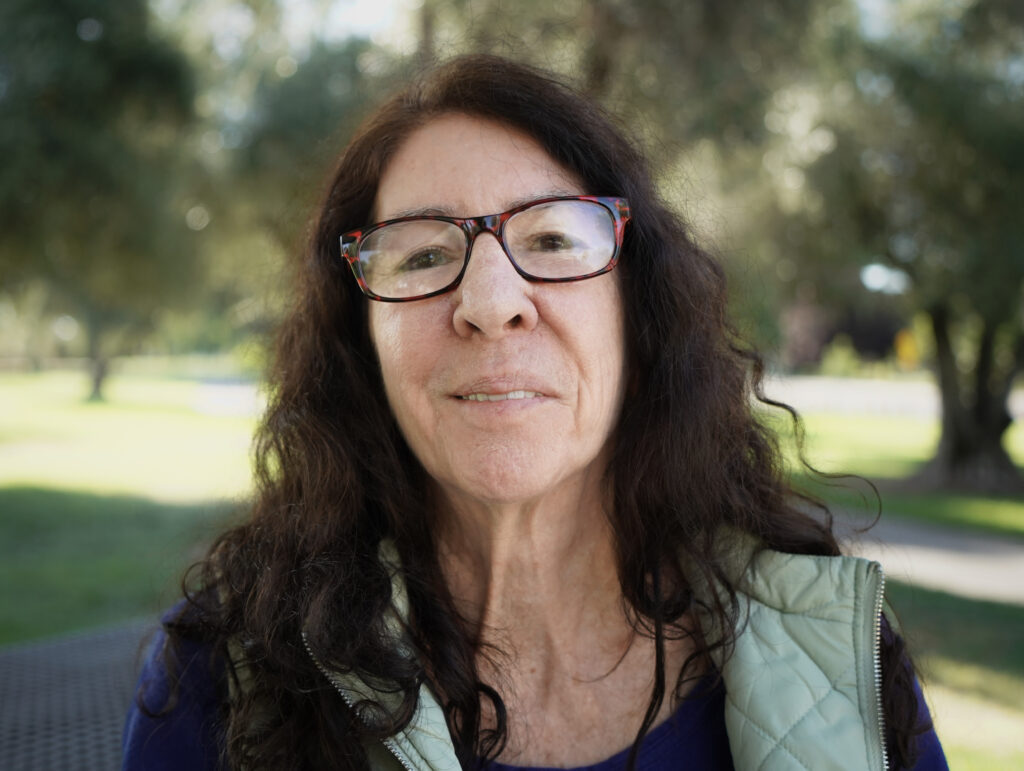
Deasy, who lives in Sacramento, said she has always lived alone, but does not feel completely disconnected.
“I have always liked solitude, and for the most part, spend most of my time alone,” she said. “I do interact with people. It is rare for me to feel alone at this point.”
When I felt the effects of loneliness in my job, I immediately recognized that one of the identifiers of people who are isolated is that we hide it.
There is science to back up that claim, according to Donna Jensen, professor emeritus in Sacramento State’s Gerontology Department.
“And the research has shown that older adults aren’t going to come up and say, ‘I’m lonely,’ just like they’re not going to come up and say, ‘I’m depressed’ or ‘I’m anxious.’ It’s just a different culture. Loneliness might be seen as a moral failure or a weakness.”
Shirley said she owns her solitude.
“I’ve had many years to accept my limitations and have filled my life within them,” she said. “I don’t say I’m never depressed or anxious, but not much.”
Our personal loneliness
Jensen has found that loneliness can be as individual as any other personality trait.
“There’s something there about kind of the person’s makeup,” Jensen said, “and what are we each doing to intentionally reach out to people.”
Concern about loneliness is not unique to the U.S. In 2018, the United Kingdom’s then-Prime Minister Theresa May appointed a minister of loneliness. Japan announced an equivalent position in 2021. In addition to accessibility of treatment, both countries prioritize removal of stigma associated with mental health care.
Murthy notes that isolation and loneliness are community issues with community solutions. His report includes Six Pillars to Advance Social Connection:
- Strengthen social infrastructure in local communities.
- Enact pro-connection public policies.
- Mobilize the health sector.
- Reform digital environments.
- Deepen our knowledge.
- Build a culture of connection.
Jensen sees the last pillar as the key.
“I did some research on the Camp Fire in Butte County, and what saved people were their neighbors,” she said. “It wasn’t the system. That’s an extreme example, but we need communities that care about who my neighbor is. I have an 80-year-old neighbor that lives next door. I’m going to see if they need anything as I go to the grocery store. I think those little micro efforts really make a difference. And so again, back to social connection.”
Jensen says it’s up to all of us to build Murthy’s proposed Culture of Connection.
“Community cannot be legislated, but if I know somebody, then I have empathy and awareness,” she said.
How to get help in the Sacramento area
- Senior Link at (916) 369-7872
- Institute on Aging Friendship Line at (888) 670-1360
- La Familia Counseling Center at (916) 210-8773 for Spanish speakers
- Sacramento County Consumer-Operated Warm Line at (916) 366-4668
- Sacramento County Crisis Center at (888) 881-4881.
- If you are in a crisis or suicidal, you can call 911.
- Your insurance company may also have a crisis line.
Donna Apidone is a regular contributor, writing Coming of Age for Abridged.