

The Abridged version:
- Following months of rightsizing attempts aimed at a multimillion-dollar budget crisis, the Sacramento City Unified School District received its most dire warning yet Thursday night. Experts advised leaders to consider entering state receivership as soon as this summer.
- Trustees resisted those recommendations, saying at a board meeting Thursday they were not comfortable turning to this last-ditch option.
- Budget woes have plagued Sacramento City Unified for years. The district was kept afloat temporarily in the past using COVID-era relief funds.
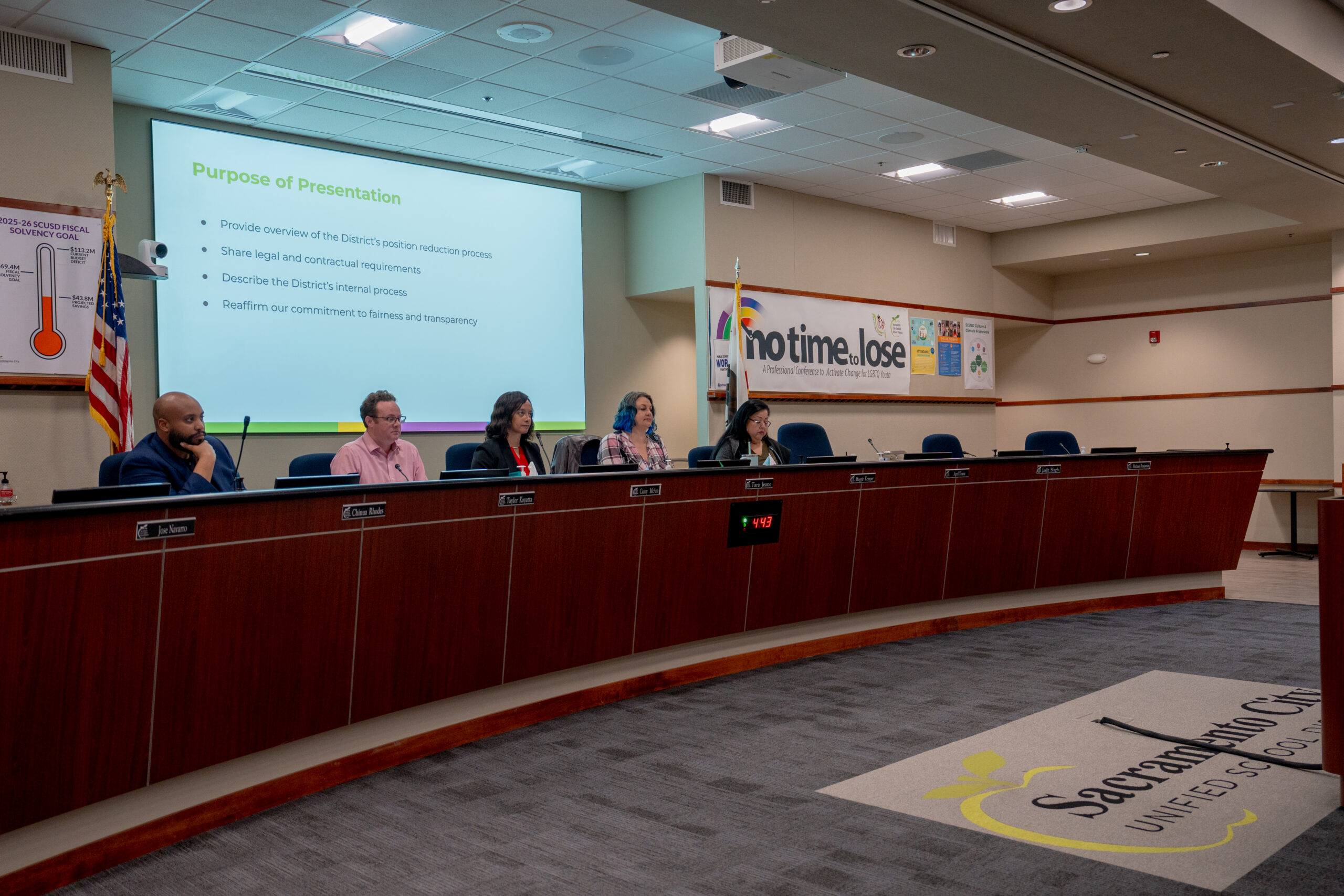
Ever since the Sacramento City Unified School District’s budget crisis became public in September, school board meetings in the South Sacramento central office have ranged from tense to fiery to cautiously optimistic.
Thursday’s gathering was one of the most somber.
District leaders received their most dire warning since the start of the school year, in a presentation from the Fiscal Crisis and Management Assistance Team, a state-funded advisory organization.
Essentially, the district appears out of time to save itself, according to Michael Fine, the team’s CEO.
“You have to make a decision,” Fine told trustees Thursday. “Whether you ask the state for assistance or not.”
Trustees resisted Fine’s warnings, though, saying it is too soon to turn to this last resort.
‘Too much time has elapsed’
Fine issued his first scathing analysis of the Sacramento school district back in December. At the time, his team calculated that the chance of insolvency was about 50%.
Since then, staff and elected leaders have implemented iterative versions of a stabilization plan, including cuts to supply budgets and staffing.
“You’ve done a lot of work since December,” Fine said in his presentation to the board this week.
But, he said, “Too much water is under the bridge, and too much time has elapsed.”
Fine and fellow adviser Erin Lillibridge did not quantify the insolvency risk as of Thursday. However, they said state receivership now appears unavoidable.
What happens in state receivership?
When a school district in California runs out of cash and all other options, it can turn to the state for emergency funding.
The Legislature must approve the loan. And in exchange for the funds (that must be repaid with interest), a county-selected administrator steps in. This appointee becomes the sole decision maker for the district.
Trustees would lose their authority. And Superintendent Cancy McArn, who was just hired officially last week, would be out of a job.
Sign Up for the Morning Newsletter
The Abridged morning newsletter lands in your inbox every weekday morning with the latest news from the Sacramento region.
Tight deadlines to act
The district is projected to run out of cash by July, or early next year with some accounting adjustments and advanced funds from the county.
Fine’s team recommended turning to the state before the Legislature adjourns at the end of August.
“We have to capture them … to assist you while they’re in session,” Fine explained to trustees.
Lawmakers return around early December. But given the lengthy process of approving and releasing a loan, Fine said there would likely be a gap between when the district runs out of money and receives state funds. In that meantime, roughly 5,000 employees would go unpaid.
Board rejects warnings
District leaders were not convinced.
“I don’t think we have gotten to the point where it is necessary,” said Trustee Taylor Kayatta.
Similarly, Trustee Jasjit Singh said he does not feel comfortable surrendering authority while there is still time on the clock.
What led to the district’s crisis?
Multiple advisers, authorities and auditors have said there is no one reason sinking Sacramento City Unified.
The district has for years spent an above-average amount on salaries and benefits, including what some teachers have called the “Cadillac” of health plans — 100% of premiums covered for employees and their families.
Last year, the board approved a two-year contract with the Sacramento City Teachers Association with a 2% raise plus two weeks’ worth of extra pay. The agreement was estimated to cost about $10.6 million in 2025-26.
Officials have also pointed to districtwide bad budgeting practices, including a habit of entering into contracts without authorization. The bulk of these spending agreements, made without going through proper channels and checks, come from the special education department.
Board members have criticized what they call a backward system of employees spending money before getting approval. Staff have emphasized, though, that they are not trying to usurp trustees’ authority but rather, they have to move faster than the official process allows to provide students with needed services and accommodations.
History of bad habits
Sacramento City Unified’s struggle to balance its books goes back years.
In 2018, Fine’s crisis team published an analysis of the district highlighting many of the same troubles: high salary spending, increased special education costs and leadership with limited experience or expertise.
Crisis was temporarily dodged almost a decade ago largely with the help of COVID-era relief funds.
Fine noted that current trustees were not the same people at the helm when problems began.
“Folks before you frankly didn’t have the discipline to make critical decisions,” Fine said.
Savannah Kuchar is a reporter covering education. She came to Sacramento to be a part of the Abridged team and contribute to a crucial local news source.