

The Abridged version:
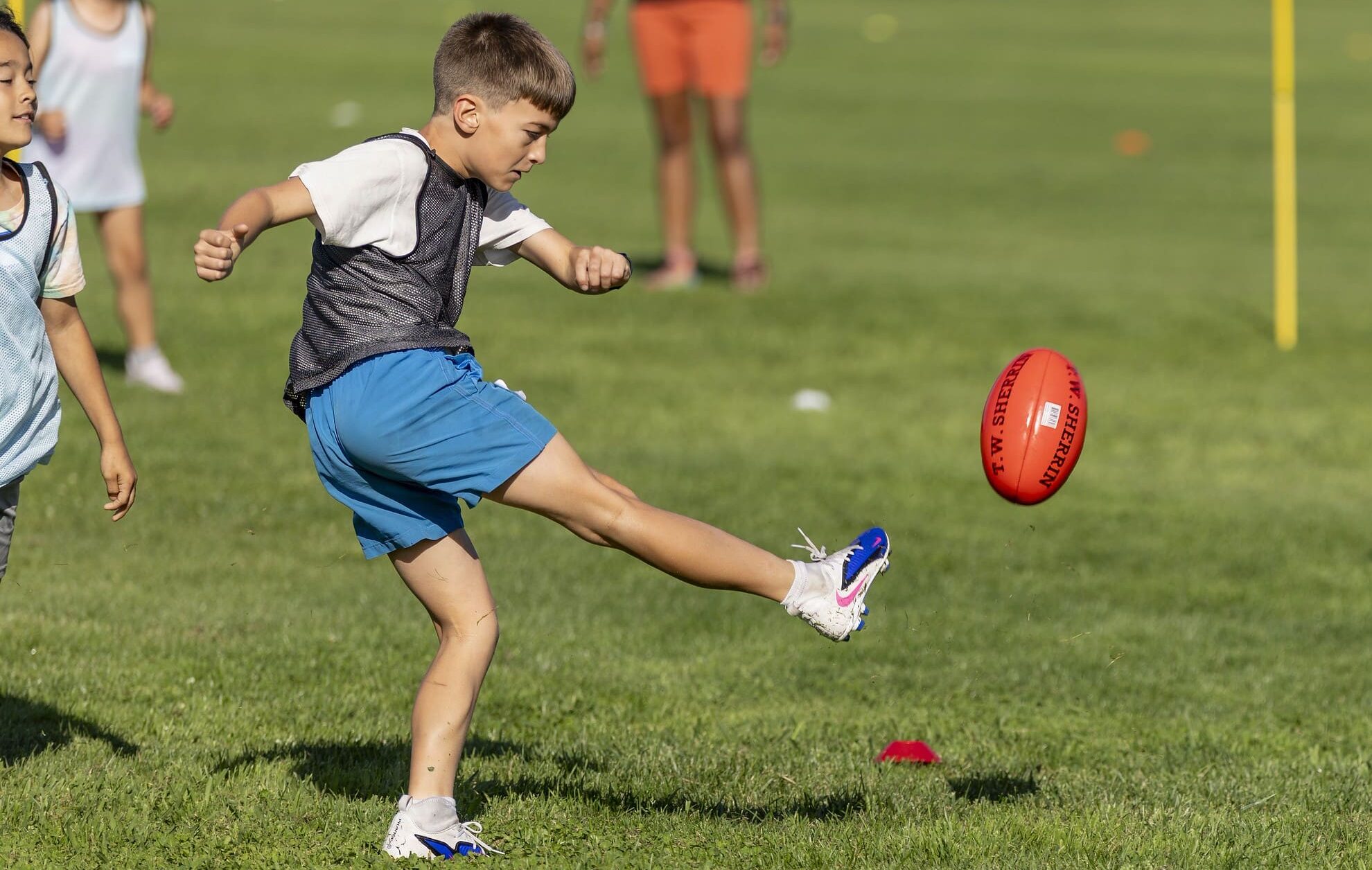
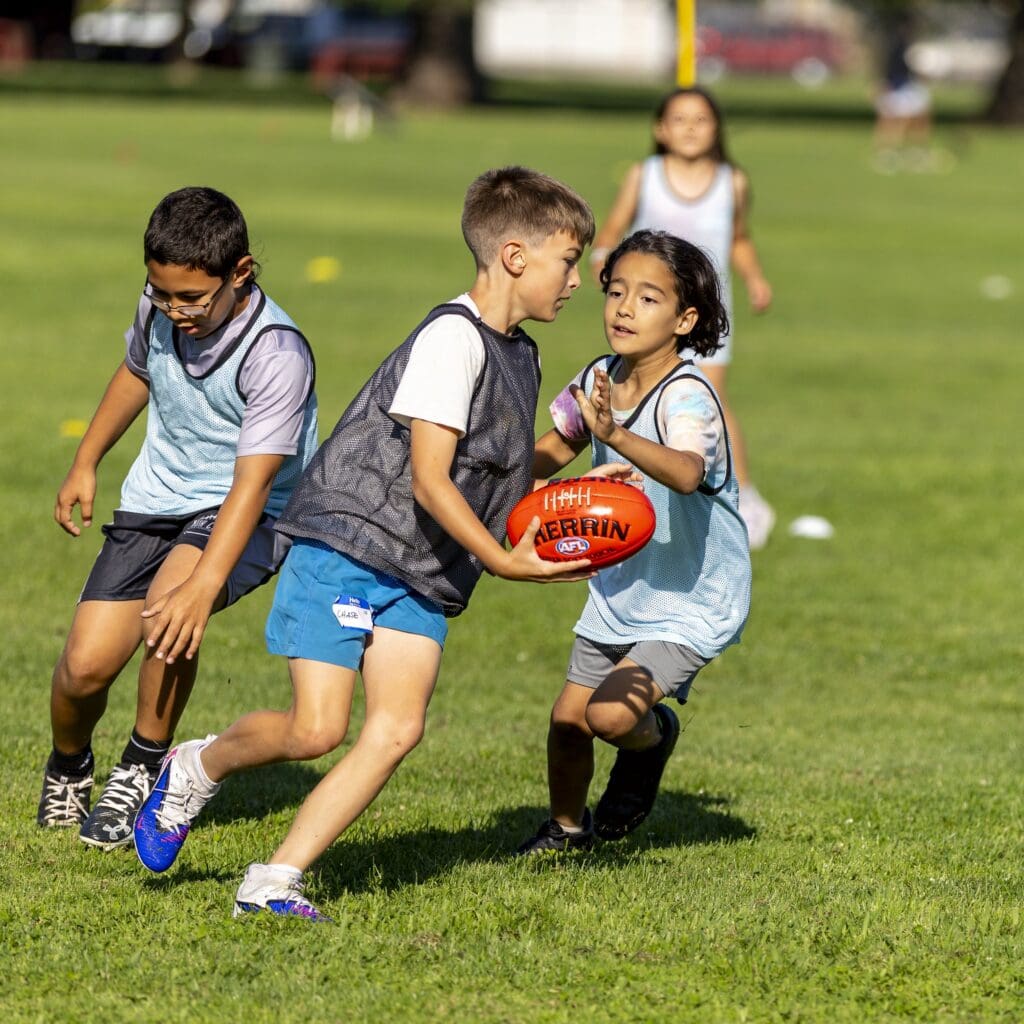
- Footy is short for Australian Rules Football, and kids can give it a try with free weekend clinics in Sacramento in May and June.
- Some call it the mega sport of all sports. It draws more from basketball and soccer than from American football.
- Notoriety spiked during the 2020 pandemic, when Australian teams kept playing while most American sports went dark. It is seen as one of the most family-friendly athletic endeavors.
Orangevale mom and Woodcreek High School PE teacher Jenna Taipaleti loves talking about — and playing — the “mega sport of all sports.” Those are her words to describe “footy,” shorthand for Australian Rules Football. The game has been gaining popularity across the United States and, to some degree, also here in Northern California, especially among youth players.
“Nationwide, more and more clubs are being founded throughout each season,” explained Taipaleti. “The United States Australian Football League is growing in terms of numbers of players competing each season.”
Australian rules football is a fast-paced team sport where players score by kicking a ball similar to an American football between four goal posts. The similarities to American football, however, are few and far between.
‘Rugby’s cousin’
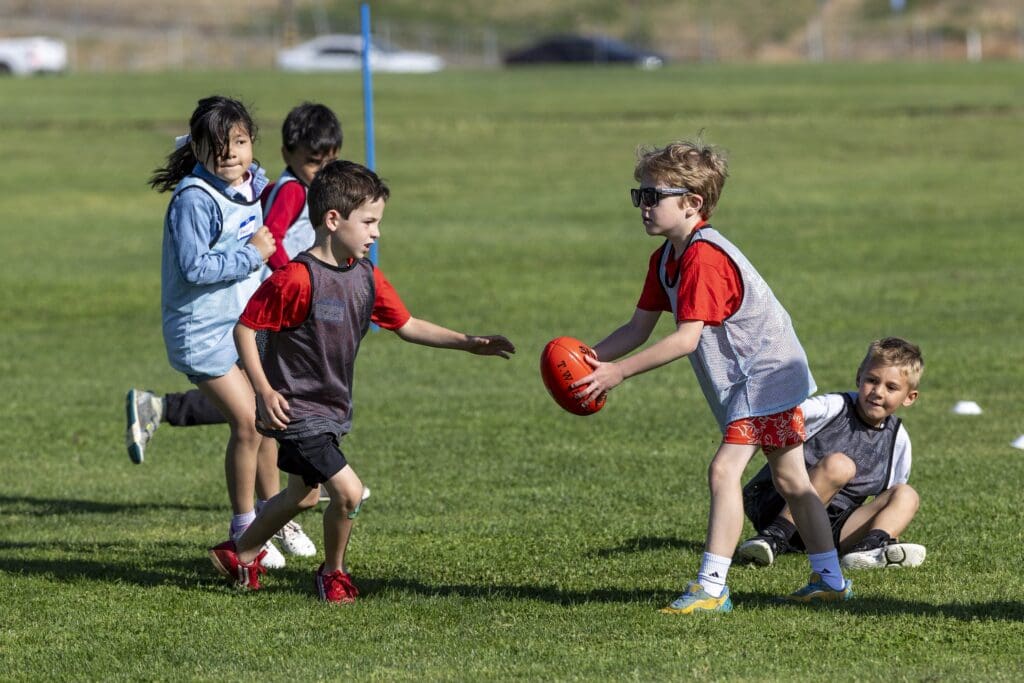
Taipaleti describes it more like “rugby’s cousin,” with certain aspects also similar to basketball and soccer. Her 9-year-old son has played all of those sports as well as flag football and said footy is a favorite.
According to the International Journal of Sport Communication, the attention on footy in the United States skyrocketed during the spring of 2020. The Australian Football League — unlike just about every American sport — decided to continue playing games at the start of the COVID-19 pandemic. In March 2020, Google searches for Australian football in the U.S. were more popular than at any other time during the previous four years.
Schools showcasing sport in PE classes
Taipaleti, along with other local footy players, hopes to see the sport grow even more in the Sacramento area, especially among younger athletes. Taipaleti plays footy herself and is heavily involved in the Sacramento Australian Football Club, known as the Sacramento Suns. Fellow parent and Suns player Kendall Hutchings has joined her to invite all interested families to try footy, including at a series of free clinics for kids in May and June on Saturday mornings in Sacramento.
“We would love to see this going from clinics to more of a league where we can … give them uniforms and have them compete more in regular season games,” Taipaleti said.
Sign Up for the Morning Newsletter
The Abridged morning newsletter lands in your inbox every weekday morning with the latest news from the Sacramento region.
Hutchings, who serves as SAFC President, said a growing number of local schools have even begun to incorporate footy into their PE classes.
“Our youth committee has run dozens of school clinics over the past decade at local elementary, middle and high schools,” said Hutchings, of Antelope. “Every time we do, several kids emphatically enjoy the sport.” Clinic organizers hand out fliers to students, but Hutchings is afraid those fliers never make it past the backpack.
“We hope this changes so that parents can give footy a chance,” he said. “Although I don’t think footy is growing as fast in popularity in Sacramento as I’d hoped or think it should, it is growing. More and more people are becoming aware of the sport.”
Free youth clinics this summer
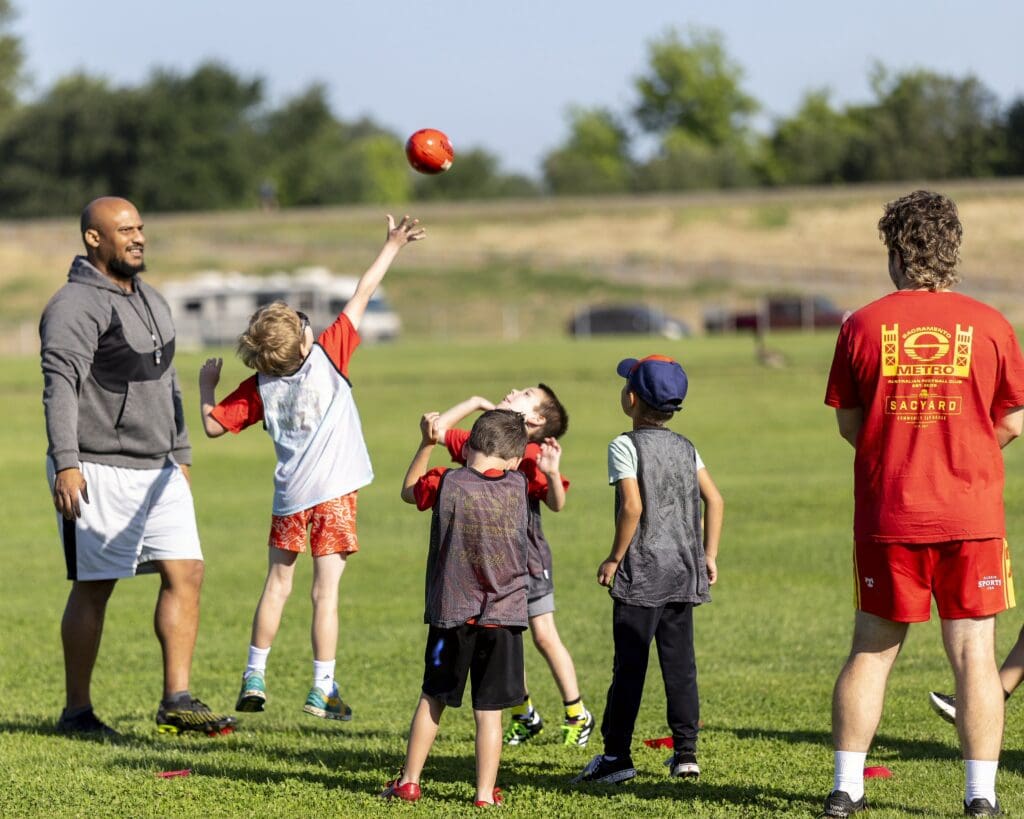
The Suns’ Saturday youth morning clinics — known as the Rising Suns — are geared toward kids ages 8 to 12. But Taipaleti said, as long as participants are at least 4 years old, parents can bring them out and sign them up on the spot. She notes that while the clinics are free, parents must first register as an official club member in order for their kids to participate, but membership is just $15.
“We want to keep it low cost,” she said. “What I like about footy is (you can) come out and try a new sport, and you don’t have to commit to an entire season. You can just try the clinics and be introduced to a new sport and the community and see how you like it.”
Footy culture encourages parents to participate in events
Both Taipaleti and Hutchings emphasize how community-oriented and family-friendly footy is.
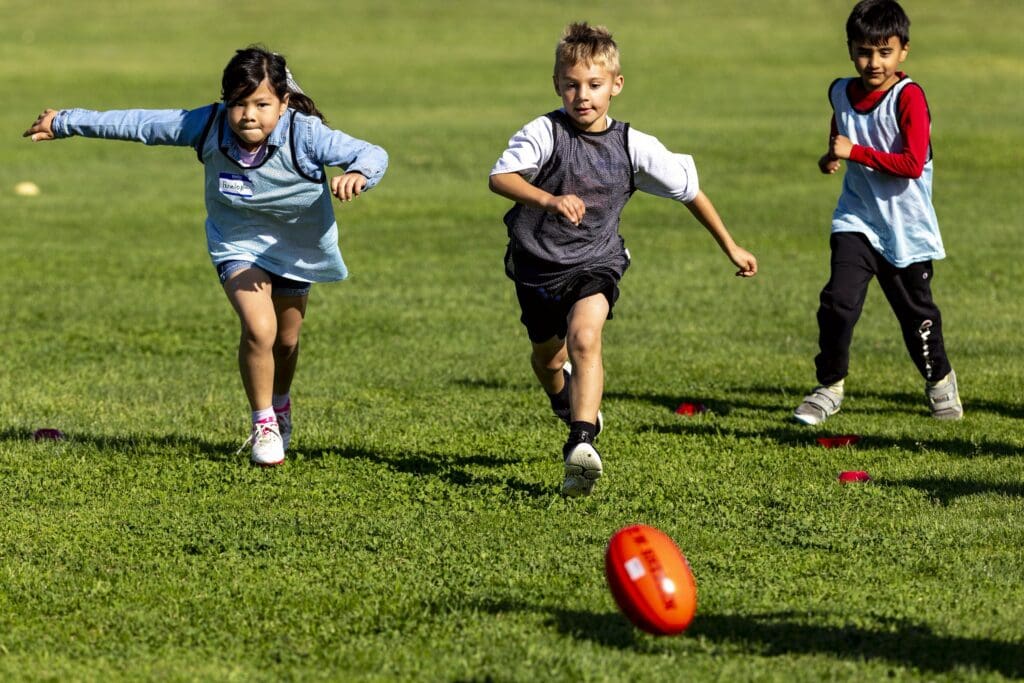
“Footy connects you with Australian culture, and in Australia, parents are expected to participate in youth footy events, not just drop them off for practice as often happens in American youth sports,” Hutchings said. “It’s meant to be a very connected community program, run by its members for its community members, with its community members jumping in and helping as well.”
“There’s something for everybody,” she added, explaining that the Sacramento Suns also have men’s and women’s teams. She also notes that club members regularly organize family outings in the greater Sacramento area — from River Cats games to pub crawls for the grownups.
“It’s a big part of health and wellness — a sense of belonging and a sense of community,” Taipaleti said. “For me, coming out (to play footy) after having kids, you know when you have kids, you kind of lose that sense of self. … So not only do I get to compete in sport, but I also get the social aspect to it as well.”
“I found a great group of folks who strive to do good in life, and who have fun in competition,” Hutchings added. “We all had in common what I like to refer to as the three C’s of motivation. We like (1) competition, we like (2) contact, and we enjoy the (3) camaraderie that the SAFC provides.”
Carolyn Becker is a regular contributor covering youth sports for Abridged in her feature Beyond the Bleachers. She’s lived in Northern California most of her life and worked in journalism and communications in Sacramento for more than 25 years. She and her husband are raising two boys, both of whom play competitive baseball.