
The Abridged version:
- Alchemist Public Market, a planned food project in the River District, is in danger of collapsing without a $3 million bridge loan.
- Alchemist had anticipated receiving the loan from the city of Sacramento, but was told Wednesday that would not happen. The city faces a $66.2 million budget deficit.
- Run by local nonprofit Alchemist CDC, the market would include eight small restaurants, a weekly farmers market, a café and more.
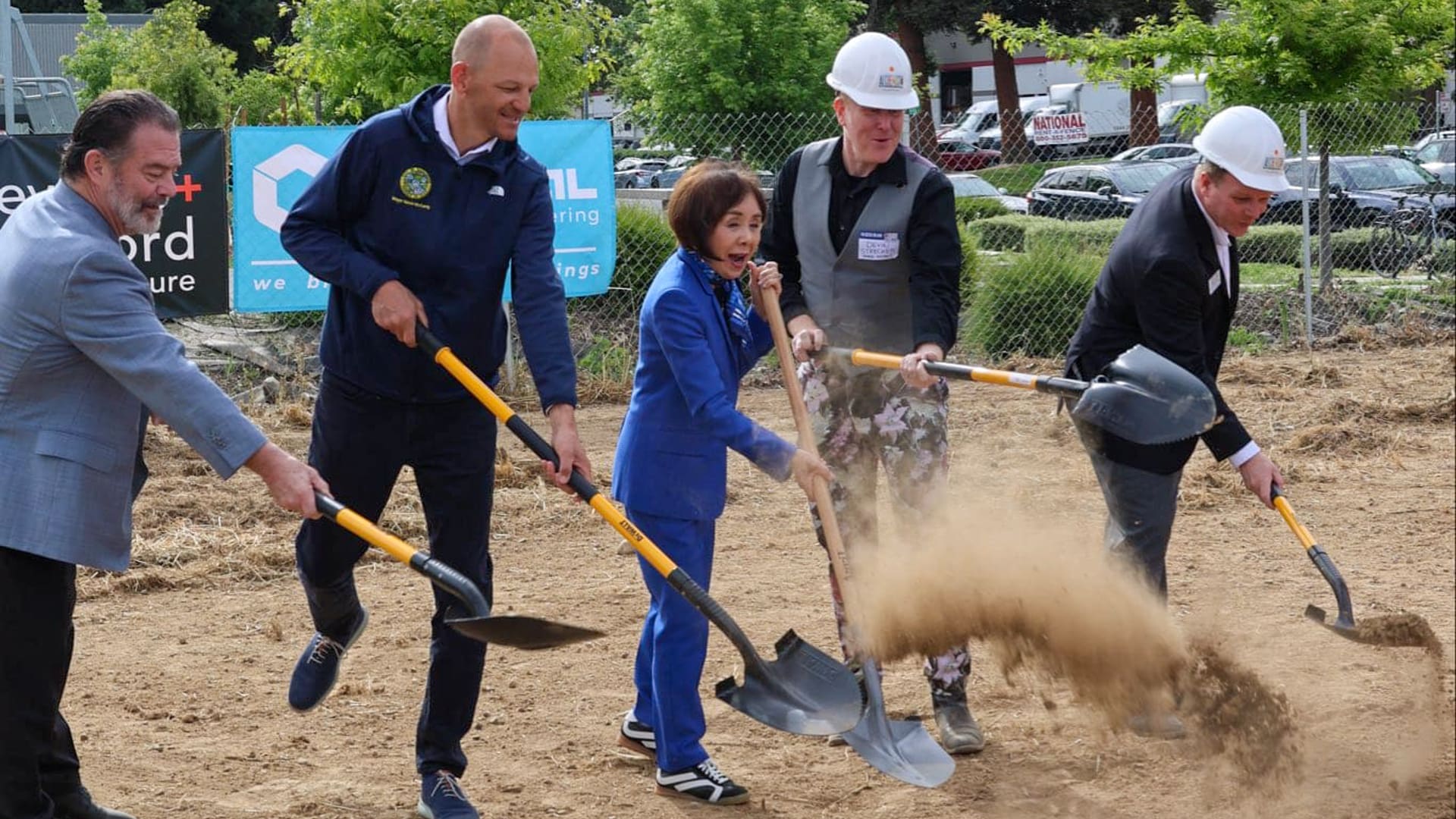
Alchemist Community Development Corp.’s planned public market has run into a surprising obstacle: Mayor Kevin McCarty, who had a shovel in his hands at the ceremonial groundbreaking last month.
Alchemist CDC had sought a $3 million bridge loan from the city to fund construction over the next year, CEO Sam Greenlee said. As of Tuesday, he and other Alchemist leaders believed they could secure that loan based on conversations with city representatives, he said.
On Wednesday, McCarty called Greenlee and told him definitively that there would not be a loan. The nonprofit is now scrambling to find an alternative lender. If it can’t find one by June 2, the Alchemist Public Market project will shut down, Greenlee said.
“We were under the misimpression, whether it was a miscommunication or misunderstanding, that the city was going to come forward as a partner on the lending,” Greenlee said. “And we now know with finality that’s not something the city sees itself as being able to do.”
The city of Sacramento faces a $66.2 million budget deficit and has looked for ways to trim that figure over the past several weeks. But Alchemist CDC had thought the loan was still likely, given the eventual backing of millions of dollars in federal grants the project is slated to receive.
Alchemist CDC director of advancement Shannin Stein made the impending shutdown known in an email, which several of her contacts then reposted to Facebook on Wednesday. In the email, Stein said McCarty was unwilling to put the loan up for Sacramento City Council consideration.
“We have frankly been told that the mayor simply does not have the ‘appetite’ to agendize the item for consideration,” Stein’s email read. “This has been particularly difficult to reconcile given that the mayor stood beside us only five weeks ago at our groundbreaking ceremony celebrating City partnership and support for the project.”
Alchemist CDC has secured about $12 million in state and federal funding for the public market, with another $5.4 million available this fall. But Alchemist receives grant money every 60-75 days, and contractors need to be paid monthly, Greenlee said. It’s not a lack of funding, but a lack of liquidity, he said.
“Without immediate City action, Alchemist CDC will likely be forced to begin winding down and ultimately canceling the project within the coming weeks due to looming construction payment deadlines and significant reimbursement timing gaps tied to our state and federal grants,” Stein wrote. “At this stage, there is likely not enough remaining time to identify or underwrite an alternative financing solution before cascading project impacts begin.”
Sign Up for the City of Treats Newsletter
Get the latest Sacramento food news from Benjy Egel in City of Treats — delivered every Tuesday.
Alchemist CDC’s grand plans
Founded by three UC Davis graduate students in 2004, Alchemist CDC has run projects dedicated to improving healthy food access in underserved communities. The nonprofit also runs six farmers markets throughout Sacramento County and provides CalFresh/EBT access at three others and facilitates a restaurant incubator program with pop-ups at Empress Tavern in Downtown Sacramento.
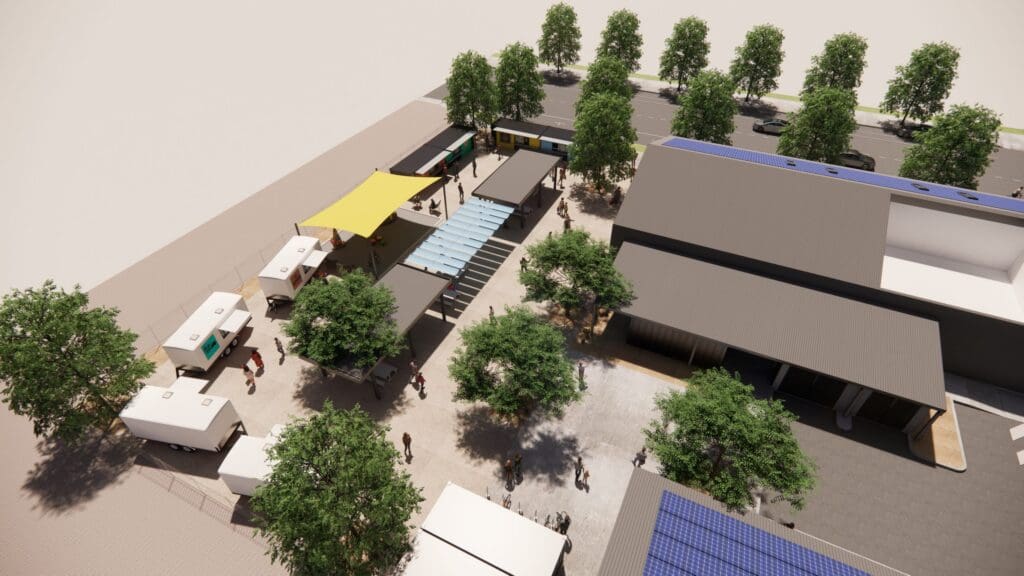
Alchemist Public Market is the organization’s biggest venture yet, set to fill 0.82 acres around 341 N. 10th St. in the River District and cost about $15.5 million to build. If completed, it will include a shared-use commissary kitchen, a market selling local goods, a weekly farmers market, a playground, a café and an outdoor food court with eight small restaurants from participants in Alchemist CDC’s incubator program. It’s currently scheduled to begin operating in April 2027, with a three-year ramp-up to full operations.
Construction is booming in the River District and nearby Railyards, with a Kaiser Permanente hospital currently being built and Sacramento Republic FC’s future 20,000-seat stadium planned. Several housing developments have opened in the neighborhood this decade, and thousands more units are coming. But the historically industrial area still lacks some amenities, a gap Alchemist Public Market aims to fill.
“It’s meant to … meet a lot of needs that that neighborhood is going to have, while also providing entrepreneurs with the opportunity to build strong businesses that can occupy vacant storefronts across the region, across the city, and bring life back to all of our neighborhoods,” Greenlee said.
City Hall’s thin wallet
Like many area cities, Sacramento faces a structural budget deficit, meaning recurring expenses such as payroll or long-term social programs are outpacing revenue. The Sacramento City Council recently approved hundreds of fee hikes, from businesses’ electronic sign permits to parking violation fines, and voted Tuesday to cut several city positions and services to address the $66.2 million budget deficit.
It’s within that context that the city has declined to directly lend to Alchemist CDC. As the assemblymember representing Sacramento, McCarty helped the nonprofit obtain $300,000 in California Natural Resources Agency funding to acquire and develop the Oak Park Art Garden, which also broke ground last month. This time, he said, the city doesn’t have the money to further support Alchemist CDC.
“Alchemist CDC’s transformative work lifts neighborhoods and drives economic development, which is why we have been proud to support them with $300k in State budget funds and, more recently, the City has provided more than $1.4M in loans, funding, and City impact fee deferment,” McCarty said in a written statement. “Unfortunately, the City’s budget deficit does not allow us to provide any additional funding, but we continue to support their efforts in our community.”
The city of Sacramento previously gave Alchemist CDC a no-interest $450,000 bridge loan for the public market in 2022, which was repaid the following year via another California Natural Resources Agency grant. Alchemist CDC also received a $400,000 fee deferral and has a pending $120,000 city loan to help with offsite expenses, both of which must be paid back to the city before a certificate of occupancy is issued, Stein said in an email to Abridged.
Despite the city’s dire financial situation, Greenlee had expected to receive the bridge loan based on conversations with city officials, he said.
“I’m ultimately surprised by this. I understand the fiscal challenges the city is under at the moment right now, and we did our best to position a loan that we thought would actually make a good return for the city and would be reasonable,” Greenlee said. “I do understand that our (elected officials) have to make their own calculus on how to most responsibly manage that money. So yeah, it surprised me, but I understand that there are considerations beyond our project alone.”
Alternative avenues?
The city wasn’t Alchemist CDC’s only prospective lender. Greenlee had previously sought private loans and philanthropic avenues as well but didn’t get much response, he said.
That changed with the news Wednesday. People reached out throughout the day, Greenlee said, offering to connect him with others in their network who may be able to help finance the project. Fresh off a River District Property District meeting, he said the level of support and desire to find the money was “pretty moving.”
“To be candid, this morning when I learned that the city wasn’t a viable pathway, I probably would’ve told you that there isn’t one,” Greenlee said Wednesday evening. “… I think there may be a path, and if there is a path, it has to come very quickly. But it will come from people advocating and speaking up with this project until we find the right group of people.”
Alchemist Public Market has already been in development for six years, Greenlee said, and has been met with obstacles before. Though there’s no clear path forward right now, he hasn’t lost hope.
“It’s hard to feel optimistic at this moment, but I will note that we have faced quite a few moments in the process where we’ve had something almost kill the project, and we found a way through, and it’s always been through the community caring, the community supporting and helping us find a solution,” Greenlee said. “So that’s where my bit of hope rests at this time. The project is viable, it’s permitted, it’s federally compliant, it’s even funded. It just needs liquidity right now.”
Benjy Egel is the senior food editor at Abridged. Born and raised in the Sacramento region, he has covered its local restaurants and bars since 2018. He also writes and edits Abridged’s weekly food and drink newsletter, City of Treats.