
The Abridged version:
- Students at Luther Burbank High School in Sacramento are learning about the world of agriculture through a program that teaches city students about food production and farmwork.
- The focus on “green collar” careers emphasizes ways to incorporate agriculture and sustainability into more traditional careers and education.
- Urban agriculture and small-scale farming introduces students to a farming industry that has grown older and smaller in recent history.
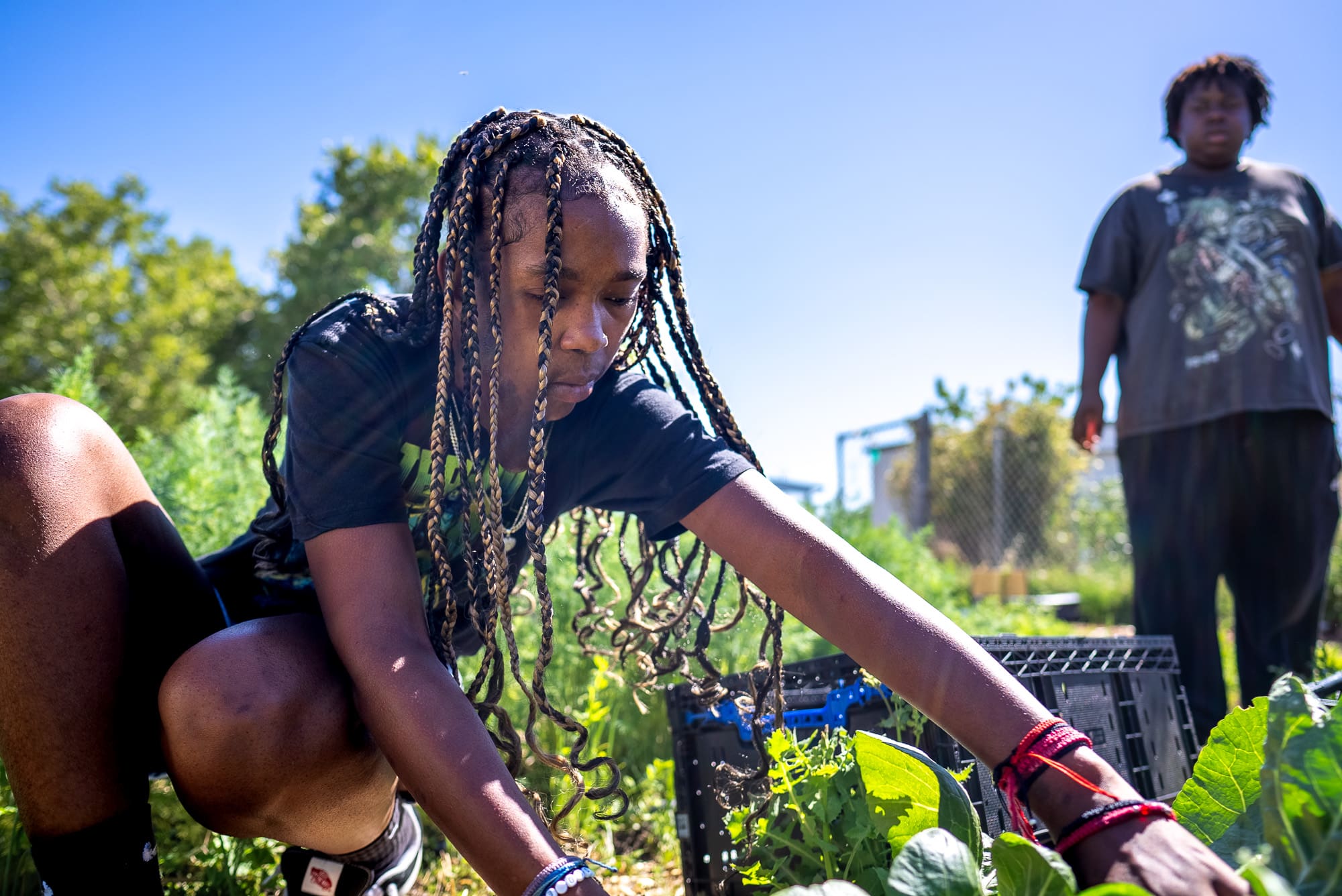
Nathan Xiong walked around the farm at Luther Burbank High School in Sacramento, making sure his classmates weren’t getting too overheated on the hot May afternoon.
Xiong, a senior, is one of two student supervisors of a crew participating in the Center for Land-Based Learning’s paid Urban Ag Internship Program. All of these students are members of Burbank’s Urban Agriculture Academy and work paid hours in the Burbank Urban Garden at the back of the campus.
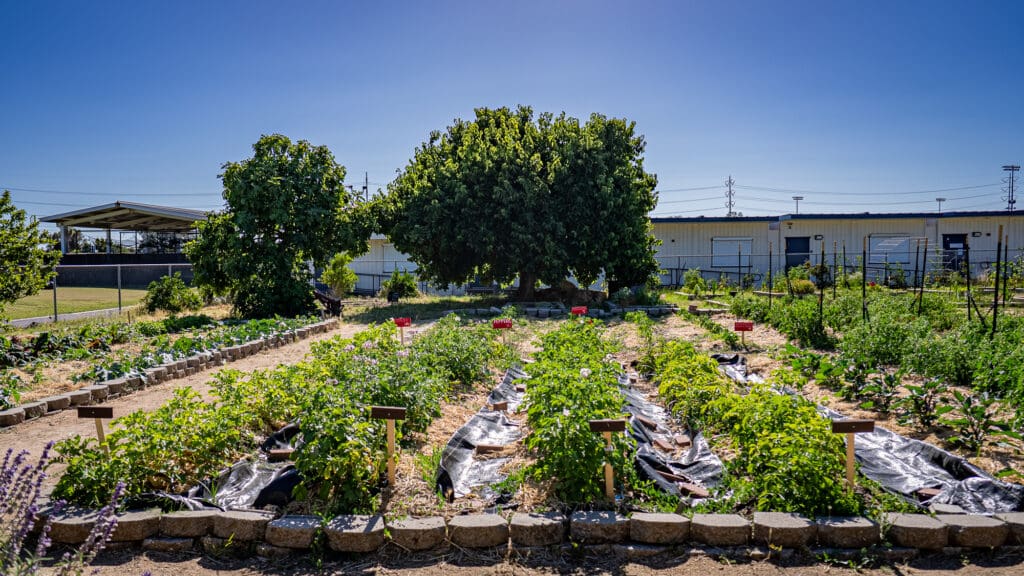
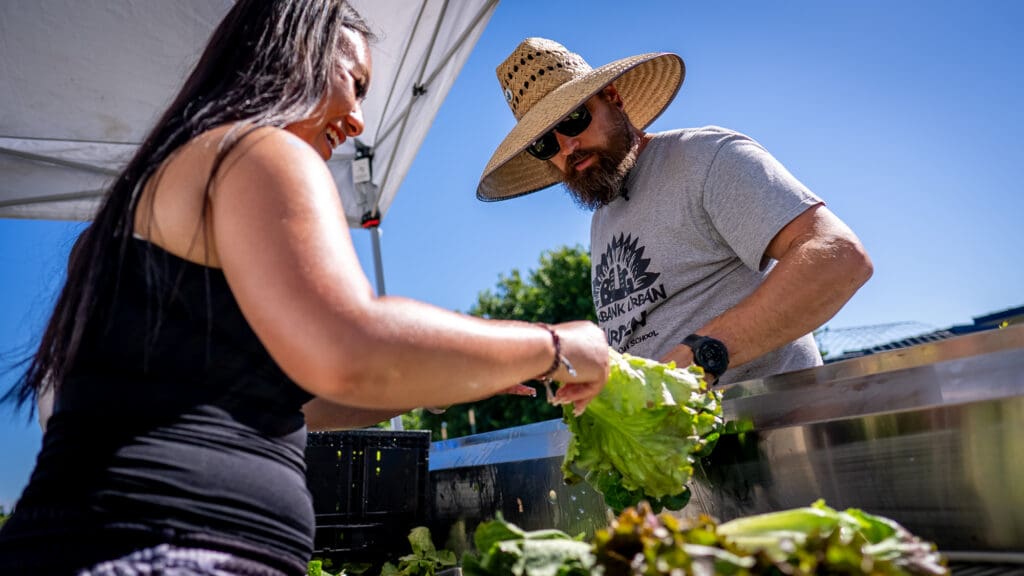
That day, interns installed trellises for tomato plants, and handled other tasks to prepare for a farmstand scheduled for early June. The students learned how to run a farmstand from farmers at Root 64, a 1-acre farmstead in Sacramento’s Tallac Village neighborhood. Earlier this spring, the farmers advised students on their annual plant sale.
Xiong said he applied to be an intern for the money, but gained much more during his two internship years and this three years taking the Urban Agriculture Academy series of classes.
“I really enjoy learning about regenerative agriculture and learning about cover crops, trying to be sustainable,” Xiong said. “The aquaponics system, which is one of my favorite things, uses the fish to grow plants. It’s a really cool system.”
Sign Up for the Morning Newsletter
The Abridged morning newsletter lands in your inbox every weekday morning with the latest news from the Sacramento region.
This fall, Xiong will attend UC Davis to major in mechanical engineering. He plans to incorporate agriculture into his college studies.
Attracting teenagers to consider future professions in agriculture isn’t easy, but those doing so say it’s much-needed. The U.S. is losing both farmers and farmland. The average age of an American farmer is over 58, according to the most recent Farm Census, and farmers over 65 own nearly 40% of all farmland. The country has lost more than a half-million farms in the past few decades.
Agriculture jobs, including those besides farming, may offer promising career pathways for young people. And an effective place to start in Sacramento is with urban agriculture, where small-scale farms and community gardens can exist right where most people live.
Attracting a new generation
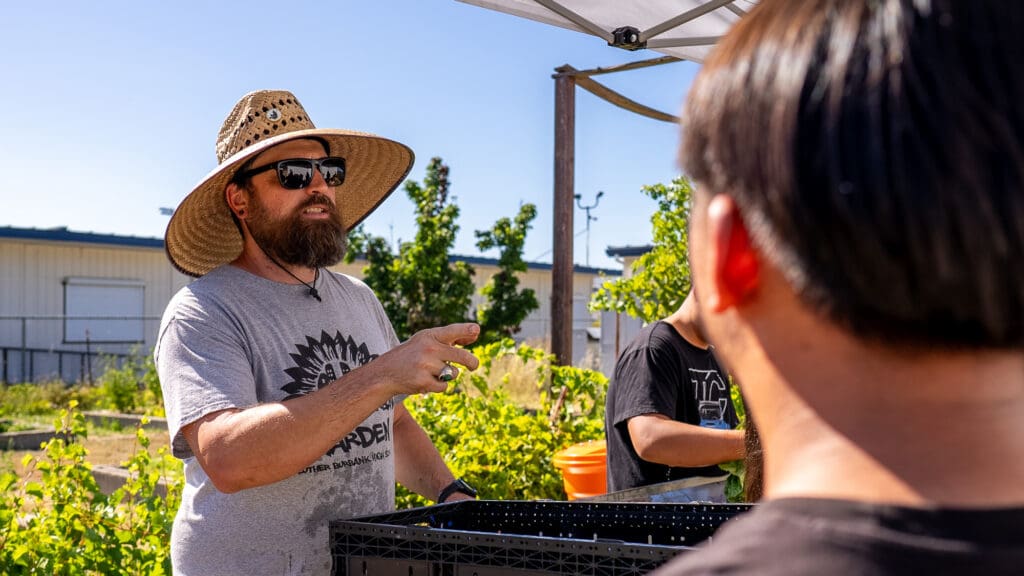
Luther Burbank is the only high school in Sacramento City Unified School District that offers an agriculture-focused academy, which teacher and coordinator Todd McPherson founded in 2017. Grant Union High School, in Twin Rivers Unified School District, has the Grant Environmental Organization, a three-year Career Technical Education academy focused on agriculture, environmental science and “green-collar” careers.
Once Burbank and Grant students complete the first year in their academy, they can apply to be selected for the Urban Ag Internship. Each year, the organization has about 25 paid interns. This upcoming school year, the Center for Land-Based Learning will expand to Sacramento Academic and Vocational Academy, adding seven interns and about 40 non-intern participants.
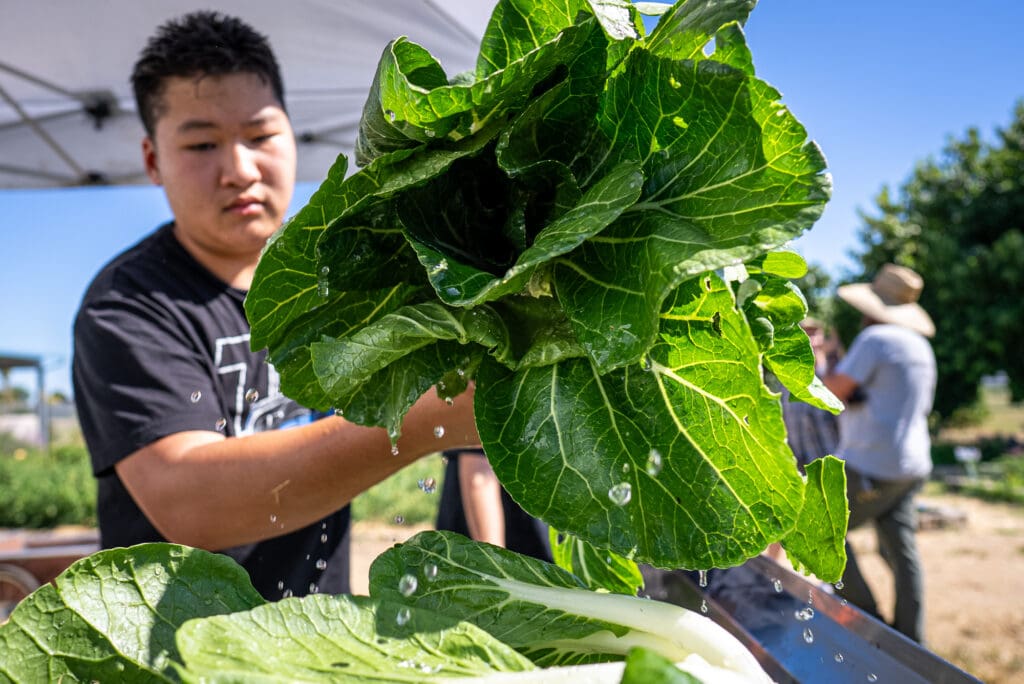
The interns gain job experience and professional development skills. They visit farms, ranches and colleges, and work on school gardens and habitat restoration.
The academy services component of the program is open to all academy students at both high schools. These non-interns, numbering about 280 to 300, also have access to field days, guest speakers, and workshops on topics like interviewing, resumes and networking. All students also learn about leadership training and relationship building.
The program aims to increase opportunities for students of color. Both Burbank and Grant have a population of about 95% students of color.
“In Sacramento, as the Farm-to-Fork capital, there’s a lot of opportunities for agriculture and for natural resource stewardship in this area,” said Morgan Caudill, who manages the program for the Center for Land-Based Learning, which is based in Yolo County. “We need more of a pipeline for our students directly into those careers that is also equitable. A lot of the students that we work with, they’re coming from historically redlined neighborhoods.”
Pathways for economic mobility
Sacramento may be the country’s self-proclaimed Farm-to-Fork Capital, but a robust farming industry does not necessarily mean food security for residents.
Learning how to grow food and pursue a career in agriculture is an all-around benefit for Sacramento residents, said Gabrielle Gonzales, assistant professor of sociology at Sacramento State. Gonzales is one of three professors behind a program called Growing Educational Pathways for Food Sovereignty.
“The students we service tend to be … from the most marginalized communities,” Gonzales said. “If we can increase pathways for economic mobility, then we’re looking at a more equal and sustainable society, essentially.”
The Sacramento State program — now in its first full year — incorporates food justice and sustainable farming education. In partnership with the Center for Land-Based Learning internship, high school students at Burbank and Grant get college-level education and hands-on training.
Leah Joyner, assistant professor of kinesiology at Sacramento State, notes that although people of color in urban areas, including Sacramento, report high levels of interest in urban agriculture, systemic barriers result in low levels of access to amenities like community gardens.
Urban agriculture can improve food security and address “food apartheid,” which refers to how racially inequitable access to food “does not just happen,” Joyner said.
In urban centers, she said, food apartheid can often be connected to the legacy of redlining, an old practice in which banks denied home loans to people of color, and instituted restrictive property deeds that prevented minorities from buying or living in predominantly white neighborhoods. These residents were limited to neighborhoods more likely to be zoned for industrial uses.
Beyond limiting the ability of residents to build generational wealth, the practice also left a lasting legacy of pollution in some Sacramento neighborhoods. People must first learn how to improve soil health, said Si Gao, an assistant professor of environmental studies at Sacramento State. Gao helps students see soil science as a good career option, especially important for those whose parents might be farm workers and have a negative view of agricultural work.
Learning about land stewardship and growing food can be about more than just a career for young people, Joyner said. It’s also about exposing students to the joy of being in a garden setting.
Expanding career pathways
Former intern Kylie Capacete graduated from Grant in 2025 and said one of her favorite field days was at Bobcat Ranch in Winters for habitat restoration on the 6,800-acre cattle ranch that practices sustainable grassland stewardship.
“I feel like what I remember most about the program was just the community I had there,” Capacete said. “Not only my co-workers and teachers, but also when we would go out on field days I would learn a lot about the people there, the work they did on their ranches.”
Capacete attends USC where she plans to major in environmental engineering.
Caudill, Center for Land-Based Learning program manager, said up to 75% of the students move on to study agriculture and natural resource careers in college. Many study environmental science; others study engineering. Only about 10% of students pursue farming.
“When you think about the opportunity for future green careers, there’s a wide and really necessary opportunity for all of these careers, especially in California,” Caudill said.
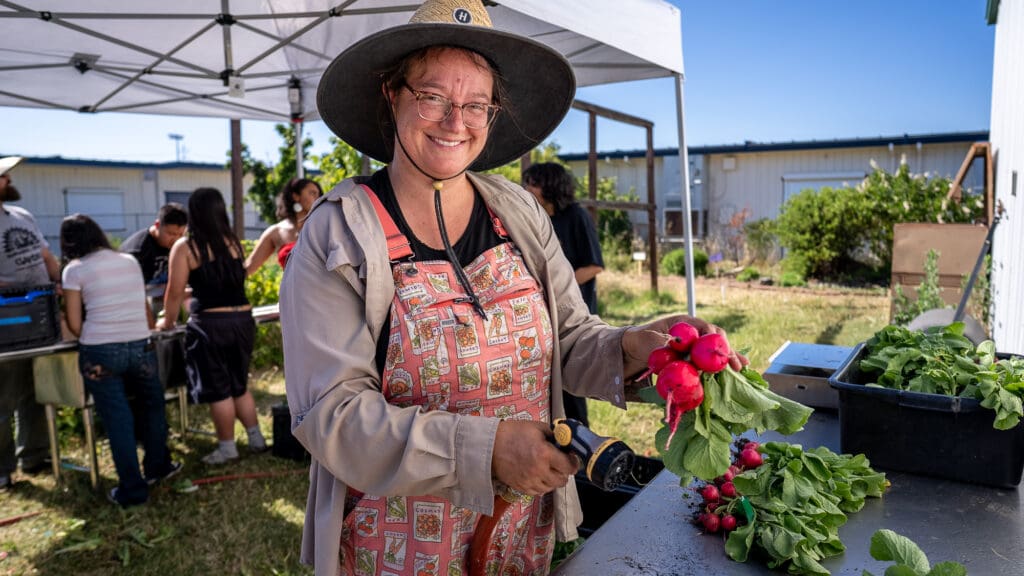
Randy Stannard, co-owner of Root 64, agrees that the program exposes young people to the full breadth of food-system jobs.
“It’s not just growing vegetables,” Stannard said. “You could go work for the state and be a soil scientist or an agronomist. Or you could be very interested in tech and want to fly drones, and that’s very involved in agriculture as well.”
McPherson’s vision for Burbank’s academy has been to provide a bridge to post-secondary education for students who are interested in school gardens, being outside or the environment, but may not know the terms of what to look for in higher education to study these interests or pursue one as a career.
They may not know about soil science or entomology, for example. They may not be familiar with the horticulture program at Cosumnes River College or American River College. The school’s Urban Agriculture Academy fills the gap by providing that exposure.
“It’s real hard to be a farmer, but at minimum, they graduate knowing where their food comes from a little bit more,” McPherson said. “The best case scenario, [we] open some doors, and they’re the next leading environmental scientist.”
But farmers are still needed, too.
Countering a crisis
Caudill said the small percentage of interns that eventually pursue farming is related to challenges of land access, capital costs and starting a business.
“But I think it is also simply because farming is incredibly hard work,” she said. “Students know they must dedicate immense physical, mental, emotional and financial energy to succeed.”
Adriana Toste, chair of Sacramento County Farm Bureau’s Young Farmers & Ranchers committee, agrees that the hardship of a farming life deters many people. Toste grew up in a dairy farming family in Merced County. The local committee serves young people from 18 to 35. Of the local group’s dozen or so active members, many come from agricultural backgrounds and move to Sacramento County from more rural areas.
“I think for a lot of us, we like having a like-minded environment where we can share ideas and advocate for an industry that we value so much, and (this is) just a good outlet to do that,” Toste said.
Several Young Farmers & Ranchers members work in agricultural marketing, representing growers or marketing to growers. Some members are in consumer-facing roles for food brands, others are agricultural teachers for Future Farmers of America programs at area schools. And then some members work in the legislative realm.
Toste studied agricultural communications at Oklahoma State University, and works at a communications and consulting firm in Sacramento for agricultural clients. Toste and her two siblings work in agriculture, but only her brother was interested in taking over the family dairy operation.
“Farming is 365 days a year,” Toste said. “It’s a really tough life, and it truly is, I like to say, a labor of love. You have to be dedicated to that labor of love 365 days a year. A lot of times, farmers are working well before the sun comes up and well into the evening and nights.”
Fresh produce for the community
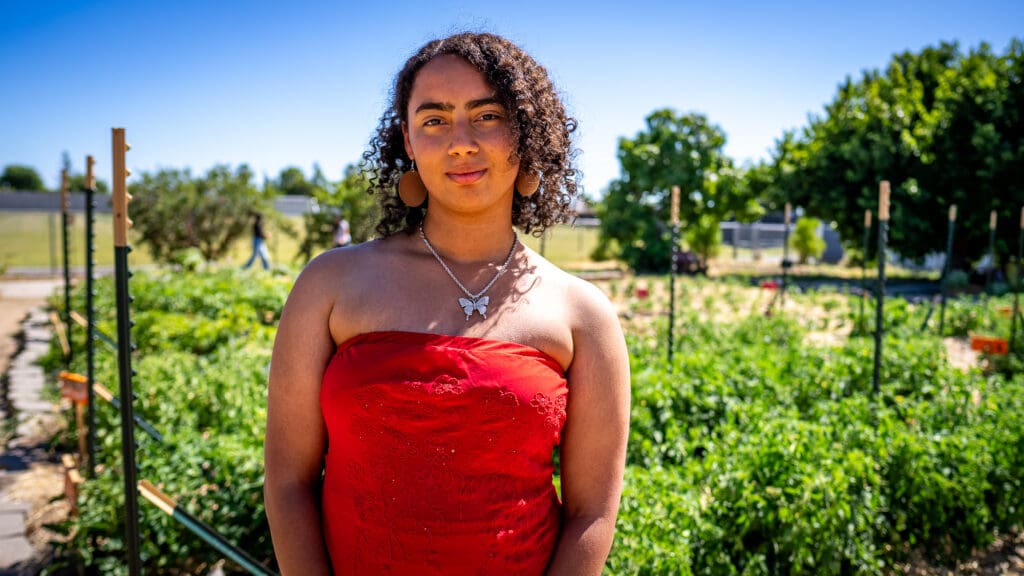
Mari Mahoney, a senior at Burbank and an intern in the Center for Land-Based Learning program, doesn’t plan to major in an agriculture field, instead opting to pursue art.
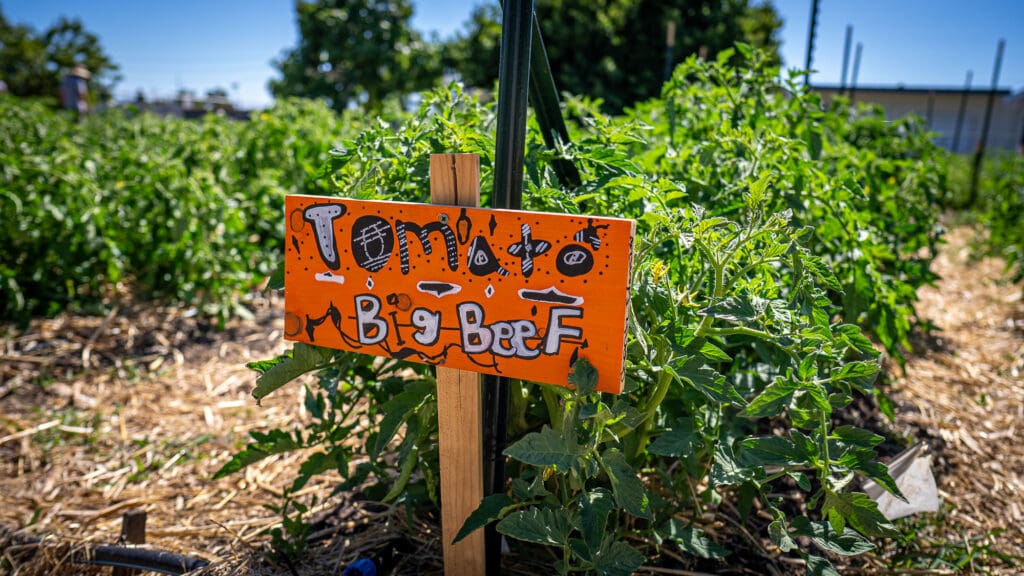
On that hot afternoon in May, Mahoney walked around pointing out the many parts of the farm. Seasonal beds with peppers, zucchini, tomatoes and artichokes. An area of carrots, lettuce, bok choy and other vegetables. A garlic patch and a strawberry bed. There are lots of trees — mulberry, fig, peach, pomegranate, apricot, plum, lemon, pear. A California native plant area. There’s a greenhouse, with one corner for the aquaponics system.
Mahoney said her school’s annual plant sale has improved each year she has been involved. “I remember the very first year I participated, which was my sophomore year, goodness, (it) was very hectic, very hectic,” she said. “It was like Black Friday at the mall.”
The students have since fine-tuned their operations, including with better labeling and charts, and a more efficient layout.
The Burbank Urban Garden area has a large expansion space that used to be the school’s tennis courts. Students recently planted cover crops to add nutrients back into the soil, but the space’s future remains unknown. There are challenges to the Urban Agriculture Academy model, McPherson said, and the program isn’t guaranteed to last forever. McPherson and others are exploring how to make the program sustainable over the long term.
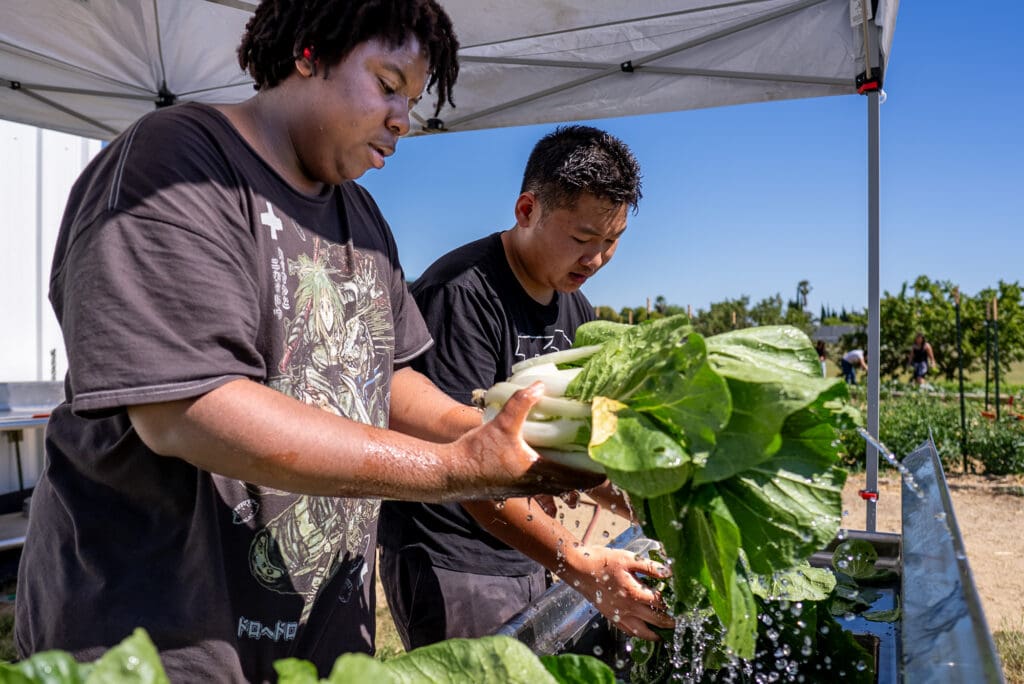
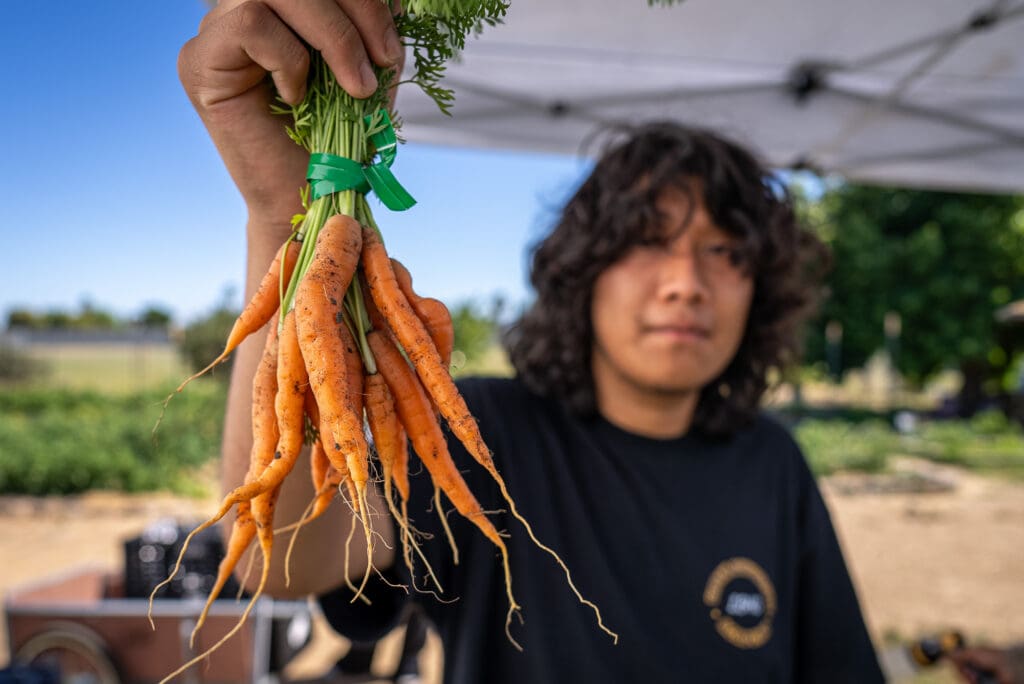
For Burbank’s farmstand in June, the third-year students decided to give the food away for free. Making the produce available to the community was more important than making money. This decision was part of the bigger picture focus of third-year academy students, as they considered the role of their school farm in Sacramento’s local food system.
McPherson said this is the food justice side of their work — and it’s informed by the lived experience of the people making the decisions, with many of Burbank’s students residing in Meadowview, a certified food desert.
“Students are learning, but we’re also generating high-quality, organic, nutrient-dense produce for our community where it’s lacking,” McPherson said. “It’s important to me that they understand the gravity of that too. It’s about producing the food, but also about meeting community needs, and not waiting to solve community problems, and not waiting for other people to come and do it.”
Even though the school year is coming to an end, the farm work won’t stop. Only a couple weeks after the school year ends in June, the crew will be back out in the summer heat.
Sena Christian is a veteran journalist and freelance writer from Sacramento. She teaches journalism at Sacramento City College.