
The Abriged version:
- A 2024 study found that the most common sources of queer joy were not large-scale events like pride parades, but smaller, everyday personal connections.
- Adam Nissen at UC Davis is currently working on a new study that builds on findings of past research into queer joy.
- Chacha Burnadette, founder of Sacramento’s Darling Clementines Burlesque and Drag Troupe, notes the importance of creating spaces where people feel free to be their authentic selves.
Andru Defeye served as Sacramento’s poet laureate from 2020-2024 and is the driving force behind Sacramento Poetry Week. In this regular feature, “The Great Joy Hunt,” he explores the science behind joy and shares strategies for adding more to our lives.
I think I found out about gay people the same way a lot of my generation did: when Ellen DeGeneres accidentally leaned over that microphone and made history coming out in prime time on April 30, 1997.
I was raised in a conservative Christian household and Ellen coming out on network television prompted a lot of conversations. The conversation in my house was “love the sinner hate the sin.” The conversation on the schoolyard was ignorantly hateful and rationalized because it was the ‘90s. “Gay” was considered fighting words among young men. No one around me was cool enough to point out Freddie Mercury or David Bowie at the time. We didn’t have the understanding that sexuality and gender are spectrums that young people do now.
Queer community formed under and around these misunderstandings and prejudices and thrived despite them. Imagine learning, before you even fully understand yourself, that some people have already decided there is something wrong with you.
That is part of what makes queer joy so remarkable.
It is resistance, certainly. But it is also something bigger. It is the refusal to be defined entirely by survival. It is holding hands in public. Dancing with your friends. Falling in love. Making art. Building family. Pride.
For many queer people, joy is not pursued against a neutral backdrop. It exists alongside ongoing questions of safety, belonging and whether their rights gained over the last half-century will continue to hold.
While it has been an ingredient in the recipe for queer resistance all along, queer joy has only recently begun attracting the attention of researchers. More often than not the focus ends up on the resilience and struggle of the queer community rather than queer joy.
One of the few studies on queer/transgender joy was published in 2024 and showed that the most common sources of queer joy were not large scale events like Pride parades, but smaller, everyday things like social support, romantic and sexual relationships, connection to the LGBTQ+ community, exploring and disclosing identity, and gender expression and affirmation.
Adam Nissen of UC Davis is currently working on a study building on those 2024 findings. In his study, Nissen surveyed 376 UC Davis students who identify as LGBTQ+ five times a day for three weeks about where they were finding joy in their life and how they were defining it. His study is waiting to be published later this year, but he shared some of the findings with us.
Nissen says one of the biggest revelations from both studies is just how many ways queer joy shows up. “It can be about identity, expression, authenticity, support or about just feeling connection and pride in the LGBTQ+ community,” he explains. “The fact that themes are emerging in what queer joy can look like across so many unique experiences is really exciting because we can use that information to develop measures of queer joy that are largely lacking.”
Nissen points out that nuance and safety quietly play key roles in queer joy. While queer joy is often simply joy experienced while being queer, there are often nuances easily overlooked by straight people. For instance, everyone may find joy in going to the gym or spending time with friends, but for many research participants those experiences were shaped by whether they felt safe, affirmed and free to be themselves. A workout at an LGBTQ+-friendly gym or an afternoon spent with friends they were comfortably out to carried a different kind of ease and joy.
While research on queer joy is just beginning, a pattern is already emerging.
Queer joy appears to be rooted, at least in part, in authenticity, chosen family and community ritual.
Together, these are some of the mechanisms that help create belonging.
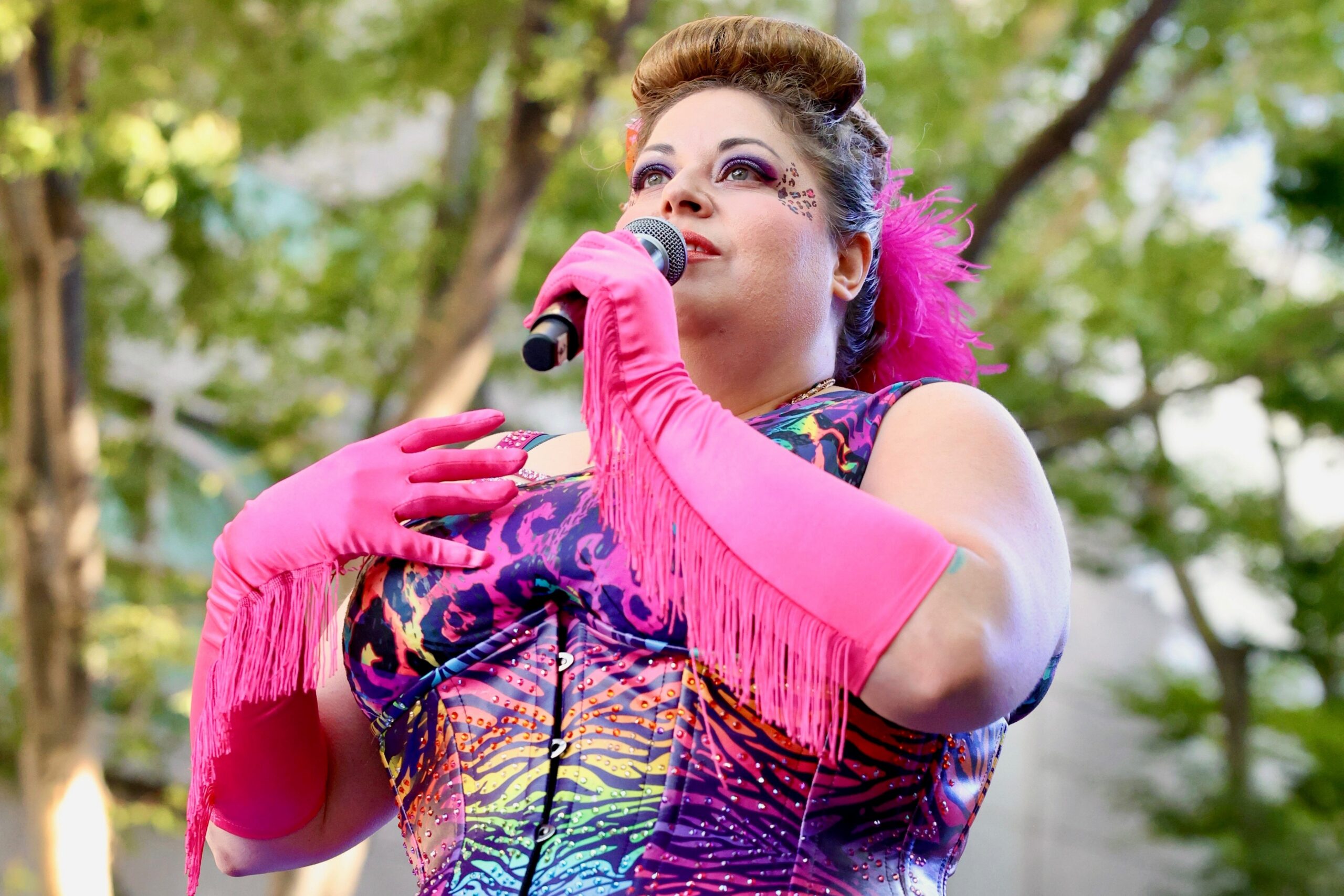
Sacramento’s 2025 Pride Parade grand marshal and founder of Sacramento’s Darling Clementines Burlesque and Drag Troupe Chacha Burnadette creates a space of queer joy and belonging at Harlow’s every month. The Darling Clementines Burlesque and Drag show brings nationally known queer burlesque and drag performers to Sacramento and has become one of the city’s havens for queer creativity, joy and community.
“Nightclubs, theaters, drag show cabarets and community gatherings are sometimes dismissed as superficial, but history tells a different story,” she explains. “When the outside world restricted our expression as queer people we built places that could amplify it. The rituals of queer performance, storytelling, gathering and witnessing one another have never been merely about entertainment.”
For Chacha Burnadette these spaces are more than venues. They are places where people can be seen and celebrated as their authentic selves. In many ways this mirrors the research findings of Nissen and others.
Nissen hopes future research will continue to be shaped by queer people themselves and not simply by researchers studying them from a distance. More broadly, he believes the field must expand beyond deficit-focused narratives.
“If we focus so much on the negative, we lose a very core part of the holistic picture,” he says.
Queer joy is rarely extravagant. Most often queer joy is found in moments of authenticity, connection, affirmation and belonging. A real conversation with a friend. Holding a partner’s hand. A room where no explanation is required.
The great joy hint
For all the differences in our identities and experiences, there is something deeply universal about wanting a place to exhale, stop performing and start belonging. This is one of the lessons that queer joy offers the rest of us. Not simply that joy can exist alongside hardship, but that belonging is a pillar of joy and something that must be actively cultivated.
We spend a lot of time talking about what hurts people. We should. Those stories matter.
Maybe there is equal and opposite wisdom in asking what helps people come alive. The emerging research suggests queer people have been answering that question all along.
Authenticity. Chosen family. Community ritual.
The simple, radical act of creating and holding spaces where people can find belonging exactly as they are.
It’s been almost 30 years since Ellen accidentally came out and I learned queer people existed. A lot has changed since then. A lot still hasn’t. But one lesson feels as relevant now as it did then:
We often think belonging is something we find.
The queer community reminds us that belonging is something we build.
And wherever belonging is built, joy has a way of showing up.
Andru Defeye is the former poet laureate of Sacramento and a regular contributor, writing The Great Joy Hunt for Abridged.