The Abridged version:
- Peer support groups, like Alcoholics Anonymous, are valuable tools for those seeking to change their relationship with drugs, alcohol and other maladaptive behaviors.
- Non-faith-based peer support alternatives to AA, like Smart Recovery and LifeRing, are also options for those seeking a sobriety community and can all be used simultaneously.
- SMART Recovery and LifeRing have a small but passionate in-person Sacramento-area presence. Here’s how you can get involved and start your own sobriety journey.
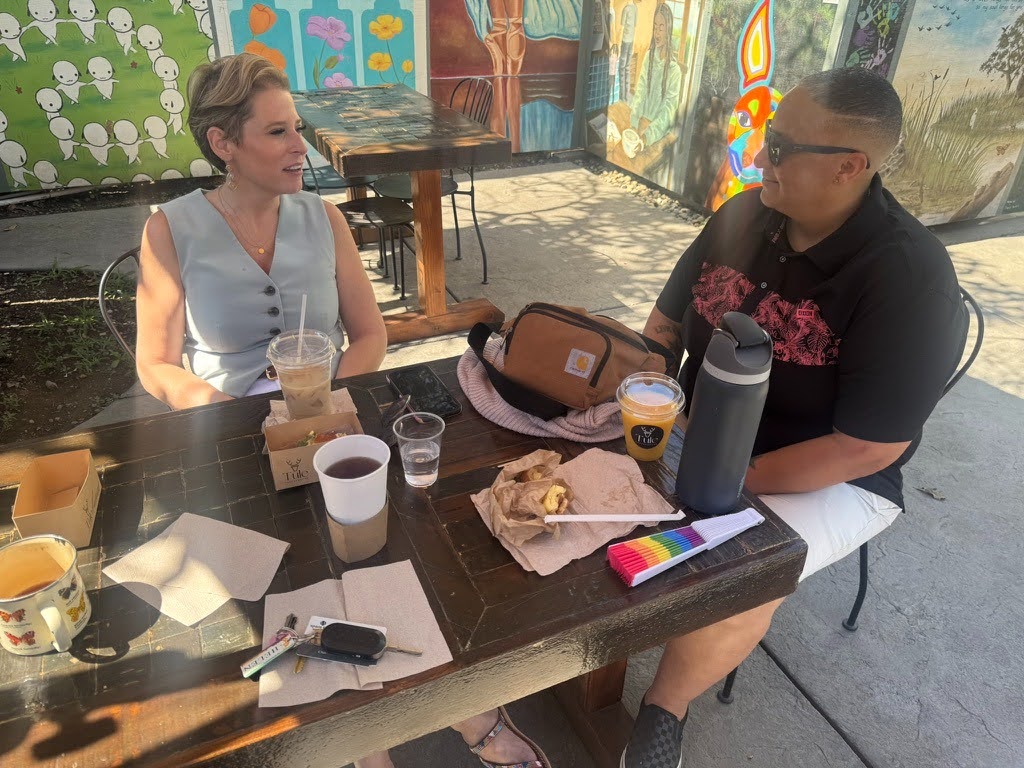
Amanda Scott-Telford and Tanya Grandison text and chat often. Grandison recently helped Scott-Telford move. Scott-Telford gave Grandison her old dryer as a thank-you.
As friends, they have much in common. They both live in Elk Grove. They are both mothers: Scott-Telford, a copywriter, is a mother to six. Grandison works in law enforcement and has teenage triplets.
But perhaps their strongest bond formed in recovery — the broad term that applies to anyone seeking medical or peer-based support to change their relationship with drugs or alcohol.
Both attended rehab — a term we have all heard which can include a medically assisted detoxification plan or an inpatient or outpatient program — but that’s not where they met. They currently both identify as sober, although Scott-Telford does not necessarily use that term.
“Sobriety isn’t the point. Recovery and living a full life are the point,” Scott-Telford said. “I like the word recovery a lot better, because look at the lives we’re building now that have nothing to do with our drug of choice.”
Sign Up for the Morning Newsletter
The Abridged morning newsletter lands in your inbox every weekday morning with the latest news from the Sacramento region.
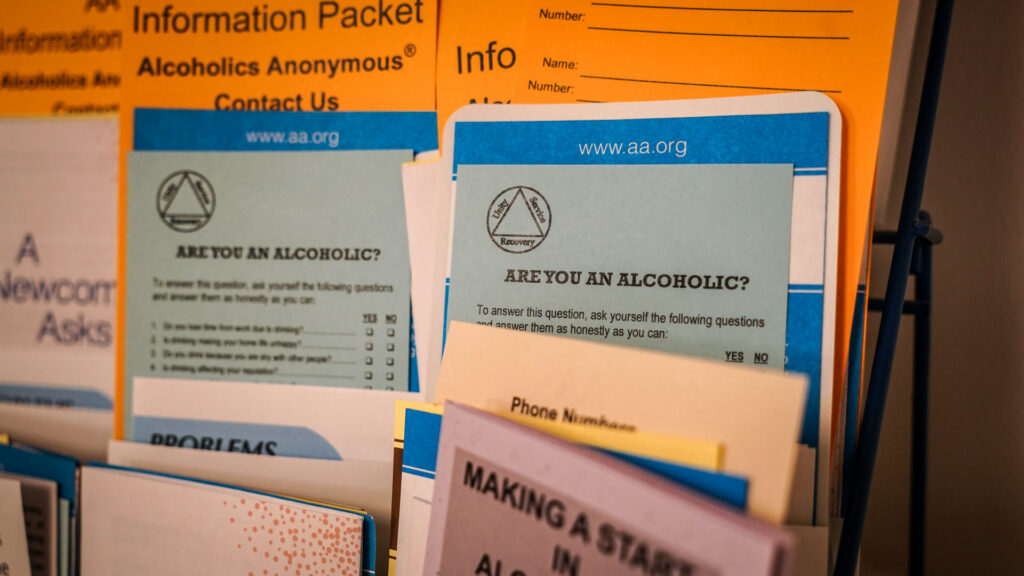
They met online 3½ years ago through a peer-support recovery group. Most are familiar with the best-known of these: Alcoholics Anonymous and its sister program, Narcotics Anonymous, the international, faith-based 12-step program.
Many of us know or have known people in “the program,” as AA is sometimes called, and it’s been featured in popular culture and touted by celebrities who extol its benefits. Although grounded in faith, there is no religious prerequisite to AA, and many atheists or agnostics have found success in the program.
What many do not know is that there are other peer support options in recovery, in addition to AA, that are not faith-based. They are often called “alternatives to AA” and can all be used simultaneously. In fact, a 2025 study by the Alcohol Research Group, a program of the Public Health Institute, found these other options to be just as effective as one another.
Sacramento offers in-person and a much larger, sometimes international, online presence through some of these alternatives. Here’s how they work.
Getting ‘SMART’
Scott-Telford, 46, and Grandison, 38, met in SMART Recovery, a peer-support recovery group and alternative to faith-based programs such as AA. Scott-Telford’s self-identified “drug of choice” was alcohol. Grandison’s were opiates and alcohol.
Founded in 1994, SMART is an acronym for Self-Management and Recovery Training and “an evidence-informed recovery method” rooted in rational emotive behavior therapy and cognitive behavioral therapy, according to its website.
Like AA, SMART offers in-person and online meetings. It can also provide proof of attendance, called verification, if needed for legal or personal reasons. And one does not need insurance or medical approval to walk into a SMART meeting, either online or in person. The meetings are free.
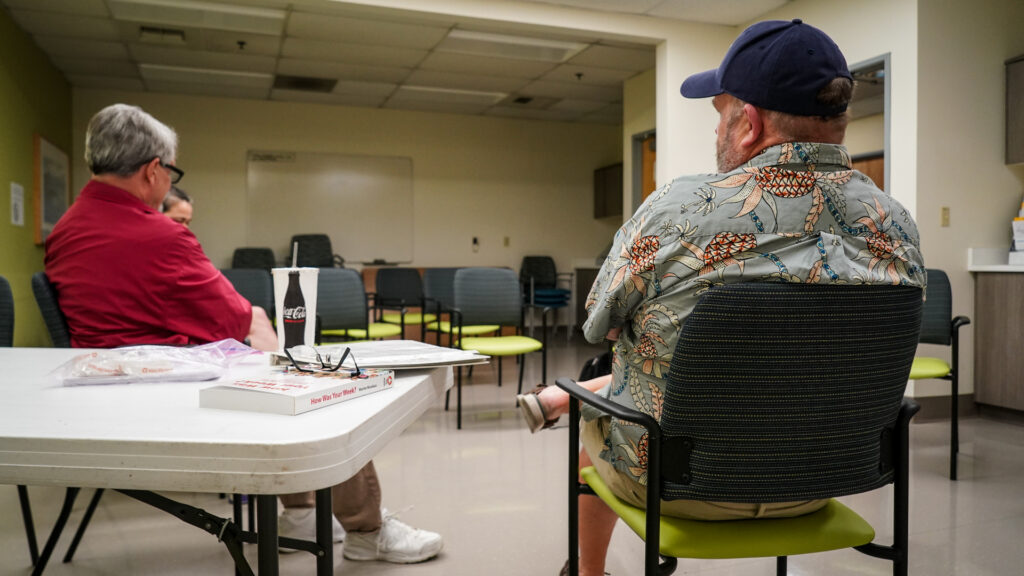
Scott-Telford and others in the local SMART community started the first in-person meetings in Curtis Park in June 2023. The meetings moved to Kaiser Permanente’s Addiction Medicine & Recovery Services facility in Arden Arcade that fall.
That Kaiser building is where many go to seek clinical intervention, peer-based community support or both for chemical dependency issues or maladaptive behaviors. But it can also be where you can take a first and valuable step in recovery: joining a peer support group and finding like-minded friends on a similar path. A 2024 Harvard Medical School study backs this claim, using the term “camaraderie” and saying it was “by far the most important aspect” of attending any peer-support group.
These groups offer a variety of benefits, including giving participants a sense of hope, control and empowerment. They can also provide a valuable sounding board when facing new choices.
Scott-Telford and Grandison ultimately chose SMART over AA because they were uncomfortable with AA’s faith-based element.
“I really liked the science-based aspect, because I don’t want to just give it to God,” Scott-Telford said, referencing the third of AA’s 12 steps: “Make a decision to turn our will and lives over to the care of God as we understood him.”
“I grew up a Jehovah’s Witness. I don’t want to hear about God. Religion was used against us,” Grandison said. “For me, God doesn’t give me a good, like, ‘Oh, you’re gonna save me or help me.’”
Grandison is a lesbian, and LGBTQ+ people make up almost 12% of the recovery community, according to the Recovery Research Institute. She said she did not necessarily feel that she chose SMART over AA for any one reason related to her queerness. She also said she found SMART appealing because it did not have groups just for queer people.
“AA has meetings for everybody, but they also have separate meetings for lesbian, gay, queer. But I felt SMART because it was for everybody,” she said. “I wouldn’t have to partake in a different medium that excludes other sexualities.”
Like AA, SMART is a volunteer-run nonprofit that can provide verification. SMART differs from AA in many respects beyond its secularism, including its language.
“We don’t use the word alcoholic, we don’t use the word addict, and we don’t count days,” Scott-Telford said. “Labels are unnecessarily stigmatizing.”
Instead, the term “alcohol use disorder” is used, a term that is becoming increasingly used instead of “alcoholic.”
‘What I’m there to do’
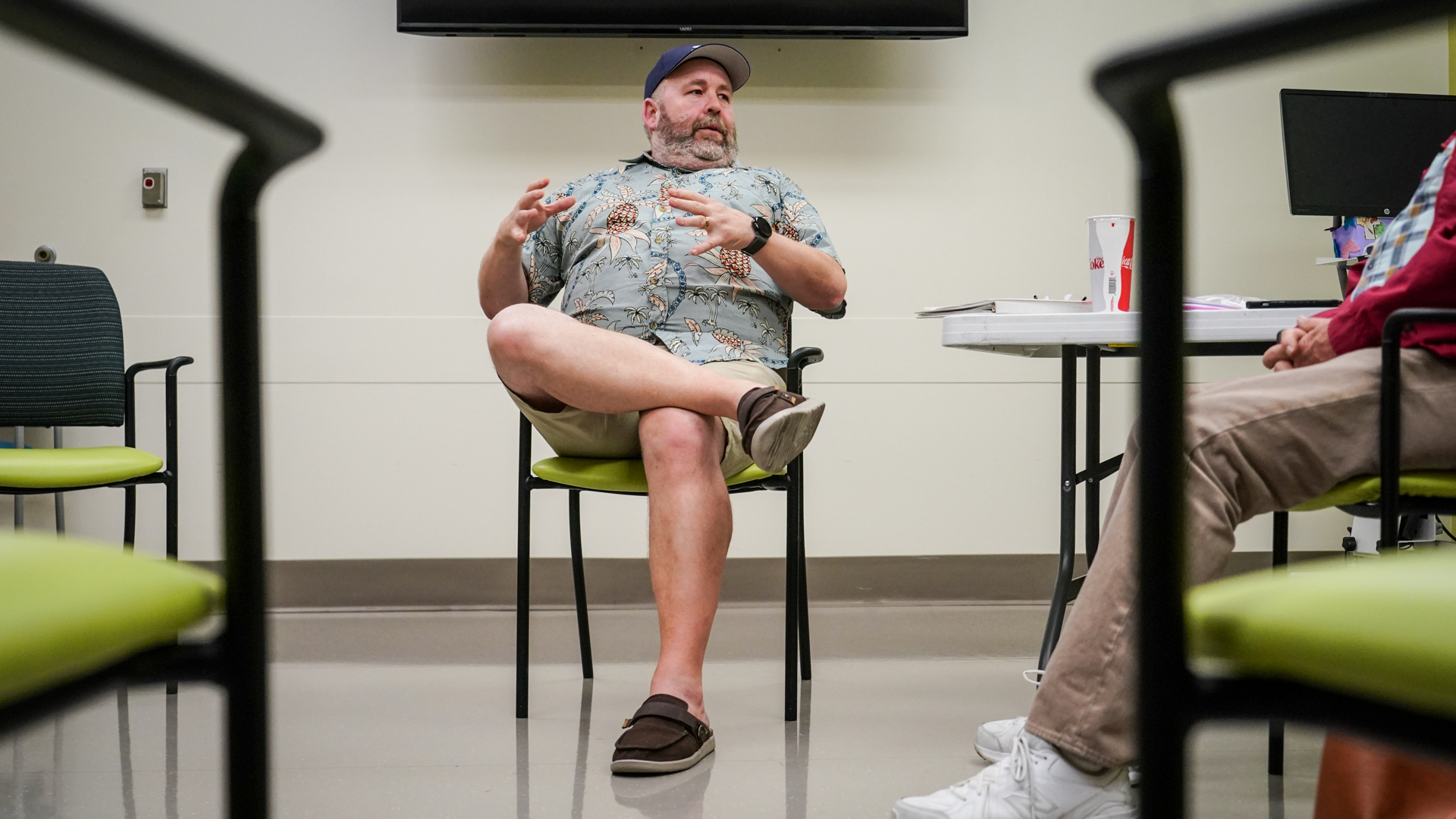
Scott-Telford is a trauma-informed recovery coach. She both leads and attends SMART meetings. Scott-Telford went through the program’s facilitator training and hosts an in-person meeting on the first and third Saturdays of every month at the Kaiser facility. She also hosts an online meeting on Sunday mornings.
Grandison tries to attend eight meetings a month, both in person and online, and often finds the experience emotionally cathartic.
“Sometimes I just go there to talk and cry, but that’s what I’m there to do,” she said.
SMART’s meeting format is based on what they call “4-Point Recovery,” a series of self-empowering bullet points. They can be designed for a broad group welcoming to all adults, or a more specific one, such as military veterans and first responders. Themes have included complex post-traumatic stress disorder, family systems and neuroscience. Scott-Telford recently hosted a meeting about perfectionism.
Meetings usually start with introductions for new people and check-ins for returning members. That is followed by a presentation curated by the facilitator, which includes slides. They close with a “checkout.”
To the outside eye, SMART meetings might look like more of an academic endeavor than a group. The word “training” is, after all, in their name.
“It’s all really well-researched stuff. So mine’s a little different. People start calling it a class,” Scott-Telford said.
SMART meetings allow what is called “crosstalk,” which means when one person is speaking, others are allowed to chime in respectfully. Crosstalk can be discouraged at AA.
“We try not to give advice, but others’ perspectives are really valuable,” Scott-Telford said.
“This isn’t some shameful thing,” she added. “Everybody screws up. It’s OK.”
Unlike AA, which splits maladaptive behaviors into individual groups (alcohol, narcotics, gambling), SMART Recovery meetings are open to people seeking help with various maladaptive behaviors, such as internet addiction or sex addiction.
SMART does not have formal sponsors, a key component of AA, but in spending time with Scott-Telford and Grandison, one could see they have developed a strong mentor-mentee relationship.
“She’s helped me get through things,” Grandison said.
Throwing a ‘LifeRing’
Marc Olson is a self-professed “recovery bigamist.” Olson, 49, a legal style editor, participates in SMART Recovery and LifeRing Secular Recovery, another AA alternative that also hosts in-person meetings through Kaiser Sacramento.
“LifeRing is vibes, and SMART is like a class,” he said, distinguishing the two.
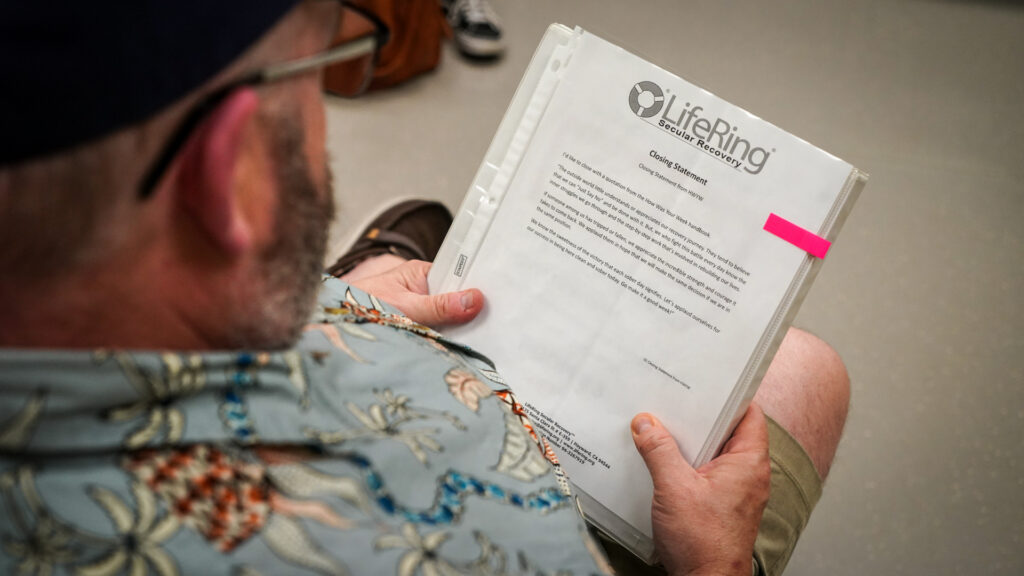
Like SMART, LifeRing is a non-faith-based peer-support group that offers a broad slate of online meetings and a modest roster of in-person gatherings, run by volunteers, which anyone can attend at any time. Like SMART and AA, LifeRing offers verification.
Sue Betts sits on the LifeRing board of directors. The Kentucky native and San Francisco transplant, who has been sober since 2019, echoed a similar vibe to Olson’s when speaking of the differences between the two groups.
“I like to say it like this: LifeRing is like SMART Recovery without the homework,” she said. “We want to go back to the dorm room. It’s like the classroom versus the dorm.”
LifeRing, a Hayward-based nonprofit, allows crosstalk and does not have sponsors. They do, however, have “e-pals” and “e-groups” if one wants more one-on-one support outside of meetings.
Meetings follow a format similar to SMART but often have creative titles. They are all rooted in LifeRing’s “3-S Philosophy” — sobriety, secularity and self-empowerment.
Every Thursday morning, Olson hosts LifeRing’s “The Thursdays Are The Hardest Days” online. He began a recent one by underscoring it with ’70’s British rock group Deep Purple’s “Smoke on the Water.”
LifeRing hosts, or “convenors,” are not required to attend training but must have six months of continuous sobriety. Olson is just over two years sober and has attended residential rehab. His drug of choice was alcohol.
He also attends the group’s Wednesday night meeting in person and fills in as host when needed. Sometimes, the group gets together for tacos beforehand at the nearby Los Inmortales Taqueria. Olson has also found friends within his LifeRing and SMART community to do in-person things like bowling or hiking.
“It’s funny, my wife is now saying, ‘You have your little sober friends,’ and she’s very excited about that,” he said.
Though Olson says he “vibed right” with LifeRing, it took him two months to finally speak up at a meeting. “Speaking up” at meetings is an essential part of the process and “reinforces the likelihood of ongoing recovery,” according to the Harvard Medical School study.
Ultimately, doing both SMART and LifeRing online and in person in Sacramento has been good for Olsen.
“I’ve stolen material from the SMART website to present in my LifeRing ring meeting,” he said. “Because if it works, it works.”
Taking ‘multiple paths’
“Whatever works” is a phrase you might hear a lot in the recovery community, and for many, crossing over between multiple peer-support groups does just that.
“Choosing multiple paths is the beauty of the recovery ecosystem,” said Betts, the LifeRing board member. “Maybe you want some more structure; you go to AA. You want camaraderie, you go to LifeRing. If you want a little brainy, psychological perspective, you go to SMART. You want to maybe do some meditation; you go to Recovery Dharma,” Betts said. (Recovery Dharma — a Buddhist-based peer-support program — also offers groups in Sacramento.)
“I have people who do all of those because each one speaks to a different part of who they want to become, or how they want, or how it supports their recovery,” she added.
The most practical reason for multiple paths in Sacramento might simply be availability. If you went to all SMART and LifeRing in-person meetings in Sacramento, you would attend just six a month. North Hall AA, an LGBTQ+ friendly community that gathers in Oak Park, offers several in-person meetings every week.
“You’re the only person who can figure out your recovery plan,” Olson said.