The Abridged version:
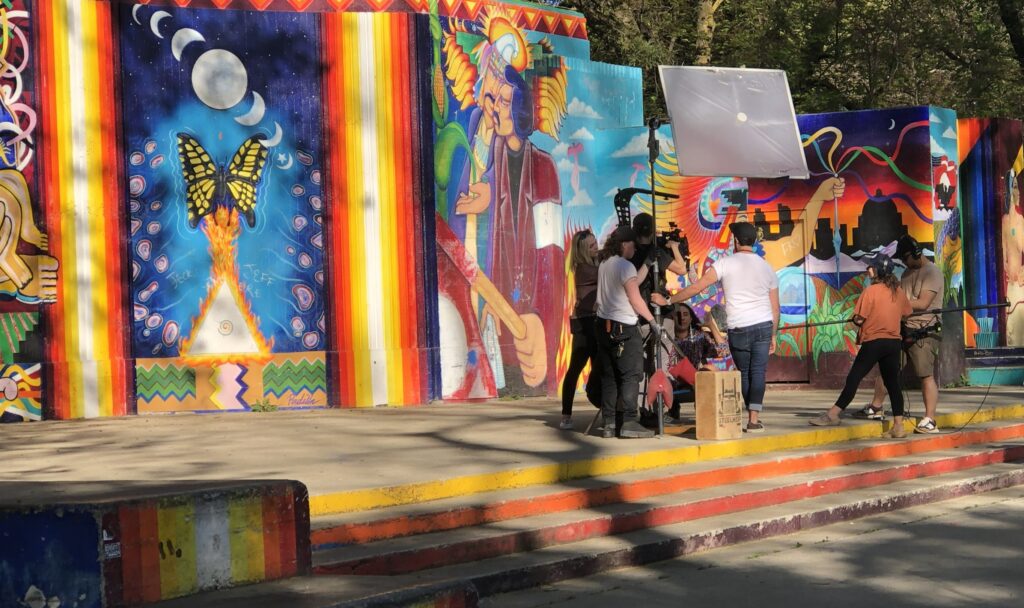
- Sacramento has versatile locations and nearby scenery, some of which featured in Hollywood films over the past decade. Local filmmakers see the potential for more.
- The city has skilled professionals and rising young filmmakers but lacks the steady work, financing and depth of trained labor to support a durable industry.
- The success of “Lady Bird” led to Sacramento’s first full-time film commissioner role, a grant program and a new rebate.
When “One Battle After Another” closed streets in Sacramento’s affluent Fab 40s neighborhood, location manager Tyler Semons expected some resistance — the kind of irritation, or a bill for the inconvenience, that a similar shoot might draw in Los Angeles or San Francisco. Instead, people brought out wine.
“It turned into a whole block party,” Semons said. “When we’re working on projects of similar scope in larger markets, it’s the opposite.”
Sacramento is relatively close to Los Angeles, easy to navigate and surrounded by an unusually broad range of landscapes and architecture — downtown streets, a river, turn-of-the-century neighborhoods, foothills and farmland — without losing hours to big city traffic. The airport sits 15 minutes from downtown.
The film community here has skilled professionals and rising young filmmakers, but it does not yet have the steady work, financing or depth of trained labor to make it a durable industry.
Sign Up for the Morning Newsletter
The Abridged morning newsletter lands in your inbox every weekday morning with the latest news from the Sacramento region.
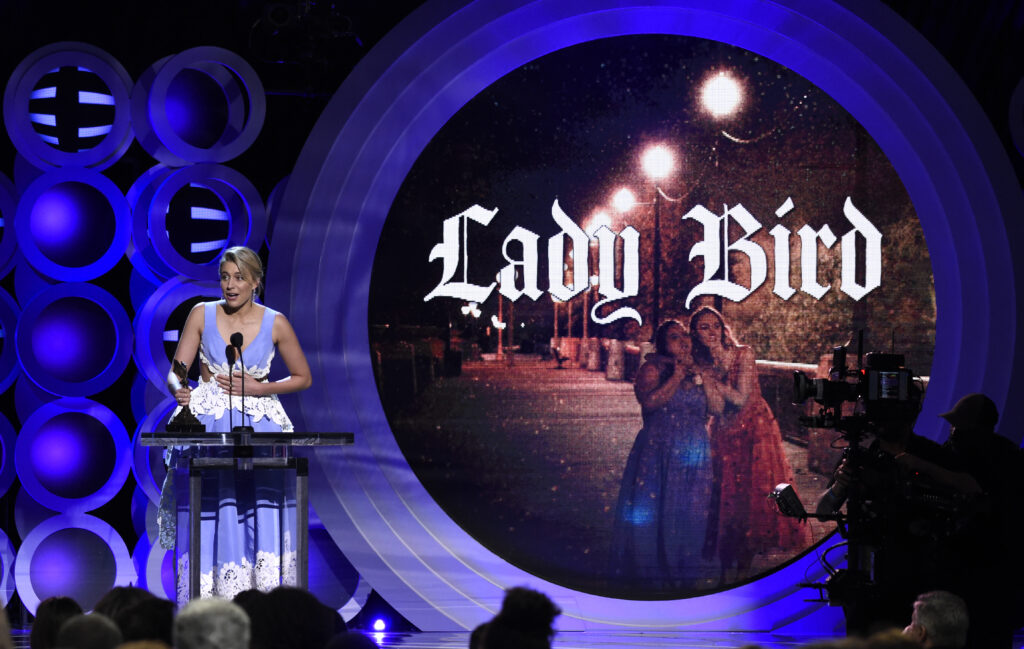
Many people associate Sacramento filmmaking with “Lady Bird,” Greta Gerwig’s 2017 film, on which Semons worked as a location assistant. What most people don’t know, said Sacramento Film Commissioner Jennifer West, is how brief that shoot was.
“It only filmed here for about seven days,” she said. “Those seven days captured some of our most iconic locations, but they’re only a snapshot of what the region offers.”
In West’s telling, “Lady Bird” became a catalyst. Its success pushed the city to create Sacramento’s first full-time film commissioner position in 2019, plus a grant program and, eventually, a rebate that hadn’t existed before.
“Our film rebate program helps productions stretch their budgets while encouraging them to film more days in Sacramento,” she said.
A growing base of talent
Producer and director Mark S. Allen said the difference is visible at local festivals.
“There was a time where maybe one out of 10 Sacramento-based films looked cinematic and distributable, and the rest looked like student films,” he said. “Now, I’m just blown away by the talent that’s out there.”
Allen, who made “Notorious Nick,” the Jerry O’Connell comedy “Ballbuster” and several horror films, sees Sacramento as a place where films get made more efficiently: period neighborhoods, urban streets, hills, palm trees and redwoods all within a tight radius.
“Your money will go further,” he said.
David Bunge, owner of Bunge Grip Services, has watched outside crews come around since opening his equipment business in 1987.
“We had to put up with people who came to town thinking Sacramento was a cow town,” Bunge said. “By the end, producers would say, ‘You guys work hard, and you know what you’re doing.'”
He has seen the Sacramento and American rivers double for the Nile, thickets along Garden Highway stand in for Vietnam, and Folsom Prison play a range of institutional settings — though most of his career runs on commercial, corporate and political work between narrative jobs.
“If you are lucky enough to get three days a week, you are doing well,” he said. “There is no full-time job. It is freelance.”
Cinematographer and director Aaron Leong, who trained at the Global Cinematography Institute in Los Angeles under cinematographers including Dean Cundey and Vilmos Zsigmond, returned to Sacramento and calls it “a prime location for film. But it just isn’t fully set up for it.”
Larger productions often still bring cameras and lighting from outside the region. Bunge sees another gap at the entry level: aspiring filmmakers often call, wanting to rent a few lights or pieces of grip equipment, only to discover they cannot afford the insurance to protect equipment worth thousands of dollars.
“It breaks my heart that I can’t help some of the student films,” he said. “They’ve studied Hitchcock, but they may not have dealt with real budgets.”
Staying in midseason form
Sacramento has skilled crews, Bunge said, but not enough to staff several large productions at once.
“If two big commercials are going on, there’s nobody left,” he added.
Without steady work, young crew members leave for construction or another dependable trade.
Actors face the same problem. Casting director, producer and acting coach Sally Forcier said Sacramento has real talent, but performers in Los Angeles and Atlanta audition several times a day, keeping their instincts sharp.
“It’s one of those ‘use it or lose it’ things,” she said. “Practice makes perfect in this world.”
Her advice: Do not wait for a major production — coach, rehearse cold readings, make self-tapes every week.
“If you haven’t worked on a project for six months, you’ll get rusty,” she said. “Create your own content. That keeps you fresh, keeps you in it.”
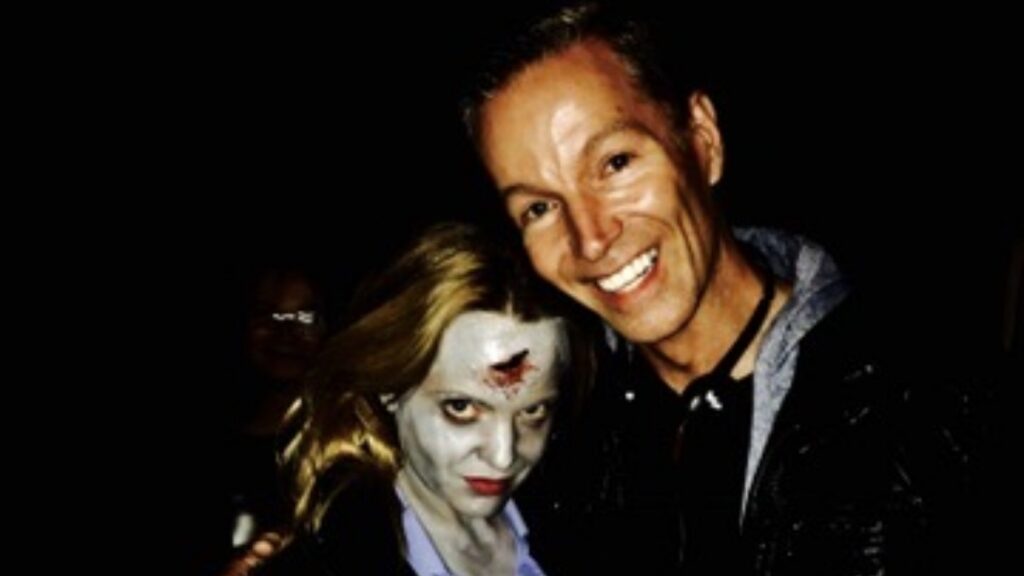
Writer, director, composer and performer Belton Mouras recently completed “Fingers: The Vegan Zombie Musical,” which he believes is Sacramento’s first locally produced feature-length movie musical — 13 original songs and a dramatic score, all composed by Mouras, who also wrote, directed, executive produced and starred in it.
Most of the cast and crew came from Sacramento and Northern California, supplemented by a few outside collaborators, including Broadway performer Grace Field.
“My goal was to build the film on Sacramento’s remarkable depth of talent while complementing it with a few seasoned specialists whose feature-film experience helped strengthen the production,” he wrote.
What began as a short film grew into a two-year feature effort. “Independent filmmaking is rarely a sprint,” he said. “It’s a long-term commitment fueled by persistence, passion and a belief in the story you’re trying to tell.”
Building a supportive community
Several organizations are building infrastructure to nurture independent filmmaking.
Access Sacramento’s “A Place Called Sacramento” competition pairs local scripts with volunteer crews and contributes an estimated $80,000 in volunteer labor a year before premiering at the Crest Theatre. Add to that the Sacramento Film Project’s 916 Film Challenge; and the Capital Film Arts Alliance, founded in 2004, which Forcier calls the region’s most valuable networking resource.
West also points to the California Film Foundation: “We’ve always had talented individuals, but we’ve also had organizations that have spent years bringing filmmakers together.”
Sacramento State and Sacramento City College train filmmakers who increasingly stay local.
The nonprofit Modest Film Society provides another layer, hosting screenings and workshops and reinvesting ticket sales through its Modest Film Fund directly into local filmmakers’ next projects — the kind of ecosystem that has helped a company like Woof Cat Films, cofounded by Robert Livings and Randy Nundlall Jr., make three features together, including “Infrared.”
Mouras advises newcomers to help before asking for help.
“Volunteer on productions. Attend screenings, film festivals and networking events. Meet local filmmakers. Ask questions,” he wrote. “Talent opens doors, but relationships sustain careers.”
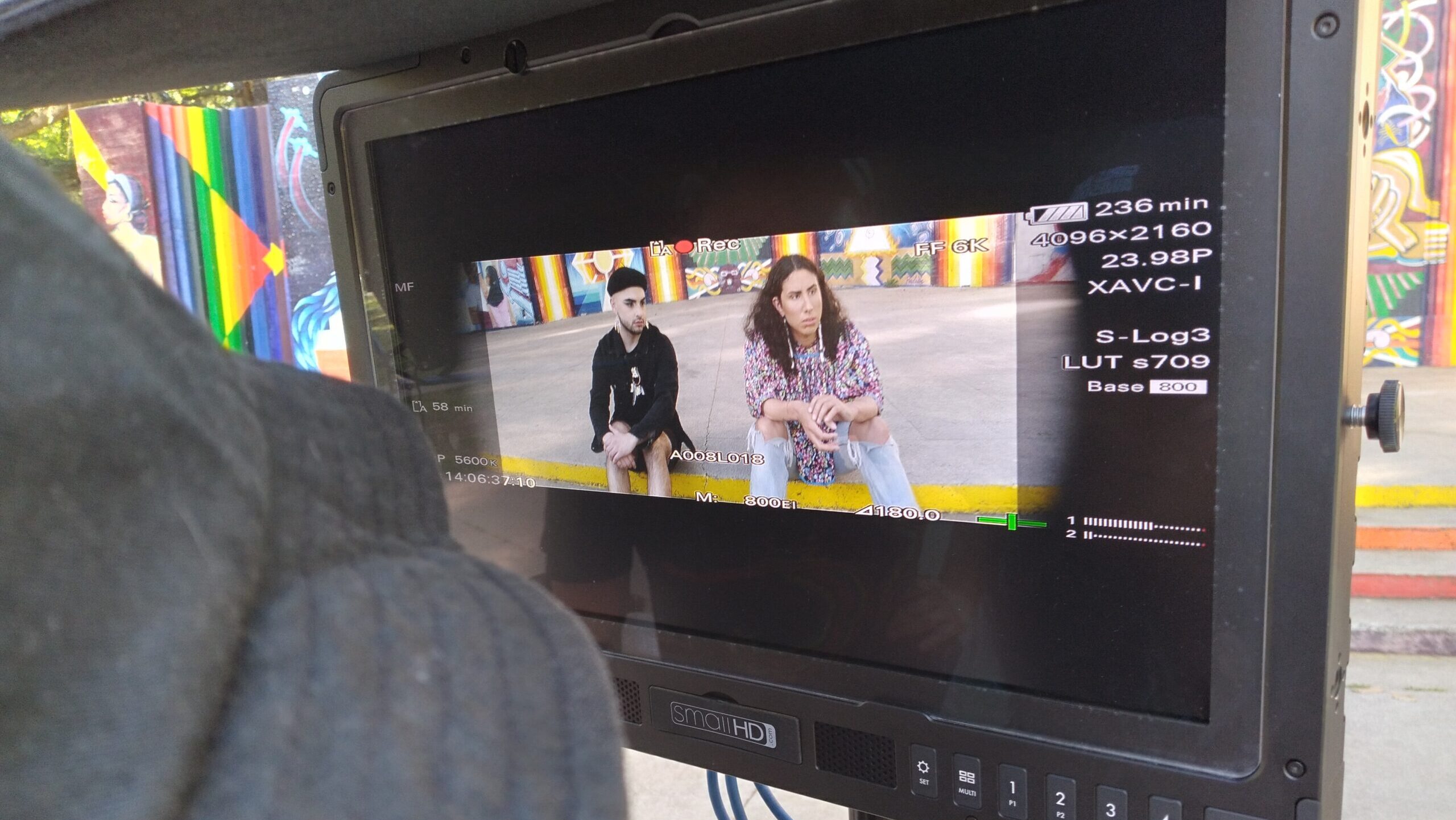
Those networks helped writer-director Roberto Fatal see a different Sacramento when they returned after years in the Bay Area. Fatal grew up in South Sacramento and gravitated to science fiction partly because they rarely saw queer, Chicano or Indigenous people in imagined futures.
Fatal studied at Sacramento State and later earned an MFA in San Francisco, where tech-driven gentrification was displacing many of the communities that had drawn them there. When Fatal came home, Sacramento no longer felt like the place they had left.
“It was wild to move back home and feel that these ideas were wanted, supported and funded here,” Fatal said.
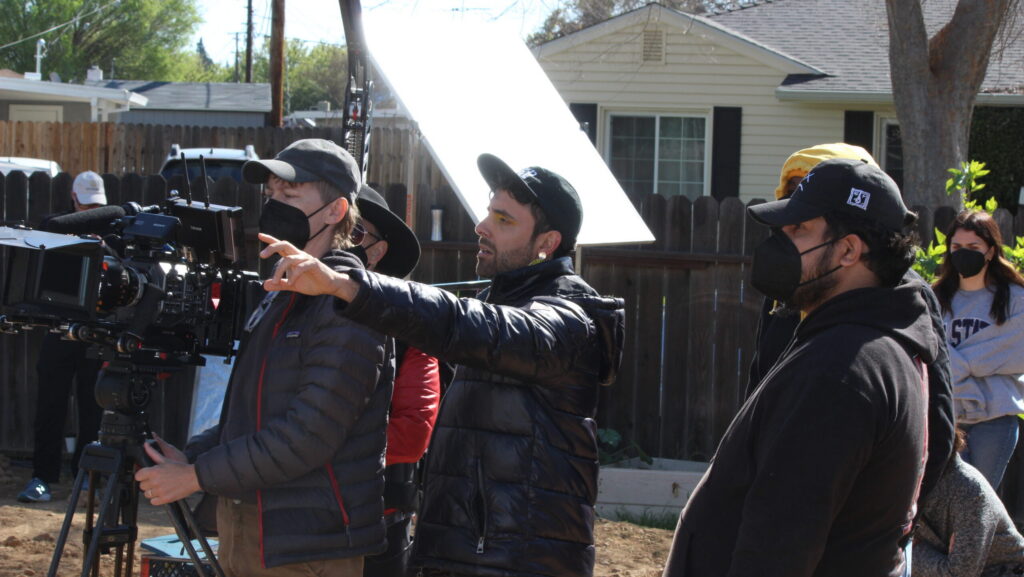
A local grant helped Fatal produce a queer, Chicano and transgender sci-fi short; a second supported “En Memoria,” which premiered at the 2025 Sundance Film Festival. Fatal’s feature, “Electric Homies,” was selected for the Sundance Institute Screenwriters Lab, and Fatal hopes to shoot the roughly $3.5 million project in Sacramento in 2027.
“We have zero financing right now,” Fatal said. “The next several months will be spent aggressively setting that up.”
Financing remains the most frequently cited obstacle, Mouras said, even as technology has made professional-quality production more accessible. Streaming has opened distribution to independent filmmakers, Fatal said, but it has also flooded audiences with content.
“Creating a great film is only part of the challenge,” Mouras said. “Finding creative ways to connect that film with audiences has become equally important.”
Finishing the movie is no longer the finish line. Filmmakers also have to figure out how to get audiences to notice it.
A film office that clears the way
Filmmakers consistently credited West’s office with making Sacramento’s permitting and logistical process unusually fast and responsive — coordination that becomes an expensive source of delay in many cities. Bunge said seamless permitting and parking approvals are among the things producers remember when deciding whether to return.
Fatal experienced West’s support not only as a filmmaker but as a teacher. When Fatal invited her to speak to his Sacramento City College students, she responded immediately and offered to appear without charge.
“She’s hedging bets on these young future filmmakers who were born and raised here,” Fatal said.
West has also advocated for state film incentives and enlisted filmmakers to speak with legislators about California’s production tax-credit program.
“This is somebody who truly does love cinema and artistic expression and the city she lives in,” Fatal said. “You can feel that this is not just a job for her.”
The secret sauce for growth?
Leong argues a certified soundstage could help capture productions with few options elsewhere in Northern California. Mouras would also direct new investment toward post-production and workforce development. Bunge is skeptical: He has owned two stages and remembers them as “black holes” surviving on conventions and parties rather than film work.
A more modest approach might start with scalable facilities, equipment or insurance pools for emerging filmmakers, and workforce programs coordinating colleges and unions — building on a permitting system that already works, and incentives, like the city’s rebate program, substantial enough to compete with states using tax credits to pull work away from California.
Rather than emulate Los Angeles, Atlanta or Toronto, Fatal believes Sacramento should specialize in films budgeted at roughly $3 million to $15 million — large enough to employ professional crews and fill hotels, small enough that they do not require studio-tentpole infrastructure or overwhelm neighborhoods for months.
“If Sacramento focused on films in roughly that range and attracted a steady volume of them, those productions could spend their entire budgets locally rather than shooting only a few scenes here,” Fatal said.
That could mean a reputation as a reliable home for independent features, genre films, character-driven dramas and documentaries priced out of Hollywood scale.
Mouras agreed.
“Rather than trying to imitate Hollywood, they’re increasingly telling original stories in their own voices,” he said.
Leong said the region has producers and projects but not enough investors willing to bet on the people making them — a gap West confirmed: “I’m not aware of any local investors” currently active in Sacramento film.
West is bullish on industry growth here.
“I’ve never believed the goal was to become ‘Hollywood North.’ But look at the data.”
According to the Film & Media Office, permits and film days peaked in 2024, lifted by “One Battle After Another,” driving $6.3 million in local spending. Both dipped in 2025 amid a Los Angeles industry contraction and the region’s pandemic and wildfire recovery — but 2026 is already turning that around, with spending through mid-July already topping all of last year’s total.
“Every production that comes here creates jobs, supports local businesses and strengthens the ecosystem for the next production,” she said. “That’s how you create an industry with staying power.”
A more alluring city
A film community’s value extends beyond direct spending. Cities compete for people — young workers, artists, entrepreneurs deciding where to build a life — and a visible film culture adds to a sense that a place is creative and open to new ideas.
Asked what success looks like five or 10 years out, West described careers, not headlines: filmmakers and crews able to earn a living here without leaving to find opportunity and an industry mature enough to support several large productions at once.
“Communities don’t become recognized film centers overnight,” Mouras wrote. “They grow one successful production at a time, one filmmaker at a time and one collaborative relationship at a time.”
The consensus is that a sustainable industry cannot be built by a blockbuster arriving every few years. What is required is enough recurring productions to keep actors practicing, crews employed and young filmmakers from concluding that serious work can only happen somewhere else.
Such a change would be the difference between Mouras moving straight into his next feature instead of rebuilding a production from scratch each time, Fatal coming home from Sundance to actually make the film rather than chase the next grant and Bunge finally seeing the kind of steady crew base take root that keeps young workers from leaving the trade.
Fatal has no intention of leaving. At the Sundance Directors Lab, other filmmakers introduced themselves as being from London, New York, Los Angeles. When Fatal’s turn came, they said, “I’m from Sacramento, California.”
“It’s what it’s becoming,” Fatal said. “And that’s exciting to me.”