

The Abridged version:
- Caltrans was planning a 27-hour lane closure on Highway 50 in January before issuing a last-minute roadwork pause, citing weather concerns.
- The day the bulk of the roadwork was planned, Sacramento was bathed in sunny skies, marking the warmest day the region saw that month.
- Public records acquired by Abridged show that a supply issue for an oil product needed for paving caused the delay.
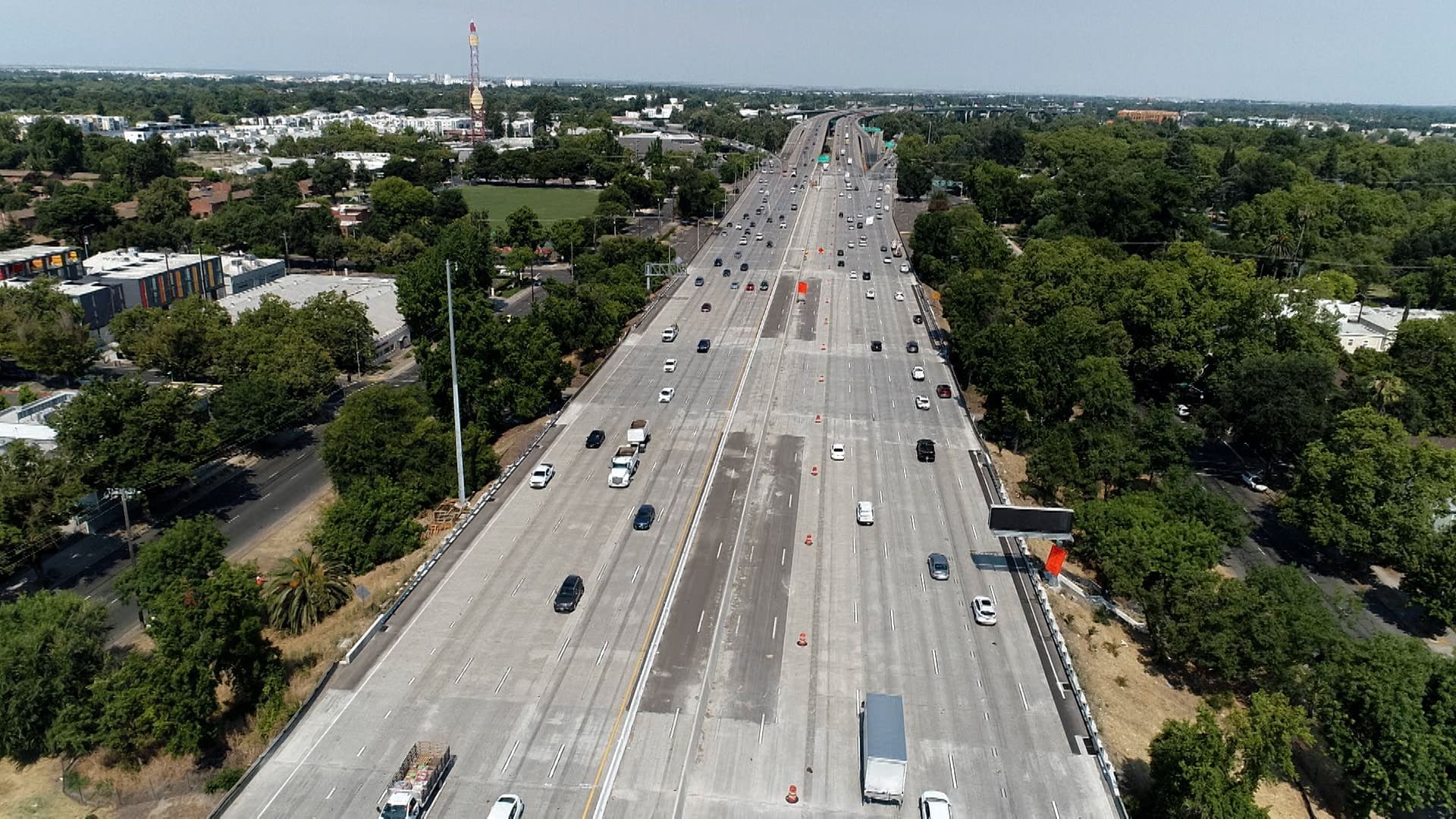
In late January, Caltrans was preparing for another weekend of lane closures on Highway 50 in Sacramento for its large-scale Fix 50 project.
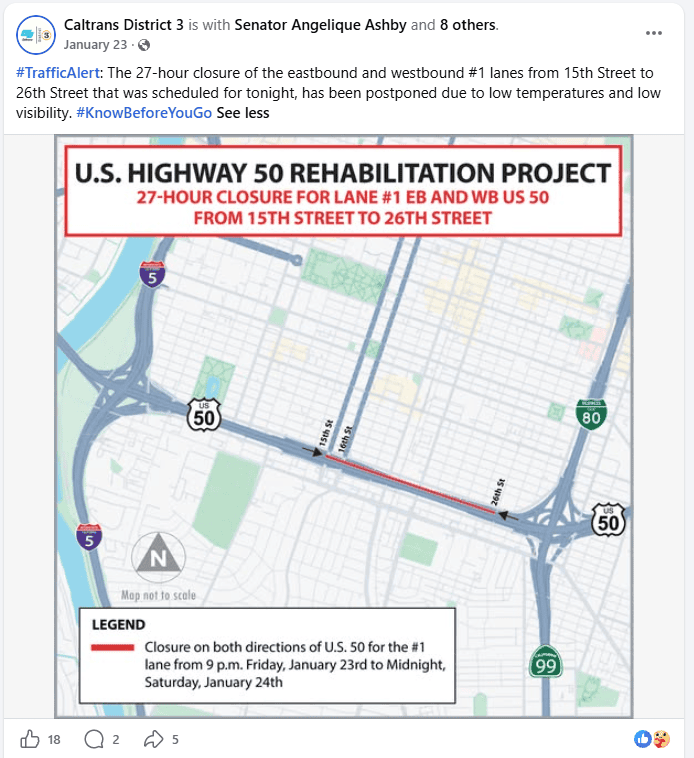
More than a week in advance, the agency notified drivers that lanes on both sides of the highway near 15th Street and 26th Street in Sacramento would be closed while a layer of asphalt was removed and replaced. The 27-hour lane closures were set to take place from 9 p.m. Friday, Jan. 23, through Saturday.
The disruptive and traffic-inducing lane closures have been a common sight for drivers in Sacramento. Caltrans has worked the massive highway construction project since March 2021, rehabilitating the aging highway and adding new lanes. The project has gone two years over its initial timeline and seen its cost soar from $394 million to $511 million.
Five hours before the lane closures were set to begin, however, Caltrans issued an alert that it was postponing the work due to weather concerns. Public records show another cause for the postponement.
Sign Up for the Morning Newsletter
The Abridged morning newsletter lands in your inbox every weekday morning with the latest news from the Sacramento region.
Caltrans messages, which Abridged by PBS KVIE requested in January and received in July, show that a supply issue contributed to the delay. A contractor told Caltrans that workers would not have an oil product needed to pave that section of highway as planned, according to an email at the time.
Midway through the planned closure window, Sacramento was bathed in a clear sunny day and temperatures of 65 degrees — the warmest the city saw that month.
Emails show oil supply issue caused delay
Abridged filed a request Jan. 26, after the last-minute postponement, under the California Public Records Act seeking communications regarding the delay.
Caltrans sent notices delaying its release of those records six times in the subsequent months. A lawyer contracted with Abridged sent a letter to Caltrans on July 2 claiming the agency had failed to comply with its legal obligation to disclose public records in a timely manner.
On July 8, Caltrans released the records: two emails.
The emails show that in January contractors discovered that they lacked an oil product needed for the planned paving just hours before the road closure was set to begin.
At 2:18 p.m. Jan. 23, a construction manager with design-build contractor FlatironDragados alerted Caltrans of the supply issue.
“We have to cancel tomorrow’s paving operation due to the unavailability of the 64-28M Oil from Valero,” the manager wrote.
The manager added that the cancellation was needed “due to the high degree of uncertainty associated with the oil blending and achieving acceptable test results,” according to the email.
At 3:58 p.m., Caltrans alerted the public the road closure was delayed, posting on Facebook that it was postponing the closure “due to low temperatures and low visibility.”
Less than an hour later, another email arrived from a subcontractor to Caltrans staff working on the Fix 50 project. That message also stated that the delay was due to a subcontractor that was “not able to secure the proper oil for paving work.”
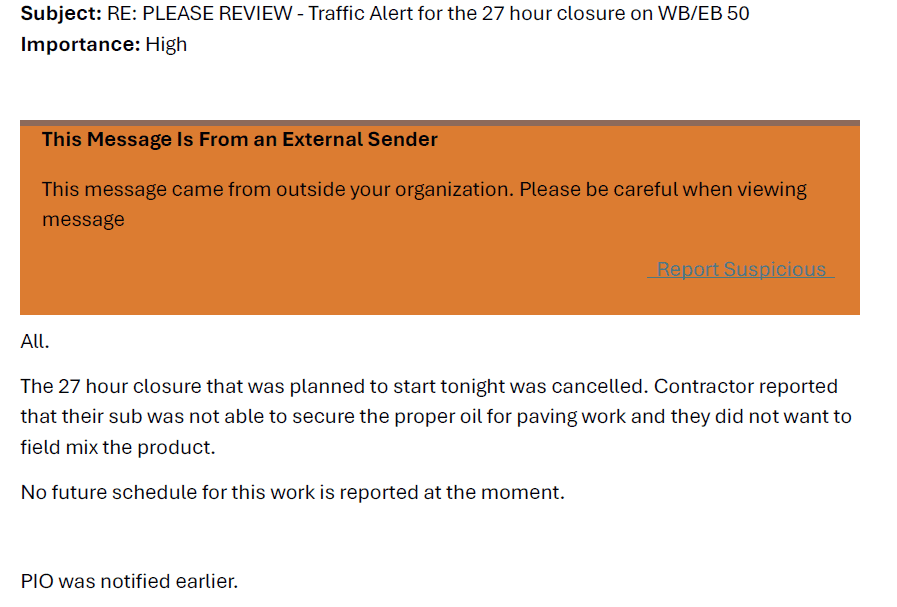
The second email provided to Abridged notes that public information officers, who handle public-facing messages for the department, were notified of the change. The public records Abridged received through this request do not include details of that communication.
Cold weather before planned roadwork
The Sacramento region was blanketed with a thick fog for much of January.
The National Weather Service office in Sacramento issued a dense fog warning for the Sacramento Valley from Jan. 22 to Jan. 26, urging drivers on social media, “If you encounter fog, slow down and use low-beams!”
Fog and mist settled in the area for most of Jan. 23. By the next morning — when the bulk of the roadwork was planned — the skies were clear, according to historic weather reports from Weather Underground.
When Caltrans released the public records, the agency acknowledged that both weather and supply issues caused the delay.
“Caltrans recognizes the complex nature of this project,” wrote spokesperson John O’Connell.
“The cancellation of the planned lane closures was due to the weather forecast predicting dense fog and excessively cold temperatures unsuitable for paving, along with the unavailability of the 64-28M polymer-modified emulsion (oil) provided by Valero, which is part of the asphalt mix. Caltrans is committed to delivering this project to improve safety and mobility for the traveling public in Sacramento County.”
Caltrans did not respond to questions asking why it did not disclose the supply issue.
Previous investigation found delays from rejected concrete
Caltrans, when responding to questions from the media, has often pointed to weather delays and traffic accidents as the cause of delays on its Highway 50 project.
Last December, an investigation by Abridged found that rejected concrete contributed to delays on the Fix 50 project.
Public records showed that a concrete company working on the project substituted the materials used in the concrete mix used for a section of the highway. The concrete later failed Caltrans strength tests.
While the rejected concrete caused at least six months in delays, that cause was not referenced in Caltrans statements to the public or media.
Felicia Alvarez is a reporter for Abridged by PBS KVIE covering accountability. She’s called Sacramento home since 2015 and has reported on government, healthcare and breaking news topics for both local and national news outlets.