

The Abridged version:
- The Elkhorn Fire Protection District in eastern Yolo County has been dissolved.
- The district, which is one of 16 in the county, struggled to maintain staffing and resources.
- The dissolution was met with opposition from residents in the district.
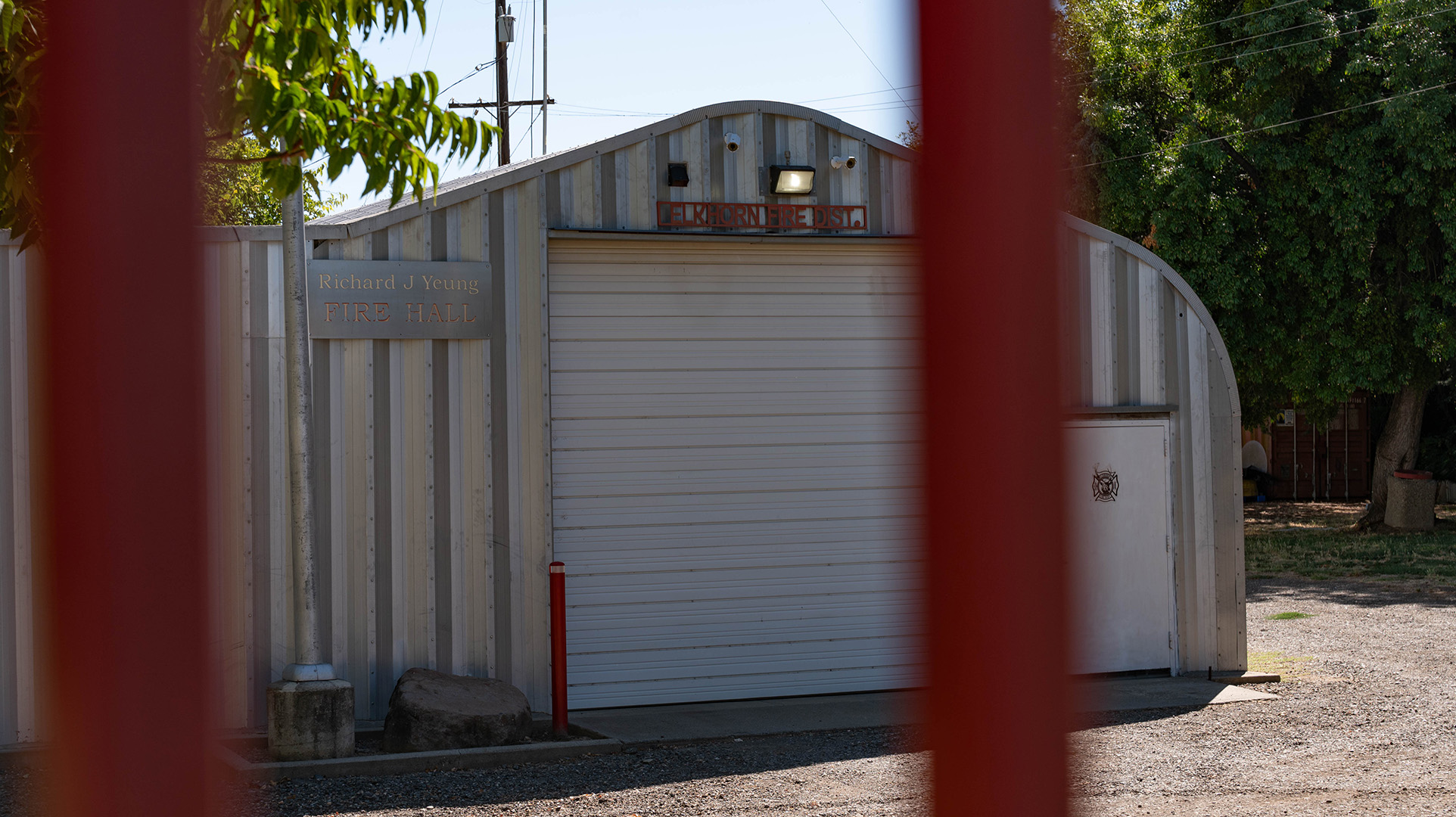
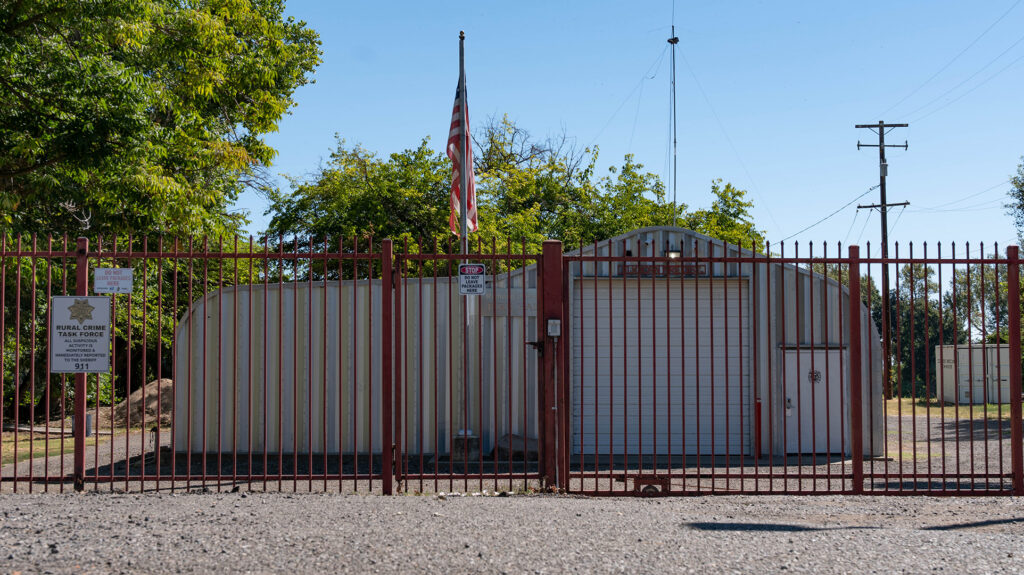
A lot of hands built the volunteer firehouse in Elkhorn.
Made of corrugated metal sheets, the small structure was erected by farmers and residents of the Yolo County community on the bank of the Sacramento River.
“We had to bolt that thing together,” said Richard Yeung, chief of the Elkhorn Fire Protection District for 42 years. “It was a great community event.”
Sign Up for the Yolo County Newsletter
Stay in-the-know on all things Yolo! Weekly email with stories and insights from Yolo County reporter Daniel Hennessy.
In the years since then, the all-volunteer department, one of 16 in Yolo County, became a focal point in the area. There were Thanksgiving potlucks and lectures from the chief.
The volunteer firefighters based at the station responded to emergency calls, covering roughly 30,000 acres.
“I’ve personally done CPR on five of our residents here,” Yeung said.
But time also brought challenges to a district that had limited resources since its first day in 1965. With a small and shrinking population, 250 in 1965 and roughly 85 today, the potential volunteer base is low. At the same time, more vehicle traffic through the district has increased service needs.
“The commute time between 3:30 and 6 (p.m.) can be overwhelming,” Yeung said, referring to travelers on Old River Road between Interstate 80 and Interstate 5.
The department has struggled to keep up, prompting local officials to make the decision to dissolve the fire protection district despite local opposition. On July 1, the station stopped taking emergency calls for the first time in decades.
“The service need outgrew the population,” said Christine Crawford, executive officer of the Yolo Local Agency Formation Commission. “It’s just not a safe situation.”
Increased pressure
Just before midnight on a summer evening two years ago, a 911 call was placed from a remote stretch of Old River Road on the very eastern edge of Yolo County.
The caller told dispatchers about a crashed vehicle that appeared to have multiple injured passengers inside. Emergency services were immediately mobilized, including paramedics, an air ambulance and volunteer firefighters from the Elkhorn firehouse.
About 10 minutes after the call, the ambulance arrived and found two injured young people and an adult without a pulse. Eight minutes later, Yeung showed up in a specialized truck built to go off-road and fight wildfires.
When the victims needed to be moved, the firetruck was unable to complete the task without a second volunteer who was coming from Woodland.
Precious minutes passed and the victims remained in place.
Finally, the on-duty battalion chief for the nearby Woodland Fire Department self-assigned and took command. Thirty-three minutes after the 911 call, Woodland responders showed up and completed the rescue.
The response intensified scrutiny on the Elkhorn district, which had already been identified in a 2022 municipal service review report as unable to meet staffing, response and service standards required of a fire district. That made the district heavily reliant on mutual aid from the Woodland and West Sacramento fire departments, an arrangement for which the two cities were not compensated.
In the meantime, car trips on I-5 through the district ballooned to 59,000 each day, according to a LAFCo report.
“Public safety has been an ongoing concern,” Crawford said.
Dissolution
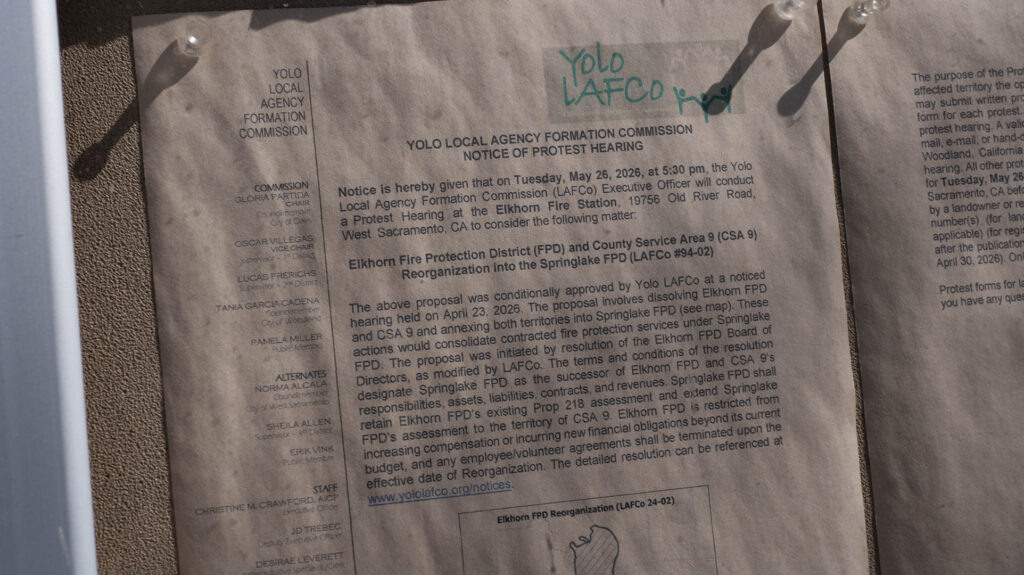
Because of concerns about the Elkhorn district’s capacity to meet the area’s needs, LAFCo initiated dissolution proceedings in 2022.
After the revealing report findings, the fire district board initially agreed to the proposal, which would have meant the district being annexed by the neighboring Springlake Fire Protection District. Annexation requires officials to conduct a protest vote, giving residents the opportunity to deny the action.
When the vote began this year at the end of April, some members of the Elkhorn board had changed their mind, pointing to efforts to turn the district around.
“We know the area, we know the roads, we know where the orchards are,” Yeung said. “We are debt free, money in the bank and moving forward.”
With three new volunteer recruits who were “19 years old and ready to go,” Yeung and some board members felt they could bolster the district’s services.
People in Elkhorn agreed, with a majority of the small population voting to reject the annexation.
But county officials disagreed with the district’s assessment of its capabilities, instead opting to dissolve the district and have Yolo County contract with Woodland and West Sacramento to provide services. That arrangement, which doesn’t legally require a protest vote, went into effect July 1.
“We were shocked,” Yeung said.
Now, calls in the Elkhorn area are covered by Woodland or West Sacramento fire departments, which coordinate with each other to respond.
Since July 1, there have been two or three calls in the area, said Woodland Fire Chief Eric Zane.
“It doesn’t change a whole lot for us,” he said. “It’s not a huge lift.”
Unlike before, the departments are now receiving property tax income that used to go to the Elkhorn district as compensation for covering the area.
A statewide problem
The Elkhorn firehouse was not alone in its struggle to maintain volunteer staffing.
More than half of California’s fire departments are entirely or mostly run by volunteers, according to a report released by researchers at UC Santa Barbara. Many of those are in rural areas, where the status quo has been to maintain volunteer-led departments.
In recent years, volunteerism has dropped, and many departments across the state found themselves struggling to find recruits.
The researchers found that this has contributed to “uncovered shifts, lower response rates, reduced station functionality and pressure on EMS support in some counties.”
Elkhorn has suffered from these kinds of volunteer shortages at multiple points throughout its history.
When Yeung was brought on in 1984, the department was made up of five farmers, each of whom could be reached on their home phone if they weren’t out in the field working.
Yeung was eventually able to increase that number to a dozen at its peak, he said, operating on a budget of about $8,000 per year.
“You don’t have a whole lot to work with,” he added.
At first, each volunteer was given a stipend of about $5 per day, an amount that eventually increased to $40.
“To at least pay for their fuel,” Yeung said.
That makes it hard to recruit and maintain good firefighters. For those who are serious about the job, the goal is to eventually make a living doing it.
“If you start early, it’s a great career,” Yeung said.
By this year, the firehouse crew had dwindled to six, three of whom live in the district, according to the agency that dissolved the district.