

The Abridged version:
- The Willowgrove Project, which would add more than 1,200 units of housing to Davis, will go before voters in November.
- Unlike the Village Farms development, which failed in June, there is little formal opposition to the development.
- Opponents of Village Farms said that Willowgrove has fewer complications and a better affordable housing plan.
In Eileen Samitz’s eyes, the housing project coming before Davis voters in November is entirely different than the one that failed in June.
“They’re like total contrast,” she said. “It was the good project and the terrible project.”
Samitz, along with other members of a group called Citizens for Responsible Planning, was the leading voice behind a campaign against Village Farms, a proposed 1,800-unit housing project on the northern edge of Davis.
For months, Samitz and others fought hard against Village Farms, pointing to concerns about its environmental impact, soil toxicity, cost and what they considered an inadequate affordable housing plan. The message resonated with enough Davis voters to reject the project by fewer than 300 votes.
“There was a plethora of reasons why Village Farms was rejected,” Samitz said.
Sign Up for the Yolo County Newsletter
Stay in-the-know on all things Yolo! Weekly email with stories and insights from Yolo County reporter Daniel Hennessy.
But Samitz and many in her group view the Willowgrove development differently.
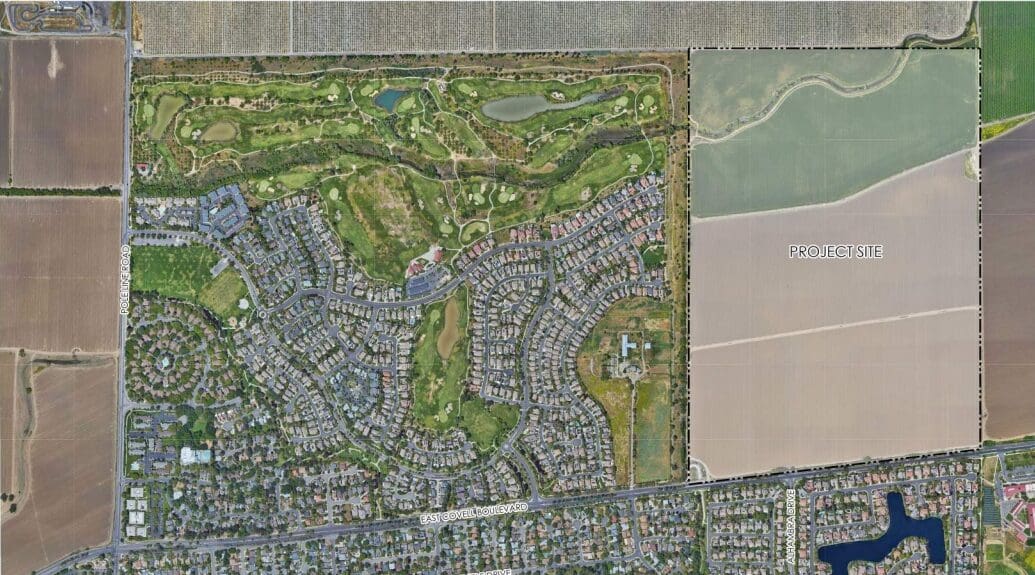
The project, which Davis voters will vote on during the November general election as Measure W, proposes putting more than 1,200 new units on a 234-acre plot of land just down the street from the former Village Farms site.
Unlike the failed development, Willowgrove has so far enjoyed less formal opposition.
“The vast majority of our group are all in strong support of it,” Samitz said. “It’s a project that makes sense.”
Affordable housing plan
The Willowgrove Project, which was first proposed roughly five years ago, was unanimously approved by the Davis City Council in May.
At the time, members of the city council praised the project developers, a group led by James Koppert, for their willingness to engage with people in Davis about site plans, including by hosting dozens of public meetings.
“You do get the best product when everybody comes together and you get community input,” said councilmember Gloria Partida.
Along with houses and condominiums, the development includes a park, a greenbelt, retail and 250 units of housing that is affordable for households with extremely low, very low and low-income levels.
According to the affordable housing plan submitted with the project, the promised units will come without use of city loans or grants. To do that, the developers have partnered with outside affordable housing developers, including AMG Land Development and The Pacific Companies, to build all of the units in one phase of construction. In addition, they will provide just under $7 million to the city’s affordable housing fund.
“This is a great affordable housing plan,” councilmember Bapu Vaitla said at the May meeting.
Samitz said the affordable housing plan is one of the reasons she is supporting the project.
“This is much more generous in terms of the affordable housing plan,” she said.
On top of that, Samitz said the partnership with an established affordable housing developer gives her confidence that the affordable units will be delivered.
“So we know it’s going to get built,” she said.
Different than Village Farms
Willowgrove is slated for a plot of land that sits just about a mile east of the former Village Farms site. Like Village Farms, the land is agricultural, borders the already established Wildhorse neighborhood and is outside of city limits so it is subject to a majority vote of Davis residents.
But Village Farms was plagued by concerns that its plot of land was unsuitable to a development of that size.
Samitz and other detractors pointed to potential toxics leaking out of the bordering old Davis landfill, as well as vernal pools with endangered species and the land’s designation as a floodplain.
Samitz said a project that size on a “handicapped” site would have had “too many impacts, too many costs.”
But Willowgrove has a smaller footprint, and the piece of land it is planned for has fewer of those complications.
“It has all these amenities and features and not all these problems, serious problems, that Village Farms had,” Samitz said.
Going to voters
Because Willowgrove sits outside of city limits, it is subject to a Measure J/R/D vote on Nov. 3. If approved by more than half of Davis residents, it can move forward. If it fails, the plan is rejected.
The Yes on Measure W campaign, which formally kicked off last week, has picked up support from local elected officials, including Davis Mayor Donna Neville and Yolo County Supervisor Lucas Frerichs.
On the county elections website, no formal argument against the measure has been submitted.
Samitz anticipates that there will be some opposition from people who are worried about traffic and growth in Davis.
But she is optimistic about Willowgrove’s chances.
“I think of Willowgrove as being a uniting project,” she said.