
The Abridged version:
- Much of the Tahoe area was placed under a wind advisory this weekend, with a high risk of wildfire across the region.
- Changing climate and weather patterns have made Tahoe more susceptible to the spread of wildfires during extreme wind events like this weekend’s storms.
- A long history of logging in the region has resulted in an overload of dry vegetation fuel in Tahoe’s forests, putting communities and lake health at risk.
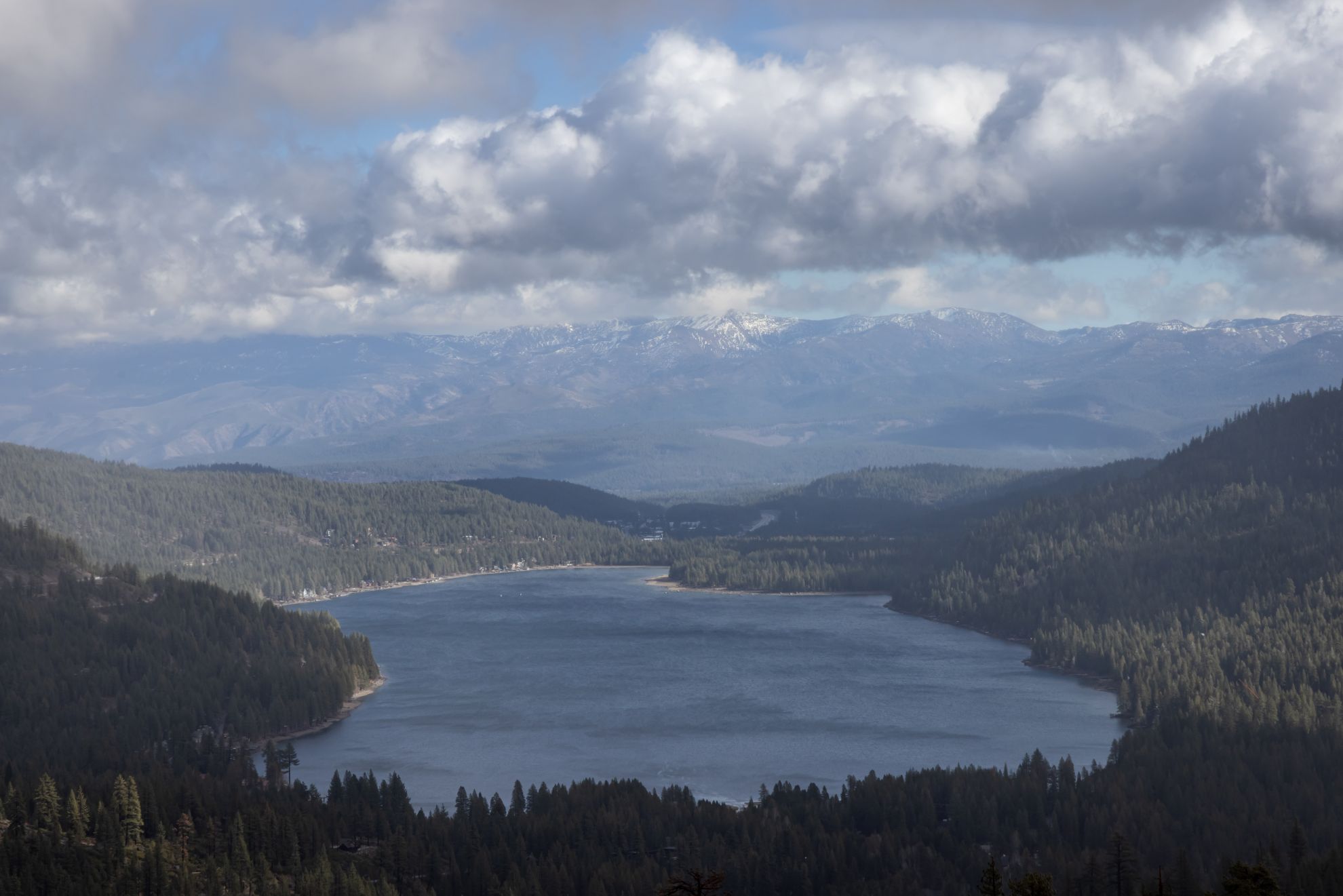
Firefighters tend to keep three components in mind when determining risks of wildfires: fuel, weather and topography. In Placer County’s Tahoe region, all three may mean an increased fire danger.
As Tahoe communities contended with a strong windstorm advisory over the weekend, utility companies planned for outages to avert the risk of wildfires. Between season-driven winds and September dry conditions, wildfires this time of year are not exactly unusual, meteorologists with National Weather Service offices in Sacramento and Reno told Abridged by PBS KVIE.
But paired with shifting climate conditions, fire risks are ramping up in the region long term, thanks to a combination of hotter temperatures and lasting damage to the forest ecosystem.
“It always puts us on high alert around fires,” said Jeff Cowen, Tahoe Regional Planning Agency spokesperson. “It’s a major threat to the health of the lake, and to our communities, and to the people who come and visit here, to have unhealthy forests.”
Sign Up for the Morning Newsletter
The Abridged morning newsletter lands in your inbox every weekday morning with the latest news from the Sacramento region.
‘The snow wasn’t there’
Most North Tahoe communities are located in or near “very high fire hazard severity zones,” as designated by Cal Fire.
When the Sierra Nevada snowpack melts due to springtime warming, California forests receive a much-needed water supply. But rising global temperatures have changed precipitation in the Sierra Nevada and Tahoe: instead of traditional snow, cold weather precipitation has increasingly been rain, reducing snowmelt.
Thomas Smith, battalion chief for Cal Fire’s Nevada-Yuba-Placer district, said that a reduction in snowmelt helped drive the severity of wildfires Californians have experienced in recent years.
“Normally where a snowpack is, that would keep the dead down and fuels moist for longer, further into the spring and early summer,” Smith said. “That didn’t happen because the snow wasn’t there. That just gave fuels additional months of drying.”
Smith added that human-caused fires have been responsible for many of the wildfires that have devastated the region in the past decade, especially in recreation areas.
Excessive clear-cutting across Tahoe’s natural forest system centuries ago, plus a long period of fire suppression efforts without prescribed burning, created a dense and dry landscape with too many unhealthy trees for the environment to sustainably manage.
Increased competition for water among plants, invasive species that harm tree health and years of massive drought conditions have had negative impacts on fire risks in Tahoe.
“There was a seven-year drought that left entire stands of trees dead and brown in the Tahoe basin, and insects that were able to infest those trees were a major threat,” Cowen said. “During the 2007 Angora fire, the loss of those homes and the devastation to the landscape was a real turning point for the Tahoe Basin.”
Many Tahoe communities are still reeling from the 2021 Caldor fires, he added, which burned through hundreds of thousands of acres in the region.
Several parts of Northern California, including the Sacramento Valley and Sierra Front, were subject to red flag warnings by the National Weather Service offices in Sacramento and Reno over the weekend, meaning that weather and land conditions supported extreme fire danger.