The Abridged version:
- The number of Sacramento County residential properties using the California FAIR plan for fire insurance has increased more than fivefold since 2021.
- Most of the increase is occurring in eastern parts of the county, including Folsom and Sloughhouse.
- Climate change and frequent wildfires in unexpected places have deterred insurance companies from insuring homes in Sacramento County.
For decades, few people in Sacramento County needed to think much about the FAIR Plan — California’s fire insurance of last resort.
Sacramento County does not have a history of huge wildfires on the scale seen in nearby Sierra communities, and fire insurance has traditionally not been difficult to obtain.
But that has changed.
The number of Sacramento County residential properties using the California FAIR plan for fire insurance has increased more than fivefold since 2021, rising to about 1,820 policies.
The biggest increases are in the eastern portion of the county, particularly around Folsom and Sloughhouse, though parts of Elk Grove and the unincorporated area of Florin have also seen a jump. Parts of all those places border large grasslands, and some feature rolling hills.
“Fires that were imaginary 25 years ago are happening every year in California,” said Folsom Fire Chief Jason Solak.
A less-than-ideal alternative
Few people would choose the FAIR plan over traditional insurance. It is usually much more expensive. And the plan’s average rates will rise almost 30% this month.
FAIR plan coverage is usually less comprehensive than traditional coverage, with no liability insurance, said Joel Laucher, preparedness advocate for United Policyholders, a nonprofit that provides insurance information to consumers. When a home is damaged or destroyed, getting a payout can be a bureaucratic headache.
“The FAIR Plan is meant to be the backstop of our admitted insurance industry, and so we’re very fortunate to have one,” Laucher said. “A lot of states don’t have them and are hustling to create them.”
The number of FAIR plan policies statewide more than doubled between 2022 and 2026 in the wake of several large wildfires, including the 2025 Eaton and Palisades wildfires that destroyed more than 16,000 structures in Los Angeles County.
Climate change, frightened insurance companies drive the change
Sacramento County does not have the dense rural tree canopy, thick chaparral, myriad steep ravines and frequent windstorms common in the Sierra and Coastal mountain ranges.
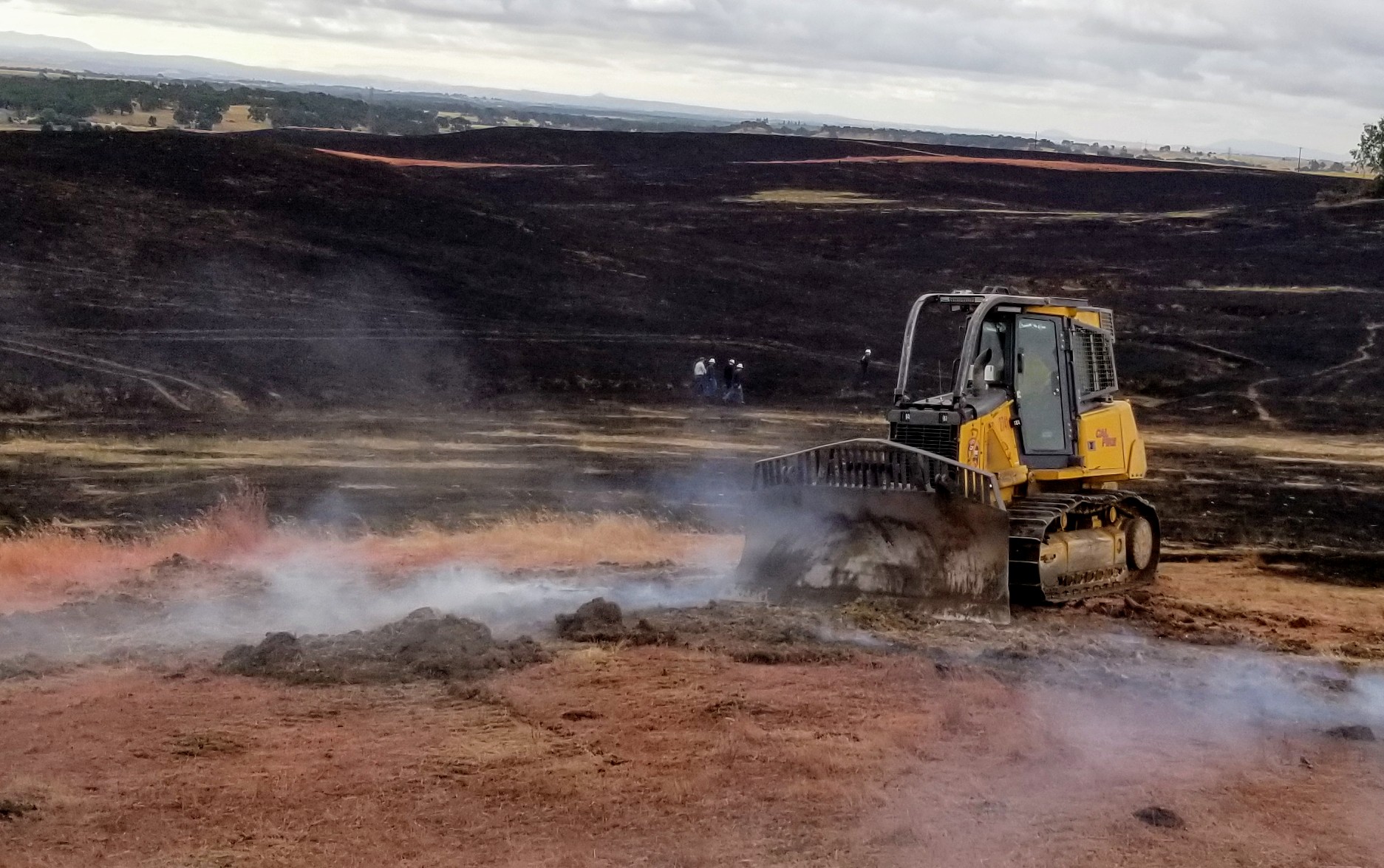
It does, though, have large, hilly grassland areas, often dotted with oaks, particularly in the eastern part of the county. In 2020, the Grant Fire burned around 5,000 acres between Sloughhouse and Folsom. The Meiss Fire burned around 14,000 acres near Herald in 1981.
New fire hazard maps from the state fire marshal classified a large portion of the county as at “moderate” hazard for wildfire and even put big swaths of the eastern part of the county in the “high” hazard zone.
Climate change and frequent wildfires in unexpected places have made insurance companies more wary of insuring homes in the county, Laucher said.
“Now they have aerial and satellite images, and they can detect more issues of tree limbs over the house, or deteriorating roofs,” he said. “If they don’t want to write homes with trampolines or pools or whatever else … it’s a lot easier for them to underwrite and enforce some of their own rules.”
Industry concentration had left a few insurers covering a large number of homes in a small area, meaning that their exposure would be severe if fire ripped through a community. Some insurers declined to renew policies to reduce such exposure.
“Every new home in Folsom might arguably qualify for a State Farm policy, and maybe 10 years ago State Farm would have written almost every home, but now I think they’re just saying ‘no, we’ll write three out of 10,’” Laucher said.
A new reality in Folsom
The trend is perhaps most apparent in Folsom. In 2021, the FAIR Plan covered just eight residential properties in the 95630 ZIP code surrounding Folsom, a city of about 95,000 residents. By June of this year, the FAIR plan covered 300 residential Folsom properties.
Folsom is growing rapidly, with plans to add thousands of homes on grassland south of U.S. 50. Residents have reported trouble finding coverage, with some saying their insurance companies dropped them.
“Folsom prides itself on all of our open space and our trails, and, of course, that has vegetation and that has hazards associated with it,” Solak, the Folsom fire chief, said.
City fire officials will increasingly partner with other local and state agencies to reduce wildfire fuels around parks and the American River canyon, Solak said. Officials also encourage residents in higher-risk parts of town to maintain a defensible space around their homes.
“I bought a home in Empire Ranch back in 2001, and the developer put in a ton of trees,” said Solak, referring to a leafy community in northeastern Folsom. Today, “you’re just not seeing that because of this huge paradigm shift.”
Real estate agent Steve Heard lives in the Willow Creek Estates neighborhood of Folsom, and his own insurance premiums essentially tripled a couple of years ago, causing him to switch carriers.
“I have not had anyone not buy a house or unable to sell a house because of the FAIR plan,” he said. “But if it is going to keep growing, it’s just a matter of time before that happens.”
A shift or a pause?
The trend may be plateauing. All of the net increase in FAIR coverage in Sacramento County occurred between 2022 and 2025. There was a small decrease in the number of FAIR homes in the county from September 2025 through June 2026.
State leaders overhauled some insurance regulations during the last two years and boasted that some companies were writing more policies and coming back to areas they had largely abandoned. Insurance Commissioner Ricardo Lara announced last month that State Farm and Allstate have filed plans to begin writing new residential policies.
Laucher said many homeowners with FAIR plans in moderate risk areas probably had given up too soon on finding traditional insurance. He advised spending an afternoon calling insurance companies — including reputable “non-admitted” carriers — and asking them for coverage.
“It is in part about trying harder by going to more agents, which can be very frustrating,” he said. “But once you kind of have all the details about your property — the age of the roof, and the pictures, and the electrical panel — you can submit that to one agent after another.”
Still, the underlying problems that contributed to so many huge, recent wildfires — climate change and dense vegetation — are not easy to solve. It is not yet clear if the last year represents a pause in the growth of FAIR policies in the county, or if it is the start of a new trend.
“We had 25 years of just writing as much as you could wherever you could,” said Laucher, referring to insurance companies. “Now I just think they’re being very cautious.”