

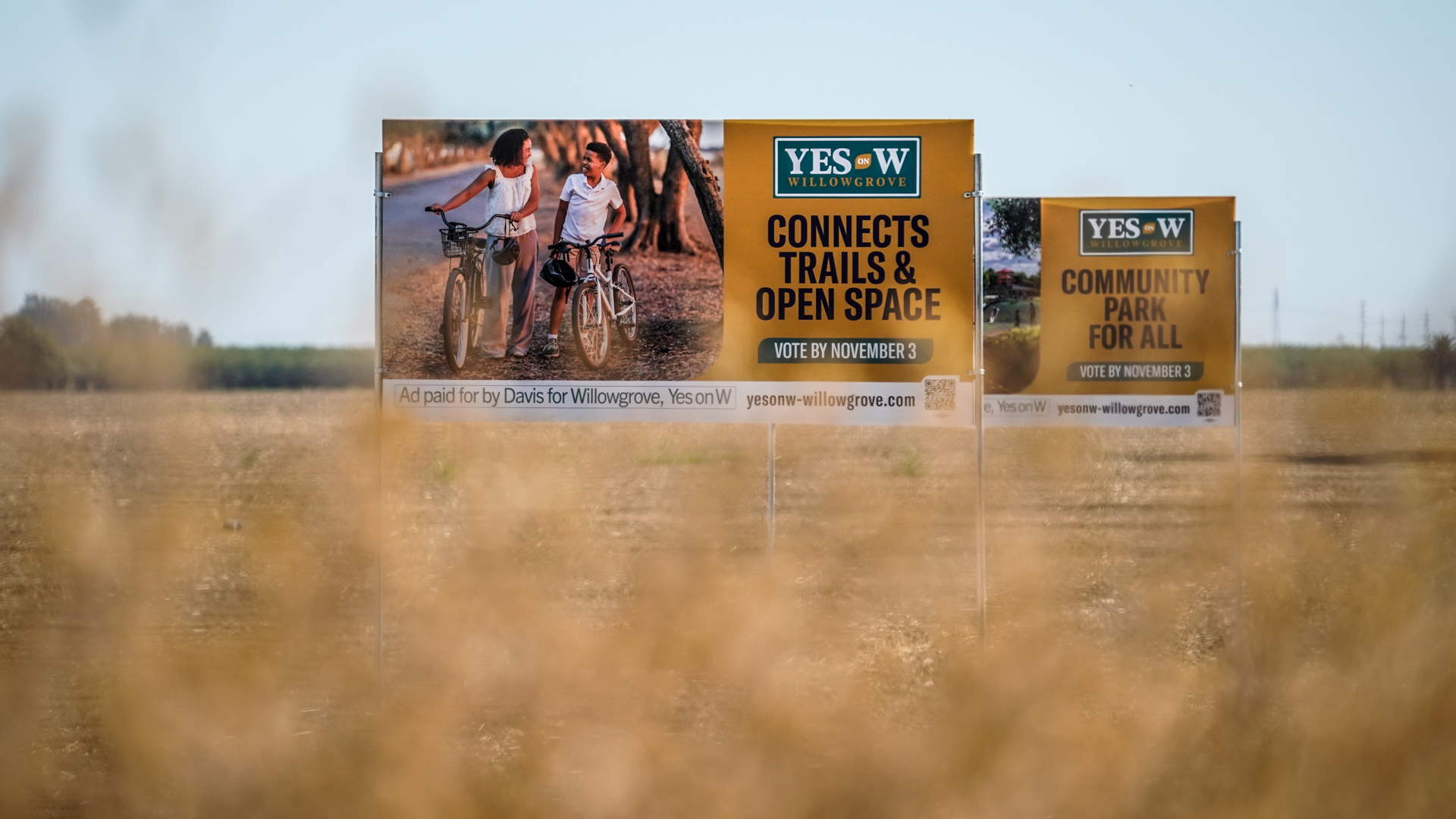
The Abridged version:
- The Willowgrove housing development could add more than 1,200 homes to Davis if voters approve Measure W in November.
- The project has been in the works for years, and the details have been ironed out through negotiations between the city and developer.
- Voting for the measure gives the go-ahead; a vote against rejects the development.
Voters in Davis will decide the fate of the Willowgrove project in November, choosing to green-light or reject a development that would add more than 1,200 residential units to the city.
Plans for the project have been years in the making, and details have been ironed out through negotiations between the city and development group, Davis Eastside LLC, and funded primarily by James Koppert. The Davis City Council voted unanimously in May to send Willowgrove to voters.
Sign Up for the Yolo County Newsletter
Stay in-the-know on all things Yolo! Weekly email with stories and insights from Yolo County reporter Daniel Hennessy.
A simple majority in support of Measure W would give the project the go-ahead, while more than half of the vote being against the project would stop it. Polls will close at 8 p.m. Nov. 3.
Here’s what you need to know before casting your vote:
Where and what is the project?
The proposed site for the 232-acre project is a stretch of land on the northeastern edge of the city, just east of the Wildhorse and Palomino subdivisions along Covell Boulevard. The land is not currently part of the city and is being farmed.
In a Measure J/R/D election, which gives Davis residents the right to weigh in on annexing land for development, a series of baseline project features are listed on the ballot. Those are components of the proposal that the developer cannot back out of without another public vote.
In Willowgrove’s case, the listed project features include:
- Rezoning the site to allow for 1,250 residential units at high, medium and low-density designations. That includes at least 250 deed-restricted affordable units, which means that deed on the property itself limits how much it can be sold for. Twenty of those units will be set aside for people with intellectual or developmental disabilities.
- $6.8 million from the developer to the city for affordable housing development.
- A community park with an indoor basketball gym, three playfields with lights, an inclusive playground and retail space in the central area of the park.
- At least 44 acres of buffer between the project and surrounding agricultural land. The developer will also place 374 acres of the nearby Bullseye Farms property under a permanent conservation easement to meet agricultural mitigation requirements for converted farmland at the project site.
- Roadway improvements on East Covell Boulevard, Alhambra Drive and roads along the project site.
- Funding for traffic improvements elsewhere along East Covell Boulevard, Mace Boulevard and the Interstate 80 interchange and West Covell Boulevard and Highway 113 interchange.
- Three miles of bicycle and pedestrian trails that connect to the Wildhorse Agricultural Buffer trail, Gill Orchards property trail and the East Covell Boulevard undercrossing.
- Planting of 2,500 trees.
- All-electric units that support EV charging.

What is the affordable housing plan?
Affordable housing was one of the major sources of contention over the rejected Village Farms development.
Willowgrove’s affordable housing plan goes further than Village Farms. Here are the basics:
- 250 units will be reserved for people with extremely low, very low and low income levels.
- All construction of affordable units will happen in one phase and be ready before the first occupancy permit for market rate homes is issued.
- There will also be 288 condominiums or townhomes, which will cost less than detached single-family homes. Twenty of those units are funded for affordable homeownership opportunities.
- The project will not use city money for affordable housing. AMG Land Development and The Pacific Properties will take the lead on carrying out the affordable housing plan.
- $6.8 million to the city for the Housing Trust Fund to provide affordable homeownership opportunities and development impact fees.
Who is the developer?
James Koppert is the lead owner of the project, with money for the Yes on W campaign also coming from Bill Chatham and Timber Trinity LLC.
Koppert has not developed real estate in Davis before, but the group has conducted a public engagement process that has influenced the direction of the development. In addition to community meetings held over the course of four years, the project has been reviewed by six city commissions and the City Council.
Those conversations led in part to the provision of a subdivision map ahead of the council and public votes.
The provision of the map, which does not always happen for developments of this size, moves the proposed project’s timeline ahead and lays out the engineering for all components of the site.
“The commitments there are binding, said campaign spokesperson Austin Heyworth. “There’s no bait and switch; there’s no promise that doesn’t actually get upheld. If this passes, we have to build that and we’ll deliver that on a timeline where people will actually see this sooner.”
If Measure W passes, the development group will select a builder to complete the construction of the project.