
The Abridged version:
- Finding a lost or stray pet can leave even the most passionate animal lovers wondering what to do next. Local animal care professionals say the right next step depends on the pet’s condition, where the animal was found and whether you can safely hold onto the pet while searching for its owner.
- This guide can help you assess the situation, safely help a found pet and navigate the region’s different animal shelters.
- A visual tip for Sacramento shelter jurisdictions: green street signs usually indicate city limits served by Front Street Animal Shelter, while white street signs indicate county roads served by Bradshaw Animal Shelter. If it’s unclear, call 311.
Have you ever found a stray pet in the Sacramento area?
Knowing how to respond when you find a lost pet can make a difference in getting them home safely. From contacting the correct animal shelter to posting in neighborhood lost-and-found groups as soon as possible, local animal care professionals and advocates said there are several steps you can take to help lost pets find their way home.
Ryan Hinderman, a spokesperson with Front Street Animal Shelter, said requests for help with stray animals were Sacramento’s third-most common 311 call category in 2025 and so far this year. Last year, the community brought nearly 4,000 dogs and 3,100 cats to the city shelter.
“People’s instinct when they see stray animals is often not the best practice,” Hinderman said. “We encourage the public to slow down and think about the different options they have.”
What to do when you find a lost or stray pet
The Bradshaw Animal Shelter, responsible for pets found in Sacramento County, takes in approximately 14,000 pets annually, spokesperson Brittani Peterson said.
The first step is determining whether the animal is safe to approach. Watch its body language and behavior for clues. A friendly dog may willingly approach you with a relaxed posture, while an aggressive or fearful dog can appear stiff and standoffish with raised hackles, growling or a fixed stare.
Peterson said even friendly dogs can bite when they’re scared or hurt, and if the animal seems aggressive, fearful or injured, call 311 for help.
“You can keep an eye on the dog and let animal control know where they’re at and help out in that way, but never put yourself in a position where you can get injured,” Peterson said.
Hinderman emphasized not to chase animals because it risks them running farther away and getting hit by cars. Instead, wait for them to come to you and make slow, gentle movements to either secure them with a leash or guide them into your car.
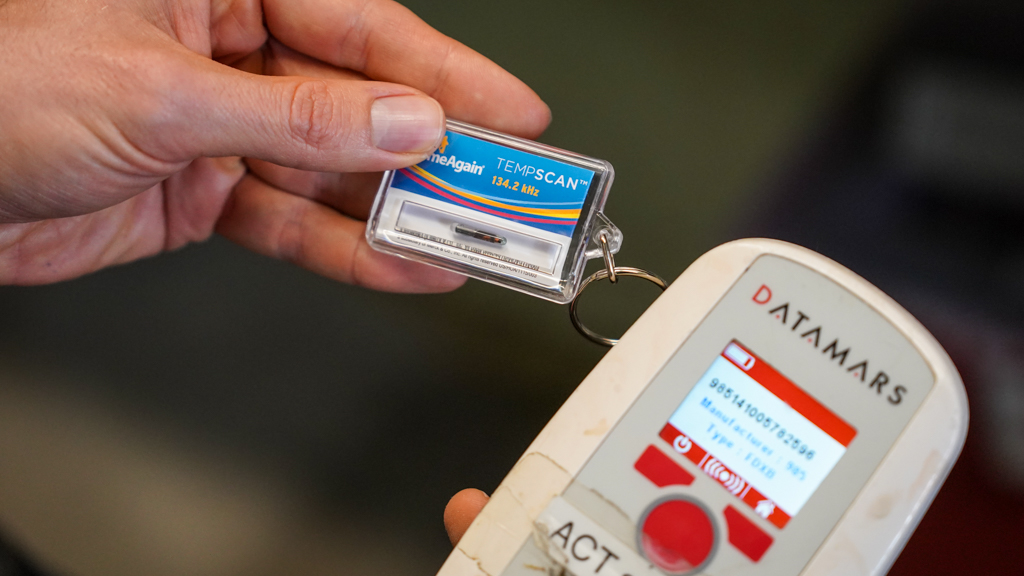
If you can safely touch the animal, gather as much information as you can by checking for a tag and microchip. Most local vet offices have microchip scanners and can check if a found pet has one, in which case they may be able to provide the owner’s information or a number to look up on a microchip registry search website. Keeping tags and microchip information updated as phone numbers and addresses change is essential to helping shelters connect pets to their owners.
Next steps for helping a lost pet
The next step is to document where and when the pet was found and take several photos of them. Write down the address, nearest cross streets or landmarks, and the date and time you found the pet. The more information you can provide to shelter staff and share online, the better the chances of reuniting the pet with its owner.
While the pet is in your care, share photos and a description on local lost-and-found pet websites and social media groups. Front Street suggests walking a stray dog around the neighborhood where they were found and asking neighbors if they recognize them.
Kellee Benedict, founder of Pilots and Pups and a member of the city’s Animal Wellbeing Commission, stressed that sharing photos online can help get the information in front of more people.
“Take pictures right away. Get that dog on Instagram, Facebook, Nextdoor, Petfinder and the other platforms so the ball can start rolling,” Benedict said, adding that PawBoost and 24Petconnect are also common sites to post found pets.
Hinderman said Petco Love Lost is what Front Street recommends the most and where it links its shelter pets. The website uses facial recognition technology to match photos of lost and found pets and notify owners of potential matches.
Where to take a found pet in the Sacramento area
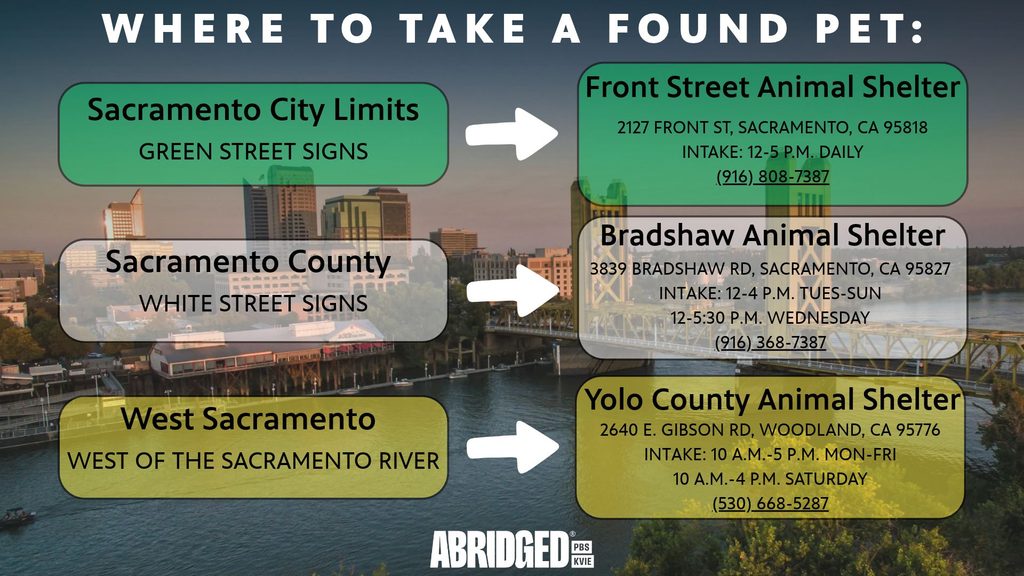
Sacramento is served by several animal shelters, and where a pet is found determines which shelter takes the animal in.
Pets found within Sacramento city limits are in Front Street’s jurisdiction, and pets found in county areas are part of Bradshaw Animal Shelter’s service area. In cities such as Rancho Cordova and Folsom, you may be directed to the Sacramento SPCA or a local shelter. Pets found in West Sacramento must be taken to the Yolo County Animal Shelter in Woodland.
A few visual tips: Green street signs generally indicate city streets served by Front Street and white signs typically mark county roads served by Bradshaw. If a pet is found west of the Sacramento River, on Jefferson Boulevard for example, they should go to Yolo County’s shelter.
If you’re unsure which jurisdiction a pet was found in, shelters highly advise calling 311 to confirm before bringing them in.
“We want to make sure you’re going to the jurisdiction you found the pet in and not just the one you live in because their owner is going to be looking for them in the shelter near where they live or where they would have lost the animal,” Peterson said.
What about kittens and cats?
Hinderman advised people to not automatically remove stray kittens from where they’re found. He said kittens younger than 5 weeks old that appear healthy and safe are generally better off staying with their mother, who may be away searching for food.
He recommends observing kittens from a distance to see if their mother returns and contacting a shelter or 311 for guidance before moving them.
“Those kittens have a far better chance of survival with their mom, getting their mother’s milk,” Hinderman said.
Before bringing a cat to the shelter, Hinderman said people should check for a tag and microchip, ask neighbors whether they recognize the cat and call 311 if they appear sick, injured or in need of help.
Residents who want to help control a feral cat population can contact their shelter about catch-and-release programs, which allow cats to be spayed or neutered and then safely returned outdoors.

The first 48 hours
When it’s safe and practical, Front Street and Bradshaw encourage holding onto healthy pets and pets discovered outside of intake hours, although shelters are legally obligated to take in stray dogs and cats found in their service areas and respond to calls about them.
“If you can take that first 48 hours to look for the owner and you can prevent that dog from coming in, you’re saving kennel space at the shelter and preventing that dog from going into a stressful environment,” Hinderman said.
While 92% of found dogs have a family, Hinderman said only 25-30% of dogs in shelters are found by their families. The rate of cats returning to their owner is under 5%, he said.
Benedict said she relies on community and friends to find safe places for found pets to stay until they reach the owner or the shelter opens. Focus on giving a lost pet a secure, quiet space to decompress, and because their vaccination history and behavior around other pets is unknown, keep found pets separated from your own pets until a shelter or vet can assess them.
If you plan to hold on to the pet, make sure to file a found pet report with the correct shelter. This ensures the pet’s information and photos are added to the shelter’s database, increasing visibility on the shelter’s website and lost-and-found pet pages.
“Let the shelter know that the dog is with you so that if the owner does come to the shelter, they can contact you and get their pet back,” Benedict said.
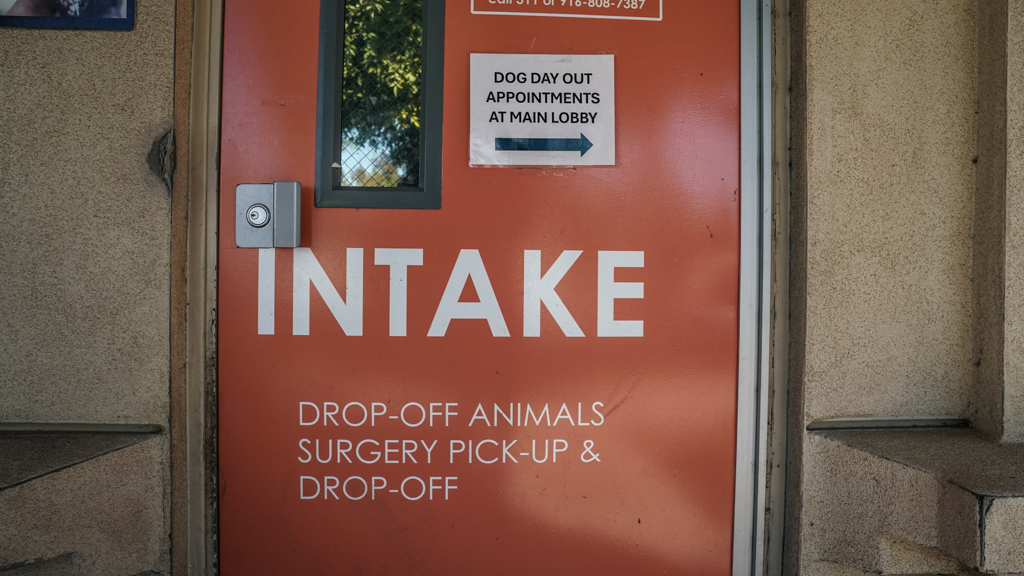
People bringing a found dog to Front Street will head to the intake building behind the adoption center, where staff will check for identification and a microchip, take pictures and assess its health and behavior. Hinderman said the process takes about 20 minutes, but wait times can vary depending on how busy the shelter is.
Front Street holds stray pets without a tag or microchip for 72 hours and those with identification for five days before they can be put up for adoption, during which time staff work to locate the pet’s owners.
Front Street’s Lost2Found program offers text-based resources: by texting STRAY to 833-511-0426, users receive links to local shelter listings, lost-and-found pet reports and guides for helping reunite pets with their owners. The automated system will ask you to text “LOST” or “FOUND” to receive the appropriate guidance.
How to improve the chances of finding your lost pet
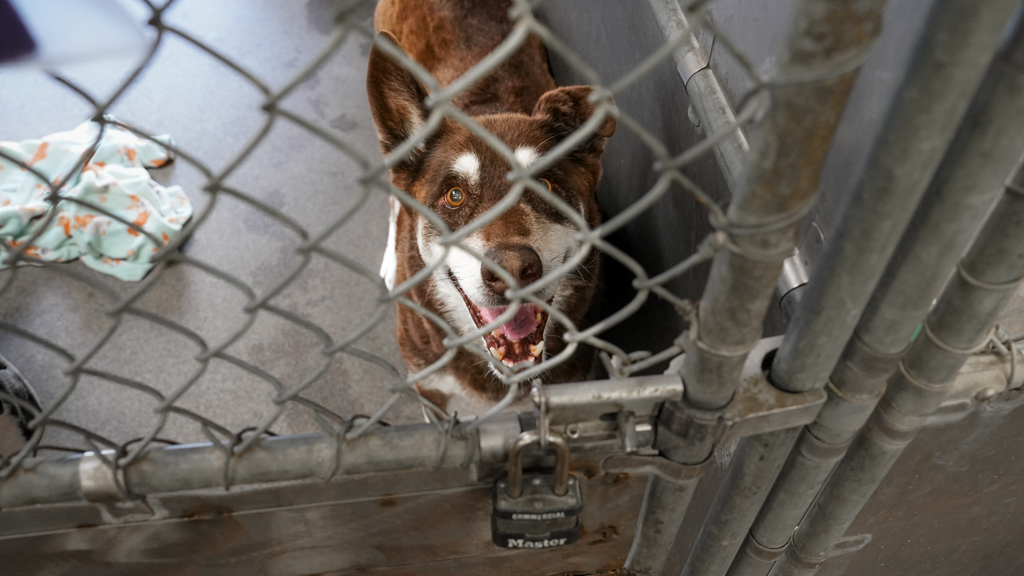
When a pet is lost, acting quickly and checking multiple sources can increase the likelihood of bringing them home. Check shelter and online listings regularly and don’t give up if your pet isn’t listed right away. They may arrive at the shelter later in the day or be staying with a foster family.
“It’s really common for people to come into the shelter or look at the website one time and kind of give up,” Hinderman said.
Pet owners can spread the word by sharing photos and descriptions of their missing pets on Nextdoor, local lost-and-found pet groups and Petco Love Lost. The county also has a guide on making lost pet flyers.
“The community is smaller than you think and word gets around,” Peterson said. “People want to help pets find their homes.”