

The Abridged version:
- The number of Black, Hispanic and Asian American teachers grew in the four-county Sacramento region between 2019-2020 school year and last year.
- More than two-thirds of the region’s teachers last school year identified as white. Just one-third of K-12 students identified as white.
- Some school districts in the region have stepped up efforts to diversify their teaching ranks. San Juan Unified School District trains instructional aides and other classified staff to become teachers.
The Sacramento region’s Latino, Asian and Black students are much more likely to see teachers who look like them today than they did five years ago, new state data shows.
The number of African American teachers in the four-county area grew 44% from the 2019-20 school year to the 2024-25 school year, higher than the overall 8% growth in the number of teachers, according to the California Department of Education. The number of Hispanic teachers rose 35% and the number of Asian American and Pacific Islander teachers increased 23%.
The figures represent an incomplete reversal of a long-standing reality: Most Sacramento teachers are white but most students aren’t.
About 69% of the region’s K-12 teachers identified as white last school year, down from 76% in the 2019-20 school year. By comparison, about 34% of K-12 students in the Sacramento region identify as white.
Diversity helps student performance, research says
Research has shown that a diverse teaching workforce can increase test scores, improve student happiness and boost students’ likelihood of graduating high school and attending college (though not all studies agree).
Sacramento-area school leaders credit teacher mentorship programs and an emphasis on recruiting bilingual teachers for the rise in teachers of color.
“We’re actually trying to deliberately do something,” said Woodland Joint Unified School District Superintendent Elodia Ortega-Lampkin. “We always try to hire bilingual preferred. We also recognize people for their skill, so we offer stipends or additional pay, and if people are bilingual, they get additional pay.”
Woodland district shows recruitment success
Woodland Joint Unified has seen remarkable success recently in hiring more Latino teachers, state data shows.
During the 2019-20 school year, the district employed 99 teachers who identified as Latino. By the 2024-25 school year, that number had increased to 154 Latino teachers.
Across the region, about 12% of public school teachers identify as Latino. But in Woodland Unified, about 31% of teachers identify as Latino.
Woodland Joint Unified has one of the highest concentrations of Latino students in the region, with more than two-thirds of its students identifying as Latino.
“We want to make sure that we see our Latino community as an asset; that we honor what they bring already with them; that we don’t try to take away the Spanish; that we don’t try to take away the culture; that we actually embrace it,” Ortega-Lampkin said.
Number of Black teachers tripled in San Juan district
At San Juan Unified, a suburban district east of Sacramento, the number of African American teachers more than tripled in the last five years, going from 43 in 2019-20 to 151 in 2024-25.
Black teachers make up about 6% of San Juan’s teaching corps, similar to the rate of students in the district who identify as Black. Regionwide, about 4% of teachers identify as Black.
During the last few years, San Juan Unified has put significant resources into its Teacher Residency Program, which trains instructional aides and other classified staff to become teachers.
“Our classified staff tends to be the most diverse group of employees that we have,” said Nicole Kukral, San Juan’s director of professional learning and curriculum innovation.
Burnout less common after teacher residency program
The program, which is a partnership with the Alder Graduate School of Education, helps residents obtain a master’s degree and teaching credential, with a focus on training for teaching jobs that are hard to fill like math, science and special education.
Largely funded by grants, the program has about two dozen residents. They each receive a $30,000 cost-of-living stipend. Many of them will soon teach in their own classrooms somewhere at San Juan Unified.
Kalei Eskridge, teacher residency facilitator for San Juan at Alder Graduate School, said residents who complete the program tend to stick it out as teachers. They know what they are getting into so burnout is less common.
“Many of them were already in our schools, and have students, their own children in the schools, so they really understand that piece of it,” she said.
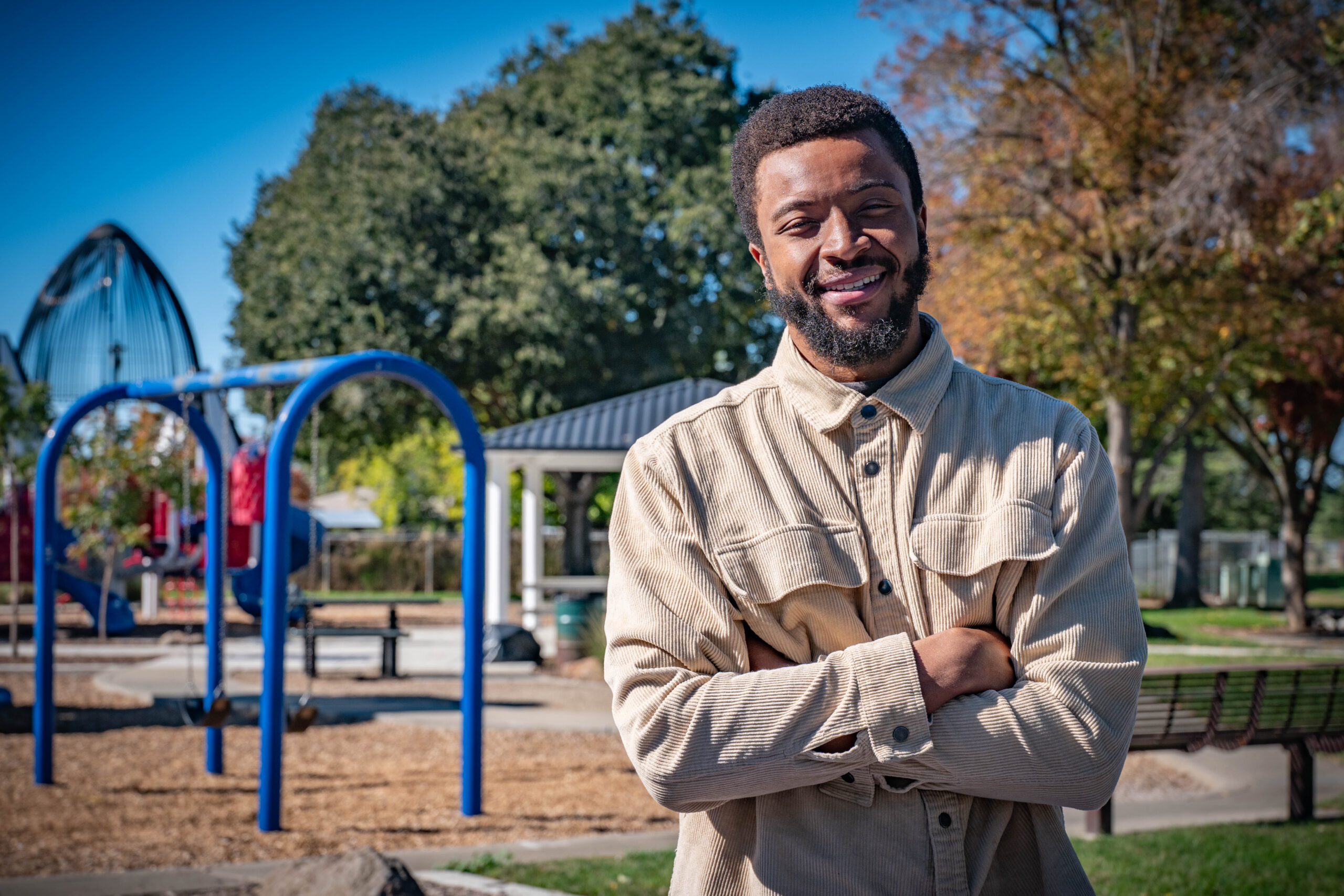
Jeremiah Graves recently worked as an instructional aide for a school in Natomas Unified School District. He just landed a job teaching sixth grade at Bowling Green Charter McCoy Academy in South Sacramento. He’s planning to go back to school and earn his teaching credential.
Graves grew up in south central Los Angeles and initially attended elementary schools that had many Black teachers. He realized the value of having Black mentors when he switched schools and experienced a culture shock.
It can be jarring for students to live in a community with a high number of Black residents but not see any Black teachers, Graves said. “They interact with so much of one culture, and then they get somewhere else and they’re sort of lost,” he said.
Show lessBeyond serving as mentors, teachers of color often have unique “mental models” when considering the potential of students, said Natalie Wheatfall-Lum, the director of TK-12 policy at EdTrust West, an Oakland-based education advocacy group.
“They have higher expectations for students of color and a higher level of belief in their ability to achieve academically,” she said.
When a teacher shares similar life experiences and identities with a student it creates “a sense of belonging and a sense of connection to school that is more likely to happen for students of color,” Wheatfall-Lum said.
Advocates say state, districts need to do more
The trend occurring in Sacramento is also occurring statewide, with large increases in the number of Latino teachers and modest increases in AAPI and Native American teachers during the last five years. Unlike Sacramento, the number of Black teachers did not significantly change statewide.
According to a recent EdTrust-West brief, school districts need to take several steps to continue recruiting a diverse workforce. School districts must fairly compensate teachers, build pipelines for classified staff to become teachers similar to the program in San Juan Unified, help prospective teachers pay for their education, and keep data on the race, ethnicity and language capabilities of new hires to evaluate how efforts are succeeding.
After making hires, school districts need to make sure teachers are supported and don’t burn out, Wheatfall-Lum said.
“We need a strong signal from the state around some unifying goals for diversifying the workforce,” she said.
Phillip Reese is a regular contributor, writing Numbers Matter for Abridged.