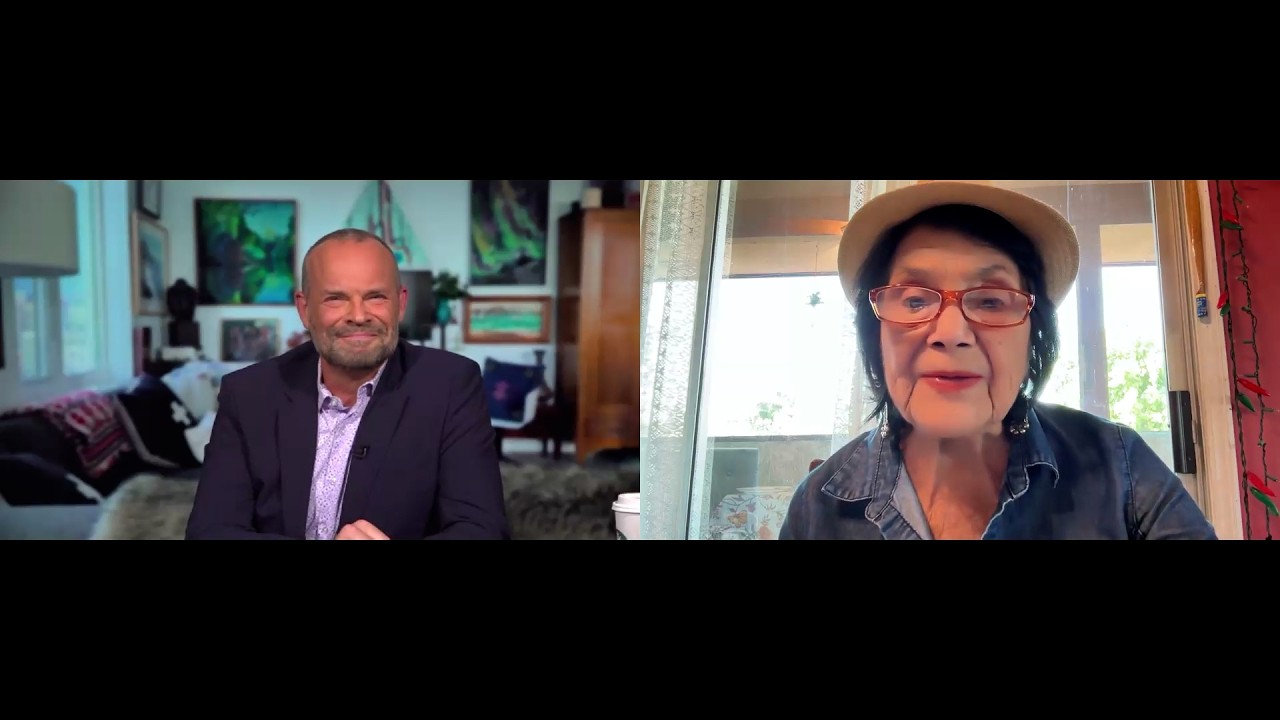
Dolores Huerta died on Wednesday, Oct. 28, 2026, at the age of 96. In August, Huerta sat down for an in-depth interview with me for an Abridged by PBS KVIE story.
Huerta agreed to speak with me on any topic, from her work in the farmworkers movement to how she handled the Cesar Chavez sexual abuse revelations and her message for the next generation of activists. She candidly spoke about her private conversations with Pope Francis and President Barack Obama.
The interview was recorded Aug. 7, 2026. Watch the full interview above. Here are some excerpts from the 34-minute interview.
Rob Stewart: The Peace and Justice Cultural Center, those words are so beautiful. There’s something extraordinary about being able to build and watch a place come to life with so much public support dedicated to carrying your work forward. And you get to see it.
Dolores Huerta: Yes. I’m quite honored. I do have to say that it was not my idea. Okay? This kind of idea of having the cultural center came from my son, Emilio Huerta, who’s an attorney. And it was he and my daughter, Camila, Camila Chavez, who is the executive director of our foundation. I mean, the two of them came up with this idea, and they sold it to the rest of our board, and our board bought it. And so, they went forward with it. And now it’s going to be a done deal, and it should be completed by the spring of next year.
Rob Stewart: I just want to know – how you are doing? Truly.
Dolores Huerta: Well, I think I’m doing as well as I can. Luckily, I survived the scandal, and I think people still have respect for me, at least most people still have respect for who I am and the work that I do. And, you know, it’s interesting because yesterday I was in Orange County and actually I met a man and he came over and he spoke to me, he recognized me. And he told me how he had got his legalization status under the amnesty bill about 1986. And when I told him that I had worked on that bill to make sure that it passed the Congress, of course he was just overwhelmed, you know, but to me, that was like a reward. When you meet people like that and you meet someone that has been helped by the work that we – that we’ve done, it makes it all worth it.
You know, it’s like a thank you from the universe. Thank you for from God, you know, and whomever saying we just want to thank you. And this is the way that we thank you. And it makes every moment of all the sacrifice and the work and all the anguish, you know, in the work we do worth it.
Rob Stewart: And I and I say this to you and to anyone that when hard times hit, and I know you took some time off to regroup. My goodness. And, I also know that getting back out there has been good medicine because you’re hearing so many people like this man just told you about how you changed his life. And I just want you to know that so many people have said to me, “please tell her how much we love her and support her.”
Dolores Huerta: Well, I appreciate that. And I just feel that I’ve been very blessed to be able to do the work that I’ve done. And again, I have to thank Fred Ross, Sr., who was the one that showed us how to organize, to get people to know that they have power and that they can make changes.
And then, of course, I have to thank my mother. You know, my mother was very Catholic, and she was a devotee of Saint Francis. And she always, you know, as kids, we were always told, I probably said this to you before, which she always told us that we have to help people. If you see someone that needs help, you have an obligation to help them.
Rob Stewart: And whether they ask or not, that’s what you taught me.
Dolores Huerta: Whether they ask or not, even if they don’t ask you and then don’t expect any kind of a reward. Because if you expect a reward, then you’re taking away the grace of the act. And by the way, I just got back from Rome, so I was able to meet the Pope for a few minutes, you know?
Rob Stewart: And what did you say to each other?
Dolores Huerta: Yeah. Well, when I said to the Pope, because I only had a minute just to give him a message. And,
Rob Stewart: Dolores, you didn’t get more than a minute?
Dolores Huerta: Well, there were a lot of other people there, okay? 100 people, but my request to the pope was, when are we going to have women priests? Okay. And he responded, he didn’t say no. He said “slowly but slowly.”
Rob Stewart: As painful as this year has been for you, this is something that you had to carry for a very long time. Do you feel freed?
Dolores Huerta: Oh, yes, I do. And there have been, of course, many, many, many women who reached out to me and had similar stories that they never told anyone.
And as a matter of fact, one of the things that’s happened is we’re working to launch, and I’ll keep you informed to let you know how this goes, we want to launch a new movement, but we want the movement to be led by men. Okay. To say men, have to take responsibility for violence against women. Men have to take the responsibility for violence against women because it’s not working with the women, trying to lead that it’s not working. So, we’re going to be calling on many, many men of stature and of influence and say to them, we want you to help us start this movement, and hopefully we can kick it off and make it a national movement.
Rob Stewart: You know, when you shared this – and I’m not going to talk about this long, I give you my word I’m not because I know that this is a private pain that you had – that you were pressed with. But I also know that it did upset you tremendously when you found out that it happened to other people.
Dolores Huerta: Well, of course, it was something that I had no idea. I had no clue. And, and the disappointment. But I think the one thing that we have to remember is that you have to take the good with the bad. And what Cesar did does not erase the kind of a visionary that he was, because so many leaders came out of the farmworker movement, people that went on to become leaders of different trade unions. I mean, yes, Cesar, what he did was awful, and there’s no way that you can justify it. But at the same time, you could not erase the good that came out of the movement.
Rob Stewart: Most importantly, I just want to tell you that I really just wanted to know how you were doing, because I remember when this news came out in March and I texted you about how heartfelt I was thinking of you and holding a space for you in my heart, and the fact that you texted me back and said, you know, thank you for thinking of me.
I felt like the whole country was thinking of you.
Dolores Huerta: Well, thank you.
Rob Stewart: And talk about the whole country. Si se puede. Si se pureed. I’ve got the clap down. I’ve been watching all that. You know, the wonderful, rally cries that you created and that someone in a high place may have borrowed from you, President Obama.
Dolores Huerta: Yeah, I saw him at the during the dedication of his library.
Rob Stewart: Oh, cool. How did that go?
Dolores Huerta: Yeah, he was very gracious. He was very gracious. And he actually took a picture with me, and he told people there that were surrounding us, he said, “I can’t take a picture with everybody, but I am going to take a picture with Dolores.” So that was very sweet of him.
Rob Stewart: Is there anything on your heart about the exhibit or the Peace and Justice Center or anything on your heart that you feel must be shared?
Dolores Huerta: Well, I believe that the, the thing I always talk about is, again, saying to people that remember that this is in our hands, okay. And we can’t pass it on to anybody else that we’re the ones that have to take the responsibility and to make sure that we save our democracy, that all of us have to become patriots.