

The Abridged version:
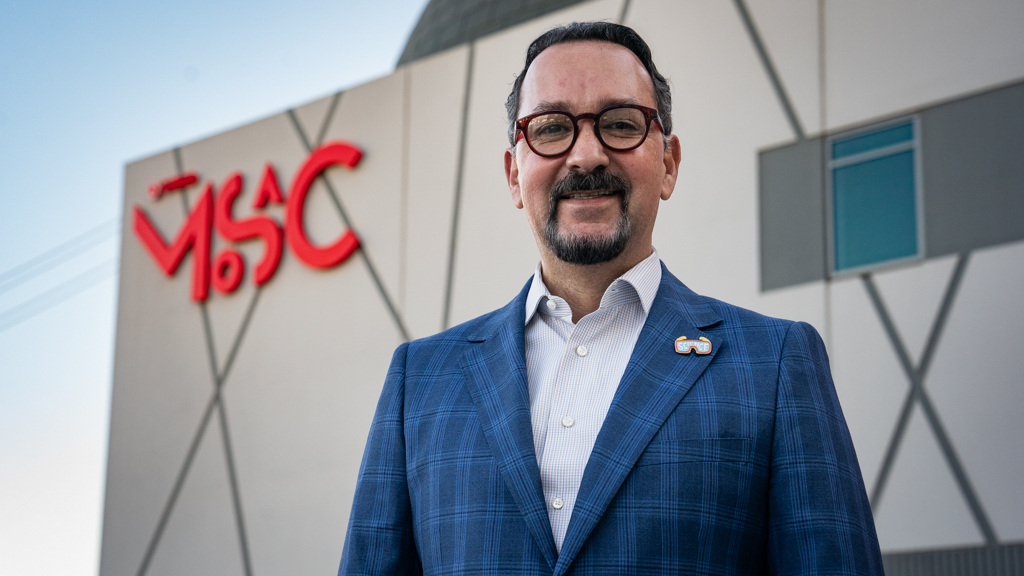
- Carlos Gonzalez-Jaime took over as executive director of the SMUD Museum of Science and Curiosity on Oct. 1. He plans to have 100 conversations in his first 100 days.
- Gonzalez-Jaime wants to see exhibits in more languages and give teenagers and adults more reasons to visit.
- Nine works from the new project ARx Sacramento bring artists and researchers together, including a neon piece that invites visitors to put down their phones and work together.
On installation day at the SMUD Museum of Science and Curiosity, Carlos Gonzalez-Jaime, the new executive director of the museum, arrived just in time to see a new temporary exhibit put in place throughout the 50,000-square-foot museum.
The exhibit, built by a collaboration of artists and scientists, is the first of its kind for MOSAC. It is called ARx Sacramento, and it invites visitors to be curious together through art, making complex scientific ideas easier to understand. Gonzalez-Jaime says ARx is the right prescription to move forward the museum he now leads.
“We are humans and you need to feel connection to create trust,” Gonzalez-Jaime said.
“How can we build a better society and a better community? By working together, not in silos, but with each other. We have our communities here, coming to the museum. So, we all need to work together if we want to make a better world.”
Sign Up for the Morning Newsletter
The Abridged morning newsletter lands in your inbox every weekday morning with the latest news from the Sacramento region.
Gonzalez-Jaime took over as executive director Oct. 1, as MOSAC approached its fifth anniversary. Six weeks into the job, he was making his way through what he calls a listening tour. He is asking the museum team and people across the Sacramento region what they would like to see next. Among his own ideas are exhibits that families can read in the languages they speak at home and more chances for high school students to try the tools they might use in a technical career.
“We are the ones that must create experiences for the people that visit our museums and our institutions,” Gonzalez-Jaime said. “I think that it is our responsibility to create spaces where everybody feels welcome.”
Creating a space to ‘see each other’
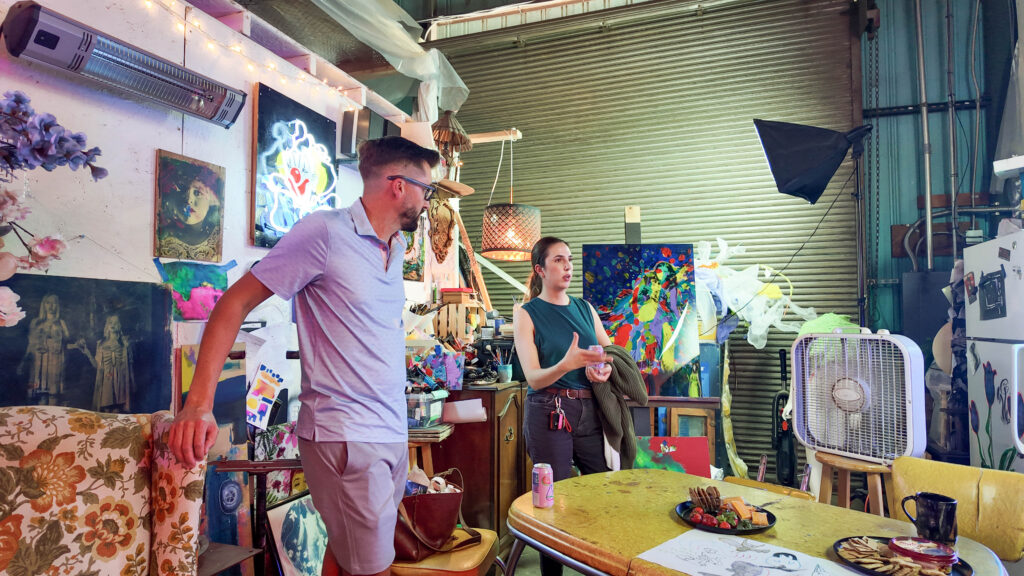
Among the works going in is a piece of neon art with buttons that light up different parts of the exhibit. Artist Melissa Uroff and UC Davis researcher Drew Cingel spent about a year creating and executing the plan. They had one goal.
“How can we create art that’s collaborative, that’s creative, and that causes you to need to put down your phone and work together to do something?” said Cingel, who studies adolescent social media use and mental health.
Cingel and Uroff came up with something cool: a flamingo made of many pieces of neon art. Visitors must hit different buttons to light up the pieces and see the whole flamingo.
“I have never heard of anything like this before. I’ve been a professor here for 10 years and it has been so important for me to be able to work with an artist in a way that I can be able to communicate what I do to the public,” Cingel said. “A lot of people don’t see how science affects their own lives. I think this does that.”
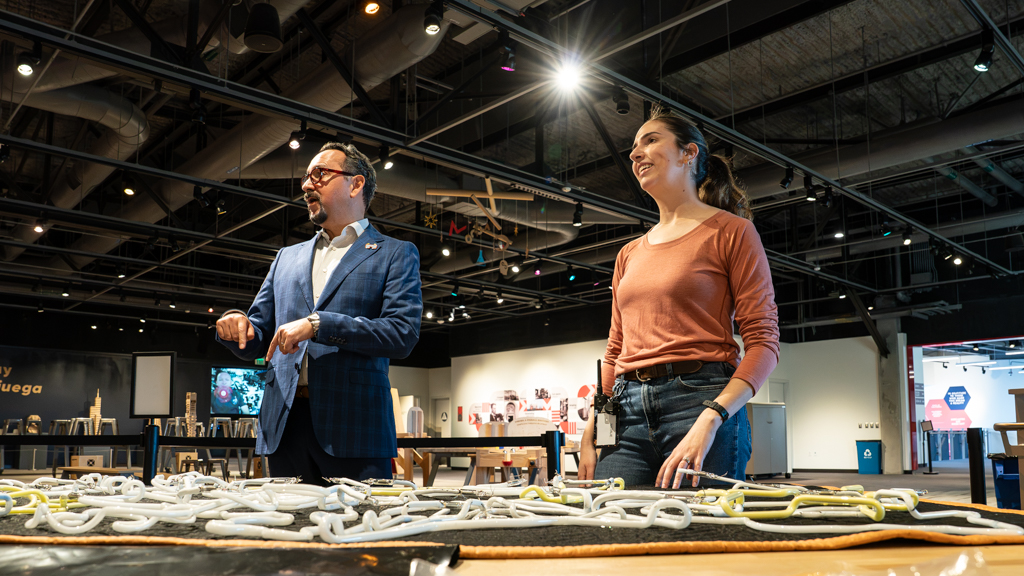
The neon work is one of nine pieces in ARx Sacramento. Natalie Rhoades is MOSAC’s manager of exhibits and oversees all installations. On that day alone, Rhoades was working on a video project, painting murals with pigments that react to ultraviolet light and working on a soon-to-be-announced collaboration involving concerts. She says Gonzalez-Jaime leads by walking with his team.
“It’s new and it is genuine,” Rhoades said. Rhoades started at MOSAC in the summer of 2021 before it opened to the public, leading a summer camp when the building was empty.
“I’m very excited to share this space even more and to usher in a whole new chapter of what the future of MOSAC can look like,” Rhoades said. “It’s like all the possibilities on the table.”
“I maybe have some ideas, but they have even better ideas because they know our guests, they know our visitors, and they are creating things for people to see each other,” Gonzalez-Jaime said.
Within weeks of his arrival, he said he witnessed MOSAC installing projects that struck the right chord.
“It’s not that I brought it,” Gonzalez-Jaime said. “But it sure is a good sign that both parties involved made the right decision for me to come here. It had to be the right fit for MOSAC and for me.”
The transformation of a lifetime
Before he applied for the Sacramento job, Gonzalez-Jaime visited MOSAC to see who came through the doors and what they came for. He had worked as an industrial engineer in a manufacturing plant in Mexico City. He had also worked as a consultant at Papalote Museo del Niño, where he built the development department while the children’s museum was expanding.
In Dallas, as the first executive director of Latino Arts Project, Gonzalez-Jaime gave tours in Spanish to school groups. After the exhibition space closed during the pandemic, he considered getting a doctorate in art history. He told a close friend about it while they were still having conversations 6 feet apart.
“I don’t think art is your passion. I think community is your passion,” Gonzalez-Jaime remembered his friend telling him. His friend had seen how much he enjoyed talking with the children on those tours.
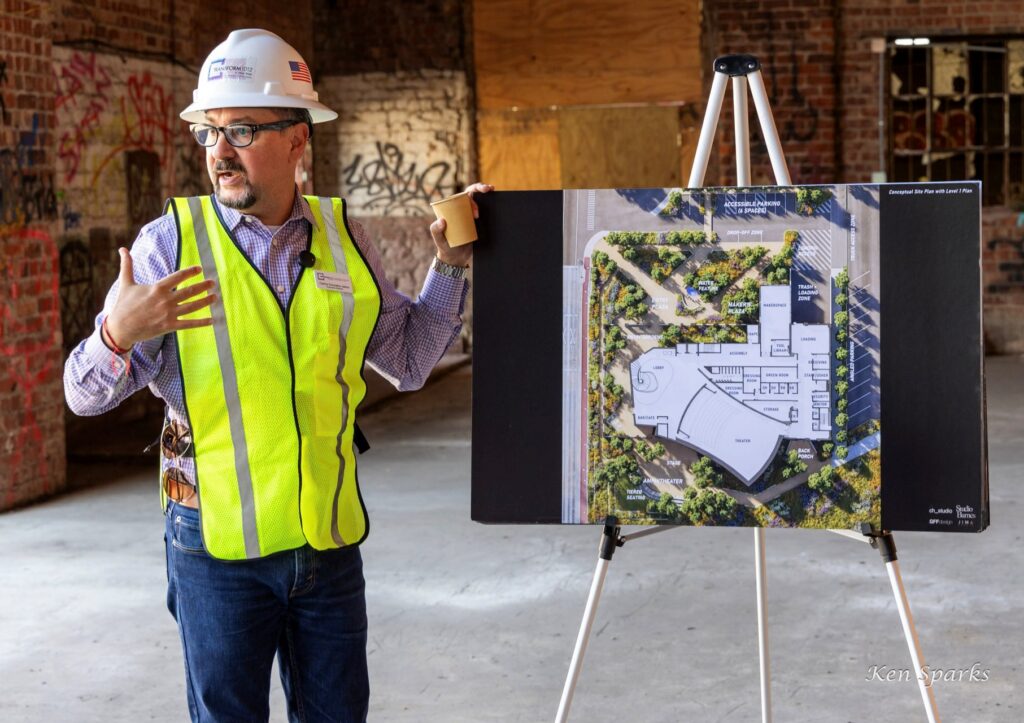
Gonzalez-Jaime went on to spend four years as the first executive director of Transform 1012 N. Main Street in Fort Worth. The nonprofit is working to turn a former Ku Klux Klan auditorium into a center for arts and community healing. The project was still in design when he left.
“It’s a social justice project with an art component, but the most important part is how can you return resources to the communities that were targeted by the far right, the KKK,” Gonzalez-Jaime said.
“It is still very close to my heart and the team there is working with those communities to make sure that a place that was built and designed for hate is now a place for love and unity and economic opportunities.”
In Fort Worth, he learned what it took to bring people together around a building that meant different things to them. At MOSAC, he is asking the people who put on the programs and spend their days with visitors to help decide what the museum does next.
The listening tour and a walk every 50 minutes
Asked how it felt to take charge of the museum, Gonzalez-Jaime said it was scary. He could already see how much people cared about the place. Being responsible for what comes next, he said, puts pressure on his shoulders.

(Meara Hain)
Gonzalez-Jaime sets a timer for 50 minutes. When it goes off, he leaves his office and walks the entire museum.
“I want to make a connection, a human connection with the team,” he said.
At MOSAC, he hears parents speaking with their children in the languages they use at home. He calls Sacramento “a beautiful mosaic of humanity.” He would like families to be able to read exhibit text in more languages and see at a glance who at the museum speaks their language. He pictured a child who speaks Vietnamese at home discovering they could speak it at the museum, too.
Gonzalez-Jaime came in planning 100 conversations in his first 100 days. At six weeks, he joked that it might end up being 1,001. He had started with the museum team, then began talking with board members, donors and supporters. He also plans to ask community leaders what programs they would like to see and what they think the museum could do with the space around it.
“My philosophy is the best place to live is where you are,” he said.
He and his husband, Crocker Art Museum director Agustín Arteaga, have been together 30 years. In Puerto Rico and Dallas, friends became family. He knows it takes time to build those relationships in a new city.
“California has always been kind of like the role model for all the other states, even though it competes a lot with Texas,” Gonzalez-Jaime said. “Moving to California was this big dream.”
Today, he says his goal is crystal clear. “What can I do today to make life easier for someone else with less opportunities than I had?” Gonzalez-Jaime said.
“I want to be a part of Sacramento.”