
The Abridged version:
- The San Joaquin Board of Supervisors voted Tuesday to approve the Lodi Winery Business Improvement District.
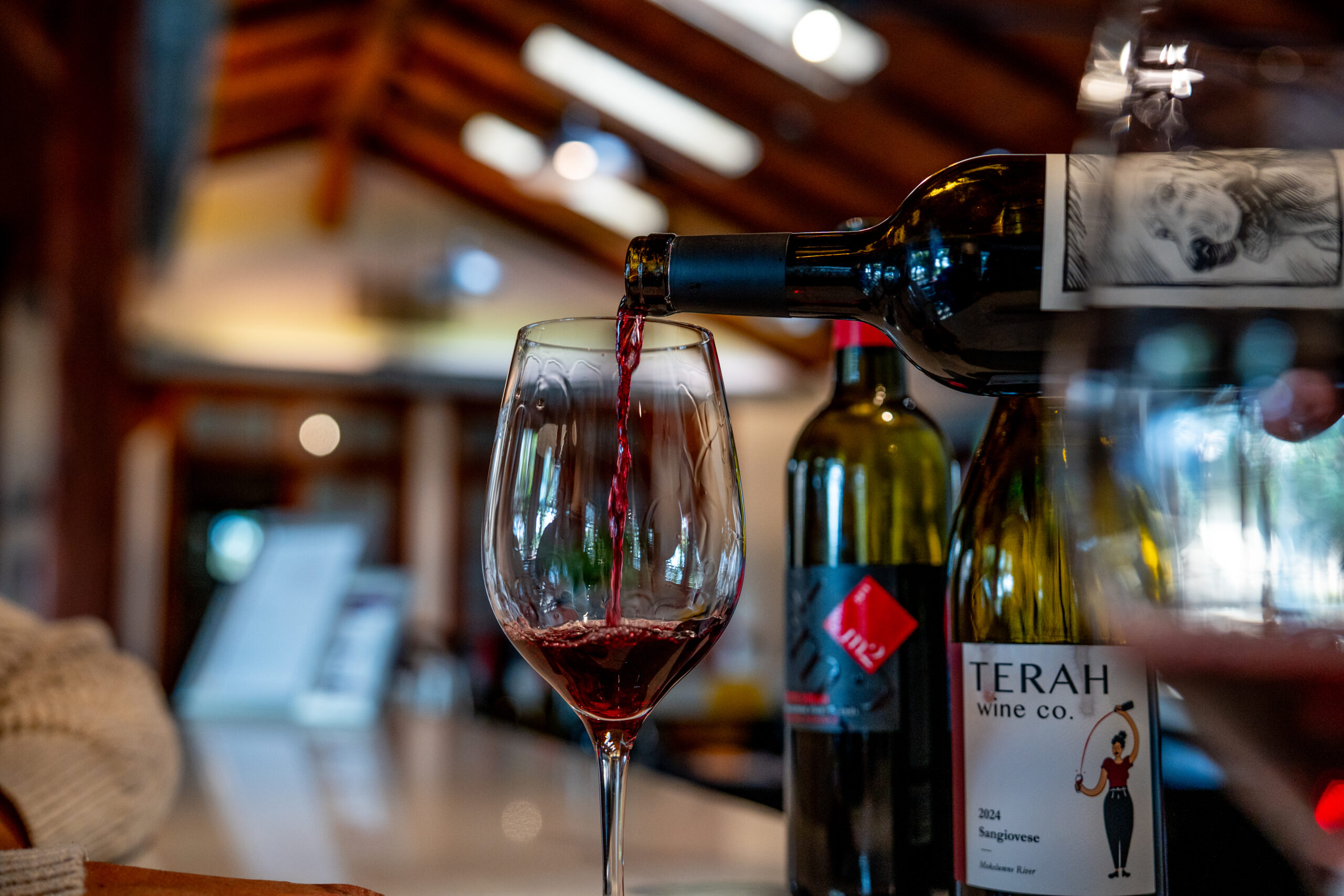
- The district creates a 1.5% assessment on wine sold in Lodi tasting rooms.
- Money raised from the assessment would go toward marketing Lodi as a wine destination.
The wine trade is stuck in Lodi, bogged down with too many grapes and too little demand for the wines they yield.
But Lodi vintners have a plan to pull themselves from the muck.
They recently formed the “Lodi Winery Business Improvement District” to raise funds to promote their region and its wines. Such a stable source of revenue, proponents hope, will provide the means to draw more visitors to Lodi’s tasting rooms, restaurants, hotels and other attractions.
The Lodi City Council voted 5-0 on Nov. 5 to endorse the Lodi Winery Business Improvement District’s formation. On Tuesday, the San Joaquin County Board of Supervisors posted its own unanimous vote for final approval.
There’ll be a cost to drinkers, though. The district will require Lodi wineries to levy a 1.5% assessment on wine sold in their tasting rooms, which will likely be passed to consumers.
Nationwide wine downturn hurts Lodi extra
The Lodi district marks California’s sixth created over the past five years. A seventh is under consideration in Sonoma County.
The wine slump is global, but Lodi is being hit especially hard. It remains the state’s most productive wine region, accounting for 20% of California’s wine grapes, but vineyard acreage has plummeted from 110,000 acres a decade ago to 82,000 today.

Several parallel currents account for California’s wine struggles, unprecedented since at least the repeal of Prohibition. They include increased skepticism among consumers about wine’s health benefits; competition from other mood-enhancing options, including canned cocktails, craft beers and cannabis; immigration from cultures without wine-drinking traditions and a shaky economy. A Gallup poll released in August found that only 54% of U.S. adults drink alcohol, the lowest percentage since the organization began tracking drinking in 1939.
As a result, business improvement districts have emerged as a popular avenue to generate traffic to tasting rooms, the lifeline for many small producers with little or no distribution to restaurants and wine shops.
All wine improvement districts share the same basic framework, including an independent nonprofit corporation to manage funds and programs, but they differ in detail. Assessments generally range from 1-2% and can apply to wine alone, or to tasting fees and merchandise.
Up to now, farmers footed much of the bill
The other means customarily used in wine regions for promotion has been an assessment on harvested wine grapes, with farmers rather than winemakers paying the bill. With grapes unharvested and vineyards shrinking, that source of revenue is drying up.
The Lodi Winegrape Commission saw its revenue from growers plunge $450,000 last year alone because of unharvested grapes, said Stuart Spencer, the commission’s executive director.
“Our funds are half of what they were 10 years ago,” Spencer said. “Winegrowers have been supporting Lodi’s marketing efforts the past 25 years, so this (wine improvement district) is an opportunity for the winery community to step forward to help those efforts.”
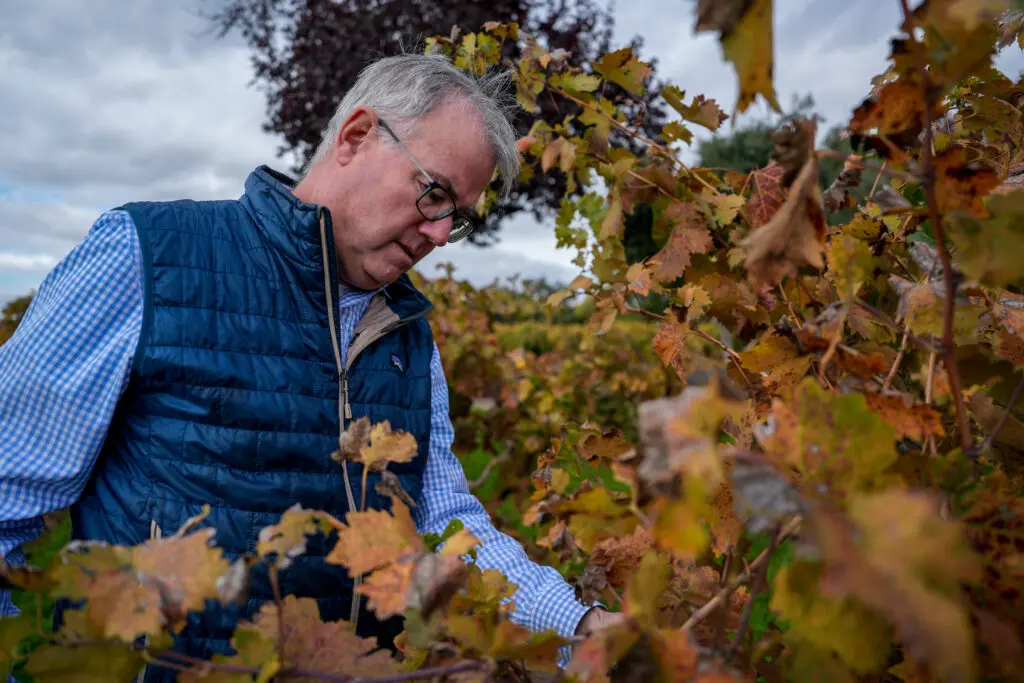
While several winemakers share that sentiment, others opposed the creation of a wine improvement district.
Rachele Spaletta, who owns Lodi winery Intercoastal Vineyards with her husband Mitch, said smaller wineries didn’t have as much opportunity as larger wineries to address the way the district was drawn up, and that the approved proposal didn’t specify just how revenues will be spent.
Most of all, Spaletta feared that her customers — 90% of the winery’s sales come from its tasting room — would be upset by the assessment.
“We have mostly local constituents, so it is difficult for me to be forced into charging my constituents a tax they didn’t vote on,” Spaletta said.
Spencer noted that 78% of sales at Lodi wineries are to California residents, with San Joaquin County residents accounting for nearly half that traffic. He is confident, however, that a widely cast promotional campaign will bring more outside tourists to the Lodi area’s restaurants, hotels and 60-some tasting rooms.
Little backlash in Amador County
There’s already a local precedent for such a district: Amador County, where customers have paid a 1% assessment on direct-to-consumer wine sales since the start of this year.
Amador County has been especially hard hit by the retreat in wine sales, with hundreds of tons of grapes left unharvested the past two years, vineyards being ripped out and two principal players — Terra d’Oro and Turley — shutting down tasting rooms.
Vintners in Amador and other counties began realizing they needed new means to finance promotion during the COVID-19 pandemic, when special events like harvest festivals that typically generate marketing funds were suspended.
Longtime winemaker Jeff Runquist was initially skeptical of the Amador County Wine Heritage District. In time, though, the promise of fresh marketing voices, increased vintner involvement and a more reliable means of promoting the area convinced Runquist to support the district — so much so that he became its treasurer. Customers, meanwhile, haven’t seemed to mind.
“No one has batted an eye at paying (an additional) 30 cents on a $30 bottle of wine,” Runquist said.
John Lambeth, founder and CEO of the Sacramento consulting firm Civitas, is the go-to guy for wine regions contemplating a business improvement district. Lambeth, who also farms 23 acres of grapes in Clarksburg, has drawn up management plans for all seven wine improvement districts created or under consideration in California.
What’s more, Lambeth was the lead author of the Property and Business Improvement District Law of 1994 that opened the door for a mix of private and public initiatives to revitalize depressed business districts. Civitas subsequently has had a hand in creating approximately 300 business improvement districts.
The law says business improvement districts are to be created for five years, with an option for members to renew for another five years. Members also can terminate a district before the first five years are up, but Lambeth recalled just one case of that over the past 30 years. About 95% of the state’s business improvement districts have been renewed, he said.
Don’t get greedy, cautions consultant
Lambeth understands why vintners may be wary that an additional levy on sales could irk customers, and he cautioned proponents to not be greedy in arriving at an assessment.
“There is very little detrimental impact from a very small charge,” Lambeth said. “But if they continue to add cost, eventually they will have a negative impact. If (the assessment) is modest in approach, and the money is put into an effective and efficient program, it moves the needle in a very positive way.”

It’s difficult to gauge the effectiveness of marketing provided by the assessments, but officials in the state’s first two winery improvement districts are convinced that directors will extend the charges as their districts near the end of their first five years.
Executive director Krista Chaich of the Temecula Valley Winegrowers Association, which created the state’s first winery improvement district four years ago, pointed to several benefits stemming from the assessment. It’s allowed the association to award college scholarships to winery and vineyard workers’ children, and led to a surge in media articles about the area from 2021 to 2024 (25 to 84).
Still, the region has seen just a 1% bump in visits since the start of the assessment, which generated $1.7 million during the 2023-24 fiscal year.
Bright spots in a dark landscape
Chaich still sees that modest gain as a win, given that wine tourism elsewhere in the state is generally stagnant or down. Only Napa Valley saw a rise in visitor traffic last year — 3% — while the rest of California saw a 14% drop, trade magazine WineBusiness Monthly reported this summer.
“Maintaining positive growth — even a single percentage point — represents meaningful progress and strong regional resilience,” Chaich said. “The district was designed for long-term brand strength and sustainability, and we’re seeing that strategy pay off.”
Brandi Lombardi, executive director of Livermore Valley Wine Community, said the group’s recent Taste Our Terroir wine festival confirmed the value of its marketing.
To market the event, the organization concentrated its promotion on the South Bay Area and Silicon Valley. Visitors from those areas increased 212% compared with the previous year’s turnout, Lombardi said.
“It’s just one data point, but that’s a significant difference. It encourages us,” Lombardi said, confident that the organization’s members will renew the assessment next June.
Proponents of the districts concur that the assessments are but one way to help bolster business. They expect that the sorts of festivals common to wine regions – Big Crush in Amador County, Passport Weekend in El Dorado County – will need to continue if the regions are to raise their profile in California’s competitive wine landscape.
“We’ll still be doing events, maybe revamped, reformulated and fine-tuned. (The assessment) is an additional source of revenue we can’t do without, though it isn’t a panacea,” Runquist said.
Mike Dunne is a longtime Sacramento-area food and wine writer. He is the author of “The Signature Wines of Superior California,” published in 2023.
UPDATE: This story was updated to reflect the San Joaquin County Board of Supervisors’ approval of the proposed assessment. Story updated at 4:40 p.m. on Nov. 18, 2025.