
The Abridged version:
- Sacramento State officials unveiled their plan for a campus on Capitol Mall earlier this year.
- The university’s proposal follows years of uncertainty for downtown Sacramento and previous attempts to boost business that had lukewarm results. School officials say the campus is also needed to accommodate a growing student body.
- Administrators are giving the plan — still in its very early stages — full-throated support. Students, faculty and experts have expressed optimism about the benefits for both university and city.
Sacramento State is advancing plans for a campus near the state Capitol, and the idea has sparked interest as a promising jolt to wake up a drowsy downtown.
School officials announced in February the potential expansion, which would include spaces for students to live, study and work, plus room for private business.
The proposal follows a string of prior ventures to bring life to an area historically upheld by 9-to-5 state workers. With many of them working from home, downtown’s fortunes have lagged.
Inspired by academic institutions across the country, Sacramento State is hoping to develop a space that serves both the student body and the wider Sacramento region.
Sacramento State needs room to grow
The multiuse development project is still in the infancy phases of planning, said Michelle Willard, chief of external relations at Sacramento State. Willard and others have been busy making presentations to civic and financial leaders, trying to win support for a project that has no price tag yet. One source of funds could be CSU bonds, but that, too, is still under exploration.
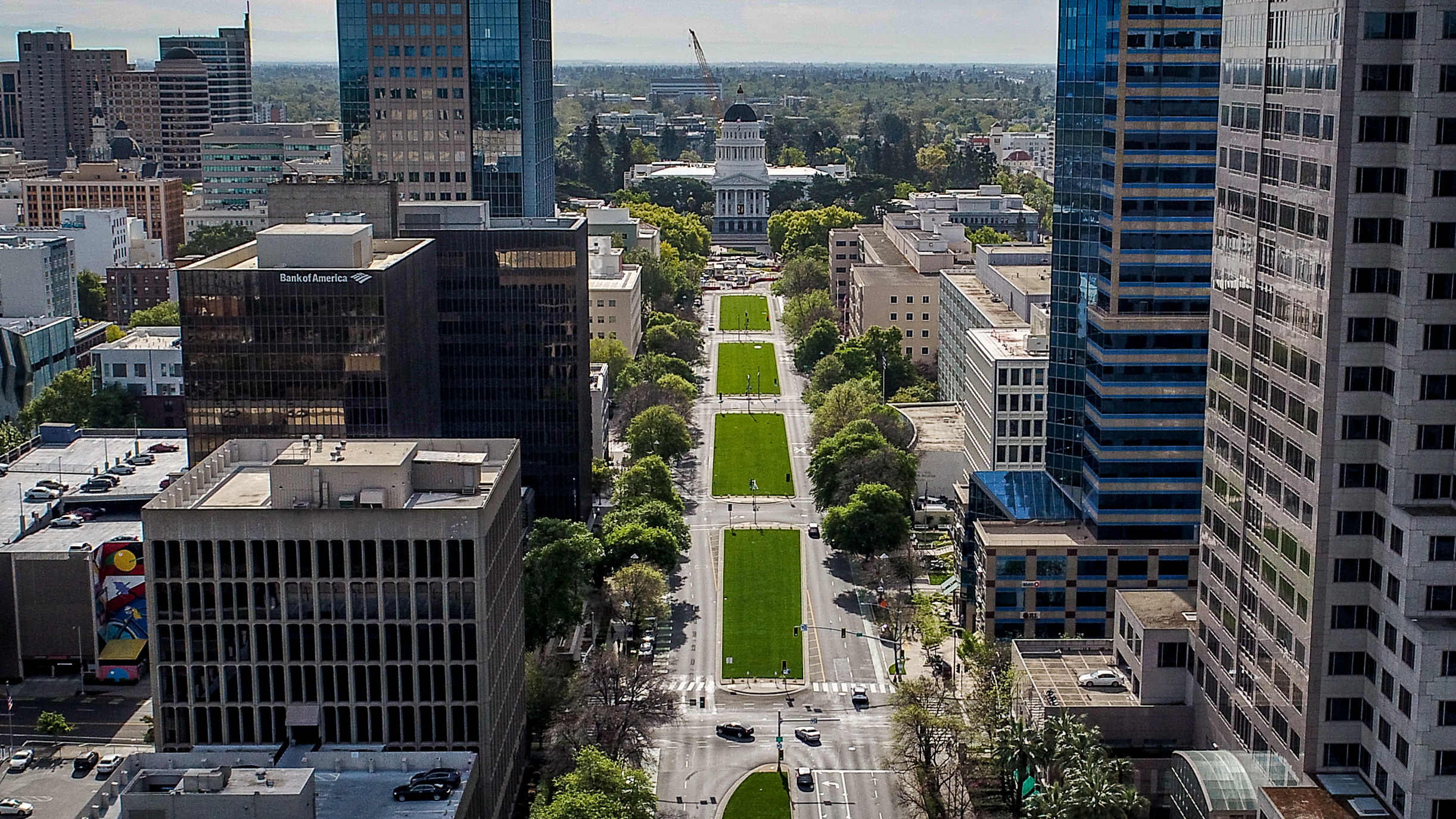
The university has exclusive rights for another year to build on 5 acres in the heart of downtown — essentially on the spots of three existing state buildings along Capitol Mall between Seventh and Ninth streets. The project could reach 5 million square feet.
Designs so far include housing for 1,000 to 2,000 students. The campus intends to target upperclassmen and graduate students, chiefly those studying public affairs or political and social sciences, Willard said. Residents of the proposed student housing would generally be able to attend classes and work at internships in or around that downtown area, rather than commute between campuses.
The university has had to look beyond its current borders in light of projected growth, Willard said.
“We’re completely out of real estate at Sacramento State,” she said.
While enrollment has waned for several California State University campuses in recent years, Sacramento State’s population has bucked that trend and maintained a steady climb over the past decade.
“We need more space as we continue to grow,” Willard said.

Project based on precedent
In Arizona almost 20 years ago, another university and capital city faced similar conditions that prompted them to work together.
Anticipating enrollment that would outpace space available, Arizona State University looked for room to build a large extension beyond its main campus in Tempe, according to a case study by the University Design Institute. Simultaneously, the city of Phoenix was in search of solutions to revitalize its downtown.
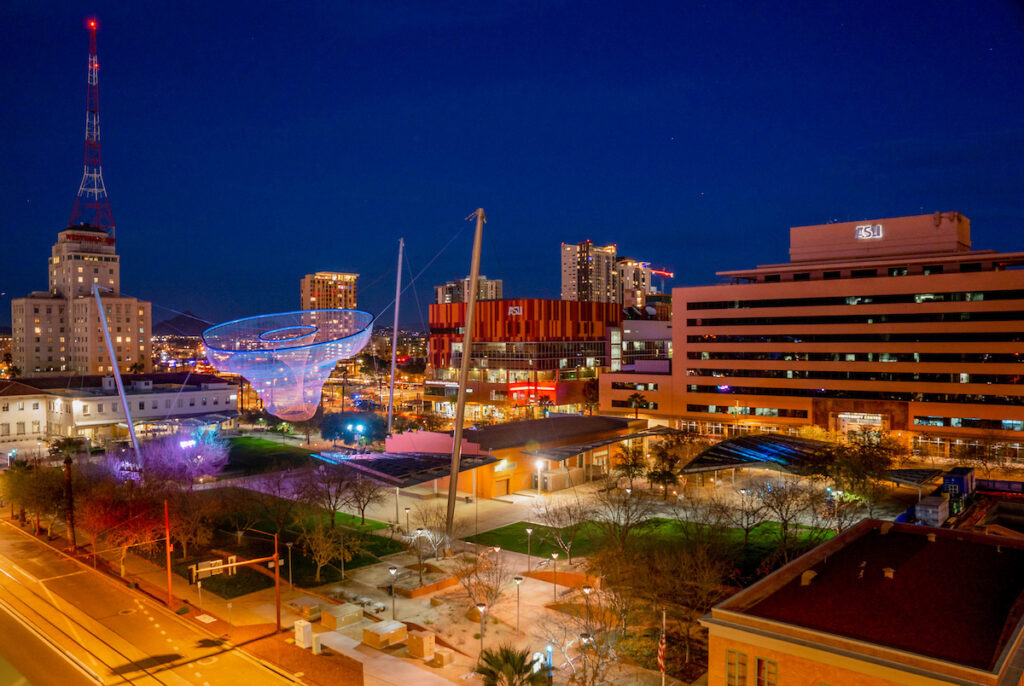
ASU’s downtown Phoenix campus opened in 2006.
Phoenix “is sort of a prime example of a university investing in a downtown location as a way to strengthen its visibility and attractiveness to employees and students,” said Kate Collignon, a managing partner at HR&A Advisors, an economic development consulting firm that has worked with cities and universities nationwide.
“And in so doing also, (it) helps reinforce the city as a place and a destination,” she said.
Sacramento State is drawing inspiration from this and other projects, including the University of Southern California’s 15-acre extension called USC Village and Purdue University’s downtown Indianapolis campus, Willard said.
Benefit for students
Sacramento State’s current downtown toehold consists of a three-story School of Public Affairs building on S Street.
Jaime Jackson, a professor and internship program director with the political science department, keeps an office there. She said the building, which opened in 2018, is actively used for classes, events and meetings — despite having a less-than-ideal design and layout.
A multibuilding campus along Capitol Mall, Jackson said, would better suit faculty and student needs.
“We’re already a value added to the Capitol community, and vice versa,” Jackson said. “And I think it’d be a lot easier for us to collaborate, there’d be a lot more opportunities for us to collaborate.”
Given the project’s early stage, Jackson said many students are not aware of the proposal. But she expects they will be on board, so long as they get an opportunity to provide feedback.
Molly Wood, a freshman majoring in communication sciences and disorders, was unfamiliar with the idea. But, she told Abridged, she could see the possible expansion providing students with a new and fun atmosphere downtown, along with better career opportunities.
“I do have a lot of friends that are (political science majors), and they do try and get in with the Capitol,” Wood said. “So I think that could be really cool for them.”

Benefit for Sacramento
Collignon, an expert in economic development, said the project has potential to be equally fruitful for the city of Sacramento.
“Students like to go out at night,” she said.
Younger patrons bring increased foot traffic throughout the week and weekend, supporting retail and restaurant businesses, Collignon said. And they are a good “first mover” to an area that’s still in the process of building up its amenities.
“Students still need a place to get food,” Collignon said. “But they’re not necessarily looking to stock up their SUV with food for the entire family on a weekly basis.”
The project has already garnered support from an array of civic leaders, including Mayor Kevin McCarty, who called Sacramento State’s venture a “game-changer” for the city.
Christopher Thornberg, an economist and founder of the consulting firm Beacon Economics, said downtown campuses can serve as a hub for economic activity at a time when traditional anchors, such as sprawling malls or department stores, have declined.
The addition of Golden 1 Center and surrounding Downtown Commons entertainment area helped alleviate downtown Sacramento’s after-work-hours lull, he said. But, “the problem with basketball games is they don’t happen every night.”
Bringing students downtown is a “win-win situation” for the university and city, Thornberg said.
“I don’t think there’s any reason not to do it,” he said.
Savannah Kuchar is a reporter covering education. She came to Sacramento to be a part of the Abridged team and contribute to a crucial local news source.