
The Abridged version:
- Sacramento public health experts say vaccinations are available and are the best way to protect yourself and others from illness this respiratory virus season.
- California joined the West Coast Health Alliance after shifting federal immunization guidelines, clearing COVID-19 and flu vaccines for anyone 6 months and older.
- For an appointment, check with your provider, local pharmacy or community clinic. For free vaccines, check with your local health department.
As a debate festers over federal vaccine recommendations and national guidelines change, Sacramento-area health experts are trying to clear up any confusion here at home.
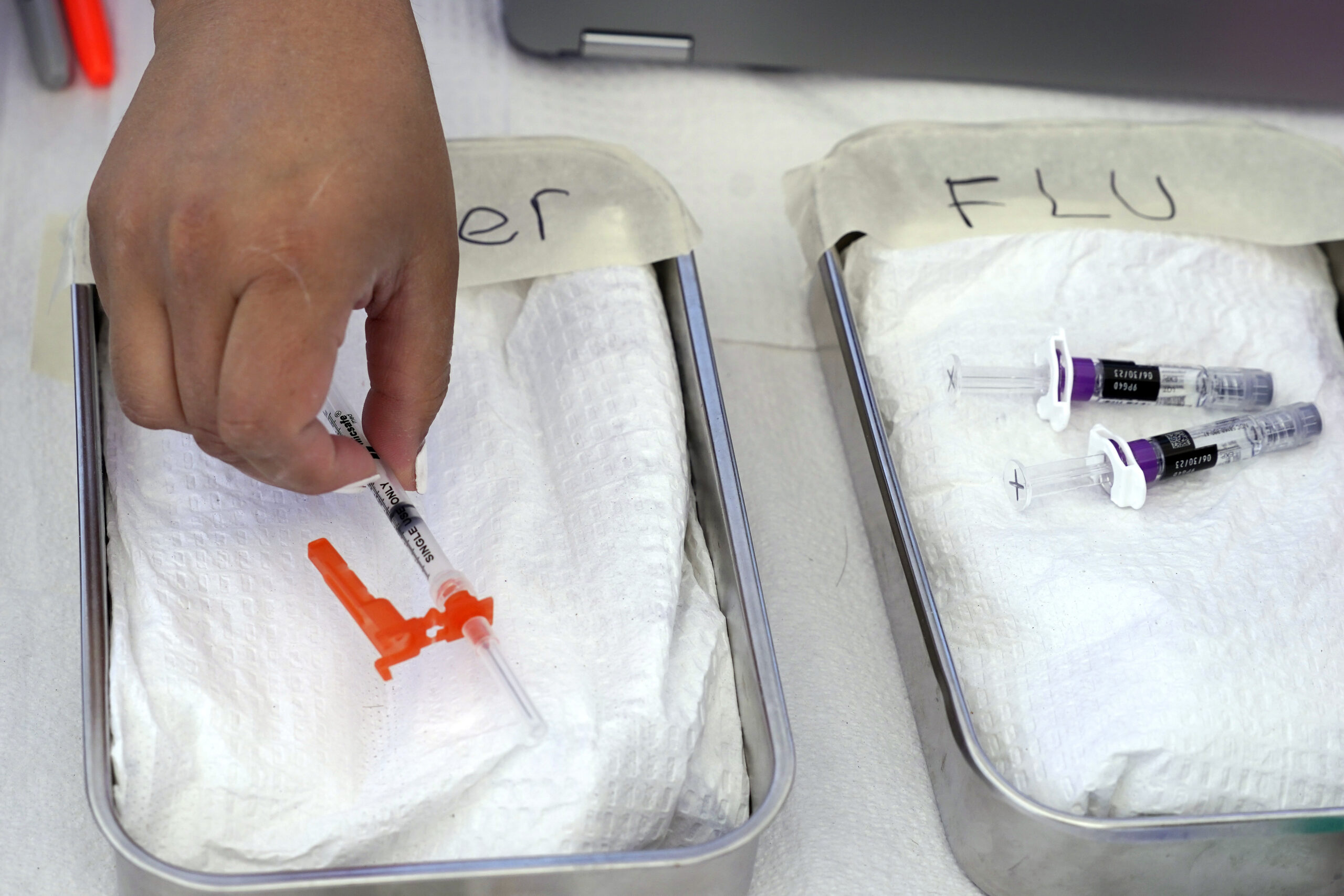
Sacramento County public health experts say COVID-19, influenza and respiratory syncytial virus vaccinations are available across the region and should be used to fight illness as the community enters the throes of cold and flu season.
Rachel Allen, the health program manager for the Sacramento County Immunization Assistance Program, said staff are following immunization recommendations from the West Coast Health Alliance at the direction of the California Department of Public Health. El Dorado, Placer and Yolo counties are following similar guidelines.
Here’s what you need to know about immunization recommendations in California and vaccine availability around the region:
What is the West Coast Health Alliance?
In September, California, Oregon, Washington and Hawaii formed the West Coast Health Alliance after the federal government implemented changes at the U.S. Centers for Disease Control and Prevention and the Food and Drug Administration placed new restrictions on COVID-19 shots. The agency limited COVID-19 vaccines to people 65 years and older and those 6 months and older with risk factors.
That same month, the CDC tweaked its immunization schedule, greenlighting COVID-19 vaccines for people 6 months and older based on individual decision-making.
The West Coast Health Alliance is designed to “help safeguard scientific expertise by ensuring that public health policies” across the partnering states are “informed by trusted scientists, clinicians, and other public health leaders,” Gov. Gavin Newsom’s office said in a September statement.
The West Coast Health Alliance’s vaccine recommendations are informed by several medical groups, including the American Academy of Pediatrics, the American College of Obstetricians and Gynecologists and the American Academy of Family Physicians, according to the California Department of Public Health.
Claims that vaccines cause autism
The CDC changed its site in November with statements suggesting the possibility that vaccines cause autism.
“The claim ‘vaccines do not cause autism’ is not evidence-based because studies have not ruled out the possibility that infant vaccines cause autism,” according to the federal health agency, calling out health officials for ignoring signs.
In a joint statement released by the American Academy of Pediatrics in November, with the support of more than 40 health advocacy groups, the CDC’s stance was described as a distraction that worsens parental fear.
“Medical researchers across the globe have spent more than 25 years thoroughly studying this claim,” the American Academy of Pediatrics said in a statement.
“All have come to the same conclusion: Vaccines are not linked to autism.”
Am I eligible for a COVID-19 shot? Flu shot?
The West Coast Health Alliance and the state Department of Public Health recommend the COVID-19 shot to anyone 6 months and older. That includes children with risk factors, people who are pregnant or may become pregnant, and adults 65 and older.
The flu shot is available for anyone 6 months and older, including people who are pregnant, may become pregnant or are postpartum. The federal guidelines on who can get the flu vaccine are similar and have remained unchanged for more than a decade, according to the CDC.
Immunization is the best protection against respiratory viruses such as COVID-19, the flu and RSV, according to the West Coast Health Alliance. It’s also a key piece in reducing illness, spreading viruses and decreasing strain on health care systems.
Allen said she urges people to get vaccinated against the flu and COVID-19 as soon as possible so the body has time to build immunity. The flu season typically runs from October to May, peaking between December and February, according to the Cleveland Clinic, an academic medical center.
Am I eligible for the RSV vaccine?
The following groups are eligible for the RSV vaccine, according to the West Coast Health Alliance and the state:
- Children who are younger than 8 months
- Children ages 8 to 19 months with risk factors
- Individuals 32 to 36 weeks pregnant (gestational age)
- Adults 75 and older
- Adults 50 to 74 with risk factors
It’s currently recommended that adults and people who are pregnant get the RSV vaccine once, not annually, according to the West Coast Health Alliance.
Allen, who’s been a nurse for more than 30 years, said it’s safe to get the COVID-19, flu and RSV vaccines at the same time. Just be sure to check with your provider to make sure that method works for you.
Where can I get vaccinated?
For an appointment, check with your provider, local pharmacy, or community clinic. Vaccine locations can also be found using VaccineFinder and My Turn.
For free vaccines, check with your local health department.
In Sacramento County, Allen said the Sacramento County Immunization Assistance Program administers free vaccines, but not everyone qualifies.
“Counties are really tasked with being a safety net to provide vaccination for those who have barriers to access,” Allen said, including underserved populations, as well as people who are uninsured and underinsured.
Sacramento County’s annual free flu vaccine clinics wrapped up last month. The county, Allen said, no longer provides free COVID-19 vaccines through the federal government unless you meet specific criteria.
The Sacramento County Immunization Assistance Program runs a weekly vaccine clinic inside the Sacramento County Health Center for children who are uninsured or on a managed Medi-Cal plan. All recommended childhood vaccines are available.
Adults who are uninsured or underinsured, she said, can get the COVID-19 shot at the clinic. No other adult vaccines are currently available.
The clinic runs once a week on Wednesdays and doesn’t accept walk-ins. Appointments can be made by email at immunize@saccounty.gov or by phone at 916-875-7468.
“It’s been a very emotional journey to go from, you know, being able to be such a steady resource to the community and such a steady presence, to trying to still do the same with less,” Allen said, adding that the team’s core funding was also reduced by 15% earlier this year.
Allen said she urges people who are hitting roadblocks to reach out to the county’s immunization team.
Yolo County free flu shot clinics are also over for the year, but the health department offers a list of immunization provider referrals on its website. Placer County also provides immunization information online for flu and other vaccines.
In a November email, Katie Combs Prichard, communications manager for the Yolo County Health & Human Services, said “access remains in place for most people seeking vaccine services.”
“There’s been a fair amount of discussion about vaccine guidance,” Combs Prichard said, “and we understand how that can lead to questions or uncertainty people may want to talk through with their providers.”
If you live in El Dorado County, you can schedule an immunization appointment in Placerville or South Lake Tahoe. The vaccines provided through this program are low-cost for those without health insurance, according to the county website.
Do vaccines make you sick?
Vaccines don’t actually make you sick — though it can feel that way.
After getting vaccinated, Allen said, you could develop mild symptoms, including muscle aches, fever and a headache. This is a typical reaction, as your body creates immunity from a small amount of the same virus that would make you sick.
Drink water and rest after getting vaccinated to give the body its best chance at developing immunity, Allen said. Symptoms should subside within 24 to 48 hours.
Can I still get sick after getting vaccinated?
You may still get sick after getting vaccinated, Allen said, but illness is typically reduced in both severity and length.
Being vaccinated is the best way to prevent respiratory illness, Allen said. The following precautions are also encouraged, according to Sacramento County:
- Stay home if you’re sick
- Test for COVID-19 and flu if symptoms develop
- Wash or sanitize your hands
- Cover coughs and sneezes
- Ventilate indoor areas
- Consider wearing a mask in crowded or indoor areas
Brianna Taylor is a regular contributor, covering Health and Wellness for Abridged.