

The Abridged version:
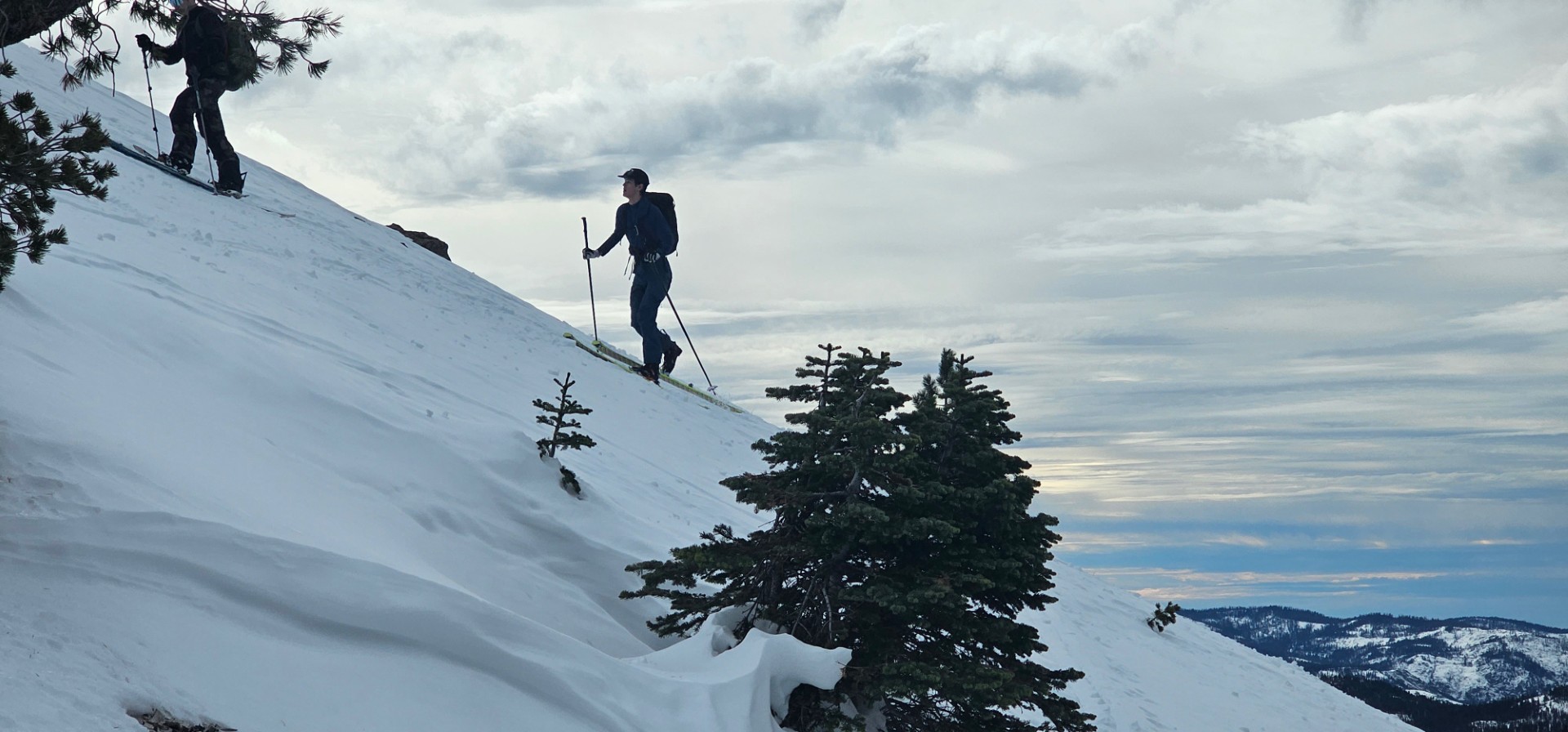
- Tahoe Backcountry Ski Patrol is a volunteer group that sends expert skiers into the woods every winter weekend to help prevent accidents and assist in rescues when necessary.
- Volunteers train in avalanche awareness, backcountry navigation and first aid.
- While the patrol does respond to emergencies, the group’s goal is prevention. Think of it as “search and rescue avoidance.”
The rising costs and crowds at Lake Tahoe ski resorts have long been driving diehard downhillers into the backcountry, where the only price of admission into pristine wilderness is the energy required to climb a mountain on skis or a snowboard. The pandemic’s shutdowns and the rise of remote work only supercharged that trend.
But skiing outside the resorts can be dangerous. It requires navigating unfamiliar terrain, understanding fast-changing weather and, especially, knowing how to avoid deadly avalanches. Many newcomers — and even some frequent participants — lack the training they need to stay safe.
Enter the Tahoe Backcountry Ski Patrol, a volunteer group that sends expert skiers into the woods every winter weekend to help prevent accidents and assist in rescues when necessary.

Training in avalanche awareness, first aid and navigation
The patrol’s volunteers train in avalanche awareness and backcountry navigation, and they take a 120-hour wilderness emergency First Aid course like what a paramedic must pass before working in an ambulance. The team members have responded to avalanches, provided medical assistance and helped lost skiers find their way back to the trailhead.
Unlike resort-based ski patrols, which are first responders for accidents, or search and rescue teams, which are equipped to mount major operations in the backcountry with snowmobiles and helicopters, the Backcountry Ski Patrol focuses on prevention.
“When we are out on patrol, we do a lot of outreach,” said Chris Haagen, a 20-year veteran of the group and the patrol’s director. “I like to think of what we do as search and rescue avoidance.”
While ski industry surveys suggest the number of people skiing and snowboarding in the backcountry doubled between 2021 and 2022 before leveling off, Haagen said he isn’t sure whether the number of people needing help has increased as much.
“You only hear about the things that go wrong,” he said. “Nobody calls up and says, I made poor choices, but I survived. I got away with it.”
Helping the public be safe in the backcountry
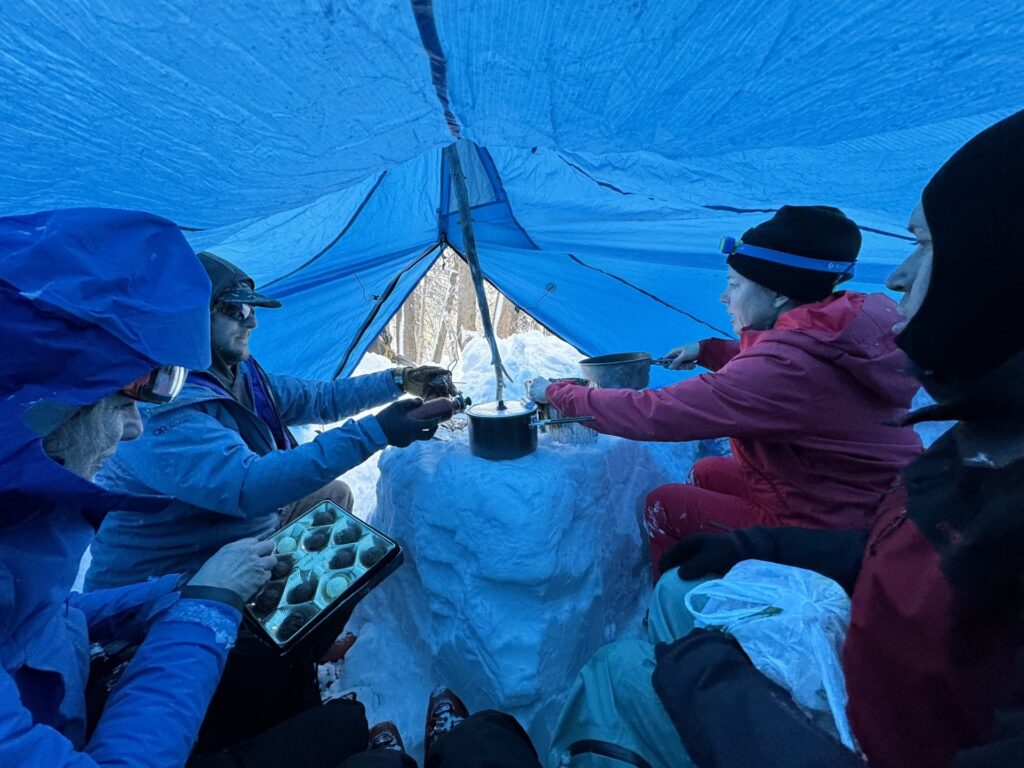
The backcountry patrol includes more than 60 skiers and riders, each of them committed to being on the mountain at least eight days each winter, plus four more training days. On a typical winter weekend, the volunteers gather in Truckee early in the morning and split into patrols of three to five people before heading into the mountains between Donner Summit and Emerald Bay.
“We’re talking to people,” Haagen said. “We’re observing the conditions, we’re practicing our skills and training for the possibility of a search and rescue or something like that.”
They are also training the public.
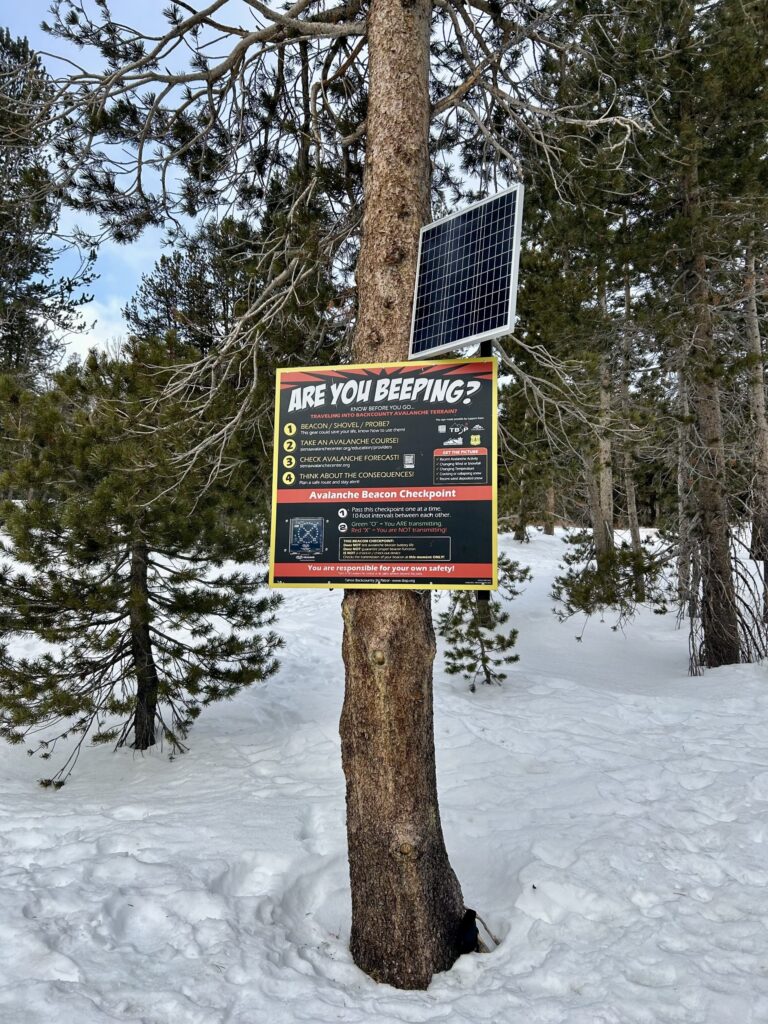
The team hosts avalanche awareness and rescue courses, which typically attract about 40 people per season. But they don’t stop with the formal classes. This winter the patrol will be setting up in snow fields near four trailheads to help people practice their use of an avalanche beacon, a handheld device that can help locate a buried avalanche victim if the rescuer and the victim are both carrying a beacon. The patrol has also erected trailhead signs that allow people to test their beacon on their way into the woods to ensure that its battery is fresh and the device is turned on.
New radio program
Now the patrol is rolling out a new program encouraging backcountry users to carry radios and tune them to a common frequency to facilitate communication in an emergency. While backcountry skiers have long carried radios, they have typically used them only to communicate with people in their own group.
The new concept, modeled after a longstanding program in Telluride, Colorado, establishes geographic zones and assigns a radio channel to each for people to share.
“The idea with this community channel is that you can communicate with the users around you,” Haagen said. “That could be us, if we’re out there. But there are a lot of users in the backcountry, and we’re encouraging people to carry radios, tune the radio to the channel that is specified for that zone, and be available to help people if they need it. It’s been incredibly well received.”
‘We all want to help give back’
Sarah Pittiglio, a Sacramento resident and longtime backcountry skier, joined the patrol 10 years ago after learning about it while taking classes to improve her personal safety. She said she liked the idea of helping the public while skiing with the group.
Pittiglio said she and her teammates casually engage fellow skiers, snowboarders and snowshoers to see if they are equipped and trained to deal with the elements.
They often help reorient skiers who aren’t where they think they are. They provide extra food to people who are running out. They advise them on impending weather or how much time it might take to reach their destination and return safely to their vehicle. While it’s impossible to know how many emergencies the patrol has helped people avoid, Pittiglio said the work is fun and rewarding.
“I just love this whole organization,” she said. “It’s the only group I’ve ever worked with that has people from so many different backgrounds and interests. We have people still in college, and our oldest members are in their 70s. You see people from every generation coming together to work toward a common goal. It’s sort of unique.
“We all want to help give back and we’re always thinking of new and creative ways to do it.”
Daniel Weintraub is a regular contributor, writing Tahoe Loco for Abridged.