
The Abridged version:
- A Sierra foothill winemaker has styled a wine to join sake, beer and tea in Japanese restaurants.
- With few exceptions, wine service has been an afterthought in Sacramento’s Asian restaurants.
- A new organization is working to raise the profile of wine with Asian cuisines.
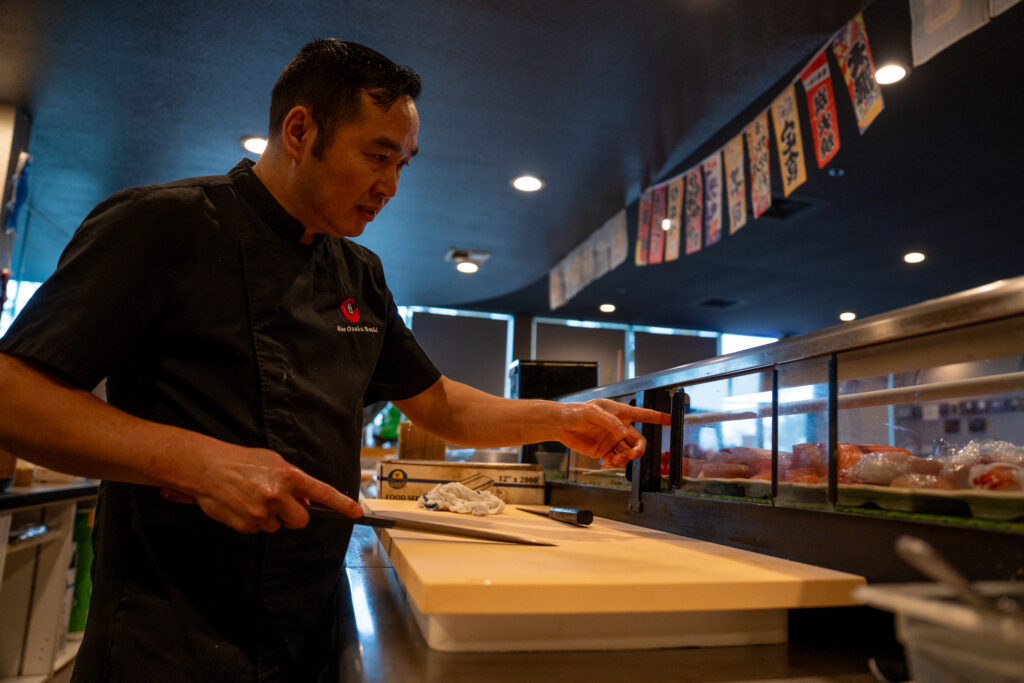
Guests were arriving, settling into seats at the two large tables Jacky Ye had assembled for the night’s wine dinner at his Laguna Village restaurant New Osaka Sushi.
One problem: He didn’t have enough wine glasses to accommodate the crowd.
That shortcoming underscored the minor role that wine customarily plays at Japanese restaurants. Sake, beer, tea, soft drinks, yes; wine, not so much.
But Ye hopes to change that, along with Chaim and Elisheva Gur-Arieh, owners of C.G. Di Arie Vineyard & Winery in Amador County’s Shenandoah Valley. They’re part of a growing movement to develop wines that pair with the Japanese, Chinese, Vietnamese and other Asian flavors that so influence California’s culinary scene.
‘The sushi wine’ springs from passion and friendship
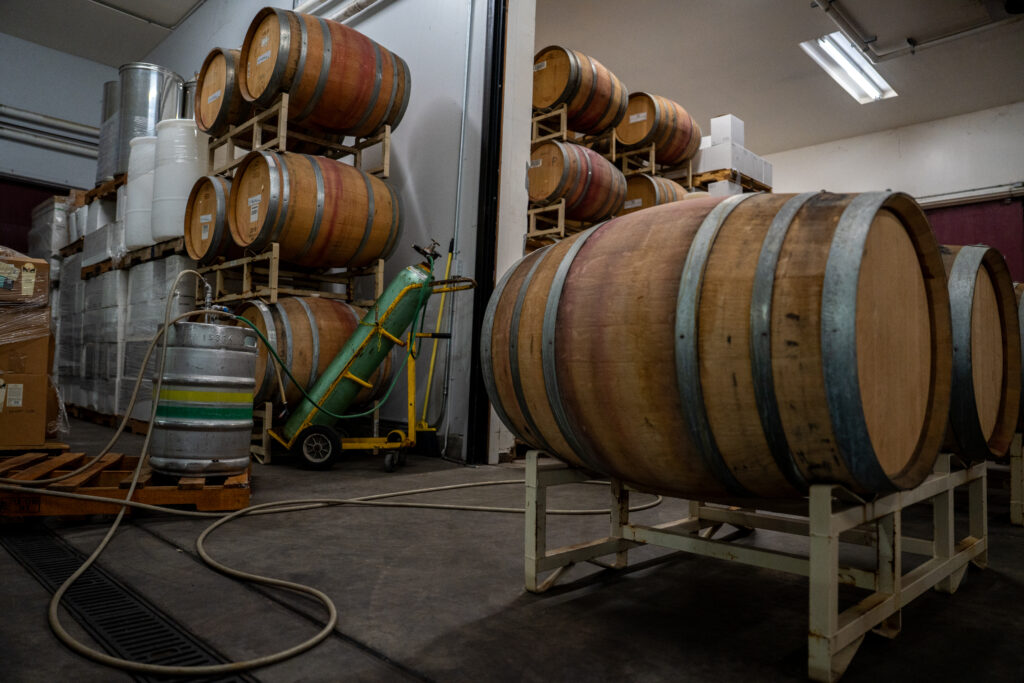
Three years ago, the Gur-Ariehs and their daughter Sivan added a new brand to their portfolio, Hikaru, Japanese for “to shine.” Hikaru is an outgrowth of the family’s long fondness for sushi, and their friendship with chef Jin Joo of Kamado, a Japanese restaurant in Berkeley.
While visiting the Gur-Ariehs and tasting their wines a few years ago, Joo commented that the refinement, crispness and balance of the wines made them ideal to accompany Japanese dishes, especially sushi. That was all the encouragement Chaim Gur-Arieh needed.
This wasn’t his first go-around at dreaming up ways to enhance eating. Before the Gur-Ariehs moved to the Sierra foothills and got involved in the wine trade in 2001, Chaim, 91, was a successful food technologist, instrumental in developing products such as Hidden Valley Ranch, Cap’n Crunch and bagged bulk ketchup for McDonald’s.

For Hikaru, subtitled “the sushi wine,” Gur-Arieh felt that the wines needed to be vibrant in fruity and floral overtones, light but lively, with sharp acidity.
“They had to be wines that wouldn’t overwhelm sushi. I didn’t want them to compete with the sushi,” Gur-Arieh said.
Most importantly, the wines had to complement umami, or glutamic acid, the flavor credited with adding savory, meaty and mouth-watering dimensions to high-protein foods such as chicken broth, Parmesan cheese — and raw fish.
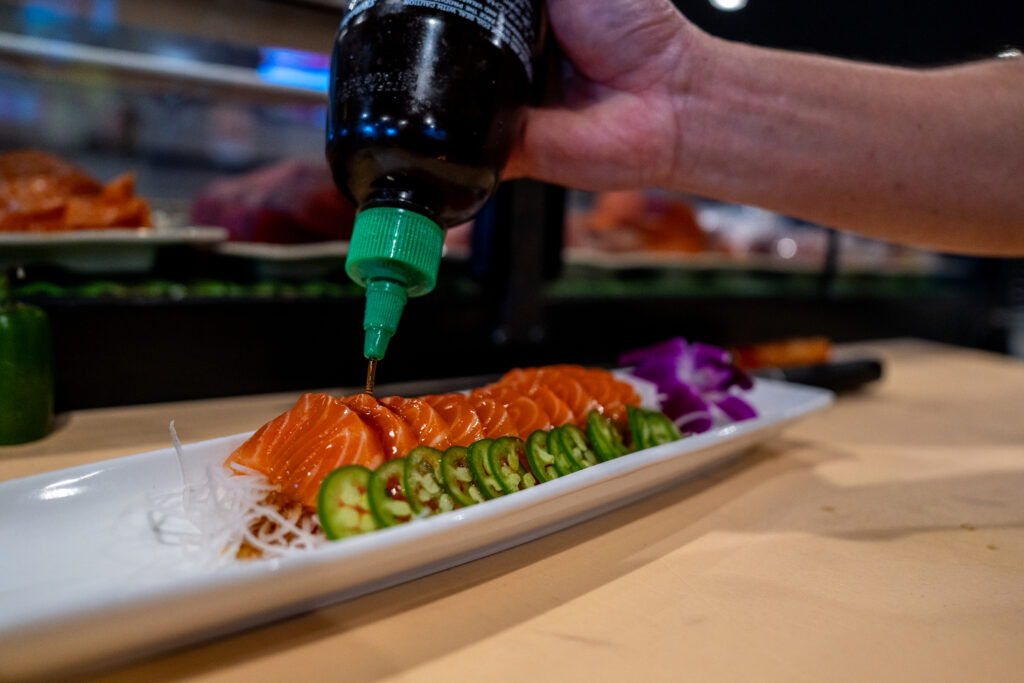
Once glasses were in hand at New Osaka Sushi, the Gur-Ariehs poured tastes of the three Hikaru wines with dishes they felt were fitting for each style — a sparkling rosé with cucumber salad and miso soup, a sauvignon blanc-viognier blend with albacore tuna and jalapeño slices in ponzu, a chilled red blend with the restaurant’s signature New Osaka Roll (a juggernaut of deep-fried shrimp, crab, avocado, and salmon topped with two rich sauces).
They made their point. Diners appeared pleased and surprised, and Ye ordered two cases of each of the three wines.
Wine’s modest presence in Asian restaurants is being updated
The pairing of wine and food has been a popular culinary sport in the U.S. since the 1960s, when the country’s winemakers saw it as a novel way to market wines. But while Italian, French, Spanish and other European-inspired restaurants have been the standard setting for wine dinners, Asian restaurants have rarely explored the matching of wine and food.
Wine simply hasn’t been a major player in the culinary traditions of Asian countries beyond large international cities such as Singapore, Hong Kong and Tokyo. With few exceptions, tea, beer, sake, soft drinks, spirits and smoothies endure as the beverages of choice at Asian restaurants, whether in the United States or across the Pacific.
Some Sacramento-area Asian restaurants have pointedly included creative and industrious wine lists — Chinois East West four decades ago, and Lemon Grass and Kru Contemporary Japanese Cuisine in recent years, for example. Even so, Kru chef/owner Billy Ngo is skeptical of wines styled to accompany specific cuisines.
“Just make good wine that goes well with food and talk to us about it,” Ngo said.
Yet the Gur-Ariehs aren’t the only wine enthusiasts aiming to make change. One is Dr. Ron Jan, a vascular surgeon and former director of the Paul Hom Asian Clinic in Sacramento. For four years, he coordinated A Taste of Asia, a fundraising benefit for the clinic.
The event involved the pairing of different wines with specific Asian dishes — sauvignon blanc with Kru’s hamachi carpaccio, albariño with honey walnut prawns from Chinese restaurant Asian Pearl, pinot noir with butter chicken from Mehfil Banquet Hall and so forth.
For participants, whose reactions to this or that pairing ranged from lukewarm to enthusiastic, the dinner showed both the wide range of Asian cuisines and the difficulty of coming up with any one wine to accommodate all tastes.
Though A Taste of Asia has been discontinued, Dr. Jan continues exploring food and wine pairings by convening periodic dinners with fellow wine enthusiasts at local Chinese restaurants and studying for a Wine & Spirit Education Trust of London diploma in wine service.
Turnaround will require personal and impassioned commitment, vintners say
Ultimately, Dr. Jan would like to assume the role of wine ambassador at a Chinese restaurant, perhaps rolling through the premises with a cart stocked not with dim sum but with wines, offering diners small tastes in hopes they’ll be intrigued enough to order a glass or bottle to accompany their dinner.
That’s the kind of personal, hands-on salesmanship wine needs if it’s ever to become established as an option in Asian restaurants, restaurateurs and vintners said.
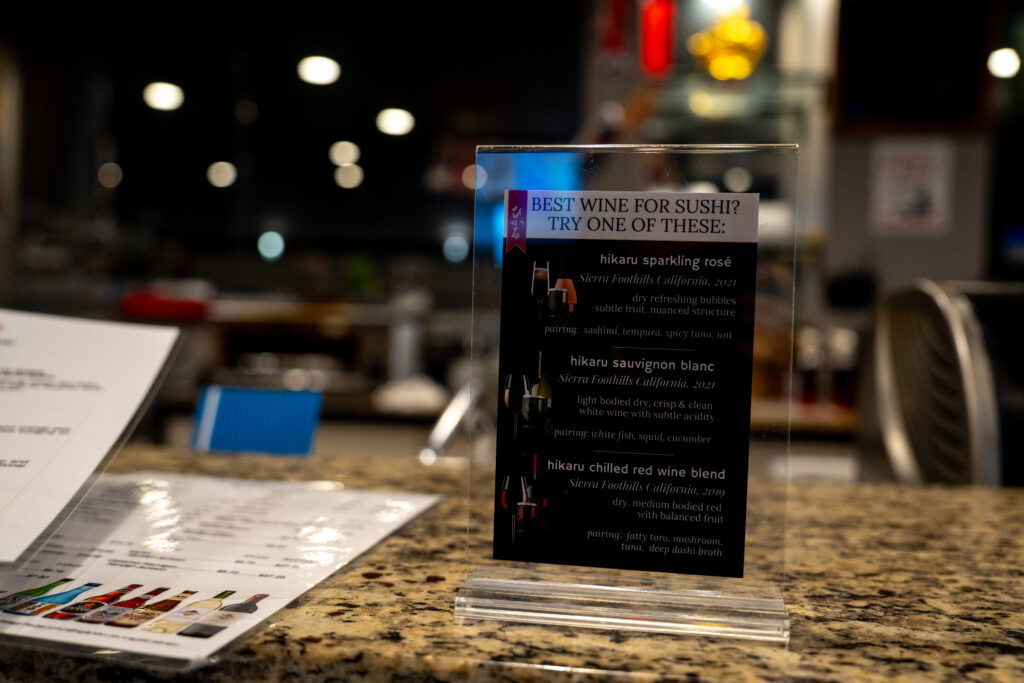
Jacky Ye, for one, just directed servers at New Osaka Sushi to provide diners with a card that concisely introduces the Hikaru wines, lists their price and offers a complimentary taste. The experiment is young, but Ye said diners seem to be as captivated by the convenience and novelty of the cans in which the wines are packaged as they are by their compatibility with his food.
Jane Jiang, who owns Duncan Peak Vineyards winery in Mendocino County, said familiarizing wine in Asian restaurants will take intensive and intimate marketing. She comes to the topic as both a restaurateur and vintner, owning Hunan Bar and Restaurant in Davis with her family.
“It is really hard to sell wine to Asian restaurants. Asians tend not to drink wine. Marketing is needed to push people to try wine with Asian food,” Jiang said.
Jiang advocates for personal salesmanship, even conducting tastings in wine club members’ homes throughout Northern California. And with winemaker Kale Anderson, she’s also styled some Duncan Peak wines specifically to complement Asian cuisine.
A cabernet-petite sirah blend called “Chronicle Reserve” was made lighter and with less alcohol than wines customarily from those grapes. Duncan Peak’s rosé, meanwhile, aims to strike an agreeable balance between sweetness and acidity, and is meant for spicy and savory foods.
Jiang is also introducing a new line of wines, Otia, made solely with Napa Valley grapes. Some Otia wines also are styled to accommodate Asian food, such as a chardonnay made with less oak than usual, intended to elevate sushi and sashimi.
California’s bold approach in wine styling is being tempered
Several other Asian members of the state’s wine trade are sculpting wines specifically to accommodate the freshness, spiciness and complexity of Asian foods.
Kevin Lee and his winemaking partner Greg la Follette of Marchelle Wines (Sebastopol) see Pinot Noir as particularly well suited to Asian cookery.
“Cool climate pinot noir is aromatic and nuanced, with the acidity to pair well with the umami, sweetness and spiciness of Asian food,” Lee said. “It’s hard to pair more full-bodied wines like cabernet sauvignon, zinfandel, and oaky chardonnays with Asian food.”
Mailynh Phan agrees. Her family’s RD Winery, the Napa Valley’s only Vietnamese-owned winery, largely styles its Fifth Moon line to accompany fresh and spicy dishes, regardless of origin.
“They have brighter acidity, lower alcohol, and minimum oak or no oak. There are no buttery flavors. Their acidity cuts through richer, spicier flavors,” said Phan, RD Winery’s CEO.
Each Friday-Sunday, RD Winery converts its tasting room into veritable Vietnamese café to show how fitting its wines are with Southeast Asian food. Tastings may include riesling with curried kettle corn, grüner veltliner with yuzu-poached shrimp and kimchi cocktail sauce or a grenache-based rosé with roasted honeynut squash soup spiked with Chinese five-spice powder and coconut milk.
Asian Wine Association of America at the forefront of advocacy
Jiang, Lee and Phan all are directors of the newly-formed Asian Wine Association of America, which aims to raise the understanding and presence of Asian-affiliated wines in restaurants and markets. Roughly 200 California wineries have Asian owners, winemakers, growers or other principals, according to the organization.
Food and its accompanying dining traditions have long played significant roles in Asian cultures, said Susan Lin, AWAA’s president and head of wine for Belmont Wine Exchange in Hayward. She’s been encouraged by early responses to the association’s efforts, noting that inventive Asian restaurants are especially interested in expanding their wine programs in hopes of growing their audiences.
The group’s timing looks favorable. The types of lighter wine seen as most fitting for Asian cuisines is the style gathering momentum among consumers, especially members of younger generations who have been slow to join the wine community.
“There is a shift in sentiment, a little bit. But it takes time. One conversation at a time,” Lin said.
Correction: A previous version of this story misstated Kevin Lee’s last name. The story was corrected at 9:45 a.m. on Dec. 29.
Mike Dunne is a longtime Sacramento-area food and wine writer. He is the author of “The Signature Wines of Superior California,” published in 2023.