

The Abridged version:
- The Sacramento City Council approved a new lease that will allow Railyards developers to pick up revenue from city-owned billboards near the site.
- Opponents alleged the deal is a $115 million “quiet subsidy” for developers of the new soccer stadium at the Railyards.
- City staff declined to detail how much money is associated with the lease, but other billboard contracts reveal that the rent is a lucrative revenue generator for the city.
After a $92 million financing district was halted for Sacramento’s Railyards development, city leaders are looking to use billboard funds to sweeten the deal for the planned sports complex and entertainment center.
Despite opposition from union organizers, the city of Sacramento is set to provide more funding for the incoming soccer stadium and entertainment district at the Railyards using proceeds from billboard rentals.
On Tuesday night, the City Council voted 8-1 in favor of a new master lease with the Railyards’ developers that will grant them decades worth of revenue from new billboards near the site. Councilmember Mai Vang cast the sole no vote.
The council approved new leases that allow lead developer LDK Ventures to receive the revenue generated by two billboards over the next 34 years. Planners envision 12 billboards for the Railyards site, which still require approval from the city.
Union blasts ‘hidden subsidy,’ lack of housing
Opponents accused the city of providing a $115 million “hidden subsidy” for developers with the new lease. Unite Here Local 49, the union that represents Sacramento’s hospitality workers, urged the council to vote down the project and dedicate funds from the billboards to affordable housing instead.
“That’s a huge amount of money that could go toward alleviating the hugest problem the city is facing right now, which is housing,” said Sonya Karabel, a researcher with Unite Here Local 49.
Last summer, the union mobilized residents near the Railyards to halt a $92 million financing district deal from the city. The city previously tried to create an enhanced infrastructure financing district, or EIFD. The financing district would have allowed the developer to borrow against its future tax revenue to cover the cost of infrastructure improvements like utilities.
Unite Here Local 49 has consistently complained about the amount of affordable housing planned for the Railyards. Only about 6% of about 10,000 new units would be designated as affordable, according to the union. Unite Here Local 49 is pushing for city leaders to increase that figure to 25%.
Billboard money critical to project, city says
The revenue from the new billboards, however, could be an important part of the financing package for the Railyards.
“The project does not advance without this billboard revenue,” said Marco Gonzalez, senior development project manager with the city.
Representatives from LDK Ventures, the lead developer behind the Railyards, did not respond to questions about the billboards and financing for the project.
Union representatives also blasted the city for not disclosing the amount of money associated with the master lease. A city staff report did not estimate how much revenue could be generated by the billboards.
The union arrived at its $115 million estimate by looking at a separate contract the city has with an advertising company and multiplying it by 34 for the number of years in the lease.
Vang complained the city was leaving money on the table.
“The City Council is being asked to approve a 34-year transfer of revenue without knowing its value at a time when our city is facing a projected budget deficit,” Vang said.
Echoes of controversial Golden 1 Center funding deal
Mayor Kevin McCarty praised the proposal for providing momentum for the Railyards, which he described as “the largest infill site in America.”
“This is a good deal, and I know this when there’s a bad deal because I voted against this when there was a bad deal 14 years ago,” McCarty said, referring to his vote against city subsidies for the construction of Golden 1 Center.
The mayor added that revenue from the billboards would go to the developers only if construction goes forward for the site.
Similar debates swirled around the construction of Golden 1 Center more than a decade ago, when public subsidies plus the revenue from 3,700 parking spaces and six billboards were included in a deal with the Sacramento Kings.
At the time, a citizens group accused the city of declining to disclose $250 million in financial benefits for the Kings. A Sacramento Superior Court judge later rejected the claims, and the group dropped its lawsuit.
Quiet revenue received from billboards
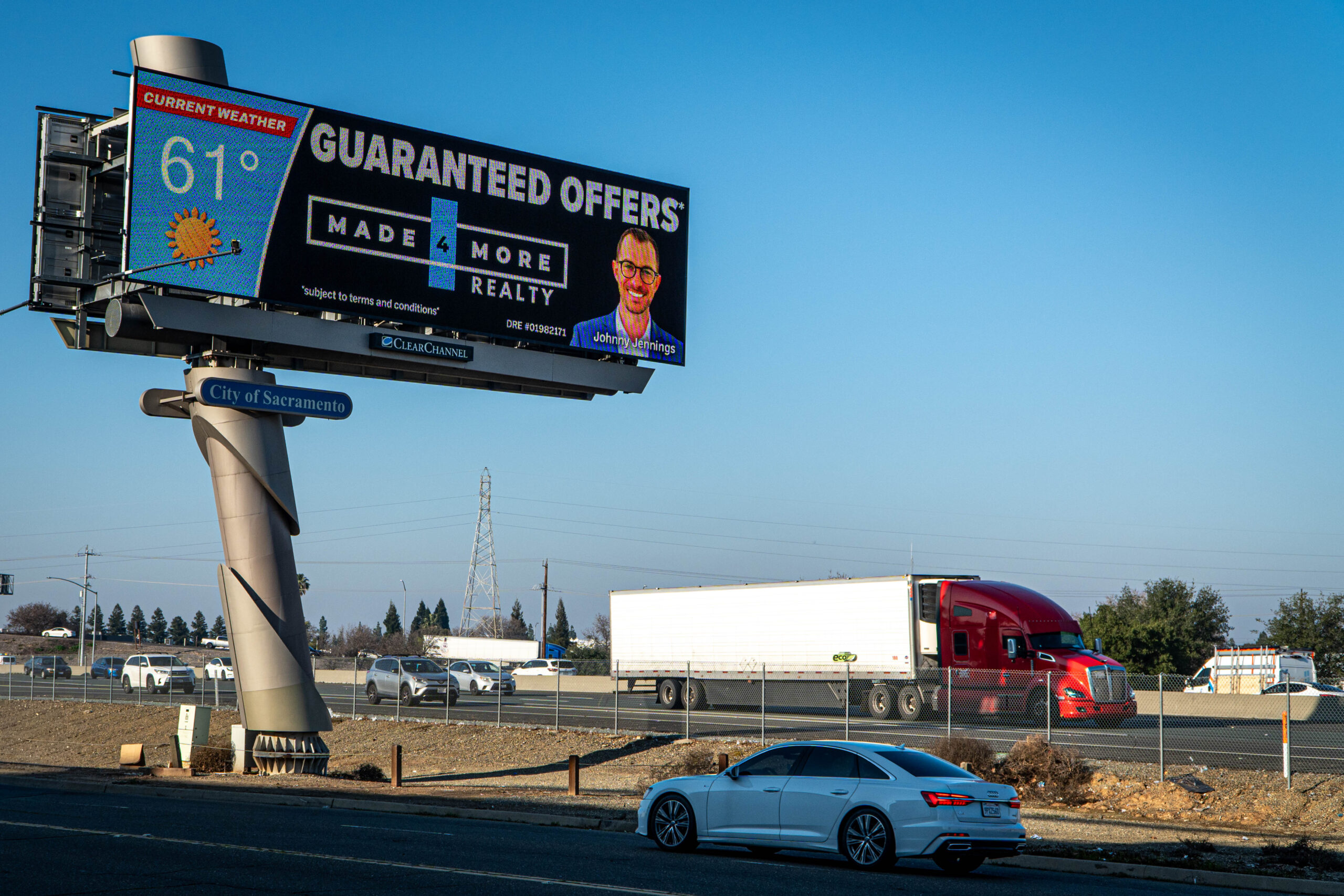
Billboards are a quiet revenue generator for the city of Sacramento. The city owns multiple static and digital billboards that dot the sides of local freeways and charges rent to the companies that fill them with advertisements.
Three billboards near Sutter’s Landing and Interstate 80, for example, are set to generate a minimum of $240,000 per year, or 60% of the gross advertising revenue — whichever is greater over the next five years — according to city contracts.
The revenue from those billboards is then earmarked for the city’s youth and parks funds, to help pay for improvements near Sutter’s Landing Park.
Digital billboards, such as those proposed near the Railyards, fetch a higher price. The city receives up to $94,000 per month for each of its four digital billboards, including signs near Highway 99 and Mack Road, Highway 99 and Northgate Boulevard, Business 80 and Fulton Avenue and Interstate 5 and Jibboom Street.
The city of Sacramento’s public contract portal notes 64 different contracts for billboards and advertising subleases dating back to 2008. A total dollar amount for those contracts was not immediately available.
Felicia Alvarez is a reporter at Abridged covering accountability. She’s called Sacramento home since 2015 and has reported on government, health care and breaking news topics for both local and national news outlets.