

The Abridged version:
- Sacramento is at-risk for floods from the American and Sacramento rivers, despite a variety of flood control upgrades in recent years.
- Not everyone is required to purchase flood insurance. You can search your property and identify its risk zone using the Federal Emergency Management Agency’s interactive map.
- Flood insurance rates go up regularly, some by as much as 18% each year. It’s not just homeowners who can get flood insurance. Renters can also buy policies to cover their belongings lost in a flood.
It’s rained enough in the past few years that this month the U.S. Drought Monitor declared the entire state is drought-free. That’s a relief. Until the next obvious question comes to mind: When is the next flood?
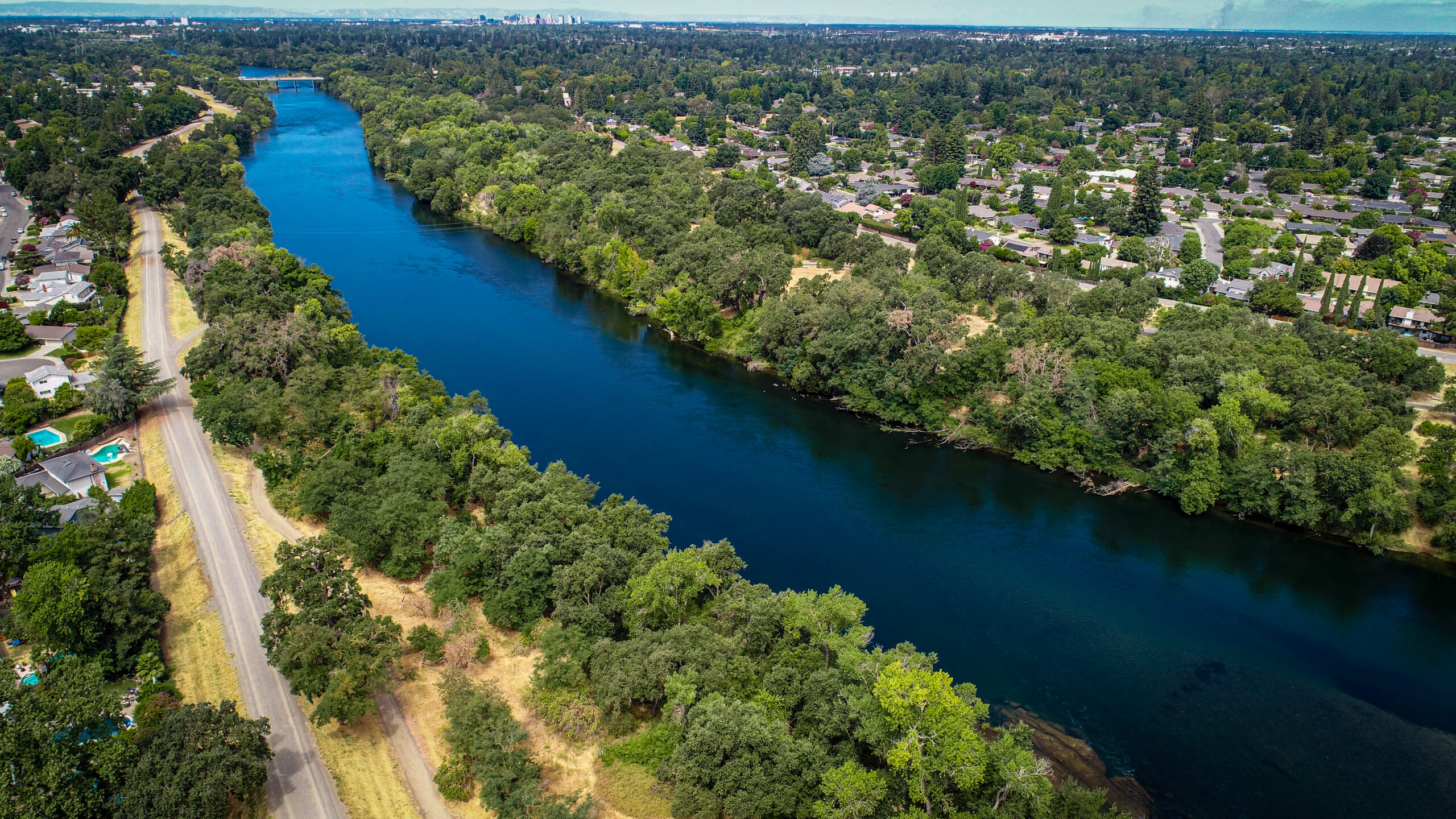
Sacramento is built on a flood plain surrounded by rivers with levees, dams, weirs and other flood control infrastructure. It’s considered one of the most at-risk cities in the country for major flooding. That’s why lenders require so many property owners to carry flood insurance on top of homeowners insurance.
Even with its history of serious floods — most recently in 1996, 1997, 2006 and 2017 — not everyone in the region is required to carry flood insurance. Natomas? Yes. West Sacramento? No. Some property owners roll the dice, thinking the next flood won’t affect them. Others can’t afford optional coverage.
So why have it? Whether it’s required or not, flood insurance offers the same peace of mind as homeowners insurance, said recently retired insurance agent Jeff Beck, who lives in the Pocket.
His standard response to clients who would say a lack of recent floods means they don’t need flood insurance: “When was the last time your house burned down? It’s the same thing.”
But the flood insurance marketplace can be confusing, and rates have been going up quickly in the past few years for some property owners. Here are answers to some frequently asked questions to help navigate the flood insurance system.
Frequently asked flood insurance questions

Who is required to have flood insurance?
Property owners in zones with greater than 1% chance of flooding in any year are required to have flood insurance if they also have a mortgage backed by federal entities like Fannie Mae or Freddie Mac. Most mortgages in the United States are federally backed.
Search for your property and identify its risk zone using the Federal Emergency Management Agency’s interactive map: msc.fema.gov
- Insurance is required in zones that start with the letters A or V. Much of Natomas and a few pockets of Sacramento County lie in zone A. Areas near the coast are likely to be zone V.
- Insurance is optional in Zone X, which includes areas protected by levees. Most of the city and county of Sacramento lie in Zone X, including downtown Sacramento, East Sacramento, South Sacramento and the Pocket.
How is flood risk evaluated?
FEMA determines risk based on frequency of flooding in the area; distance to flooding sources like rivers, levees, lakes or the coast; and the ground level elevation where a building is located relative to the surrounding area and nearby flooding sources. A building’s characteristics also play a role. For example, masonry walls perform better than wood frame walls, and buildings with mechanical systems above the floor level like heating and air conditioning systems or hot water heaters have a lower risk of damage.
What types of flood insurance are available?
Property owners in zones that require insurance must have standard flood insurance offered through FEMA’s National Flood Insurance Program. They can also purchase private insurance as long as it meets the program’s requirements, Beck said.
Property owners in zones where coverage is optional can also buy insurance through the insurance program, or through private insurance companies. Some lenders may require coverage even if FEMA doesn’t require it.
Most insurance companies like Allstate, Geico or Nationwide offer flood insurance. Private policies are available through several companies including Neptune, Wright and Beyond Floods.
Sign Up for the Morning Newsletter
The Abridged morning newsletter lands in your inbox every weekday morning with the latest news from the Sacramento region.
Why do rates go up so much?
The National Flood Insurance Program sets the rates for its policies. In 2021, the program refined its pricing through a program called Risk Rating 2.0, which uses technological advances, historical data and modeling to assess risk for individual properties more accurately. Rates went down for some policies and up for others. But rates can’t increase by more than 18% a year. For some property owners, this means rates are going up 18% a year until they catch up to a newly determined actuarially sound rate.
The new pricing system can result in widely varying rates within a neighborhood, or between zones with different risk designations because they are more specific to each property, Beck said. For example, a homeowner in West Sacramento where insurance isn’t required may pay more than a homeowner in Natomas if the West Sacramento home sits at a lower elevation.
What about all the flood protection projects to reduce risk?
Flood insurance rates in the Sacramento region may seem high, but they already include a federally determined discount based on ongoing flood protection projects, said Brian Holloway, vice chair of the Sacramento Area Flood Control Agency.
The region’s system of dams, levees, dikes and weirs gives it a 100-year rating against flooding, which is another way of saying there’s a 1% chance of flooding in any given year. The projects are intended to bring the region up to a 200-year, and eventually a 500-year rating, Holloway said.
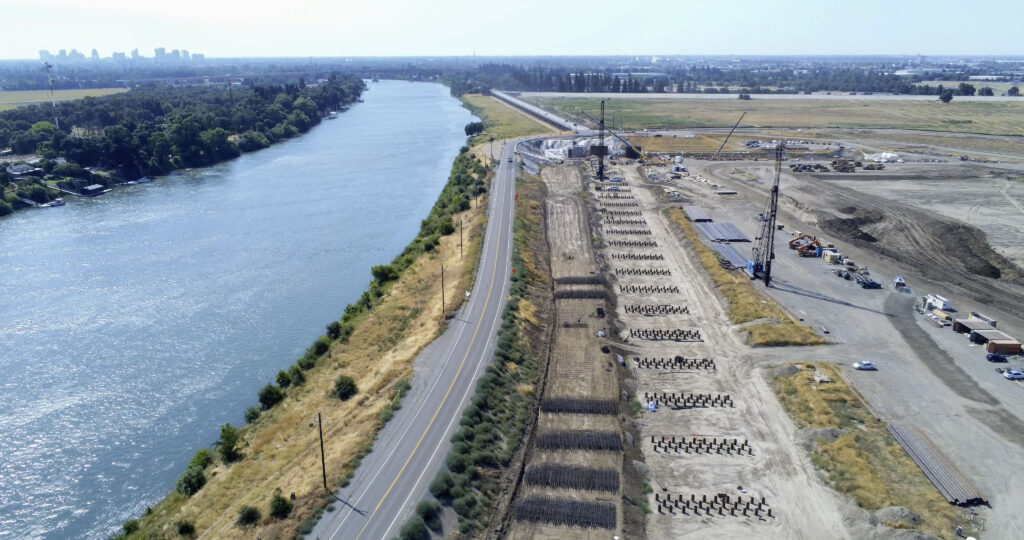
Those projects include raising Folsom Dam by 3 feet, creating a lower spillway in the dam to relieve pressure sooner in advance of major storms, strengthening levees and doubling the size of the weir that releases water from the Sacramento River into the Yolo Bypass. Special property tax assessments partially pay for the projects.
The Folsom Dam spillway and many of the levee upgrades are completed, according to the U.S. Army Corps of Engineers. Some of the projects are taking longer than originally planned for various reasons, including litigation and unexpected complications.
What does flood insurance cover? Can I shop around?
All National Flood Insurance Program policies offer the same amount of coverage: $250,000 to replace or repair residential buildings and $100,000 for their contents. Commercial buildings are covered at $500,000 for the building and $500,000 for contents. Lenders may require property owners to carry more than this amount of coverage with private insurance. The insurance program doesn’t offer coverage for full replacement value of a building.
The coverage and pricing for the policies are the same across all insurance companies that sell them, Beck said.
Private insurance offers more options, Beck said. He has private insurance on his own home in the Pocket that covers full replacement cost, plus other costs like debris removal, expenses to live elsewhere while the home is damaged, storage for possessions moved to safety in advance of a flood and preventive measures like sandbags.
It’s worth it to shop around for private policies, Beck said. His policy costs about $800 a year. But private companies can be more selective about whom they cover. If they consider your property’s risks to be too high the price will reflect that. On a scale from very low to very high, Beck’s insurer rates his home’s risk as high.
What about renters?
Landlords may have flood insurance for their buildings but not for their tenants’ possessions. Renters can obtain insurance that covers their home’s contents in case of a flood.
Won’t FEMA cover losses if there’s a flood?
FEMA offers disaster assistance regardless of insurance status only when a federal disaster is declared by the president. That assistance doesn’t necessarily cover all losses.
What happens if I’m required to have flood insurance but I don’t buy it?
As they do with homeowners insurance, lenders will impose their own coverage if a property owner doesn’t buy a policy. Lender policies are usually more expensive and make the lender — not the homeowner — the beneficiary.
Key resources on flood insurance and flood risk
- Get more information from the National Flood Insurance Program website, floodsmart.gov and FEMA’s searchable flood zone map.
- Some city and county governments maintain websites with flood protection and insurance information, including the cities of Sacramento, West Sacramento, Yolo County, El Dorado County and Placer County.
- The Army Corps of Engineers, Sacramento Area Flood Control Agency, and other local flood control districts provide updates on flood protection projects.
Laura Mahoney is a regular contributor, writing Dollars and Sense for Abridged.