

The Abridged version:
- Curating your home art collection doesn’t have to be daunting — or expensive.
- The Sacramento art community offers plenty of accessible, local options to help you get started. Don’t be afraid to use items of sentimental value — like first-date movie tickets or postcards from your grandparents — to elevate your space.
- We spoke to a museum curator, an art consultant, local artists and a frame-shop owner to bring you expert tips on finding, framing and displaying art that fits your style.
Art collecting can seem like a hobby reserved for the ultra-wealthy. Images of a de Kooning at Sotheby’s being sold for hundreds of millions of dollars come to mind. But that high-dollar culture is only a small segment of the art world. Art collecting can be enjoyed by everyone, not just the lucky few.
And Sacramento is full of interesting places to do just that.
“I think the Sacramento art community is rich and thriving with supportive people who are deeply creative and care about others,” said artist Alisa Turner of Sacramento.
Buildings’ walls are covered in murals. Theatres and cinemas still make their mark on the cityscape. You’ll find a growing number of music venues across the metro.
The region is teeming with museums, galleries, alleys, cafes, breweries, yards — and even living rooms — where there are opportunities to find art to bring into your home. If you can connect with one piece of the thriving Sacramento art community, a whole network opens.
“In our community here in Sacramento, there’s a lot of affordable art out there. We have a vibrant artist community,” said Sacramento art installer and consultant David Saalsaa. “I always encourage: just get out there and buy original art.”
How should you begin? Local artist and curator Jazel Muñoz told Abridged, “Once you take away the expectation or thought that it has to be this expensive or grand piece… think about things that bring you joy.”
Sign Up for the Cultural Capital
In your inbox every Thursday, Abridged's entertainment newsletter from Chris Macias highlights things to do in the Sacramento region.
Starting with what you have and starting small
A collection does not need to be comprised of conventional painted art pieces.
“Things carry memory,” Muñoz said. “I love having concert tickets or a matchbook or like a piece of driftwood … that makes me think of a place.”
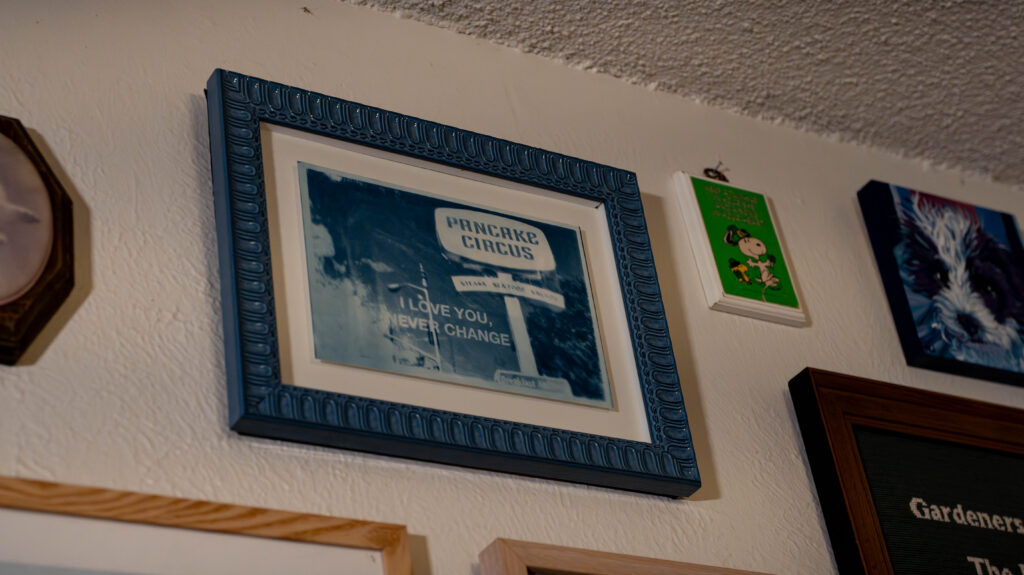
Repurposing items that hold memories into pieces of art is a place to start. Find ways to intentionally display these items in a way that can be tasteful and bring you joy when you see them. Flyers, business cards, flags, maps, coins, restaurant menus, postcards, flowers, toys — really anything could be displayed. The important thing is that it feels personal to you.
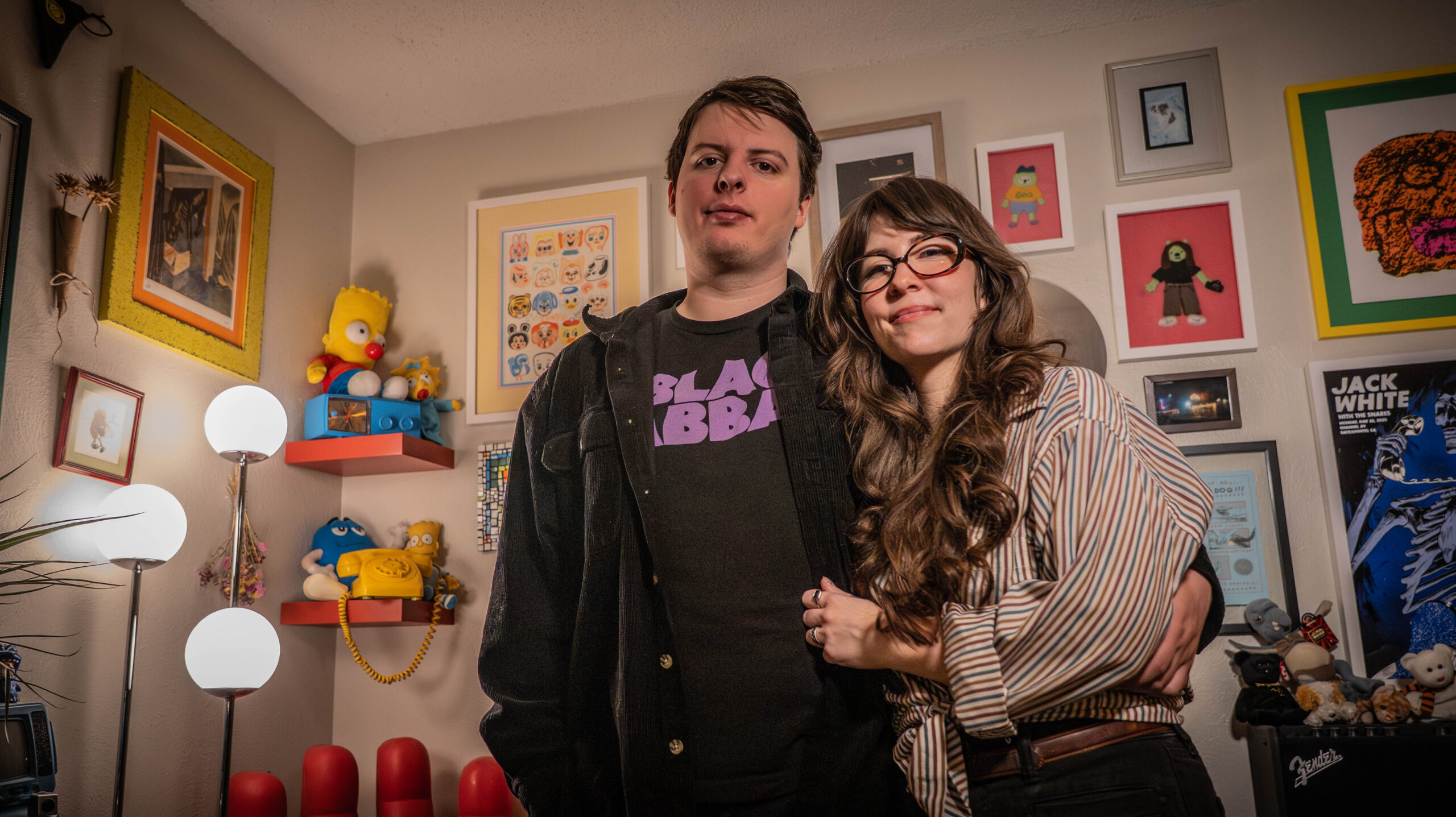
Entering the Boulevard Park home of Turner and her partner, photographer and musician Avery McPherson, feels like entering their own personal museum. There is a mix of original art, music and movie posters, toys and other personal ephemera covering their walls. It’s maximal and colorful, which they say perfectly suits them.
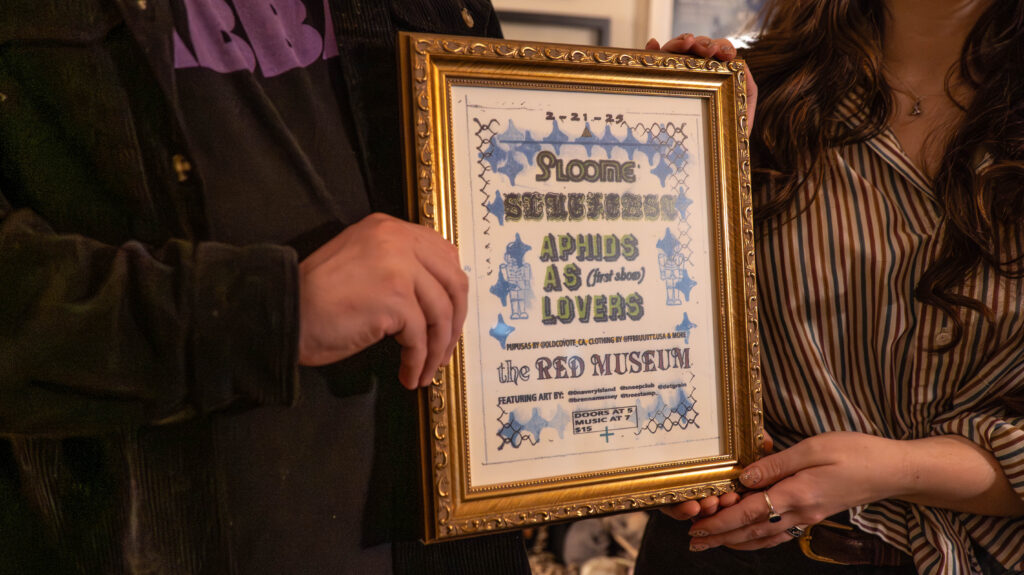
“This poster is a flyer from Avery’s first show he played with his band,” Turner said, “and mine and Avery’s first event that we worked on together. It holds a lot of sentimental value for us — we like to have it displayed to remember that special day.”
Advice from a museum curator
Sara Morris, Crocker Art Museum’s Ruth Rippon Curator of Ceramics, understands how to display art. She noted the difference between curating a museum and curating a personal collection.
“When you’re curating at a museum, you have to take into account so many other factors. If you’re collecting for yourself, you don’t have to answer to the museum. You don’t have to answer to constituents. You don’t have to explain your curatorial philosophy to the general public or to yourself. You can just buy something because you like it.”
Morris focused her early collection on small and accessible items.
“I started collecting ceramic cups by my colleagues and artists who I followed. Cups are very affordable, like, a ceramic cup you can get by an artist that you admire, usually for about $100 to $150. And then I just kind of grew my collection from there. It started really small,” she said.
Where to find art in Sacramento
It all starts with finding what you like. It can take a lot of time to develop your taste but the only way it can happen is, according to local artists and curators, looking at more art.
“I would say starting with DIY gallery spaces or if you can connect with the artist themselves,” Muñoz said, “going to an art show, even if you don’t know the person, you never know what you might find or where that might lead you to.”
So, where do you go? It’s worth checking out a variety of different spaces.
“I feel like sometimes art galleries can feel intimidating for people to walk into,” Morris said, “because often they’re the only ones in there, and they think that if someone strikes up a conversation with them, that they’re expected to buy something, and it’s completely okay to go to a gallery opening and meet the artist and learn about the art.”
You may not always find something for sale or at a price point you can afford, but you will discover an artist or a style you like.
“You’re building relationships with artists … You get to see their work develop over time, which is a lot of fun,” Morris said. Social media can help you find artists and their events.
“I think in the age of social media, all you need is one connection,” McPherson said. An artist could post events on Instagram, but they are probably connected to and posting other artists you might like, too.
“I often will put my dollar in the spaces where I know the artists will get it. A lot of the time that looks like a pop-up or a person is a part of an art market … I prefer to invest in my community in that way,” Muñoz said.
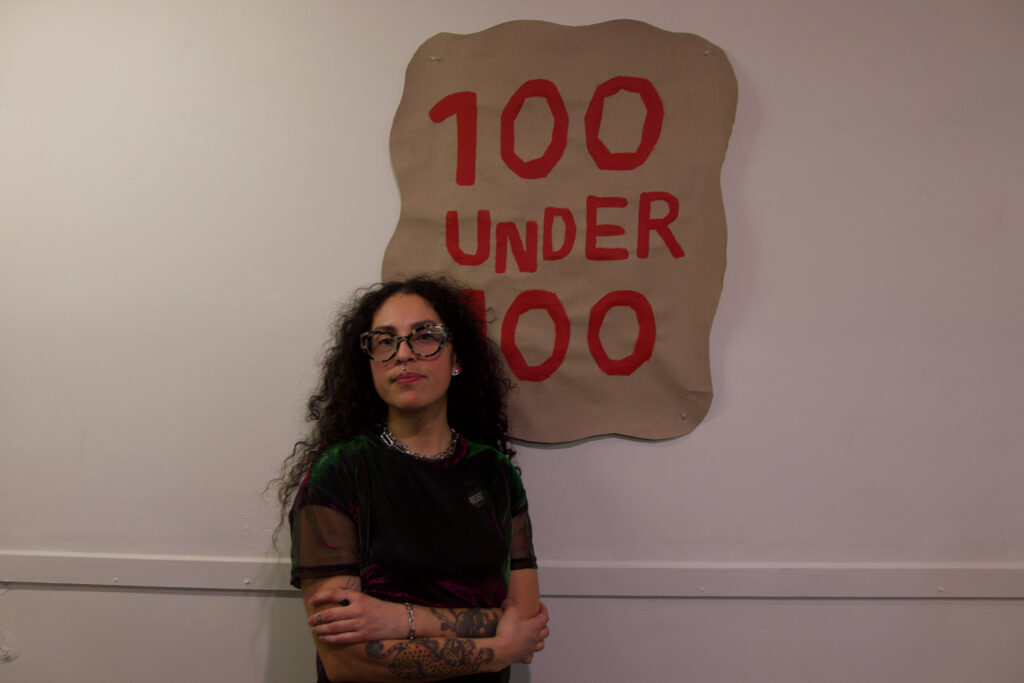
Muñoz curates one of the prime opportunities for art and artists in town in 100 Under 100 at the Warehouse Artist Lofts (WAL) Public Market on R Street. The show features 100 pieces of art by local artists, all under $100.
“I think the 100 Under 100 concept is fantastic because it is bridging the gap between the artist and the viewer,” Muñoz said. “Having everything at a price point that is $100 or less is not very common. It’s such a gift that artists want to be a part of this exhibition because these artists are more than deserving of being paid, but what they do brings so much value and joy to someone who gets to take a piece home.”
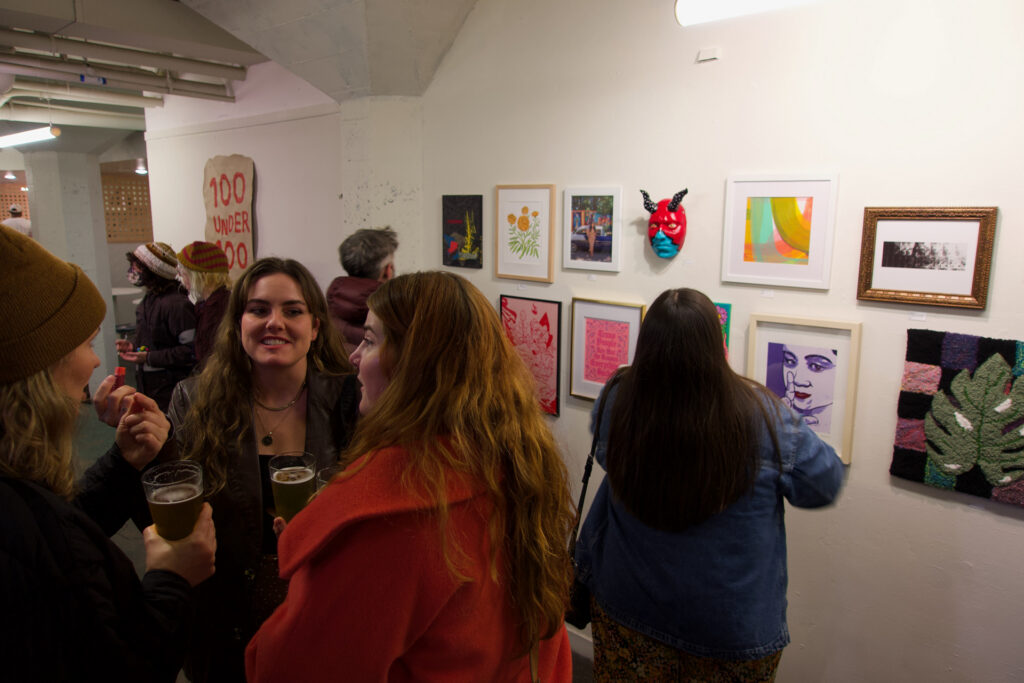
The 100 Under 100 event happens on the first Friday of December.
In the same building every first Friday of the month are the open studios in the Warehouse Artist Lofts, where artist residents open up their apartments to the public to view their art and often sell it.
The Verge Center for the Arts hosts a similar open studios event yearly where participating artists open their studios – which includes home studios – to the public.
Alisa Turner and Avery McPherson will host another music and art show at the Red Museum on 15th Street called Lovers Fest 2026 on Feb. 7.
“There will be 15 artists showing their work. All loosely related to love as a theme,” Turner said. It’s their inaugural Valentine’s event, but it is also a follow-up to their show from last year from which Turner and McPherson had the flyer framed. Not all the work will be for sale, but it’s shows like this where you can find local artists you like.
“There’ll be a wide variety of stuff to purchase. There will be live music and art on display all night,” Turner said.
Galleries and other institutional art spaces can seem inaccessible, but they often hold events with more affordable prices. Galleries will hold archive sales where you can find fine art at fair prices. The Crocker Art Auction is a more premium auction in the region where prices will be much higher. However, during the same period that event is held, Morris said the museum hosts the Big Names, Small Art auction.
“It’s (art that is) 12 by 12 inches or less. So, it’s targeted for new collectors,” Morris said.
Other auctions around town also offer original pieces at reasonable prices. PBS KVIE Art Auction happens in the fall every year, featuring work donated by the artists. Prices vary based on interest from the public, but are often priced lower than gallery artwork.
Thrift and vintage
Thrifting, vintage stores, yard sales and estate sales all provide a way into art collecting. You can find more conventional prints and stranger vintage pieces. This can be a more difficult option as it involves a lot of searching. Estate sales can be more expensive, but you can discover and share someone else’s art collection.
For Turner and McPherson, one of their favorite pieces in their collection is a portrait of a woman named Gretchen.
“We went to an estate sale and there was this beautiful house that had all these crazy pieces of furniture. It was really extravagant. Like there was a carousel horse in the living room,” Turner said. “We go to the backyard and down a hill was a separate unit that almost looked like a church. It was an A-frame with big windows, and inside was her painting studio, and then the upstairs of it was stacks and stacks of paintings.”
One of the paintings was a portrait of the artist and owner of the home, Gretchen Ryan, a Sacramento State art professor emeritus who made art with a variety of mediums. They brought their own personal style to it by putting the piece in a pink frame.
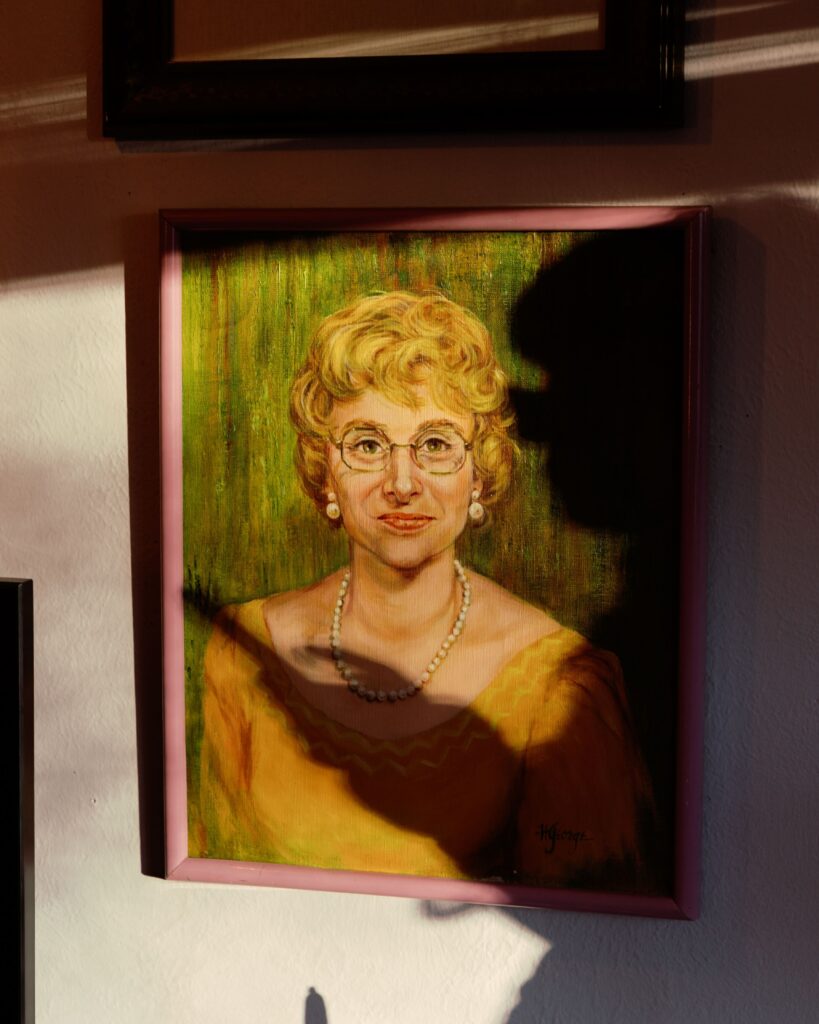
This is where your taste is involved. Remember that anything can be art. Quilts, fabric or rug pieces look great when styled. Vintage and antique stores will be easier to search through as they are more curated, but costs will also be higher. Thrift stores will often have cheap frame options, too.
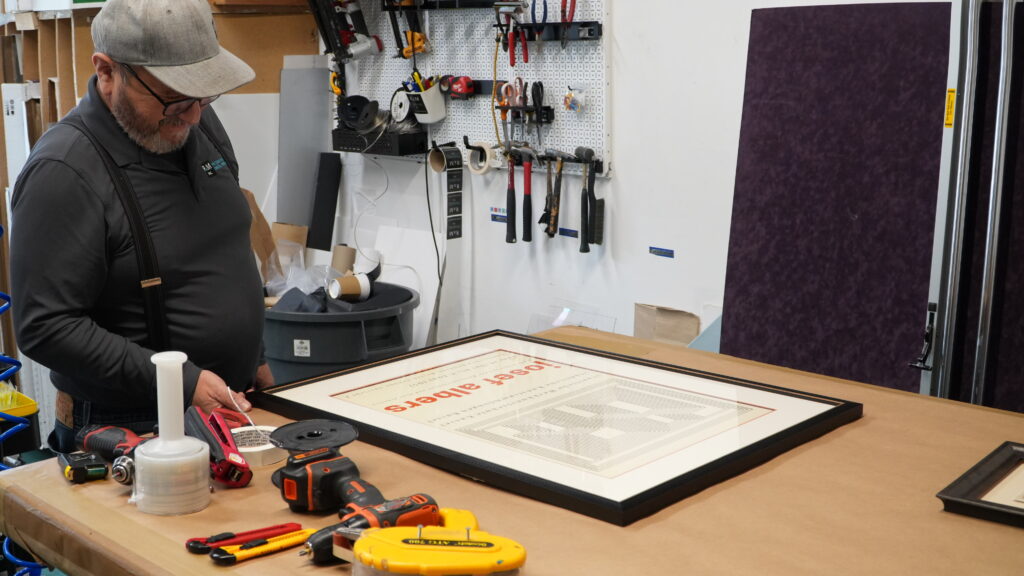
What to know about framing art
With art comes the question of the frame. Muñoz often prefers alternatives.
“Consider other options, too, you know? You can do a floating frame, or you can do magnets, you can frame it other ways too.”
If you are going to explore frame substitutes, consider how you can still protect the piece. There are some dangers of damaging your piece if you hang it with thumbtacks — so, alternatives should be explored. You are creating your own personal museum, and no museum is going to purposefully damage their collection. But ultimately, this is your personal museum, so you can curate and hang as you see fit. If you want to keep your art safe, that often means framing.
Crocker curator Morris said, “Most of the time you don’t need a frame for a painting because they have a protective layer over them already, but if you have something that is like a photograph or a lithograph or a screen print, I would probably have those under some kind of glass.”
“It’s really to protect and preserve artwork and when it’s done really nice, it has a different vibe to it,” said Rene Delgado, owner of R&M Framing near the R Street corridor. The other benefit of framing is it elevates banal items. If you put a matchbook into a frame it takes on new meaning. The frame and matte itself can even become the work of art.
Delgado said that, “In the long run it’s a really good value for customers, because there are two things with framing: it last a long time… the other thing is… the end life. These really don’t have an end life.”
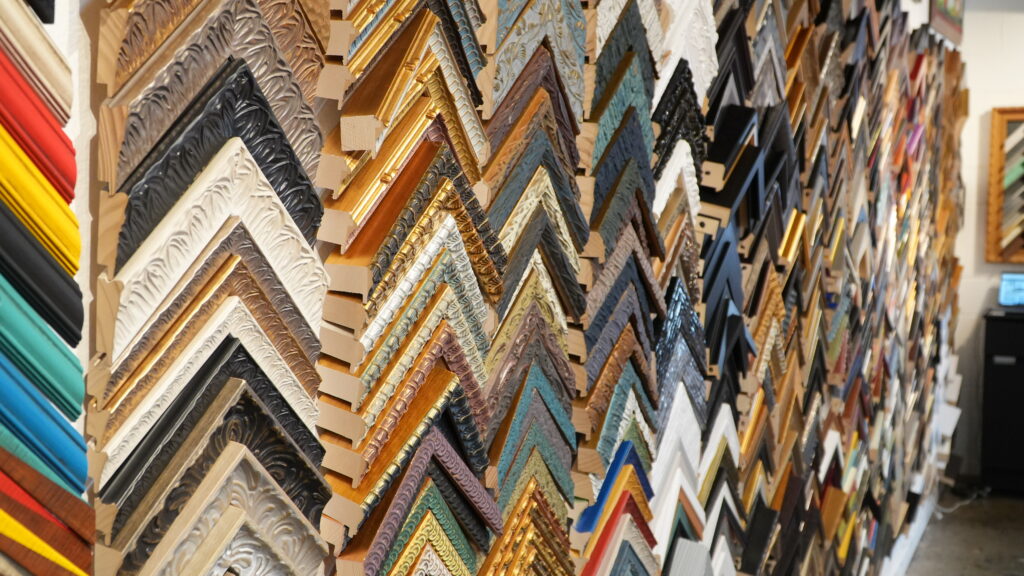
There is a reason you’ll see centuries-old art in its original frames in museums. It’s incredibly useful for archiving purposes. Not only will you get the custom considerations of the frame and matte, but you can also get museum quality glass that will protect the art from sun damage.
“Some person will bring in something that’s just, I don’t know, not challenging, and they just want a basic frame. We have basic frames. So, you can walk out of here framing something for like 30 bucks. Or they can do something real elaborate for like $800, $1000,” Delgado said of the costs of custom framing.
R&M also has a section of ready-made frames that come at a cheaper price than custom. The frames are made from end pieces of the frame molding that would usually be thrown out.
“We stock 20,000 feet of molding, so when we cut a frame, whatever we have leftover, frame shops would usually throw away … To me it’s a waste of resources … And then it fills up the landfills. It’s not very profitable but it’s the right thing to do.”
If you are an entry-level art collector this might be the best route to take.
Rene Delgado’s son, Raphael Delgado, is an artist with a neighboring studio. They stay deeply connected to the local art scene and advocate for it. R&M Framing also has a gallery filled with local art.
Tips for hanging art
Now your art is ready to be hung on the walls. Installation can be a stressful and time-consuming process. Along with helping customers decide what to do with their art, David Saalsaa helps install it. He gave some helpful tips to consider when beginning to decorate. Curator Sara Morris also gave some advice on ceramics.
Tips on hanging art from experts:
- Plan on the ground. Laying your pieces on the ground as you would hang them on the wall. This allows you to better visualize.
- Try templates and artist tape. Saalsaa doesn’t personally find templates helpful for his work, but recommends it for your home. He said hanging butcher paper, or paper bags cut and taped to the size of a piece can be helpful to plan where to put art. He often uses painters’ tape to measure out how he needs to hang the art. This can be done by marking the distance on the tape between the two holes then level the tape on the wall. Just screw into where you marked on the tape.
- Make sure your art is eye level. Saalsaa refers to this as “rested down,” where it is placed at an average eye level for most.
- Use points of contact and floating off the wall. Consider how the art hangs on the wall. Often a wire will cause a lean forward. It’s not completely necessary to do, but Saalsaa likes to try his best to “float” the work off the wall. That means hanging the piece at two points of contact, typically where a wire is usually connected. Something else to consider, especially with heavier pieces, is that a wire can stress the frame. That’s part of the reason Saalsaa avoids using a wire and instead hangs on those two points of contact.
- Consider light and sunlight. There’s a lot of three-dimensional art that can handle direct sunlight. Acryllic and oil paintings are usually safe for light but it’s best to avoid direct sunlight as much as possible.
- Stack pieces. “Three pieces that would typically be installed running horizontally through in a row, it might make sense…” Saalsaa said, “and have more impact to stack them vertically in that space. If there’s enough height in order to accomplish that.”
- Try museum putty. Morris advises the use of museum putty or wax on any ceramics, “It like $5, especially if you have cats… You need to putty your stuff down. Living in California with earthquakes, too.”
Whether it’s a deKooning, a risograph print from a Sacramento artist, or a postcard from your grandma to your grandpa from the 50s, have fun with curating your personal collection and finding your own canon of local artists. Art helps create a home that is beautiful and comfortable and reminds you of who you are.
Below is a list of some spaces to find art in the Sacramento region. Missed one? Let me know at jmata@kvie.org.
Mentioned above
- Crocker Art Museum
- Warehouse Artist Lofts
- Verge Center for the Arts
- PBS KVIE Gallery
- R&M Framing
- Sol Collective
- Latino Center of Art and Culture
- Flower Fist Art Market
- Red Museum
Sacramento
- Timeless Thrills (they also currently have a remote gallery in the Sacramento Natural Foods Co-op)
- Prism Art Space
- Archival Gallery
- Amatoria Fine Art Books
- Old Soul Cafe locations
- Twisted Track Gallery
- Midtown Farmers Market
- 1810 Gallery
- Axis Gallery
- Forma
- Atrium
- Scout Living
- Groundswell Art
- Elliot Fouts
- Tim Collom
- Jane Gallery
- B Sakata Garo
- Archival Gallery
- Gregory Kondos Gallery
- Sacramento State University Galleries
- Sacramento History Museum
- Superbum Vintage
- 5 Sips Cafe
- Arthouse
- Signa
- Immortal Cafe
- Mother Natives
- Broadroom
- Sounds of Solidarity
- Sacramento Antique Fair
Yolo County
- TANA Taller Arte del Nuevo Amanecer
- Natsoulas Gallery
- Sudwerk
- Pence Gallery
- CN Gorman Museum of Native American Art
- Basement Gallery
- Artery
Roseville
Jordan Mata is a digital audience producer for Abridged.
Correction: A previous version of this story misstated the name of a Crocker Art Museum Event. The event is “Big Names, Small Art.” The story was updated at 3:00 p.m. Monday, Feb. 2, 2026.