

The Abridged version:
- Five politically powerful labor unions are backing efforts to make remote work more permanent for state workers.
- Barry Broome, CEO of the Greater Sacramento Economic Council, accused Sacramento’s elected leaders of being unwilling to challenge the union-led effort.
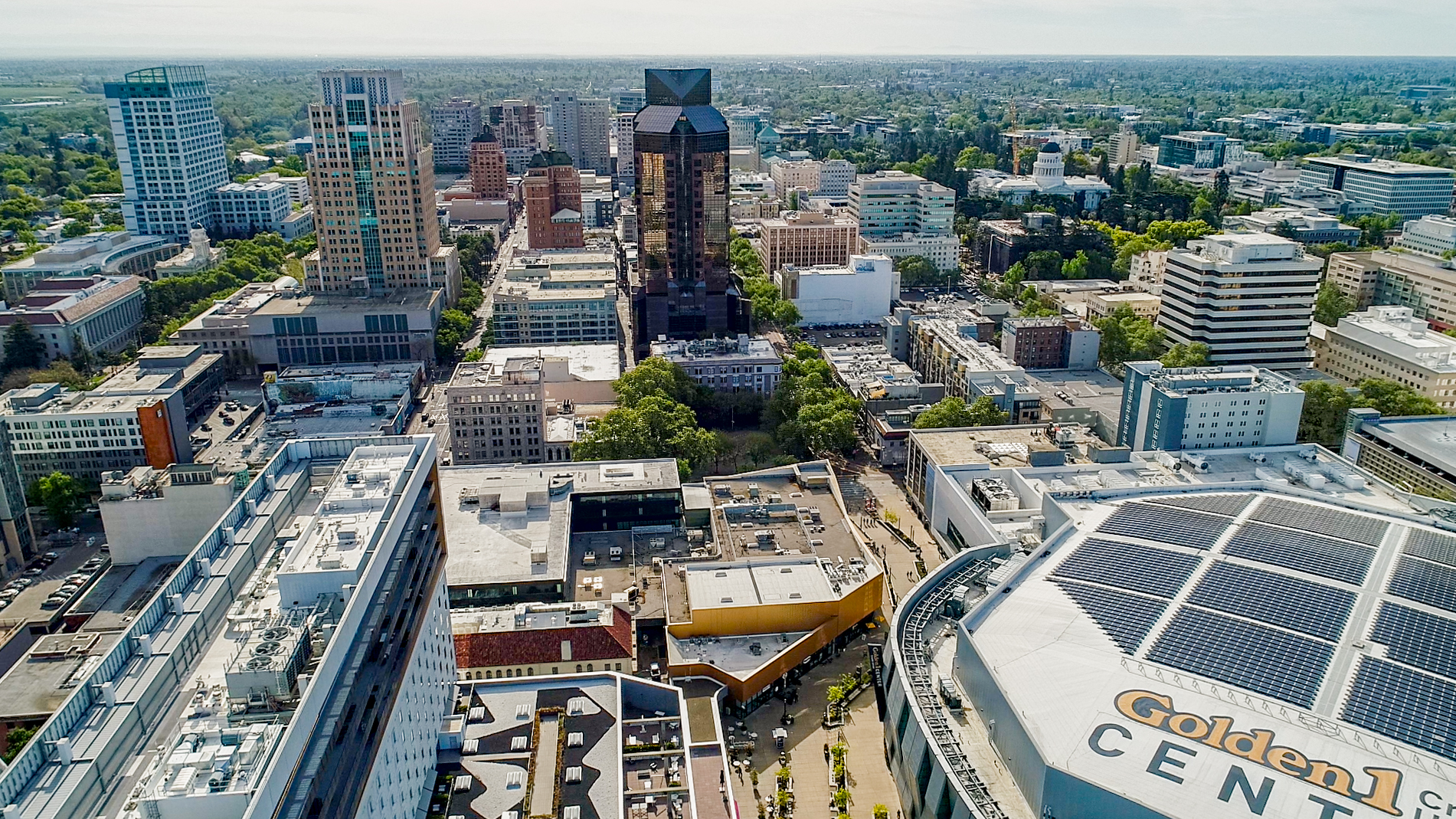
- Downtown Sacramento continues to struggle as the number of office workers remains much lower than it was pre-pandemic.
Powerful labor unions are urging lawmakers to make telework permanent for tens of thousands of state workers, drawing ire from business leaders who say the move will set back efforts to revive an already struggling Downtown Sacramento.
After the height of the COVID-19 pandemic, Gov. Gavin Newsom, two Sacramento mayors and the business community pushed state workers to return to office buildings to breathe life into Downtown. Newsom mandated that all state workers work in-person at least four days a week starting July 1.
Sign Up for the Morning Newsletter
The Abridged morning newsletter lands in your inbox every weekday morning with the latest news from the Sacramento region.
A new effort to make telework permanent, however, poses a challenge to that mandate.
Lawmakers introduced Assembly Bill 1729 earlier this month, which would require all state agencies to develop telework plans for their workers. The bill’s authors are Josh Hoover, R-Folsom, and Alex Lee, D-Milpitas.
They say the benefits go beyond backing state employees who enjoy not having to work in an office as much as they did pre-pandemic. Supporters also point to the effort as a cost-saving measure. The California state auditor released a report last year that said up to $225 million could be saved each year by only bringing workers into the office two days a week, instead of four.
Business leader criticizes union influence
The effort for the new bill is being spearheaded by five unions that represent tens of thousands of state workers, including Service Employees International Union Local 1000, AFSCME Local 2620, CAPS-UAW Local 1115, California Attorneys in State Employment and Professional Engineers in California Government.
Barry Broome, CEO of the Greater Sacramento Economic Council, accused Sacramento’s elected leaders of being unwilling to challenge the union-led effort.
“SEIU has tremendous power and they’re putting a full court press on right now that none of their workers ever have to come back down,” Broome said in a recent interview with Scott Syphax, host of PBS KVIE’s Studio Sacramento.
“If you look at our delegation, you look at our elected officials — I mean SEIU to Democrats in California, it’s like the National Rifle Association in Texas,” Broome said.
“They’re the standard bearer for the Democratic nominees, the endorsement who labor goes with. They’re incredibly powerful, they’re incredibly influential.”
The full Studio Sacramento episode will air on KVIE at 7:30 p.m. on Friday, Feb. 20.
Local leaders respond to Broome’s critique
Three local elected leaders declined interviews with Abridged in response to Broome’s comments.
State Sen. Angelique Ashby pointed to recent momentum for Sacramento State University’s Downtown campus as a path forward for the central city.
“Remote work is going to have an important role in our society. It’s all about balance. We need not look to the past but instead work toward the opportunities that are right in front of us,” Ashby said in a written statement.
Assemblymember Maggy Krell also declined to respond directly to questions about unions’ effort to make telework permanent. In a statement, Krell also pointed to the recent $50 million investment in a new Downtown Sacramento State campus by Meta to spur development Downtown.
“I’m confident we will continue to find creative ways to energize and revitalize Downtown Sacramento — the best is yet to come,” Krell said in an emailed statement.
Sacramento Mayor Kevin McCarty did not make himself available for an interview despite multiple requests. On Tuesday morning, he voiced support for the governor’s return-to-office mandates, in a statement provided through a spokesperson.
“I continue to support Governor Newsom’s balanced approach to bringing workers back to our downtown,” the statement said. “Having more people working downtown delivers tremendous economic and social benefits to Sacramento.”
McCarty added that the city must “diversify our approach for revitalizing downtown,” with efforts including the Sacramento State campus, more housing in the central city and converting offices into housing.
‘The nature of work has changed’
When Gina Garcia-Smith sits at her desk at the California Department of Education, it’s not unusual for her and her colleagues to be stuck in Zoom meetings for much of the day.
She currently works from the office three days a week and is hoping the legislative effort will make remote work a more permanent fixture.
“The reality is that the nature of work has changed,” Garcia-Smith said.
Garcia-Smith, a member of SEIU Local 1000, said costs of parking Downtown weigh heavily on workers and that inflation has made it difficult for many to afford going out to eat as frequently as they used to. She said telework policies could also help with recruitment.
“I hate to sound harsh but that’s not the problem of our employees,” said Anica Walls, president of SEIU Local 1000. “It’s not our job to make sure the businesses in Downtown thrive.”
Walls added that if workers are required to go back into the office, the union could demand higher wages to compensate for added employee costs for parking, transportation and child care.
Downtown offices continue to struggle
More than 100,000 people worked in Downtown Sacramento before the pandemic. Now, that number is only at about 60% of its pre-pandemic high, according to the Downtown Sacramento Partnership.
Michael Ault, executive director of the organization, is still advocating to put state workers in offices four days a week.
“We would love to see the employees come back as much as we can,” Ault said.
While he recognized that many workers enjoy the flexibility of remote and hybrid work, he said that the lack of public employees Downtown has noticeably hurt small businesses.
Downtown businesses leaders like Ault continue to point to the recent Sacramento State efforts, as well as momentum in the Downtown Railyards for a new hospital, soccer stadium and entertainment center that are under way.
Having more public employees Downtown “accelerates everything we’re trying to build,” he said.
“Office (work) is critical. It’s the heart and soul of this district, but we’ve got to diversify,” Ault said.
Felicia Alvarez is a reporter at Abridged covering accountability. She’s called Sacramento home since 2015 and has reported on government, health care and breaking news topics for both local and national news outlets.
This story was updated at 10:44 a.m. to reflect new comments provided by Sacramento Mayor Kevin McCarty.