

The Abridged version:
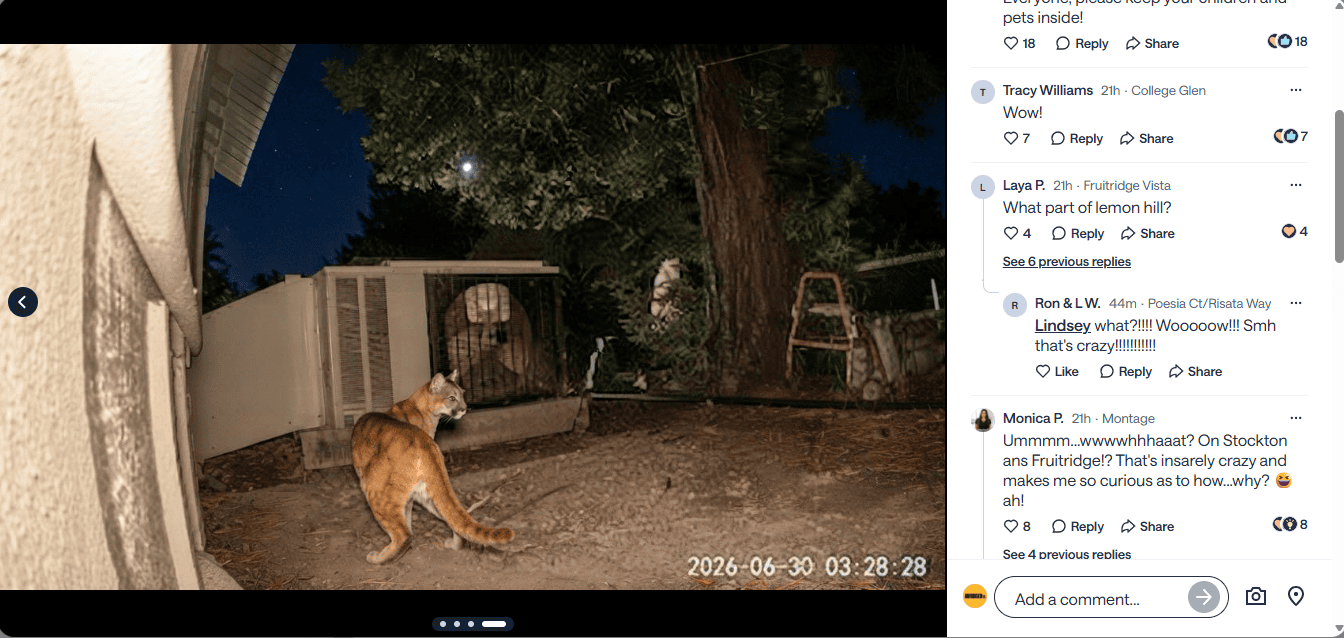
- Videos and photos circulated on Nextdoor this week falsely claimed the California Department of Fish and Wildlife had confirmed a mountain lion sighting in the Lemon Hill area of Sacramento County.
- The department’s human-wildlife conflict team was quick to spot the fake, a spokesperson said. An Abridged reporter with expertise in debunking fake online imagery pointed to tell-tale signs of manipulation.
- Asked whether AI-generated wildlife reports are becoming more common, the department said it has not seen a noticeable increase but receives periodic false reports.
Wildlife experts quickly debunked a social media post falsely claiming a mountain lion was spotted in a Sacramento County backyard near Fruitridge Road and Stockton Boulevard on Tuesday morning.
The faux feline, the California Department of Fish and Wildlife confirmed, was an “AI-edited picture of a domestic house cat.”
“It’s fake,” said Peter Tira, a spokesperson for the department, adding the agency takes seriously any potential mountain lion sighting in a densely populated neighborhood regardless of where it comes from.
Sign Up for the Morning Newsletter
The Abridged morning newsletter lands in your inbox every weekday morning with the latest news from the Sacramento region.
The false alarm on Nextdoor claimed a homeowner in Lemon Hill captured a mountain lion on a home security camera. The post appeared at 5:14 p.m. Tuesday and included two videos and two images timestamped 3:17 a.m. and 3:28 a.m. The post had more than 300 likes, 100 comments of concern and had been shared more than 200 times as of Wednesday afternoon. By Thursday morning, after Abridged by PBS KVIE debunked it, the post was taken down.
It also falsely claimed Fish and Wildlife confirmed the sighting and urged neighbors to keep a “heads up and stay safe.”
Tira told Abridged that the department’s human-wildlife conflict team was quick to spot the fake. The experts based their determination on the animal’s body, size and movement.
An Abridged reporter with expertise in debunking fake online imagery pointed to other tell-tale signs of manipulation, including inconsistencies in the animal’s size and shape, which shift rapidly frame-to-frame.

While the report turned out to be false, Tira said it still required time and attention from wildlife officers.
“We take our public safety responsibility seriously and will investigate every report about mountain lions in urban, suburban and heavily human-populated areas where they just don’t belong and where it’s not safe for them or the public to remain,” Tira said.
Abridged left multiple messages to the account associated with the post and did not receive a response.
Tira said, “Fabricated reports generated through AI or other computer-assisted programs often generate fear, waste taxpayer resources and are a huge disservice to the community to say the least.”
Asked whether AI-generated wildlife reports are becoming more common, Tira said he has not seen a noticeable increase. “But, we have periodically received intentionally false reports of one kind or another.”
Mountain lions are native to California and are occasionally seen near developed areas, although verified sightings in highly populated Sacramento neighborhoods are uncommon. Wildlife officials encourage residents to report suspected sightings but caution against sharing unverified images or information on social media.
When asked what’s next regarding the post hoax, Tira said, “We’ve moved on.”
Rob Stewart is a senior correspondent and host with PBS KVIE, and reports for Abridged. Felicia Alvarez contributed reporting.
Editor’s note: This story was updated on Thursday to reflect the post had been removed from Nextdoor.