

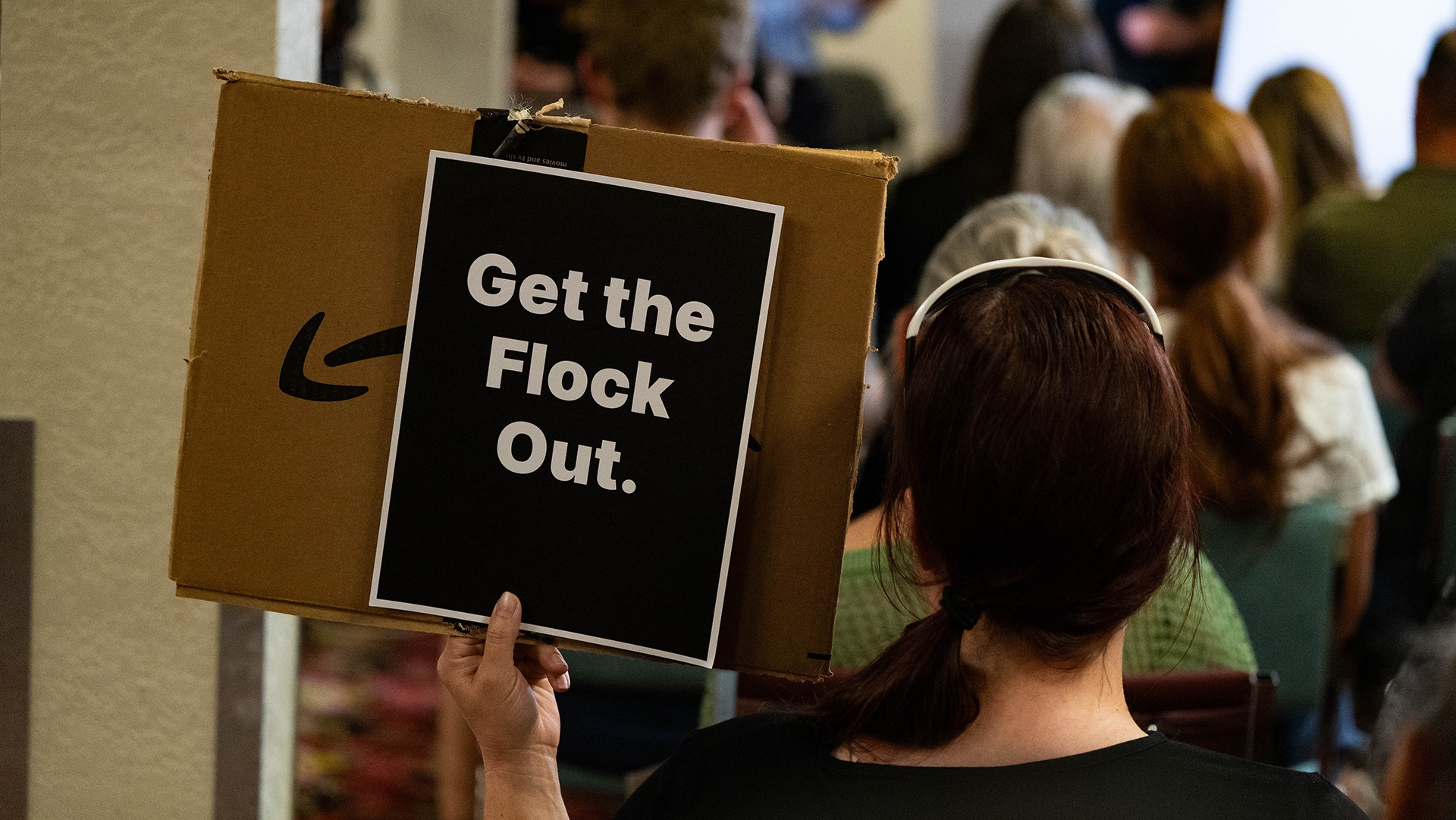
The Abridged version:
- More than 70 community members attended a town hall focused on how Auburn police use Flock cameras, mostly expressing criticism of the surveillance technology.
- While police said the automated license plate readers speed up investigations and keep people safe, critics contended that the company violates civil liberties by sharing data with thousands of agencies throughout the country.
- Auburn’s existing Flock contract expires in 2028, and whether the city will join other nearby cities that have recently canceled their contracts is unclear.
Some Auburn residents are banding together with a message for the city police department: it’s time to “deFlock.”
The city of Auburn hosted a town hall Monday night to discuss its use of Flock cameras, high-tech automated license plate readers that have drawn widespread backlash across the region and nation. Flock is a private company that operates a network of 120,000 AI-powered cameras, building a searchable database of vehicles, people and their movements. This information is accessible to thousands of law enforcement agencies with Flock contracts, from local police departments to federal agencies like the FBI and U.S. Border Patrol.
The Auburn police department entered a contract with Flock in 2022 and now operates 10 of the company’s cameras. Many community members have expressed outrage over the technology, calling it a violation of civil liberties with steep potential consequences.
Auburn police officials and a handful of Flock supporters contend that the technology helps law enforcement identify and apprehend criminals quickly, saving the department time and money.
Sign Up for the Placer County Newsletter
Coming soon: A weekly newsletter focused on the stories that matter to Placer County.
Recently, the nearby cities of Grass Valley and Folsom both ended their contracts with the company. Opponents of Flock say that Auburn must do the same.
“No one asked us if it would be all right to spend our tax dollars to construct a warrantless tracking system of cameras that log where we travel,” Auburn resident Mike Davis said. “I’m asking you, council, to end the Flock contract and remove the cameras, and to commit to not just Flock, but no new surveillance technology in the future without a public vote.”

How Auburn police use Flock
At times, tensions flared, with several community members arguing that Auburn police are unaware of the magnitude of Flock’s data storage and sharing capacities as a private company.
Auburn police chief Bryan Morrison said that Auburn police use data collected on vehicles — such as car models and descriptions, license plate numbers and potential travel directions — and not the personal information of people associated with them. He added that the information isn’t randomly reviewed by police officers without cause, and that the data bank is only accessed on a “need to know” basis.
“Our (automated license plate reader) system is not interfaced with a DMV database to automatically identify the registered owner, let alone the driver,” he said. “After an ALPR alert, investigators lead the front. Our systems do not have facial recognition capability … it does not store biometric information.”

Morrison said that because of Flock cameras, investigations that may have taken years can now be closed within minutes or hours.
A handful of Flock supporters spoke up in favor of the technology, asserting that it has a track record of swiftly helping law enforcement identify criminals. Some of the speakers identified themselves as current and former law enforcement who have personally used license plate readers to solve serious crimes, from high-value property theft to shootings.
“I’m asking you to allow our police department to continue to use a lawful tool that has proven to be beneficial in helping to solve crimes,” Scott Bergenstock, a former Auburn police officer who currently volunteers with the department, said. “Because protecting our civil liberties does matter. But so does protecting the people who live, work and raise their families in this community.”
Most Flock supporters were met with boos from the crowd after their comments, prompting efforts to settle the crowd by officials.

Public backlash to surveillance
Those against Auburn’s contract with Flock say they take issue with the mass surveillance of ordinary people and the ways Flock’s information bank has been used by bad actors across the nation.
Community members largely expressed that their problems with Auburn’s use of Flock cameras has little to do with the police department itself. Rather, they staunchly oppose the storage and sharing of their personal information and movements with agencies and private entities across the country.
DeFlock Auburn member Sarah Spitler, who obtained public records from the police department, said the records show Auburn data was externally searched millions of times, with a significant amount of searches coming from federal and out-of-state agencies.
“A system that was pitched as a local tool, described as a plan to build a citywide dragnet, and an audit trail that confirms almost none of what was promised,” Spitler said.
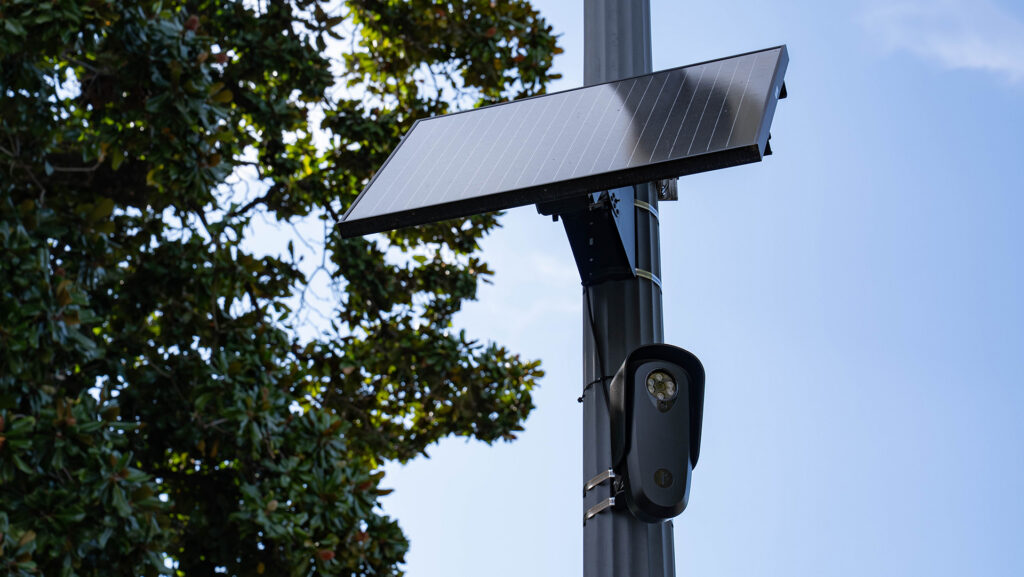
Flock critics also argued that the capture and storage of their personal and vehicular information is warrantless.
Morrison acknowledged that for years, Auburn police unintentionally shared information collected from the cameras with out-of-state agencies, including after Flock provided the department a “button” to opt out. In the last few weeks, Morrison said, the police department was able to shut off the feature.
The Auburn police consulted with four law enforcement agencies in the region and found that none had experienced or observed Flock using surveillance data for “nefarious” purposes, Morrison said. But community members argued that Flock employees and other law enforcement workers across the country may not use the information appropriately.
“This includes romantic stalking, which is using ALPR technology to look up, stalk, and harass former romantic partners,” Auburn resident Steven Meade said, citing a case involving an officer in San Jose.

The debate over Auburn’s future
Toward the end of the meeting, tensions flared between Flock opponents and the few supporters gathered in the room over the balance between civil liberties and public safety.
Supporters of the system argued that if you have nothing to hide, you have nothing to worry about. Auburn resident Harley Don said that he believed a majority of Placer County community members supported the use of Flock cameras to promote public safety, despite the backlash at the town hall.
“Up until tonight, I had not met anybody in person who was actually opposed to Flock cameras,” Don said, drawing expressions of disbelief from members of the audience. “I think as far as Placer County goes, they’re all in this room.”
But Flock critics contend that the issue is more complex than a simple matter of safety, with the cameras treating all ordinary people as potential criminals.
“I feel disgusted every time I pass the camera, that somebody’s snooping on me every single day, and I’ve not done nothing,” Meadow Vista resident Asif Ali, who lives near one of Auburn’s Flock cameras, said. “There seems to be some kind of blind faith in these technologies.”
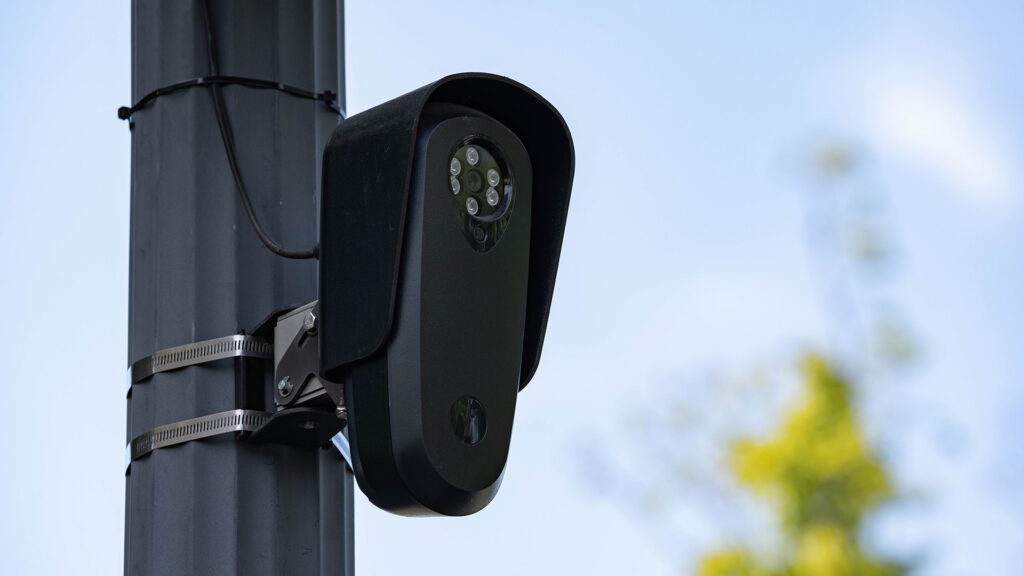
After the meeting, some Auburn residents who spoke with Abridged by PBS KVIE said that they remain opposed to the cameras, with the police presentation doing little to address their privacy concerns.
The police, they added, seemed to be largely unaware of the scale of Flock’s data-sharing with entities outside of Auburn.
The city’s existing contract with Flock extends until June 2028. Whether any change to the arrangement will come from the community backlash is unclear. But most residents made clear they believe it’s time for the cameras to “get the Flock out.”