

The Abridged version:
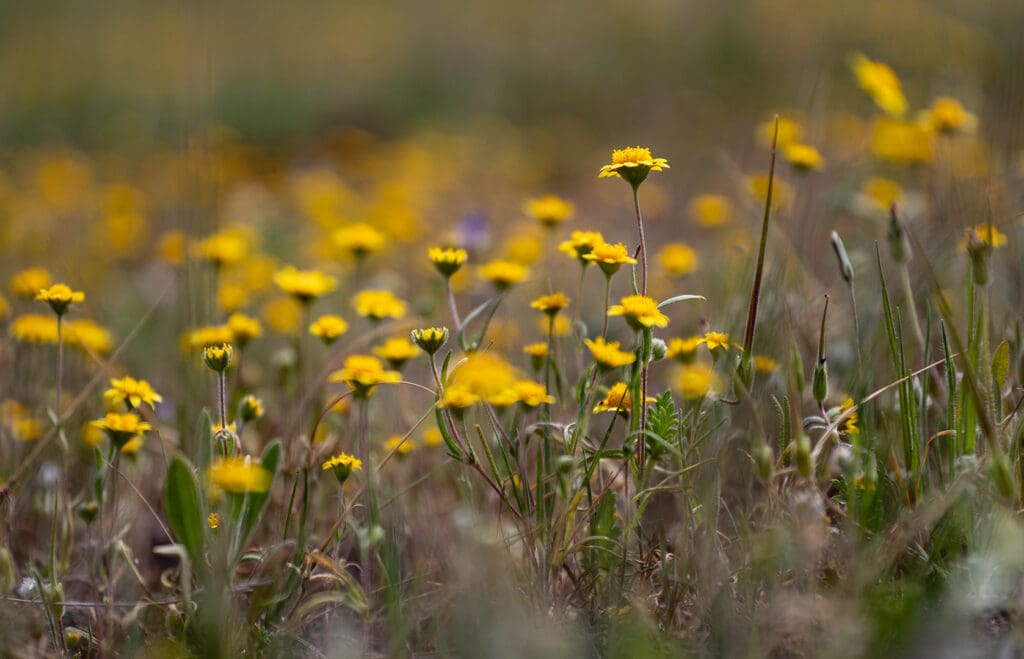
- Wildflowers in and around Yolo County are blooming for the next few months. But it already “looks earlier in the year” due to heat effects, one expert said.
- Bear Valley, which lies just north of Highway 20 in neighboring Colusa County, has a wildflower display that can be viewed from the comfort of the car.
- Tuleyome, a Woodland based non-profit, offers free wildflower tours of the valley and its surrounding hillsides.
Even after more than half a century spent as a botanist studying California’s wildflowers, the plants near Glen Holstein’s Yolo County home continue to surprise him.
On a trip to Bear Valley at the end of March, it was the flowering ash trees, which bloom subtle clusters of white flowers in short seasonal windows. Despite dozens of previous trips to the valley, Holstein, now retired, and co-wildflower tour guide Nate Lillge had never seen that particular display.
“Every trip into Bear Valley is a little different,” said Lillge, who is a naturalist and program director at Woodland based non-profit Tuleyome.

That’s because the plants and flowers of the valley, which lie in California’s Inner Coast Range, are part of a “mosaic of vegetation” that changes with the climate. Year by year, and sometimes even week by week, visitors to the region’s wildflower-strewn slopes and mountainsides can find different blooms depending on factors like soil type, precipitation and land management practices.
That variation is part of the reason Holstein and Lillge lead tour groups into Bear Valley each spring. And with this year’s early heat, the show has already begun.
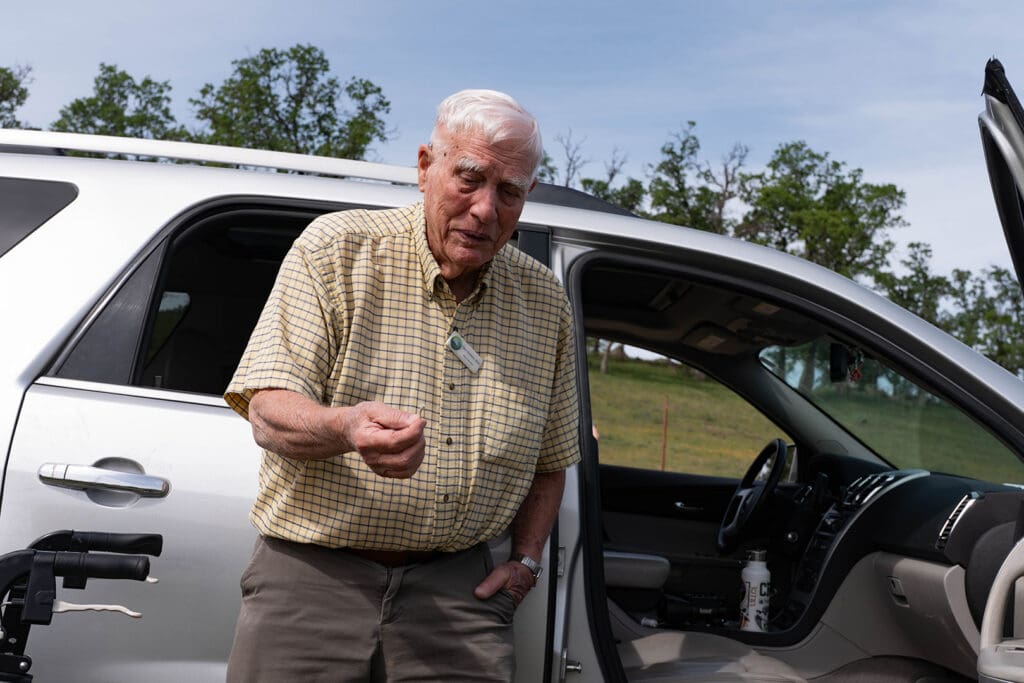
A wildflower expert
Flowers have long been a central part of Holstein’s life.
As a kid, he would spend the greener months traversing chaparral in Southern California’s Santa Monica Mountains, looking for wildflowers for his mom. The excursions, which were opportunities to explore the wilder places around his boyhood home in Laurel Canyon, took new shape when he came across a Willis Linn Jepson botany manual at his local library.
The plants that dotted the hills had names and taxonomies — California poppies, white sage, canyon sunflowers, blue dicks and silverpuffs. Holstein got so good at differentiating between them that he once identified a big patch of yellow California goldfields from 30,000 feet up in an airplane.
What started as a childhood pursuit eventually became something more. In the 1970s, he moved to Davis to pursue a doctorate in botany. After his dissertation was accepted, Holstein took a job as a plant surveyor and spent decades roaming the hills and flatlands of the Sacramento Valley.
Over the years, he published articles on California’s plant biomes, traveled the world to study plants in Mediterranean climates, helped establish nature reserves like Cosumnes, Cold Canyon, Nipomo Dunes, Carrizo Plain and Woodland Regional Park and saved numerous rare plants that he came across on surveys.
“Every time was a different strategy,” he said when talking about preserving rare plants that he found on private property. “It’s just a matter of persuasion.”
Changes in the valley
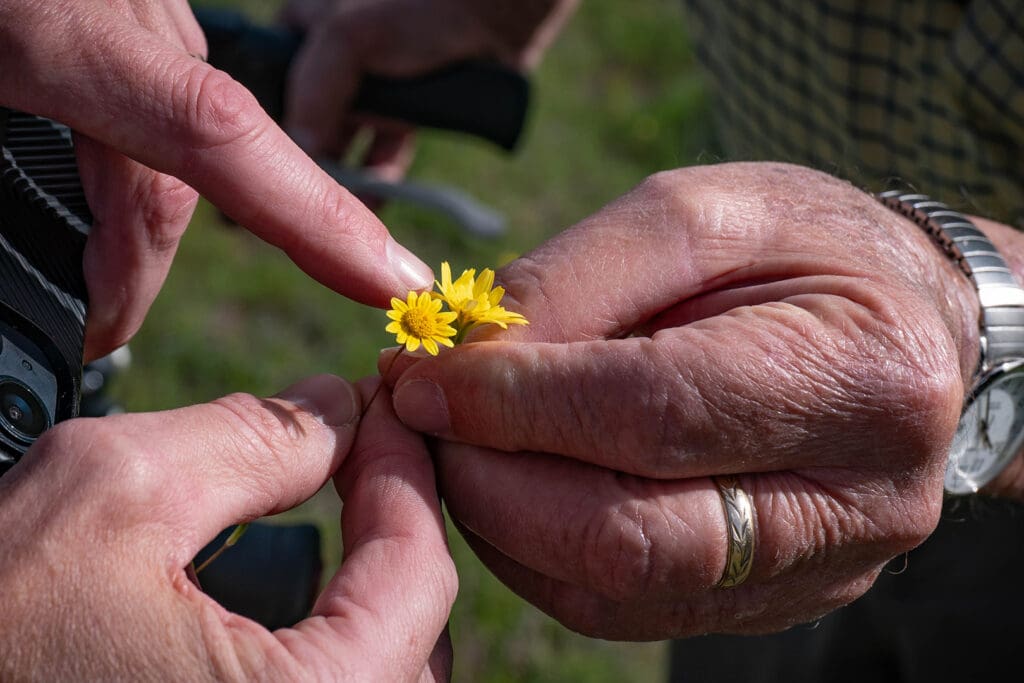
All that experience has taught Holstein that things can change year after year, sometimes dramatically.
When he first started taking trips to Bear Valley in the 1970s, an invasive weed was choking the native displays of flowers.
“It’s over for the flowers in Bear Valley,” Holstein said he thought at the time.
Then ranchers began managing the valley differently and cattle grazed heavily on the weed.
Now, more than half a century later, the valley floor is carpeted with purple lupine and yellow tidy tips in the spring. On the hillsides, flowers with common names like monkeyflower, creamsack, butter and eggs, Ithuriel’s spear, paintbrush, chia, wallflower, Chinese houses, nightshade, buttercups and q-tips thrive.
But things remain in flux at Bear Valley.

Some subtle changes can only be picked up by trained eyes like Holstein’s or Lillge’s.
During their trip on Friday, both experts noted the effects of the early heat on the valley.
“It looks later in the year,” Lillge said.
Neither was sure what that could mean for the rest of the season. All they could really predict was that the next day’s tour would have many of the same flowers in bloom.
But in Bear Valley, even that isn’t a given.
READ NEXT: Guide to wildflower season around Yolo County: Where to spot some of California’s best
Daniel Hennessy joins Abridged from the California Local News Fellowship. He’s a reporter covering Yolo County.