
The Abridged version:
- Black artists and activists regularly cite joy as an important component of their work.
- Researcher Naomi Alormele describes Black joy as a method of refusal.
- The cultural practices associated with Black joy have benefits that can be explained scientifically.
Andru Defeye served as Sacramento’s poet laureate from 2020-2024 and is the driving force behind Sacramento Poetry Week. In this new regular feature, “The Great Joy Hunt,” he explores the science behind joy and shares strategies for adding more to our lives.
It’s February.
Black History Month.
Living in Sacramento, I am surrounded by history-making Black people any day I decide to leave my house. From social justice activists to artists, one of the conversations I have most with them is about the importance and role of joy in their work.

Forged under conditions built to destroy the human spirit, Black joy has gone far beyond a feeling and become a strategy, a discipline and a powerful tool of resistance. The heinous things done to Black people at the hands of America cannot be overlooked or understated. And yet, Black joy persists, refusing erasure.
From microaggressions to overt racism, Black Americans are often forced into sustained vigilance. This forced hypervigilance wears down the nervous system. Chronic stress keeps cortisol elevated and is associated with increased risk for cardiovascular disease, metabolic disorders, and mental health challenges.
In her 2025 paper, “I dream of an island: Black joy, storytelling, and the art of refusal” (published by “Frontiers in Sociology”) Naomi Alormele describes Black joy as a method of refusal. She found that in environments shaped by racialized stress and emotional labor, Black women used humor, storytelling, ritual and creative practice as strategies of survival and reimagining.
What Alormele documents culturally, neuroscience maps biologically. Humor, storytelling, ritual, and creative practice activate reward pathways, strengthen social bonding through oxytocin, quiet threat circuitry and buffer the body against chronic cortisol exposure.
This wasn’t mood management. It was protection from spaces where contributors described constant self-monitoring and masking joy. From a scientific standpoint that reads as communal nervous system regulation from inside chronic social threat. Black joy in this framing is not distraction from harm. It is resistance to its physiological imprint.
When asked what Black joy was, MH (Mental Health) First co-founder, registered nurse and award-winning poet Asantewaa Boykin answered “Black joy is joy.”
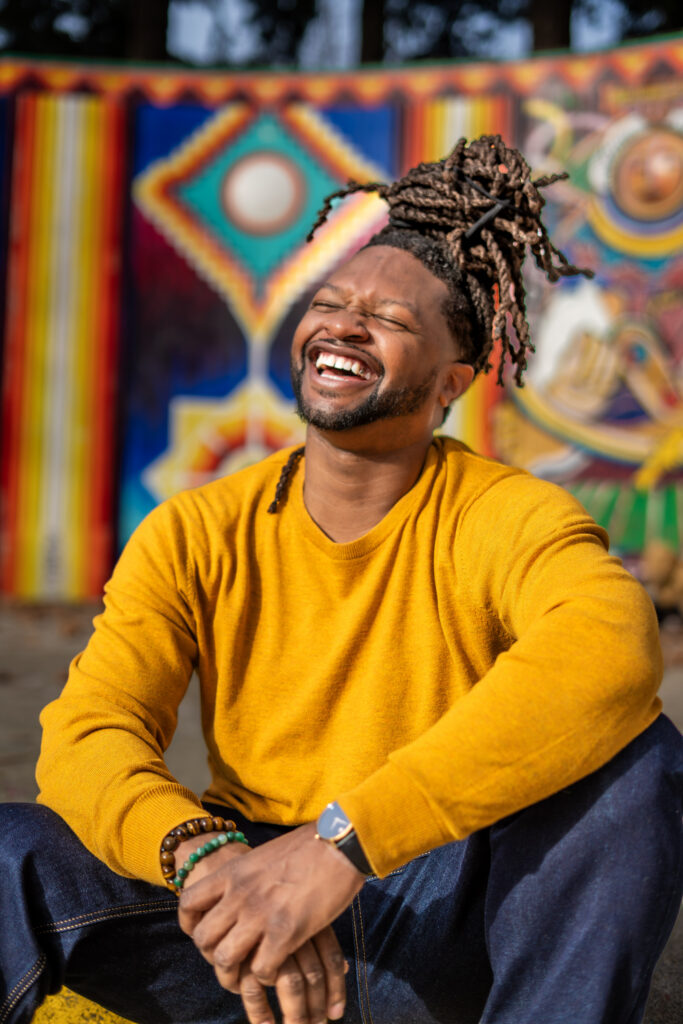
Her answer was as simple as it was profound. Black joy is built different but has something to teach us all about our own joy.
In January 2020, Boykin co-founded MH First, a non-police mental health crisis line where residents having mental health episodes could call and receive community support without law enforcement involved. Instead, community members receive formal training to de-escalate and support citizens in mental health crises.
“Our current system is based on fear and punishment which activates the brain’s fear circuitry, especially the amygdala. Joy is connected to our brain’s reward system and is experienced by multiple parts of the brain.” Boykin explains, “When we shift the act of caregiving and being cared for away from punishment, shame, and fear we are essentially decreasing the stigma and creating a sense of normalcy and acceptance because it is normal for us to be intermittently mentally unwell.”
Black joy has never waited for safety to exist to be created. It creates safety. Black joy is infrastructure, not indulgence. When communities build humor, storytelling, ritual, and creative practice directly into their resistance, they are not escaping reality. They are regulating their nervous systems in real time. The lesson for all of us is not to imitate Black joy, but to understand its design. Joy must be embedded inside the system, not postponed until the system improves.
This past weekend marked the 9th Annual Black Joy Parade in Oakland. This year’s theme was “Black is the Blueprint” and celebrated Black culture, community and creativity with a march and an all-day festival. More than 100,000 people filled downtown Oakland, joining the parade and more than 20 performances throughout the day. One of those performances was the Black Joy Choir, a yearly staple at the celebration.
Michaela Anang, J.D., a poet and researcher, joined the Black Joy choir this year for her first time. “Black art has always been politicized in the US, and within white supremacy culture, is inherently political,” they explain, “We are actively shaping our realities through our art whether by celebrating ourselves, telling our own truths, by speaking back against systems that try to oppress us.” She goes on, “It fills the spaces between our synapses that imbue times of immense grief with hope, that create the collective memory of lives worth living and of futures worth fighting for because we want, we need, we deserve more of it together — joy, life, love, all of it.”
When Anang says Black art “fills the space between our synapses,” they are describing something neuroscience has long observed. Repeated communal emotional experiences shape neural pathways and determine what feels possible and safe to our nervous systems. This is an example of how Black joy does not simply survive hostile systems. It designs alternative ones. If Black is the blueprint, then joy is not decoration. It is load-bearing. It is also an invitation for the rest of us not to replicate the aesthetic, but to examine the architecture of our own lives.
Poem: The great joy hint by Andru Defeye
Black joy is not a trend. It is a technology.
Rhythm built into resistance.
Care built into crisis.
Laughter rehearsed in the face of erasure.
It shows us how to rebuild what matters.
Where is joy structurally protected in your life?
Where is collective rhythm built in before stress spikes?
Where is care decoupled from punishment in your home, workplace, or community?
Joy is not the afterparty. It is the infrastructure.
The blueprint already exists.
Black communities have been building it for generations.
Andru Defeye is the former poet laureate of Sacramento and a regular contributor, writing The Great Joy Hunt for Abridged.