
The Abridged version:
- Concerns about how building California Forever could affect the Delta Breeze have been circulating in Yolo County, but experts say the would-be development is unlikely to alter the beloved phenomenon.
- The Delta Breeze is caused by atmospheric forces that occur over hundreds of miles.
- California Forever, which has proposed building “the next great American city” in Solano County, could bring changes to the landscape, but probably not the Delta Breeze, experts say.
Like a thoughtful friend, the Delta Breeze often shows up right when it’s needed.
At the end of a hot day in the Sacramento Valley, when triple-digit temperatures seem like they may never release their grip, the breeze comes on subtly, almost unnoticeable to the uninitiated. Leaves in the trees overhead start to flutter and, within minutes, unbearable heat transforms into pleasant summer weather.
The Delta Breeze is beloved in the Sacramento Valley, enough that experiencing it is a rite of passage.
“When I moved to Davis in 2013 I was shocked by how obsessed everyone is about explaining the Delta Breeze to newcomers,” said Davis resident Claire Goldstein. “It’s fair to say that I now see why everyone is obsessed by the breeze, and I am too.”
Because of that, any potential threats to the breeze are taken seriously. When word got around that the billionaire-backed California Forever development — which could add thousands of new homes and a shipyard in Solano County — might disrupt the breeze, residents were concerned.
“People orient their summer days and build their homes around the breeze,” Goldstein said. “It would be a devastating loss.”
Sign Up for the Morning Newsletter
The Abridged morning newsletter lands in your inbox every weekday morning with the latest news from the Sacramento region.
Experts from the National Weather Service office in Sacramento and UC Davis said the phenomenon, often manifesting as a gentle cooling trend, is driven by atmospheric forces that occur over hundreds of miles. Because of that, a surface level development, even one as potentially large as California Forever, likely will not have a noticeable effect on the breeze.
“It is unlikely that alterations to the land surface from the California Forever project will have any appreciable effect on the strength of the Delta Breeze,” said Paul Ullrich, associate professor of regional and global climate modeling at UC Davis.
Atmospheric forces and geography
The conditions that cause the Delta Breeze are as old as California itself.
When the Central Valley heats up in the summer, warm air rises, drawing in cold, marine air from the coast. As it makes its way through the Golden Gate, the cooler air is funneled to the interior of the state by its geography.
“Because you have the Coastal Range and the Diablo Range right there, you have kind of a channel in that strait as you get toward Vacaville and then through Fairfield and up into Davis and the Sacramento area,” said Jacob Spender, meteorologist with the weather service office in Sacramento.
“So that’s going to help channel all of that cooler air and those pressure differences up into the Sacramento area.”
The mountains in the region then act like a bowl, and the air circulates north toward Yuba City and south toward Stockton. That can make temperatures drop from triple digits down to the 60s and 70s.
“With that, you’re actually going to get temperatures dropping rapidly,” Spender said. “We’ve seen these occurrences almost every year, where we’ve had temperatures be extremely hot, and then cool very rapidly.”
A major proposed development
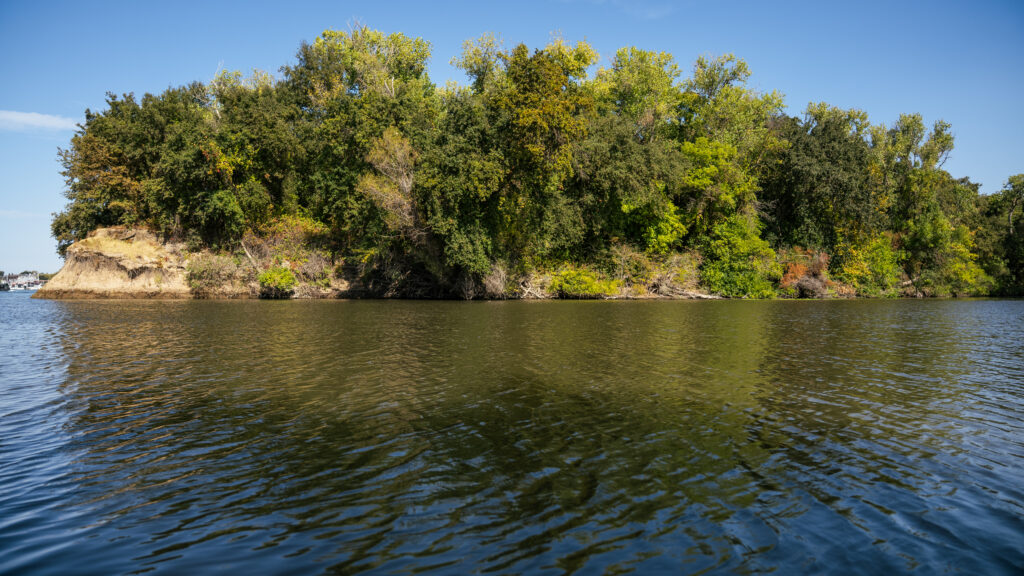
On its way to the Central Valley, the Delta Breeze passes over hundreds of miles, including roughly 110 square miles in Solano County that are owned by California Forever, a development company bankrolled by billionaires that plans to build “the next great American city” between Suisun City and Rio Vista.
As the developers, including founder and CEO of California Forever Jan Sramek, have poured money into getting the project approved, their tactics have proven controversial, causing a number of local groups to organize against it.
Along with concerns about the environment, opponents cited loss of agricultural land, traffic, pressure on infrastructure, water quality effects and fiscal issues as reasons to deny the project.
After months of back and forth, the Solano County Board of Supervisors narrowly rejected a plan to fast-track construction of the project’s proposed shipyard, delaying but not killing the development.
If the California Forever project is eventually approved and completed, it plans to add manufacturing facilities, a shipyard and just under 200,000 homes to a stretch of land in Solano County that is mostly being used as rangeland.
That conversion would rapidly urbanize a large chunk of open space right at the edge of the California Delta.
Here to stay
Development and urbanization do influence temperatures through a phenomenon known as the urban heat island effect.
Cities and towns, which are constructed with things like asphalt and concrete, do a worse job at absorbing heat than nearby rural areas. That can happen in places like Sacramento, where temperatures in metro areas tend to be higher than surrounding open space.
But the heat change, though noticeable in town, would not have much of an impact on the Delta Breeze, Spender said.
“These are strong atmospheric forces that are creating the Delta Breeze,” he said. “Synoptic scale, when we’re looking at that, we’re looking at a long-range area spanning hundreds and up to a thousand miles that can really impact an area.”
Even the Sacramento area, which encompasses millions of residents, “wouldn’t necessarily affect it.”
As far as the wind itself, construction of a project at the scale of California Forever can lead to land-surface friction that affects wind closer to the ground, but that is unlikely to meaningfully affect the Delta Breeze, Ullrich said.
“It would cover a relatively small footprint compared to the San Francisco Bay Delta, so winds would not be appreciably slowed by the turbulence produced by these buildings,” he said. “I would honestly expect that the Shiloh Wind project has a much greater effect, since it disturbs winds at higher altitude, but even then the effect will be modest.”