

The Abridged version:
- Districts across the Sacramento region have implemented new, stricter limits on students’ cellphone use at school. Some campuses bar the devices only during class time, while others extend the prohibition to the entire day.
- Responses from teachers, parents and students have been mixed, often depending on the severity of the rules.
- Experts say that along with these rules, students need space to learn self-discipline and healthy digital habits for life beyond graduation.
“Life changing! Brilliant! Spectacular!”
“This is ridiculous.”
“There has been nothing positive about this phone ban.”
Responses to an anonymous survey of students, parents and teachers at Rosemont High School garnered diverse commentary on the school’s year-and-a-half-old cellphone moratorium.
While feedback from educators at the Sacramento City Unified school was broadly positive, both students and parents were divided.
Several members of both groups agreed that the no phone rule was a blessing to the learning process, eliminating a major addictive distraction.
Others, young and old, thought the clampdown was a step too far, disconnecting families and taking away a potential tool for the classroom.
The Rosemont community’s fractured reactions are emblematic of growing cellphone scrutiny in classrooms across the region and state, similar to ongoing debates around proper AI-use. As school leaders fight to recapture students’ attention, some experts warn a total prohibition could be counterproductive.
‘We can finally see them’
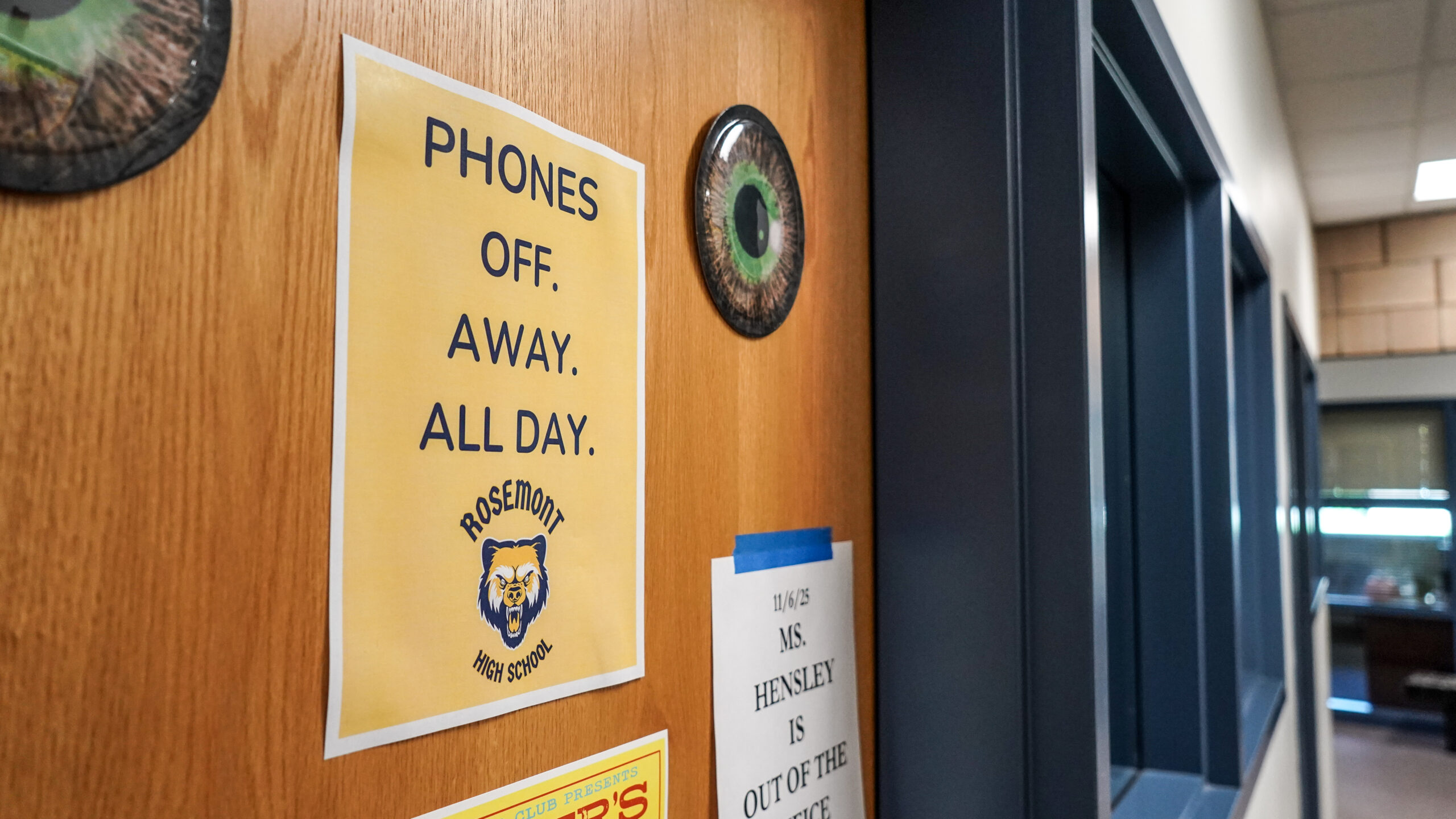
Students at Rosemont High School are expected to have their phone “off and away” from the start of school until they leave campus for the day.
Signs on walls remind them, along with words of warning from teachers as the teenagers file into classrooms.
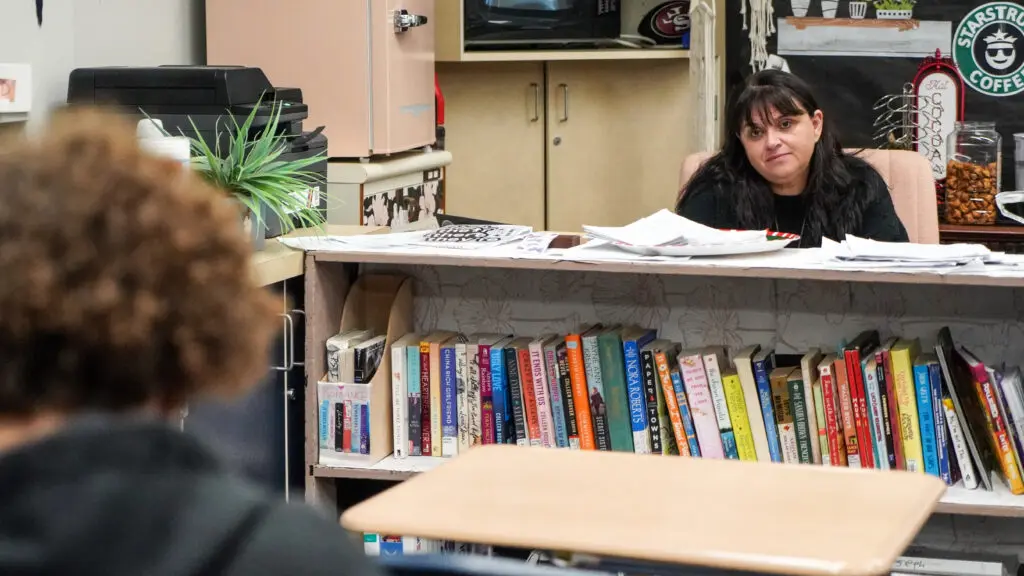
This has been the law of the land since the start of school last year. English teacher Blythe Antrim says it’s made a world of difference.
“It’s fabulous,” she said. “We feel like we can finally see them. They’re not looking down at their waist, at their pockets — their phone. They are engaged.”
The biggest difference she has noticed: Students return her hellos and good mornings in the hallways. “It’s pretty amazing.”
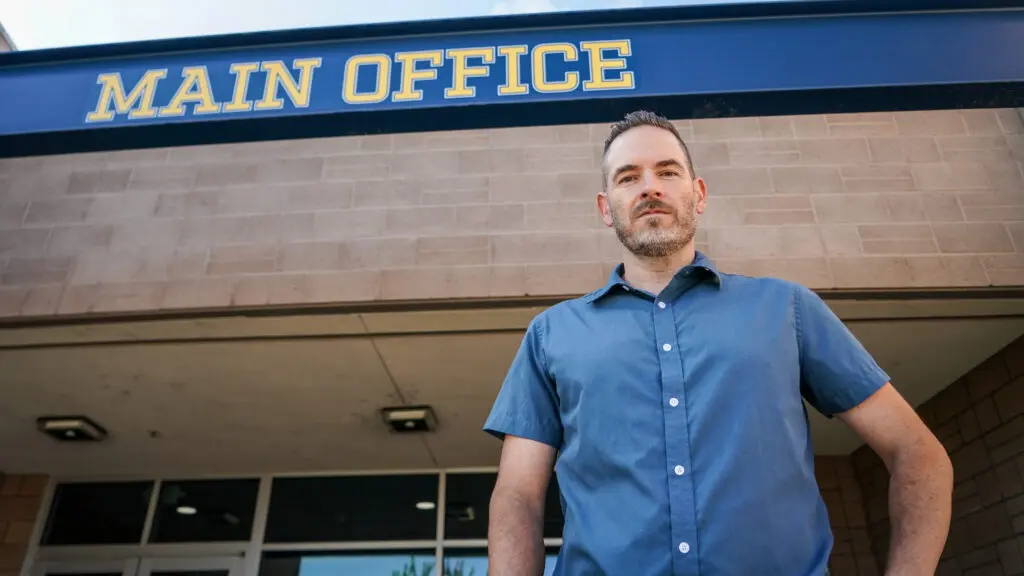
Rosemont’s Principal Mitchell Jones implemented the policy after what he said was a breaking point with student behavior. Not only were teens zoning out in class, he said, conflicts were escalating due to social media use at lunch and between classes — thus the daylong ban.
The bulk of student and parent complaints have focused on this carryover into nonclassroom time.
“But,” Antrim said, “right now, you have to overcorrect what has happened. Which is constant use.”
New state law sets higher expectations
Rosemont’s policy goes beyond the steps of many schools and districts in the area — as well as the minimum set by a new state law.
California legislators approved the Phone-Free School Act last year directing districts to set stricter guidelines that limit the use of cellphones in the classroom.
Assembly Member Josh Hoover, R-Folsom, co-author of the bill and former Folsom Cordova Unified board member, said the law was specifically not meant to be a ban on phones.
“I actually wrote the bill specifically with school districts in mind, especially as someone who was coming from the local level, to make sure there was flexibility built in,” Hoover said. “Districts have the ability to tailor these policies to what they think is going to be best.”
The legislation gives administrators until July 1, 2026, to update their policies. In many Sacramento region districts, implementation is well underway, and results are starting to show, according to school officials.
Fewer phones result in greater socialization
At El Camino High School, cellphones had been a distraction in the classroom for years, Principal Evelyn Welborn said. But as the pandemic waned and students began returning to learning in person, the situation worsened.
So, starting in the 2024-25 school year, Welborn said the school began enforcing a schoolwide policy where students must put their phone away and out of immediate reach during class.
Not only are students now paying better attention, she said, but classmates are also starting to engage more with one another.
“Teachers are reporting to me, they said, ‘You know, years and years ago, I would always try to get students to stop talking … It’s nice to hear students are talking now,’” Welborn said.
“For so long,” she continued, “they were just kind of self-isolating, using their phone.”
El Camino was an early test case for the San Juan Unified School District, which in May updated its policy to bar the use of cellphones during instructional time, with limited exceptions. The guidelines, policy documents read, strike a balance between potential instructional benefits and plausible risks, including to students’ mental health.
“Four years seems like a long time, but it goes by in the blink of an eye,” Welborn said. “Then students are out, and we want them to be productive adults and be able to manage themselves and their devices and all those things so they can be successful.”
Different grade levels see different rules
In new research from the UCLA Center for the Transformation of Schools, researchers recommend that school leaders vary their cellphone rules by age.
“Stricter limits in middle school; more flexibility for older students,” the brief reads.
Students at Elk Grove Unified can experience this variance firsthand as they age through the district.
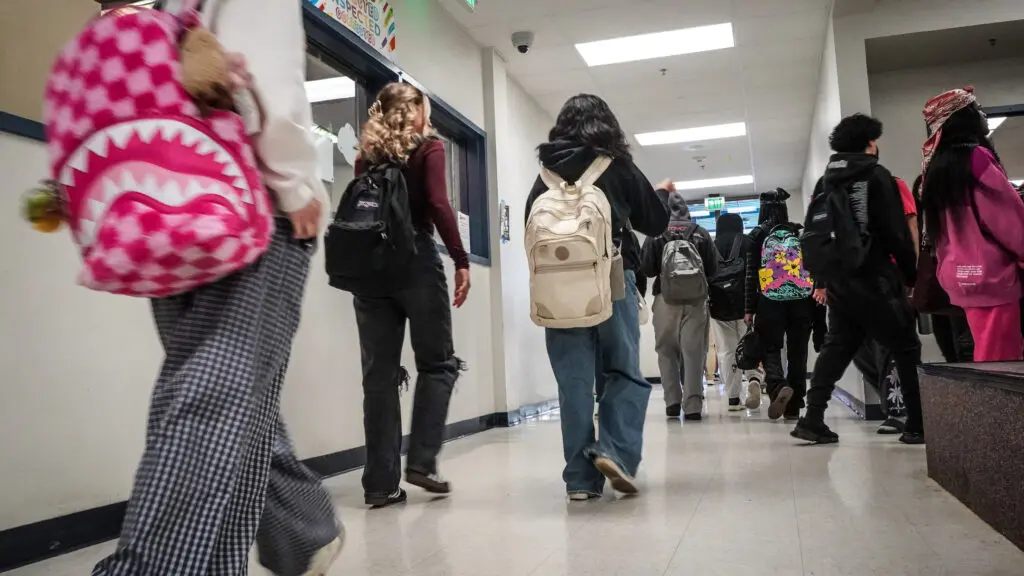
In grades TK-6, personal devices are to be turned off and out of sight throughout the school day. Then, in seventh and eighth grades, middle schoolers may be allowed to pull out their phones, with a teacher’s permission.
Once they reach high school age, restrictions loosen, so that students can use their phones at lunch or during passing periods.
Exceptions to the rules throughout grade levels include things like medical reasons. For example, Assistant Superintendent of Secondary Education Chad Sweitzer said many students with diabetes use Bluetooth devices and apps on their phones to monitor blood sugar levels.
Other local districts follow a similar age-dependent rule pattern.
At both Natomas Unified and Folsom Cordova Unified, students in grades TK-8 may not use phones at all on campus, while high schoolers are restricted only during class time, according to each districts’ policies.
Washington Unified TK-8 students can use phones at school only before first bell or after the last. High schoolers in the West Sacramento district then face similar restrictions to their Natomas and Folsom Cordova peers.
Tighter rules balanced with healthy habit learning
Skeptics of the new restrictions are not just limited to students or parents.
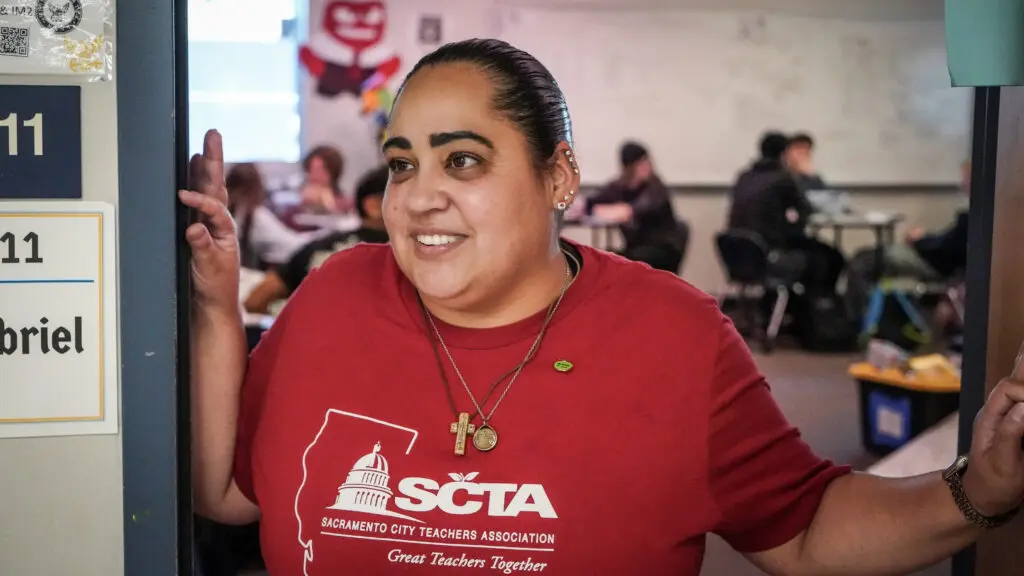
Jennifer Chabriel, a math teacher at Rosemont, said absent from the school’s prohibitive policy, she feels, is space for teens to learn self-control.
“They’ve just been given this tool and not shown any way to use it,” Chabriel said. “(As educators), we’re fighting the tool, and we’re just like, ‘No, no, you can’t have it!’ Instead of saying, ‘Well, this is where it’s appropriate, and this is where it’s not.’”
“We forget that when students are 18 and they go to college, nobody’s going to fight them on that tool,” she added.
Kathy Do, a co-author of the recent UCLA research, said limits should be paired with educational components for kids.
“Stopping at just the restrictions doesn’t help equip them with the tools or the habits they need to find that balance,” Do said.
Hoover, who spearheaded the state’s limitation push, said he has met with student groups to discuss possible legislation that supports education around responsible technology use.
“I think that it is really important that families, when they purchase a smartphone for their child, that (they) are really emphasizing those lessons at home, too,” Hoover said.
As Do noted, “Sometimes, we forget that students are learning a lot from what we do as adults.”
Savannah Kuchar is a reporter covering education. She came to Sacramento to be a part of the Abridged team and contribute to a crucial local news source.