

The Abridged version:
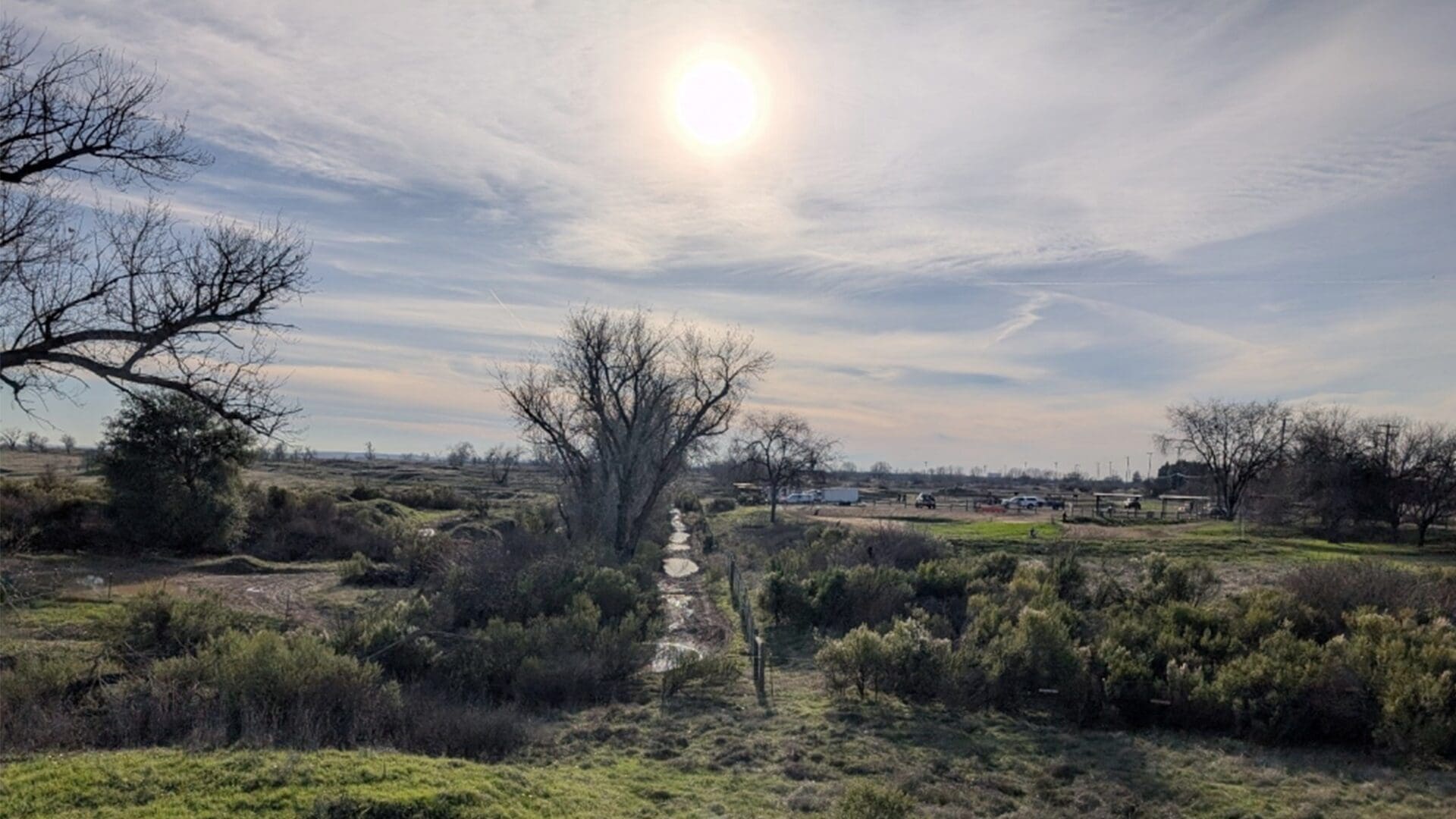
- A lawsuit has been filed to halt a 2,700-acre solar farm planned on the site of rolling hills and grazing areas in eastern Sacramento County.
- Much of the lawsuit centers on the destruction of thousands of native trees, including mature oak trees.
- The 200-megawatt project aims to substantially increase the county’s supply of renewable energy.
A pair of environmental groups have filed a lawsuit to halt plans for one of the largest solar farm projects in Sacramento County.
In mid-November, the Sacramento County Board of Supervisors voted unanimously in favor of the Coyote Creek solar project. The project is planned on a 2,700-acre span of grazing lands and native habitat south of White Rock Road and along Scott Road. About 1,400 of those acres would be converted into an “agrivoltaic” solar farm that would allow animals to graze near the solar panels.
The 200-megawatt project would also mark a substantial increase to the county’s solar energy supply. By comparison, the Sacramento Municipal Utility District currently generates about 340 megawatts from large solar projects, and 210 megawatts from rooftop solar panels, according to the utility’s website. SMUD is working to eliminate all greenhouse gas emissions by 2030.
Oak tree loss, inadequate EIR cited
The lawsuit, filed on Dec. 18, alleges the project would violate the California Environmental Quality Act. The California Native Plant Society and the Environmental Council of Sacramento are listed as plaintiffs.
Much of the lawsuit centers on the loss of thousands of oak trees and native plants on the site. The project would see the destruction of 3,493 trees or a loss of 41.36 acres of oak canopy, according to Sacramento County.
“We’re talking about trees dating back to the time of Ghengis Khan and the Middle Ages —destroyed without appropriate due diligence and in conflict with the county’s own plans,” said Nick Jensen, conservation program director with the California Native Plant Society, in a press release.
Acorn replanting questioned
The largest oak tree proposed for removal is estimated at 850-years-old and has a chest-diameter of 67 inches, according to the California Native Plant Society.
To account for the loss of trees, lead developer DESRI Inc. previously stated that they were partnering with the Sacramento Tree Foundation to harvest acorns from native oak trees on the site to replant them in protected areas.
The lawsuit alleges that those mitigation plans don’t include adequate performance standards to ensure the successful replanting of oak trees.
The lawsuit also cites impact to endangered and threatened bird species like the tricolored blackbird and Swainson’s hawk, and alleges that the county failed to address the issue in the project’s final environmental impact report. The suit also alleges impacts to groundwater were not adequately addressed.
Representatives for DESRI did not immediately respond to a request for comment. A spokesperson for Sacramento County did not immediately respond to a request for comment.
Felicia Alvarez is a reporter at Abridged covering accountability. She’s called Sacramento home since 2015 and has reported on government, health care and breaking news topics for both local and national news outlets.
Correction: An earlier version of this story misstated how much the Coyote Creek project would contribute to SMUD’s energy supply. Corrected 10:28 a.m. on Tuesday, Dec. 23.