

The Abridged version:
- The city of Sacramento is slated to change the name of a downtown space to “Union Plaza” after allegations of sexual abuse against Cesar Chavez surfaced earlier this year.
- After the plaza renaming is finalized, city staffers will consider the future of the bronze statue of Chavez that sits on the north end of the park.
- The original artist behind the statue said that although Chavez is the lead of the piece, the majority of the elements detail the families of the farmworker movement.
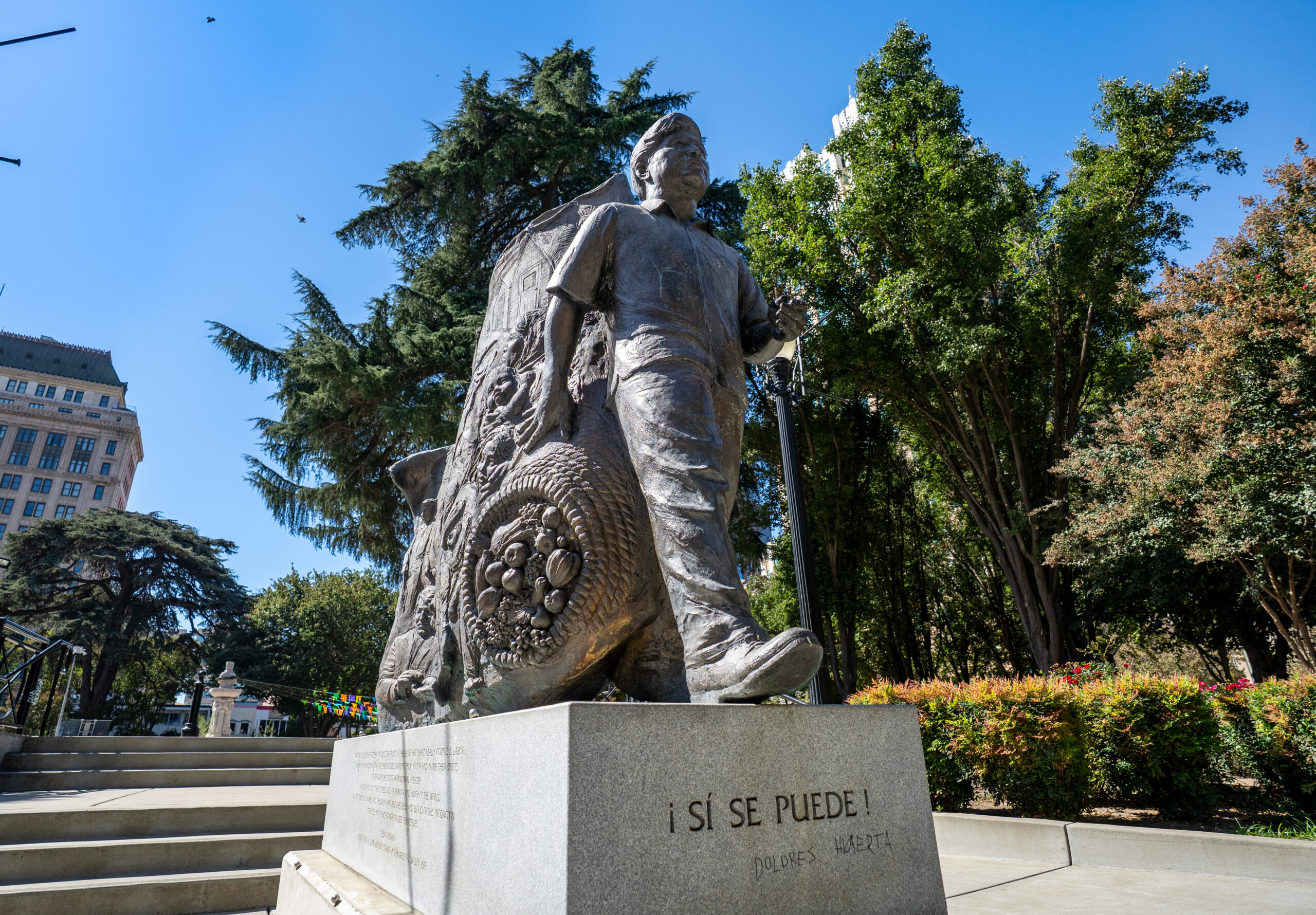
As the city of Sacramento moves forward with renaming Cesar Chavez Plaza, the future of the 8.5-foot long bronze statue that adorns the plaza is also coming into question.
Last Friday, the city revealed the prospective new name for the park that sits just across from Sacramento City Hall on I Street between Ninth and 10th streets.
City staffers are recommending the name “Union Plaza,” after reviewing the results of a citywide survey circulated over the summer.
Sign Up for the Morning Newsletter
The Abridged morning newsletter lands in your inbox every weekday morning with the latest news from the Sacramento region.
Over 2,600 responses were submitted for the survey, with Union Plaza receiving the most votes at 450. Runners-up include Dolores Huerta Park, Farm Worker’s Plaza, People Plaza, Plaza Park and Nisenan Plaza.
Sacramento’s Parks and Community Enrichment Commission is set to vote on the new name at its meeting Thursday. If the commission approves, the name change will go before the Sacramento City Council for a vote.
While there are no imminent plans to remove the statue, city staffers are beginning to explore their options, city spokesperson Gabby Miller said.
“Once the name is finalized, we’ll do another outreach effort … to see what the artist wants and what the community wants,” Miller said.
Artist reckons with accusations against Chavez
In March, a multiyear New York Times investigation detailed accusations that the civil rights icon abused girls during his time at the helm of the farmworker movement in the 1970s. After the investigation was published, Dolores Huerta — who cofounded the United Farm Workers union with Chavez — said she was a survivor of Chavez’s abuse as well.
When the accusations came to light, cities and schools quickly maneuvered to remove Chavez’s name from public places. For the artists behind murals and statues once dedicated to Chavez, the reality has been difficult to reckon with.
“It’s such a frustrating thing to discover about someone that was such a hero to so many people,” Lisa Reinertson said.
Reinertson is the artist behind the Cesar Chavez statue in Downtown Sacramento, which has been affixed to the plaza with his name for the last 25 years.
The statue was unveiled in April 2001, on the eighth anniversary of Chavez’s death. The original call for artists to honor Chavez came from former Mayor Joe Serna Jr., Reinertson said.
Before his time as mayor, Serna was an activist who worked closely with Chavez and the United Farm Workers.
Statue could keep farmworker elements
The larger inspiration behind the sculpture was Reinertson’s own experience watching the UFW march on the State Capitol in 1966, when she was just 11 years old. Her parents were volunteers with the Sacramento Democratic Party and helped provide food and water for the marchers, she said.
The next day, thousands of marchers and their supporters arrived on the steps of the Capitol, but discovered that then-Gov. Pat Brown was unable to meet with the marchers as he was in Palm Springs.
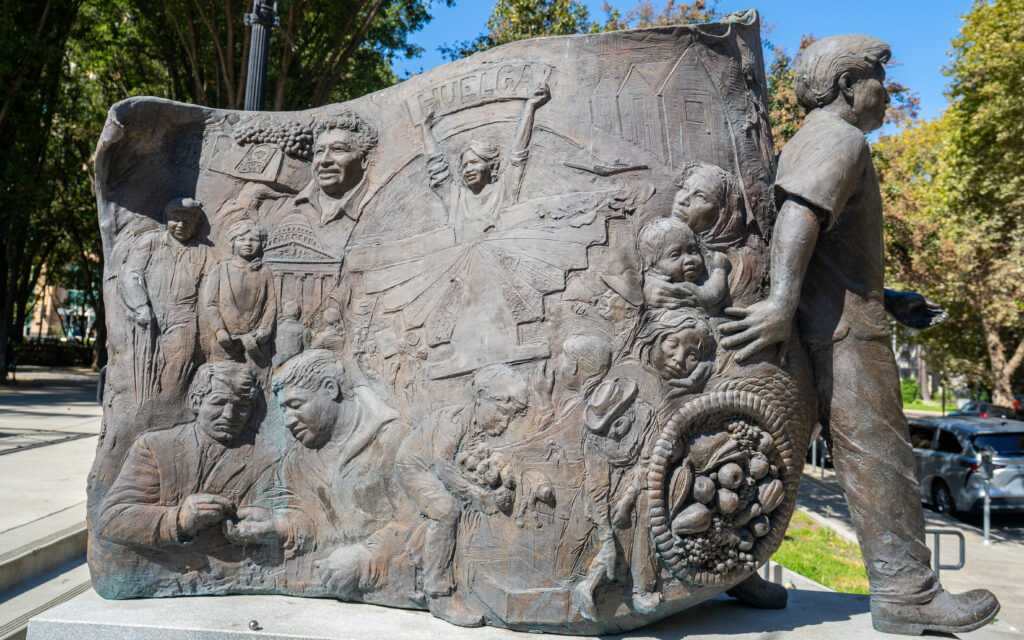
“That march that was ignored needed to be remembered in Sacramento in a permanent way,” Reinertson said. “It’s not just a statue of Cesar Chavez. … That piece has always been about the whole movement.”
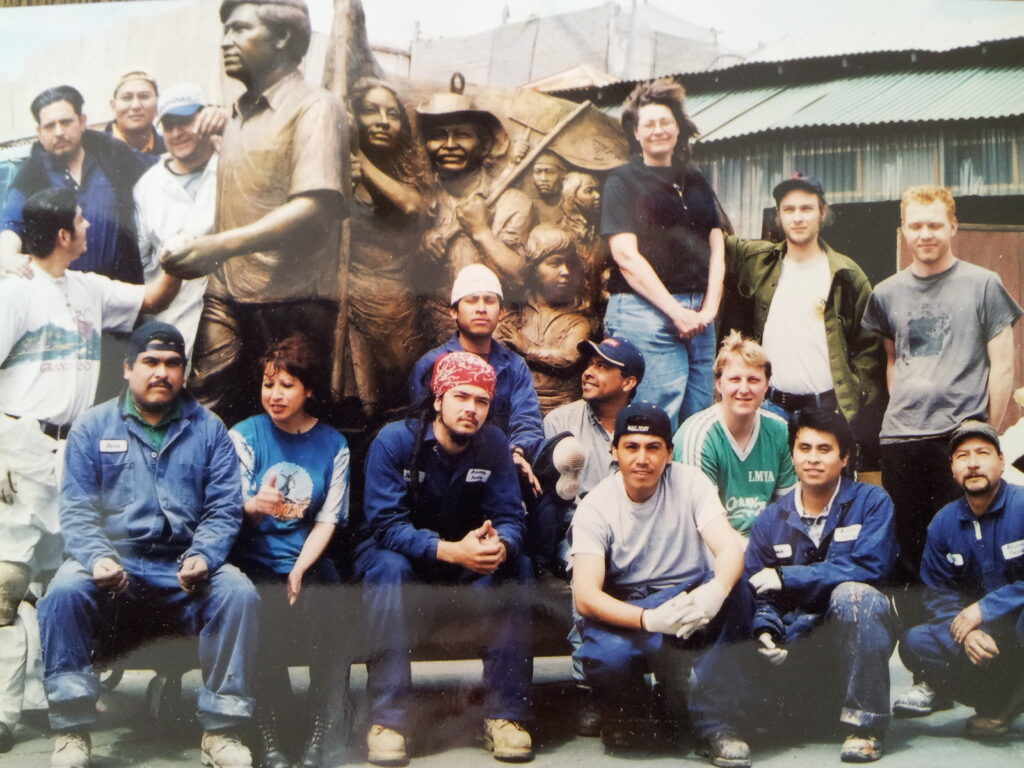
The bulk of the 1,000-pound statue is the broad flag that waves behind Chavez. Within that portion of the piece are the faces of other farmworker movement leaders, including Huerta, plus the men, women and children who make up the farm workforce.
In the last month, as conversations around the plaza have become more formal, Reinertson has also begun exploring the possibility of changing her piece.
Physically, it would be possible for a foundry to remove Chavez from the piece and preserve the rest of the imagery that accompanies him, Reinertson said. She added that it “doesn’t feel right” to remove the statue altogether.
“Farmworkers are still struggling and not being treated fairly; it’s a message that should continue,” Reinertson said.
It’s up to the Sacramento community, however, to decide the path forward, she said.