

The Abridged Version:
- More than 25 California fire agencies are training together in Sacramento to learn how a full high-rise response unfolds from start to finish.
- The Sacramento Fire Department has 74 high-rise buildings to protect.
- The training took place inside 450 N St., a vacant state building with a unique history that made it one of the most realistic training sites available anywhere.
Regional training, statewide impact
High-rise fires are among the most demanding emergencies firefighters face, requiring precision, stamina and immediate coordination.
The Sacramento Fire Department is making sure firefighters are ready to roll the moment they get the call to respond to a high-rise fire, thanks to a rare multiagency high-rise training that brings together more than 25 agencies from across Northern California in the month of November.
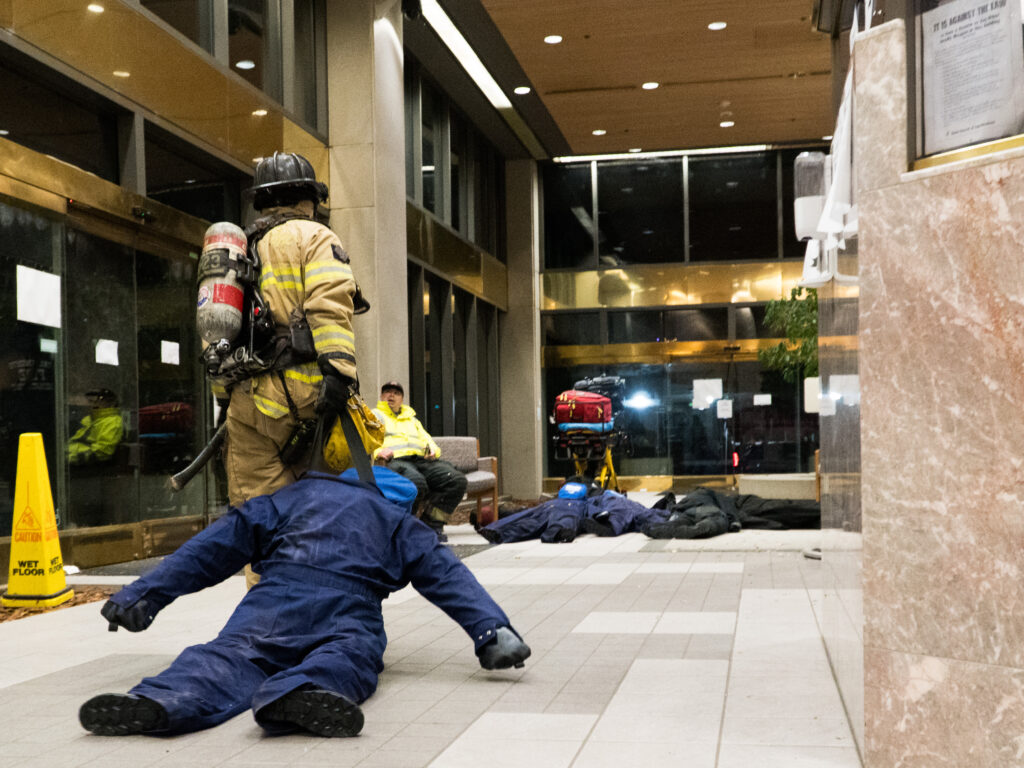
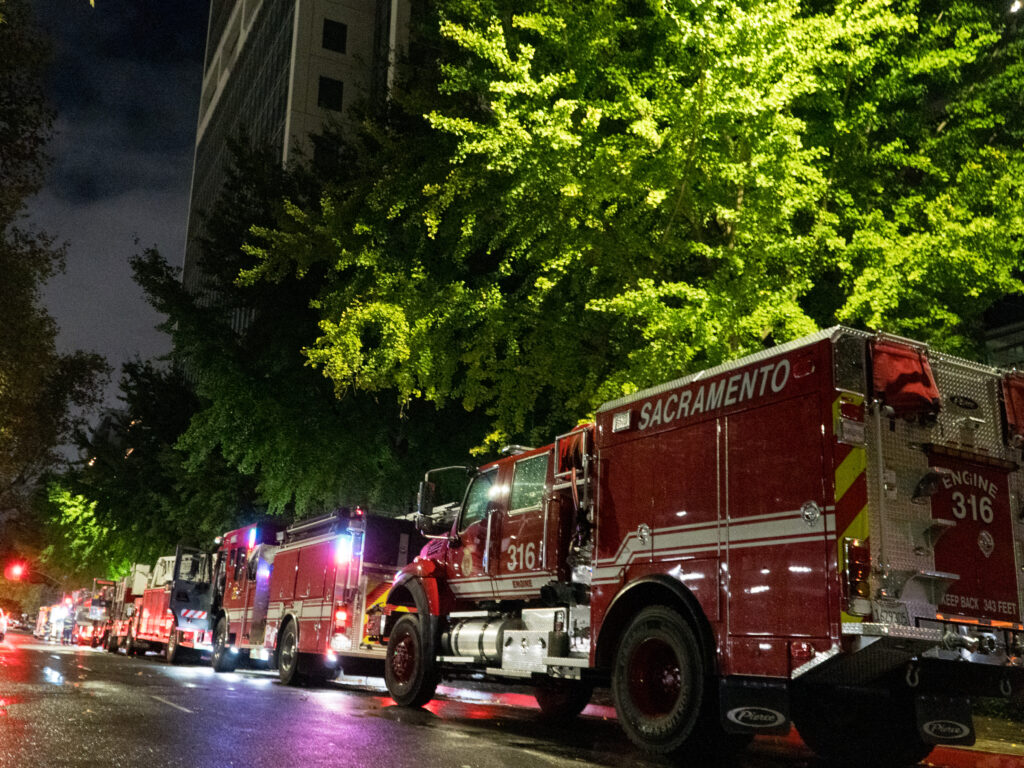
Fire crews from Vallejo, El Cerrito, Folsom, Sac Metro Fire, Vacaville, Oakland, San Francisco, Rocklin, Roseville, Fresno, Cosumnes and a dozen more arrive each evening at 5:30 p.m. and train until 9 p.m. in downtown Sacramento. Nighttime makes training harder for firefighters and reduces community impact. Fire engines line the entire city block around 450 N St., where the training takes place in a vacant state building.
“It is so realistic in there. We have multiple smoke machines that reduce your visibility down to zero,” said Sacramento Fire Capt. Justin Sylvia. He said real high-rise fires can call on agencies near and far, which is why Sacramento fire officials opened the training to agencies around Northern California. The response was so popular with neighboring agencies that Sylvia had to cut off the sign-up list fast.
“On the initial dispatch for a first alarm high-rise, you’re getting five engines, four trucks, three chiefs, two ambulances and an EMS officer,” Sylvia said. If firefighters see smoke or fire, the response doubles. Sylvia says that’s one reason so many agencies wanted to take part.
Crews experience escalation in real time, working through alarms, evacuations, stairwell challenges and search operations that unfold the way they would in an actual emergency.
“There are live victims, and there are multiple mannequins,” Sylvia said. “Some of the mannequins have heat signatures like a body would show, and they also talk. You can hear the mannequins reaching out for help.”
Why Sacramento? A building with a story of its own
In Sacramento, high-rises are defined by local and state building codes. According to the Sacramento City Code, a high-rise structure has at least six floors or stands more than 75 feet.
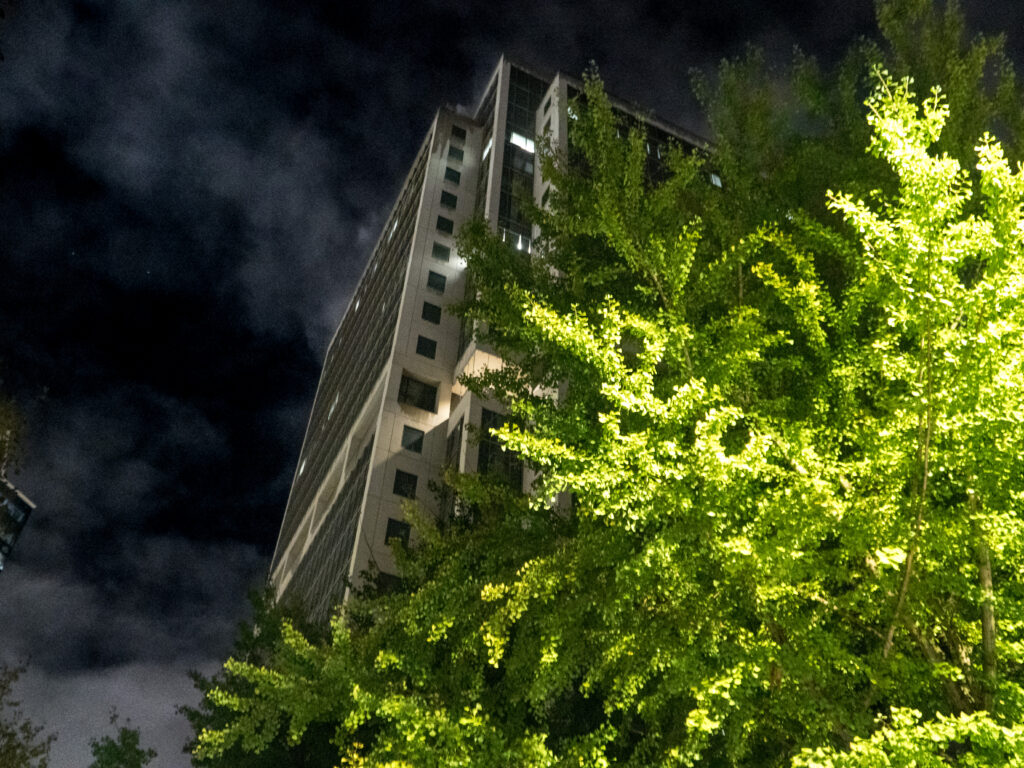
The training took place at the former Board of Equalization Building, a 24-floor high-rise with a unique history in downtown Sacramento. Built in the early 1990s, it quickly became known as a “sick” building with mold growth and exterior panels popping out and falling to the ground, among other issues.
The building is no longer in use but still intact. There are desks, walls, hallways and stairwells in place. Many vacant towers are gutted or stripped down, but this one was essentially preserved.
“It is extremely rare to have a building like this,” Sylvia says. “It gave us a real training that you cannot replicate. We jumped at the chance.”
Command, communication and the first crucial minutes
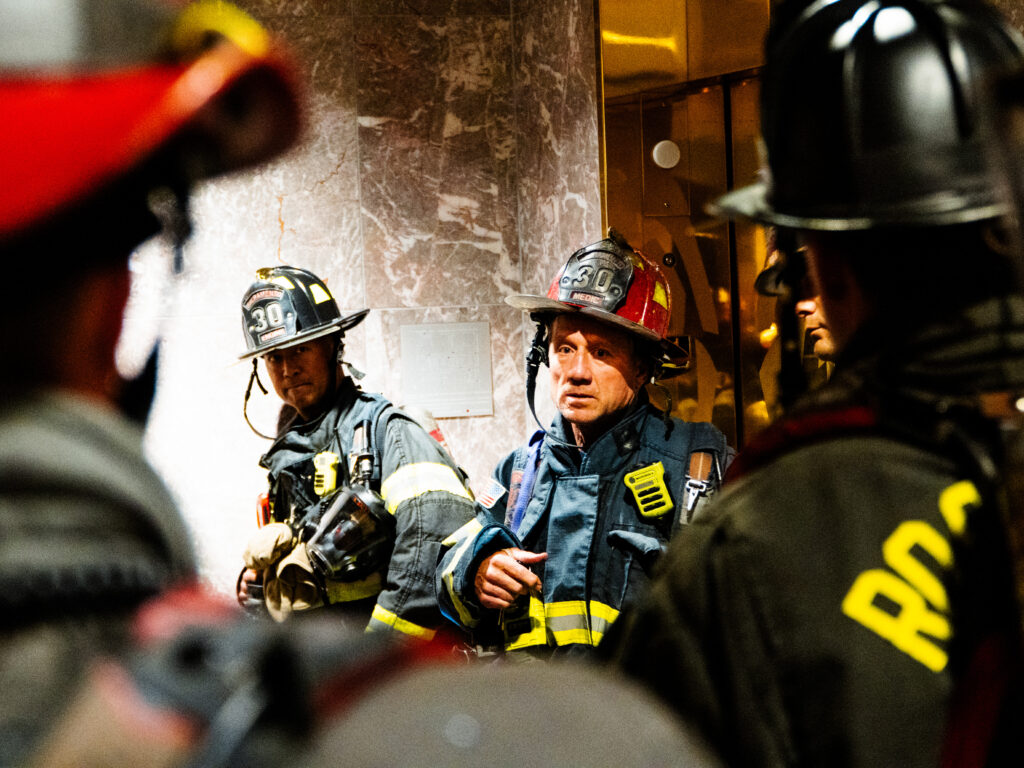
The training underscored how much the operation depends on the first arriving crews. Firefighters practiced taking control of the lobby, reading the alarm panel and communicating information with every unit that followed.
“That initial information is critical,” Sylvia says. “It tells everyone what to do, what to bring and where they’re going. It keeps the whole incident organized.”
The drill strengthened radio discipline, clarified who handles what in the first few minutes and includes a few surprises each night.
“Typically, sprinkler systems can contain high-rise fires, but this training is a scenario where the sprinkler systems are overwhelmed and cannot control the fire,” Sylvia said.
The physical reality of moving upward
Firefighters also faced the physical demands that come with high-rise fires. In this training, crews took elevators two floors below the simulated fire, off-loaded equipment, connected to the vertical water pipes and ran hoses up a floor to begin the attack.
“People forget how physically demanding this is,” Sylvia said. “You’re climbing with full gear, tools and hoses. If the elevators fail on a fire, even more crews have to respond.”
“Whenever you go to a high-rise incident, you always think of the worst thing that could happen, and that was 9/11. It’s always in the back of your mind,” he added.
Lessons from ‘vertical cities’
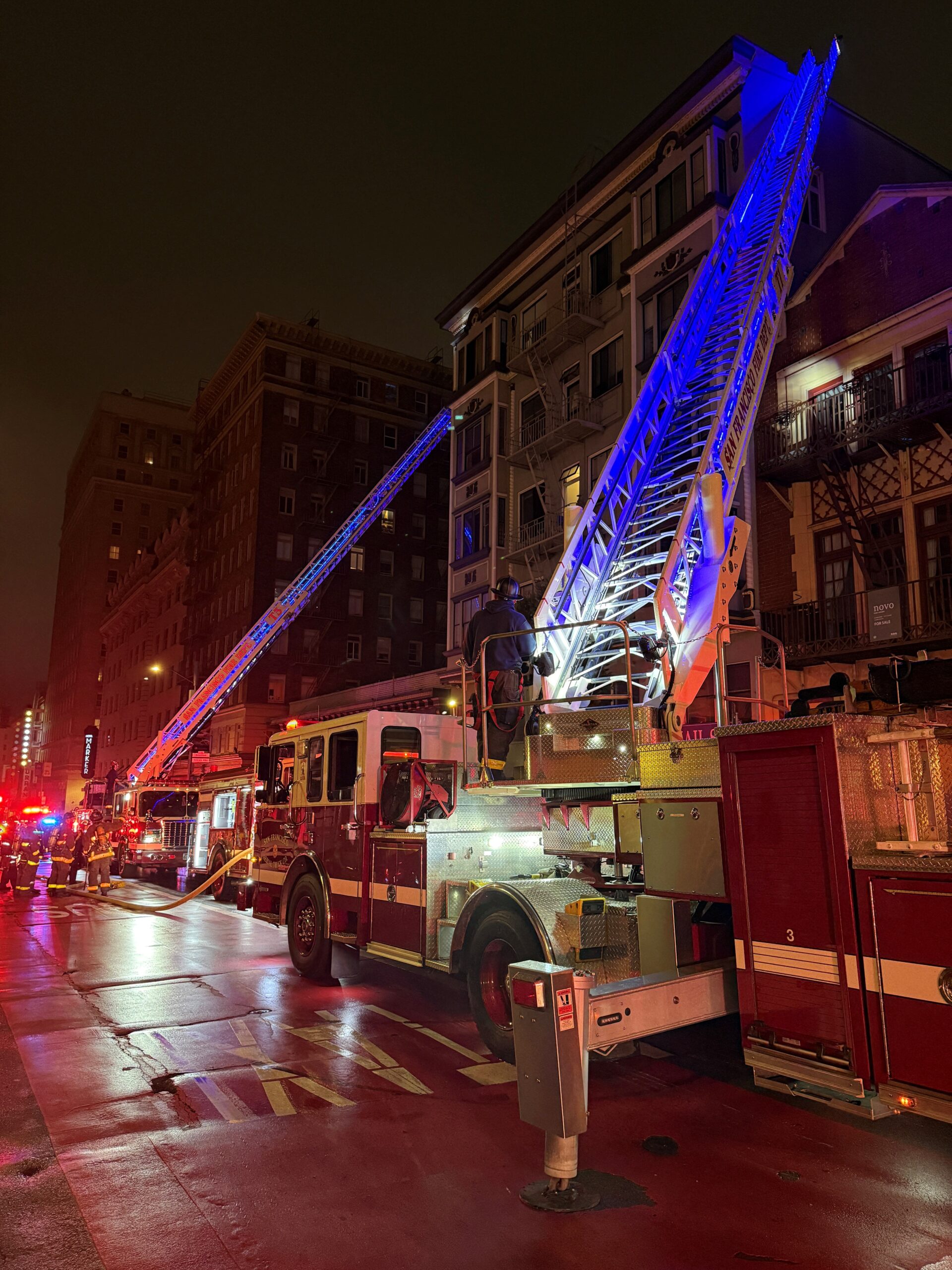
For the San Francisco Fire Department, the training offered critical insight shared across departments.
“High-rise fires are low frequency but high risk,” says Lt. Mariano Elias. “Every building is different. We have to be ready at a moment’s notice, and the more we get our hands on the equipment and train like the real thing, the better prepared we will be.”
Elias says participating agencies sharpened their ability to interpret alarm sequences, system failures and early indicators that guide tactics before crews reach the fire floor. “This allows collaboration with other fire departments to see what techniques and skills they are using,” he said.
Elias was a new firefighter on 9/11 and was at his San Francisco firehouse when the first plane hit the World Trade Center. The memory of that day continues to guide him. “I will never forget watching them climb,” he said. “The mental and physical preparation they showed is something every firefighter remembers. It influences how we train.”
The strongest lesson: Keep training
“Training doesn’t make perfect, but it makes better,” Elias said. “We have more than 800 high-rises in San Francisco.”
Both departments say the most important takeaway is the value of repetition.
The work done at 450 N St. will influence high-rise readiness far beyond Sacramento, strengthening how California firefighters respond to the most complex emergencies in their profession.
“High-rise fires don’t happen very often, but the impact could be huge,” Elias said.
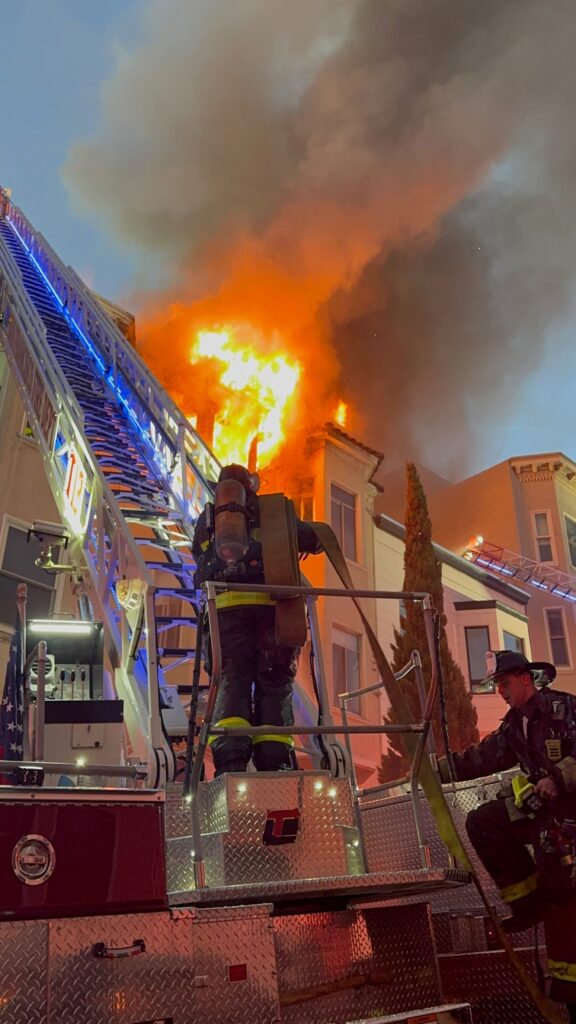
(Rescue Capt. Samuel Menchaca)
What to do if you are in a high-rise fire
Know your exits ahead of time
Identify both stairwells on your floor. Never rely on elevators during a fire.
Count the doors to the nearest exit
If smoke reduces visibility, this helps you navigate by touch.
Follow illuminated exit signs
They are designed to guide you even in partial darkness.
Follow firefighter directions
Fire crews often designate one stairwell for evacuation and another for fire protocols.
Stay low in smoke
Air quality improves closer to the floor.
Keep a small “go bag” ready
Include medications, water, a flashlight and batteries, and copies of important documents.
Rob Stewart is an executive producer and reporter with Abridged.