
The Abridged version:
- Folsom Cordova Unified School District leaders considered various ideas for reducing the time students spend looking at screens in schools.
- A group of students, parents, teachers and staff met this spring to discuss the issue. Their recommendations included grade-by-grade daily screen time limits.
- Officials said implementation is a balancing act and that they are weighing both the opportunities and consequences that come with technology.
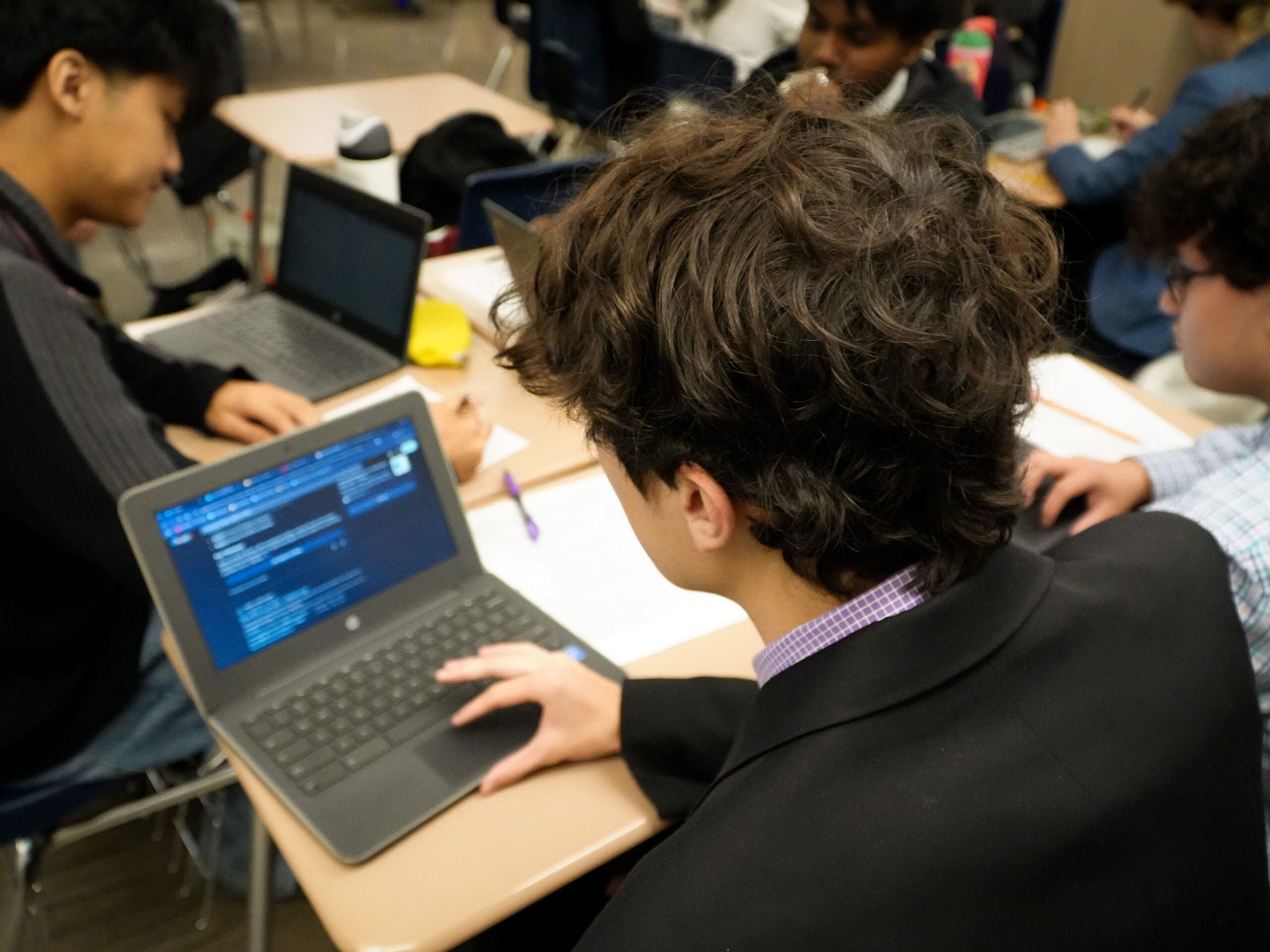
Current generations of students have grown up surrounded by bright digital screens. When it comes to the classroom, some local school officials want a little less Chromebook and a little more pencil and paper.
“Let’s not lose our ability to write with our hands, to talk with one another,” said Channa Pitt, assistant superintendent of student services for the Folsom Cordova Unified School District.
“How can we do that and potentially use technology to support that?” she added.
Folsom Cordova Unified trustees in March called for the creation of a task force to look into the issue of how much time students spend looking at device screens. The group — composed of students, parents, teachers and staff — met three times in April and May. Pitt presented task force recommendations at a meeting last week.
Parents at the meeting thanked the board and district staff for taking up the issue. Some urged leaders to keep advancing regulations and guardrails.
From cellphones to artificial intelligence, educators face a plethora of tough questions when it comes to navigating a rapidly changing digital landscape.
“Our students are currently in a very technologically advanced world,” Pitt said. “That world is here. It is in their lives every day.”
‘It’s gotten crazy’
Amanda Ross’s daughter does not use the computer at home.
“She’s outside playing with friends,” Ross said.
But as her child is preparing to start first grade at Carl Sundahl Elementary next year, Ross had to sign a student internet usage form, she said.
“When I’m hearing that she’s going to get a Chromebook in first grade, that concerns me,” Ross told the board. “Because I don’t think she’s prepared to have that kind of technology introduced to her at that age.”
Dale Alto, a dental specialist, said over the last handful of years, he witnessed young patients, midappointment, glued to the screen.
“It’s gotten crazy,” said the father of two elementary school students.
The recommendations?
The task force was focused primarily on evaluating the role of laptops in the classroom. Their recommendations included curbing access according to grade level.
For elementary school students, Pitt said the group thought a maximum of 30 to 45 minutes a day was appropriate. In grades six to eight, that proposed daily limit rises to one to two hours, and for high schoolers, it was an hour-and-a-half to three hours per day.
Other recommendations were blocking YouTube for students earlier than ninth grade, restricting Chromebook usage during lunch or recess for TK-8 students and implementing stronger internet filters on district-owned devices.
Weighing the pros and cons
In considering the nuanced issue, Pitt said it is a balancing act.
“There is not one clear, direct answer that would satisfy every concern,” Pitt said. “Sometimes, too, in satisfying one concern, you inadvertently create another concern.”
One of the biggest points of agreement for staff, parents and teachers was the value of getting students off their devices during downtime.
That thinking bolstered the idea of banning computers during lunchtime. But, Pitt pointed out, leniency may be needed for student athletes or teens with after-school jobs who want to finish some of their homework during the day.
Plus, technology has its upsides in terms of access, Pitt said.
For example, members of the task force to address student screen time levels had the option of attending meetings in person or virtually.
“There’s some irony there not lost on me,” Pitt said.
Lingering pandemic effects
The COVID-19 pandemic and remote learning expanded the role of technology in the classroom, Pitt said. Now that the peak of the pandemic is past, officials in school districts across the state and country are contending with a Pandora’s box.
The Los Angeles Unified School District last month released a working plan to cut student screen time, including limits similar to what is on the table at Folsom Cordova Unified.
“We’re not first, but we are definitely at the forefront” in the Sacramento region, Pitt said.
Folsom Cordova Unified board members voiced support for the recommendations and said they want to see the task force continue to hold meetings as staff figure out implementation.
“I mean, we turned technology on like that,” said Trustee David Reid, snapping his fingers in emphasis. “So why can’t we turn it off?”
Savannah Kuchar is a reporter covering education. She came to Sacramento to be a part of the Abridged team and contribute to a crucial local news source.