
The Abridged version:
- More than two decades into cityhood, Rancho Cordova lacks a downtown and faces development challenges. But its budget is stable, which sets it apart from some of its municipal neighbors.
- Shedding the city’s past economic identity as an Air Force hub, civic leaders are looking for the “next generation of innovation” by investing in job producers.
- Open space attracts residents but also fuels tension with development interests eying projects, including housing.
Once the hub of rocket engine innovation and Air Force combat pilot training, Rancho Cordova saw jobs disappear, businesses close and services suffer after the end of the Cold War and Space Race.
Today, 23 years after its successful cityhood bid, Rancho Cordova is one of the fastest-growing cities in the state. It boasts a balanced budget, booming business climate and money left over for neighborhood enhancement projects and investments for roads, bridges, trails and other infrastructure.
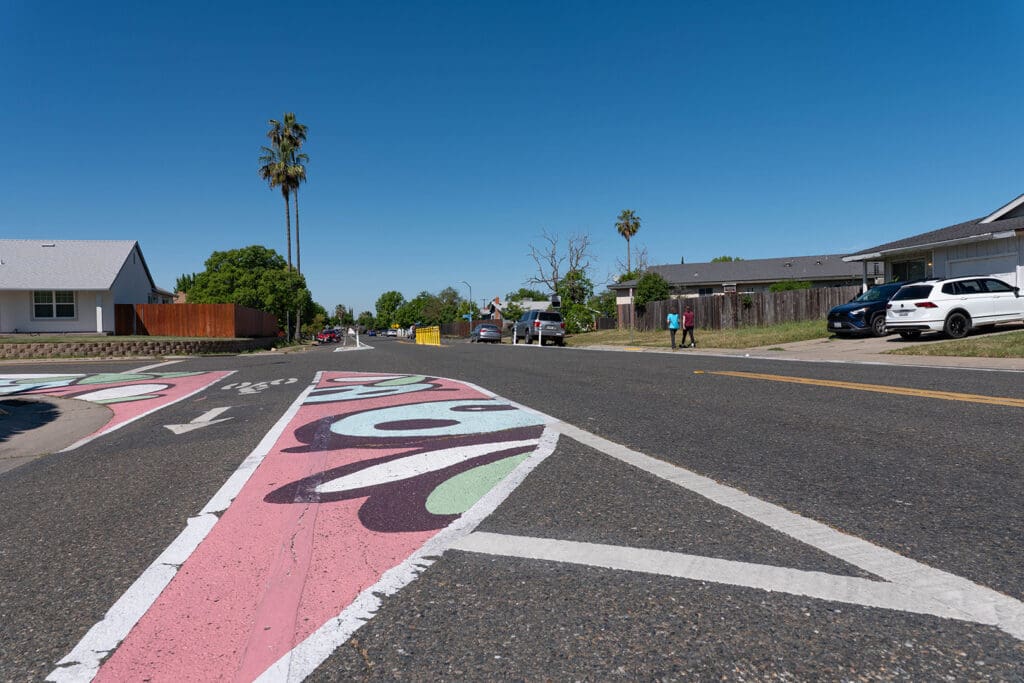
City leaders have addressed neighborhood blight block by block, forced slumlords out and proudly celebrate its population’s diversity. An estimated 39% of city residents are foreign-born.
‘Town built for a time that didn’t exist anymore’
David Sander and Linda Budge, both five-time City Council members, and other community and business leaders were the architects and builders of Rancho Cordova’s grassroots reinvention and reinvestment.
“I looked at Rancho Cordova as a place needing help … a little off the rails, a town built for a time that didn’t exist anymore,” said Sander, who moved to Rancho Cordova from Washington, D.C., in 1998. “We are certainly on the road to recovery. We have made an enormous amount of progress, but we are not where we need to be.”
Sign Up for the Morning Newsletter
The Abridged morning newsletter lands in your inbox every weekday morning with the latest news from the Sacramento region.
After the Gold Rush, Rancho Cordova grew into a prosperous agricultural area for growing grapes and other produce, nuts and hops in the rich soil near the American River. During World War I, the Army Air Service, a precursor to the Air Force, established Mather Air Base as a pilot training school, and at the end of World War II, a surge of residential development followed for returning GIs and their families. The base and the growing Aerojet Corp., which needed engineers, chemists and rocket scientists, provided good jobs; other newcomers became Rancho Cordova’s educators and business, church and civic organization leaders.
Long road to cityhood begins
They included Budge, who “grew up in the Air Force” and moved to the area with her husband in 1971. She joined the Cordova Community Planning Advisory Council and held several other posts before being elected to the city’s first City Council, where she has served for 23 years. Before incorporation, she said, the community felt like Sacramento County’s dumping ground.
“The Sacramento Housing and Redevelopment Agency and the county were putting a lot of low-income housing in Rancho Cordova,” she said of the 1970s. “It was a time when low-income housing wasn’t considered either a necessity or an advantage, and counties were not funded to provide urban services, so they weren’t maintaining the roads. Socially and economically, there was nothing in it for Rancho Cordova.”
Feeling powerless against county authorities, Budge and other area leaders decided in 1978 to explore incorporation but dropped the bid when Proposition 13 passed that year. The state measure slashed local property tax revenue, making a new city’s survival impossible. Subsequent bids failed when activists could not get enough signatures for a ballot measure.
An early step along the way was the establishment of a “sphere of influence,” delineating potential city boundaries, which the Local Agency Formation Commission approved in 1982. A decade later, after the air base closure and related job and revenue losses, the voter appetite for incorporation had grown.
Fewer jobs; more crime
Even in the late 1990s, jobs weren’t being created and crime was on the rise,” Sander said.
“Things were getting worse,” he said. “The county wasn’t worried about the health of the community. No one with the capacity to stand up for Rancho Cordova did.”
A new cityhood ballot measure succeeded in 2003, with a “revenue neutrality” agreement reached with Sacramento County. Under the 31-year agreement, the county would take out a percentage of the city’s property tax revenue to offset the county’s revenue loss after incorporation. That agreement expires in fiscal year 2027-2028.
“It was ransom for leaving the county,” said Budge, adding that the city continues to pay the county for a relatively small return on investment. “It’s illogical.”
A different approach
Despite Rancho Cordova’s revenue payments to the county, and unlike the cities of Sacramento, Davis, Woodland and Folsom, which face significant budget shortfalls, Rancho Cordova has a healthy revenue stream, with an annual general fund of $81.5 million.
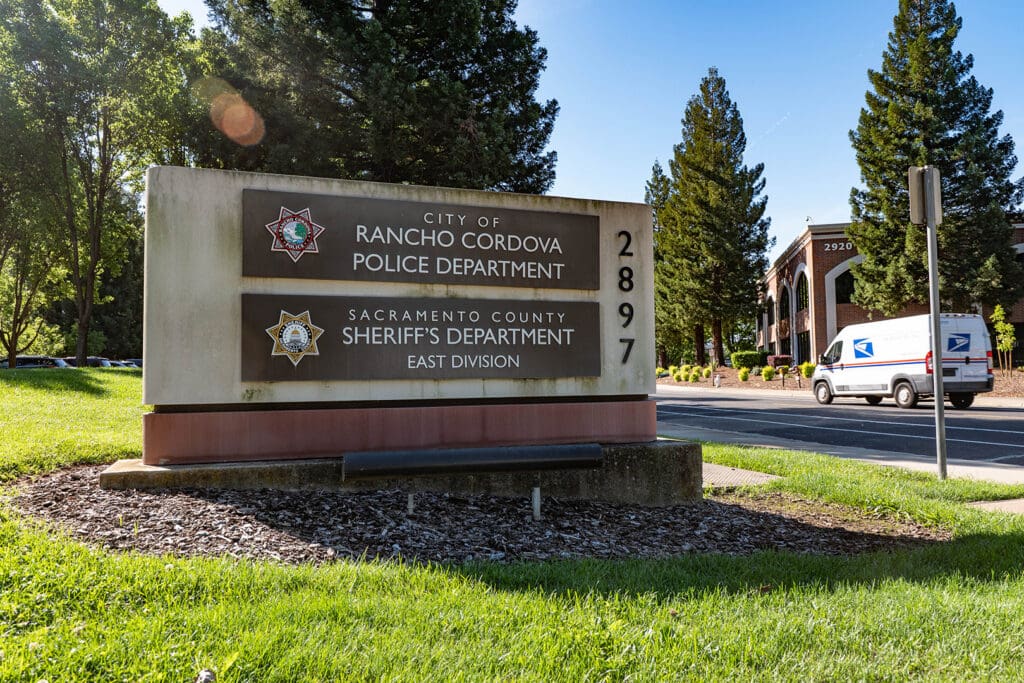
Much of these funds go to the Sacramento County Sheriff’s Department, which is under contract with the city to provide law enforcement. The arrangement allows the city to be nimbler and more efficient, said City Manager Micah Runner. For example, if the city needs helicopter or SWAT services, they are available; if it needs more officers, it can add them quickly.
The contracts with outside entities, including for street cleaning and refuse removal, also allow the city to maintain a small workforce. Rancho Cordova has only 130 staff members who manage city planning, code enforcement, animal services and economic development. This compares with another young city, Elk Grove, which has more than 500 employees, about half of whom work for the city Police Department.
Local tax measures fund arts, youth
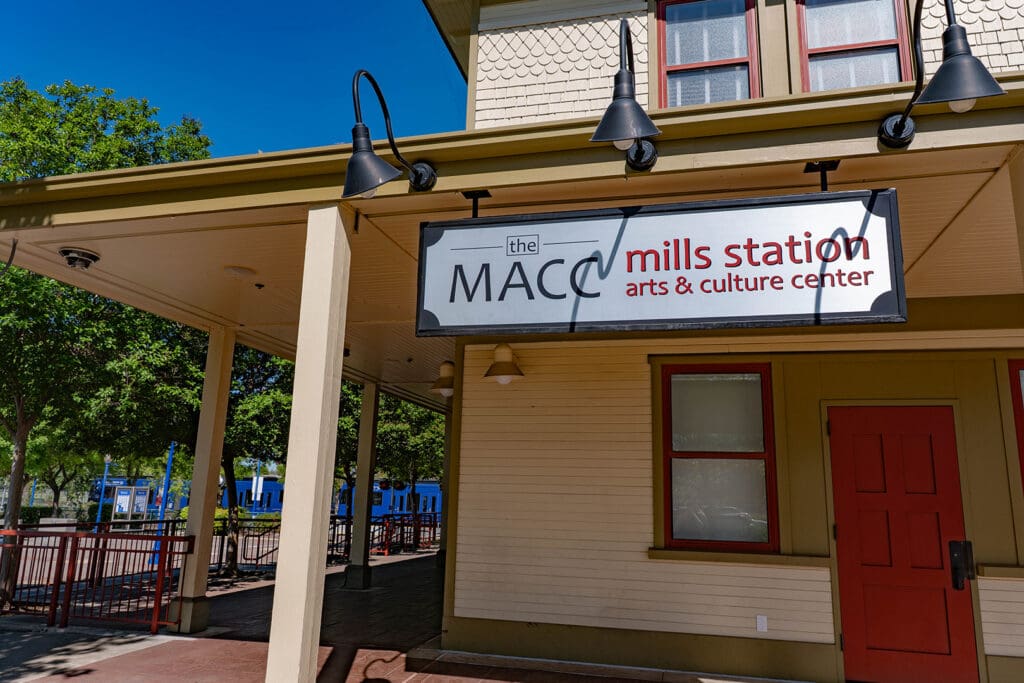
City-passed tax measures bring in an additional $22 million to $24 million annually for local arts, including the vibrant Mills Station Arts & Culture Center, a gallery and event space, as well as youth and other community-oriented projects.
Among them is an expansion of phase four of Veterans Village at Mather, a supportive housing development for homeless and disabled veterans that will begin construction this spring.
“We took the position that we could not solve the homeless problem for downtown Sacramento, but because we are an Air Force town, we help our vets,” Budge said. “Everybody has to do their share.”
Also on tap in 2026 is a tied-arch pedestrian and bicycle bridge looming 60 feet over Highway 50 at Zinfandel Drive. The bridge, including public art displays, will connect the city’s businesses and communities on either side of the highway — a symbolic reunification of the city’s older neighborhoods to the north with the new, fast-growing areas to the south, according to James Corless, executive director of the Sacramento Area Council of Governments.
Looking for downtown
Runner said city leaders recognize and continue to grapple with the challenges presented by Rancho Cordova’s geography: a highway that cuts the city in half at a diagonal, light rail stops along the old railroad corridor at least a mile from the city’s employment centers and the lack of a downtown.
“One of the things I think about is how we continue to build Rancho Cordova as a whole city for both new and existing communities and provide places and connections,” he said. “That’s why infrastructure is important.”
Hopes are high for DOVA, a planned new entertainment district on 30 acres east of where Kilgore Road meets Trade Center Drive. Developer Josh Wood, who lives in Rancho Cordova, will break ground this year on a $200 million multiuse arena, outdoor music and event space, shops and restaurants. Once fully built out, Wood said, the development district could encompass up to 70 acres and an estimated $1 billion in investment — effectively serving as Rancho Cordova’s downtown district.
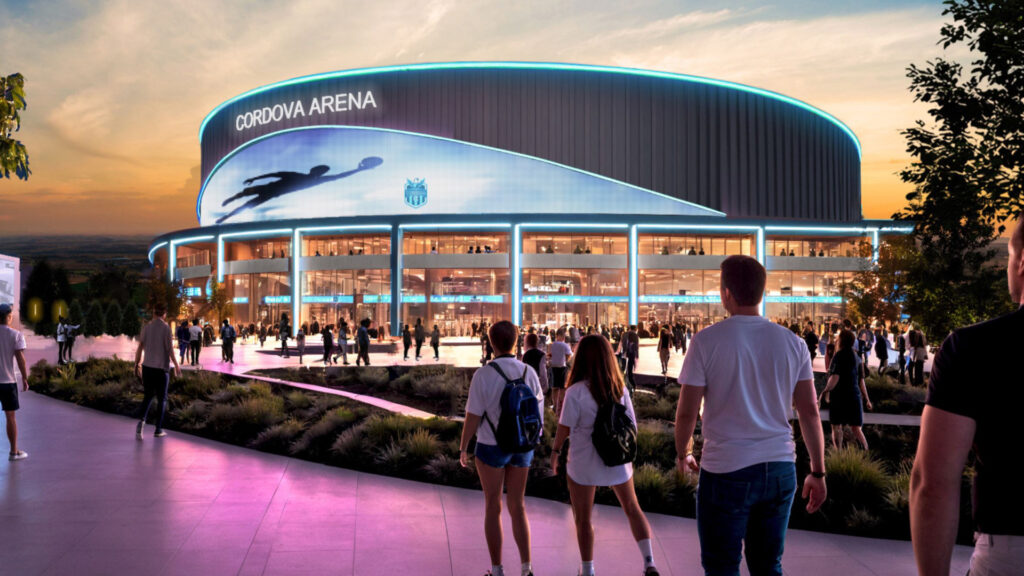
“Rancho Cordova has this amazing concentration of people and high-wage jobs,” Wood said. “It’s a high-performing business sector with great neighborhoods, low crime and clean streets, but it doesn’t have the one thing that would change not only the city but reshape the balance of the region. We are building the downtown of the future.”
Another ambitious project, the Mills Crossing development near the Zinfandel light rail station, was scaled back, however, due to the lack of interested business and philanthropy partners, Runner said. Rather than creating a civic center with a performing arts center and offices, only market-rate and affordable housing developments will move forward at the site.
A high-tech hub evolves
Still, Runner is confident about the city’s ongoing economic health and growth.
“We came from a place of industry and innovation,” he said, acknowledging the legacies of Mather and Aerojet. “We have an opportunity to be part of that next generation of innovation. We can be nimble and opportunistic in our approaches and partnerships.”
The city, for example, invested $5 million in the Human Machine Collaboration Institute to help develop an artificial intelligence and robotics ecosystem in Rancho Cordova. Computer chip maker Nvidia Corp. and its neighboring enterprise data storage company, Solidigm, are partners, and the institute also is working with UC Davis, Folsom Lake College and the Folsom Cordova Unified School District on building career pathways in the emerging tech fields.
The institute’s CEO, Sadie St. Lawrence, said Rancho Cordova is a logical place for the ecosystem because seismic risk is low, it’s not in a flood plain and electric power is relatively cheap.
“Other areas of Sacramento do not have this level of coordination and investment,” she added. “It’s a place primed. It’s not a moonshot.”
Growth vs. open space debate
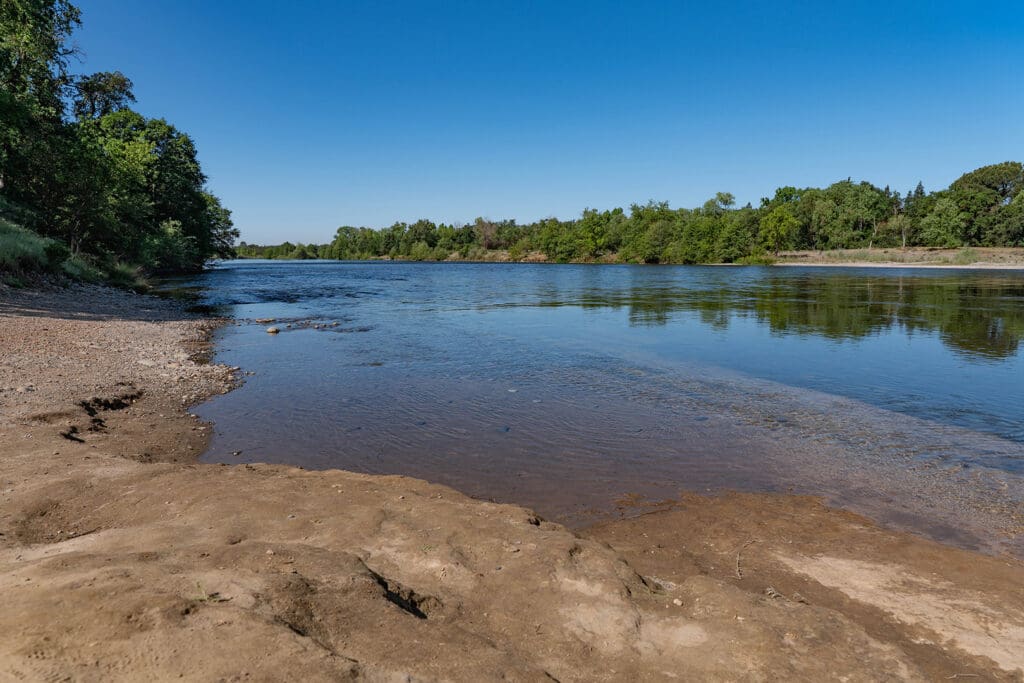
Rancho Cordova has become a desirable destination for homeowners seeking a more serene lifestyle, too. Melanie Turner left Midtown Sacramento five years ago for Rancho Cordova because she could afford a house near the American River Parkway, which runs for 6 miles through the city.
“My goal was to have no stoplight between me and the river and to be able to easily walk to the open space,” she said. “I was seeking quiet and less air and light pollution.” She loves the city’s diversity and living a mile from Soil Born Farms, its organic produce and gardening classes.
Protecting the city’s natural environment is paramount for Turner, as it is for Mark Berry of Save the American River Association, which is fighting a controversial 40-acre housing development proposed for a black walnut tree-studded parcel hugging the American River. TruMark Homes, the developer, now wants to sell the land, and Berry is trying to secure its purchase by a land trust to protect it from development in perpetuity.
“The city wanted to grow as a thriving, modern city,” he said. “I’ve been trying to persuade them that a thriving city includes quality open space. This project didn’t fit the equation.”
‘A good sense of itself’
Corless of the Council of Governments said he is optimistic that Rancho Cordova can protect access to the river, while growing in a way that enhances the area’s quality of life.
“The city has a good sense of itself and real vision,” he said. “It has some swagger that has served them really well and will be important in the next 10 years.”
Dorsey Griffith is a Sacramento-based freelance writer.