
The Abridged version:
- The Sacramento Kings have begun their 10th season at Golden 1 Center, a good milestone to evaluate how the arena and DOCO have served various interests in the region.
- Count the Kings organization, fans/concertgoers, Golden 1 Credit Union and downtown boosters as satisfied. Taxpayers? Depends on whom you are.
- Options for growth include developing a WNBA franchise as co-tenants. The dream of hosting an NBA All-Star game remains dependent on building more hotel rooms.
This Kings season marks Year 10 of Golden 1 Center — and its promises as a state-of-the art arena to keep the team in town, rescue the downtown economy and transform the region’s arts and entertainment.
We asked the main stakeholders in the arena’s unlikely construction to assess its impact on the team, the city’s economy, culture and identity. Has Golden 1 Center paid off for community leaders, investors and taxpayers? Have the promises been kept?
Here’s a report card, a decade in:
1. Kings organization is ‘deeply proud’
“We don’t build cathedrals anymore. This is kind of the 21st century cathedral, and it’s the fire that we lit. In my vision, this becomes one of the premier cities, and we become a showcase for what that city looks like.”
No one has benefited more from the arena than the source of this 2022 quote — Kings owner and tech magnate Vivek Ranadivé.
Ranadivé, who led a group that bought the team for $534 million in 2013, is now sitting on a franchise valued at $4.45 billion, according to Forbes.
At the time of the sale, the Kings were one foot out the door to Seattle, where everything was in place for them to replace the SuperSonics, who moved to Oklahoma City five years earlier. That is, until the spring of 2013, when Sacramento beat the buzzer via a last-minute deal struck by then-Mayor Kevin Johnson and NBA Commissioner David Stern. It called for the Kings to invest $254 million and the city a maximum of $255 million to build the arena, projected at $477 million. (With a final cost of $559 million, the team covered the overrun.)
In addition, the team took ownership over six square blocks surrounding the arena, instantly becoming one of downtown’s largest landowners and among the region’s most prominent developers. The entertainment area was later rechristened as Downtown Commons, or DOCO for short.
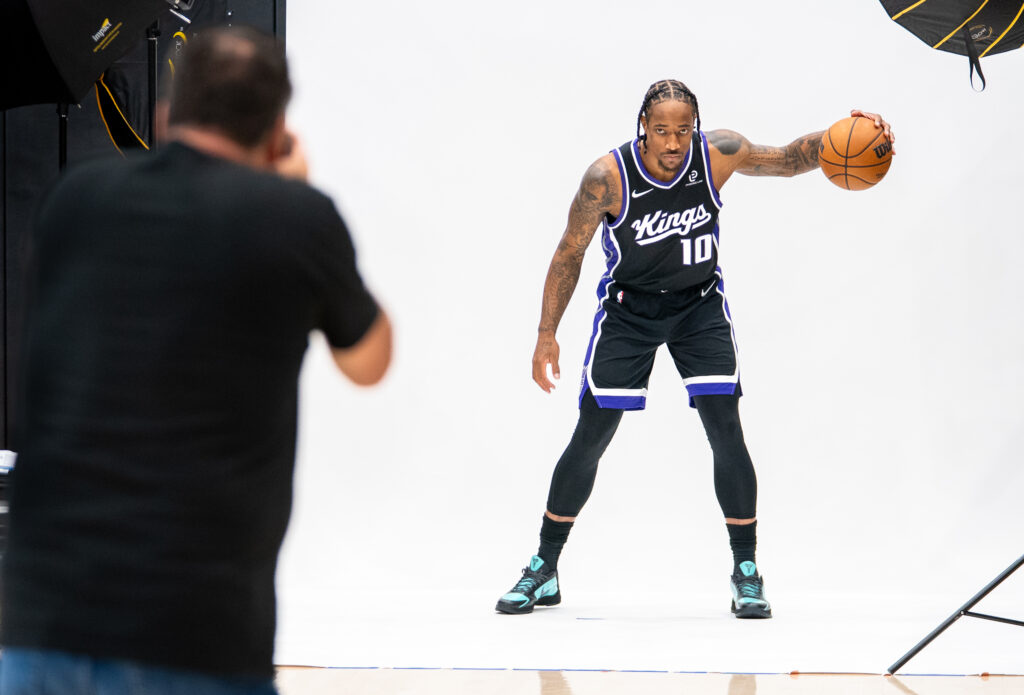
The team itself has been aided by the arena and its energy. It is difficult to imagine that anybody would have dared to “Light the Beam” from Sleep Train Arena in Natomas. Much of the concept is centered around Golden 1 Center being a modern, tech-centric building that sort of looks like a spaceship. And without the building and its facilities, plus the Beam Team momentum, it seems unlikely a free agent like former All-Star DeMar DeRozan would have signed with the team in 2024.
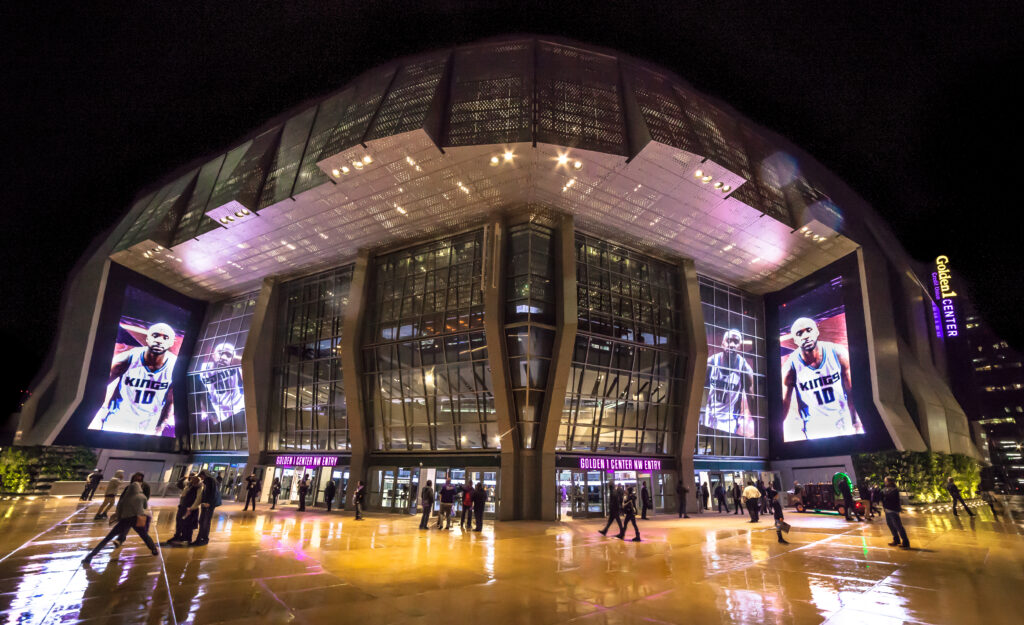
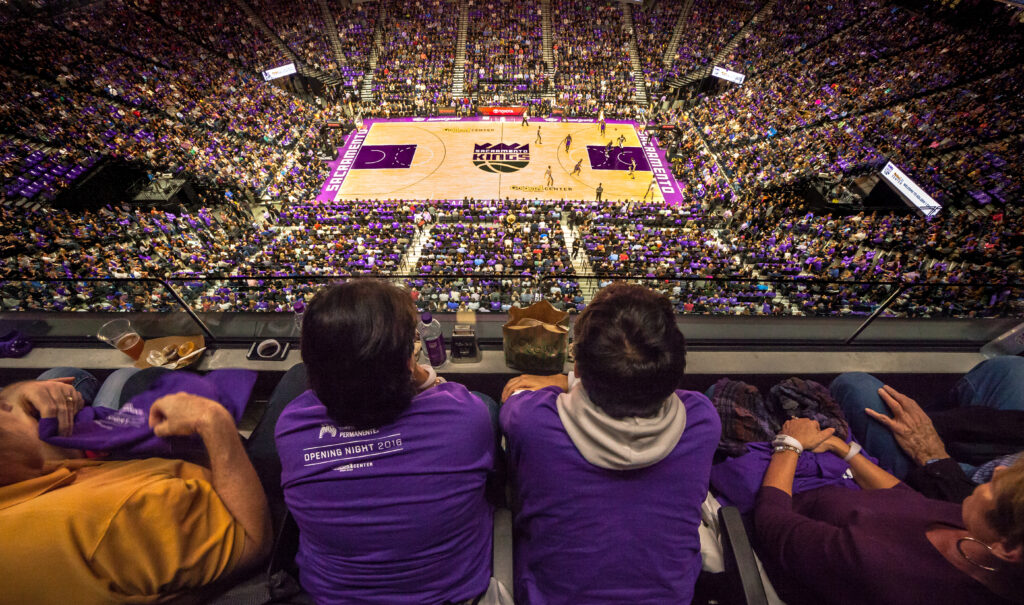
Fan energy hasn’t necessarily boosted the Kings’ on-court performance: The team’s home record is under .500 in more than 300 games across nine full seasons. And postseason games have been few and far between. The team has hosted a total of six postseason games in Golden 1 Center.
The 2022-23 “Beam Team” — which did so much to bring Sacramento together and validated some of the vision behind building the arena — now feels like a distant memory, with star point guard De’Aaron Fox demanding a trade last season after the team fired head coach Mike Brown and replaced him with Doug Christie, the team’s eighth coach under Ranadivé.
This season, the team appears to be back to its old ways with a sub-.500 record out of the gate. Last Wednesday, after its fourth consecutive loss at Golden 1 Center — three of them blowouts — players were booed off their home floor.
The Kings did not make Ranadivé available for an interview but provided the following statement via email:
“For the past decade, Golden 1 Center has been more than just an arena — it’s been a catalyst for transformation in downtown Sacramento and a source of pride for the entire region. Since breaking ground in 2016, more than $7 billion has been invested in Sacramento, fueling economic growth and redefining what’s possible for our community. We’re deeply proud of what we’ve built together with our community — and even more excited for what lies ahead.”
2. For fans and concertgoers, complex has lifted pride
Golden 1 Center is home to far more than just Kings games, however. The arena hosts about 80 other ticketed events a year, including concerts, monster trucks, pro wrestling and Disney on Ice. It has hosted men’s NCAA March Madness and is set to host a women’s NCAA regional next spring.
The arena’s inaugural event was a Paul McCartney concert on Oct. 4, 2016. Darrell Steinberg — mayor of Sacramento from 2016 to 2024 and a key player in the arena deal while serving in the state Senate — still recalls the feeling floating through the building. “We all felt such a great sense of pride,” he said. “Incredible.”
Since the catharsis of that night, the arena has hosted headliners including Stevie Nicks, Bad Bunny and Lady Gaga.
“When we bring (people) in to tour it — to talk about its capabilities, the flexibility it has, both internally and then to do some things outside on DOCO and the surrounding area — it’s something we’re really proud of, and I think we’re really lucky in terms of how we can compete against similar markets across the country because of Golden 1 Center,” says Visit Sacramento’s David Eadie.
Though the arena is regarded as having very good acoustics, many visitors take issue with the design of the arena’s upper bowl, which features very little leg room and is constructed at such a steep angle that some people report feeling vertigo.
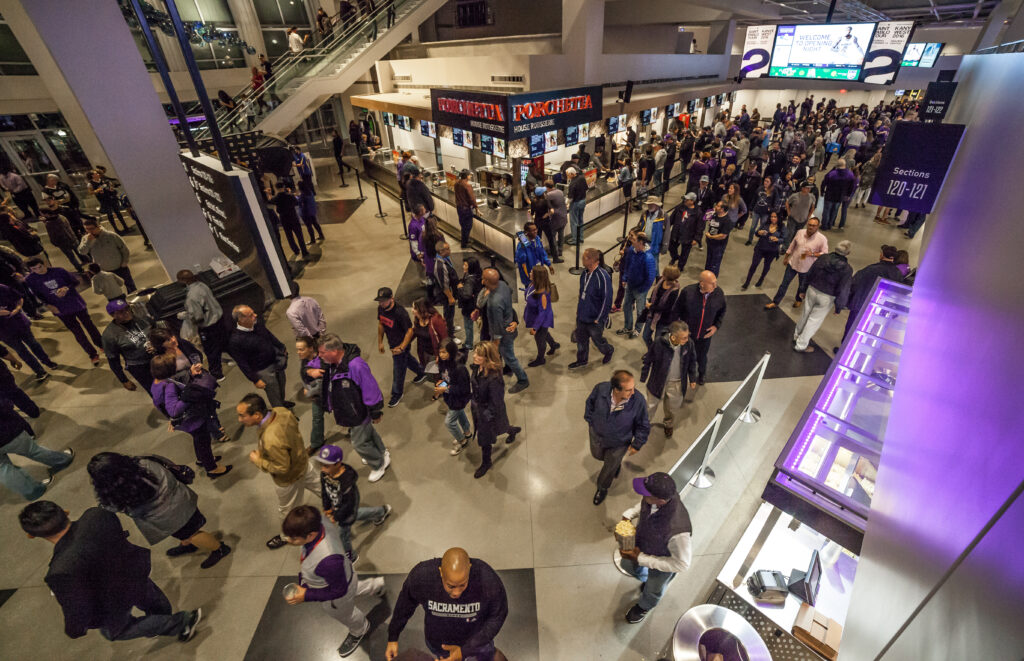
The food offerings, advertised as farm-to-fork and overseen by a former gourmet chef, are generally well-received and decently priced.
3. Naming rights help Golden 1 Credit Union thrive
The naming rights sponsorship for $120 million over 20 years that Golden 1 Credit Union signed with the Kings in 2015 — a key part of the arena financing package — is now halfway through.
The credit union offers its members discounts of as much as 50% at home games, plus access to various perks like holding the flag during the singing of the national anthem.
In general, Golden 1 seems to have gotten its money’s worth (despite a former Kings executive attempting to embezzle $9 million in the mid-2010s). The credit union’s assets have more than doubled from $10 billion-plus to nearly $22 billion, and its membership from 800,000 to more than 1.1 million, making it the nation’s eighth largest. And that growth is due at least in part to the credit union’s community investments, symbolized by Golden 1 Center, it says.
“We knew this was a solid investment in our region — and when the region thrives, Golden 1 thrives,” says Erica Taylor, Golden 1’s senior vice president of community impact. “We knew that it was going to be big. (The arena) has become the centerpiece of a revitalized downtown. It’s been a dynamic force for growth.”
Taylor said Golden 1 will make a decision on whether to extend the naming rights closer to the deal’s expiration date in 2035.
4. Value to taxpayers depends on whom you are
Whether Sacramento taxpayers have benefited may depend on if they can afford tickets to events at Golden 1 Center and if they regularly park in city-owned garages and metered spaces.
The public funding — about $500 for each Sacramento resident — was approved by the City Council, not by voters.
Most of the funding came from borrowing against revenue from city parking meters and its five garages. The total cost with interest, paid out in $18 million annual chunks until 2050, is north of $600 million.
At the time the council approved the deal, officials promised that under no circumstances would the city’s general fund — which pays for police, fire, parks, libraries and other basic services — be used.
Then, in 2023, it was revealed that the city had been forced to use $5.7 million out of the general fund over the previous two years to cover a shortfall in parking revenue. The main factor was the COVID-19 pandemic, which devastated the downtown economy and halved parking receipts. Had the city defaulted on the bonds, it would have had a disastrous effect on its credit rating and long-term financial health.
“Clearly, we didn’t protect the taxpayers enough,” then-Assemblyman Kevin McCarty said during his mayoral campaign in 2023.
McCarty, who voted against the deal in 2014 when he was on the City Council, was asked recently whether Golden 1 Center and DOCO have been a benefit to the city. The mayor’s office provided the following statement: “We are invested in bringing more life to downtown. The future of downtown is bright.”
City Finance Director Pete Coletto and Public Works Director Matt Eierman, in an interview with Abridged in late October, laid out their plans to ensure that the general fund won’t be used again to repay the bonds.
“You can see the revenues have really recovered already, and the fund is now right side up,” Coletto says.
Eierman said the city tried to address the problem through “the modernization of its own asset” — via things like license plate recognition technology and an online reservation feature — to ramp usage back up rather than seeking a quick fix.
Neil deMause, who coauthored a book detailing public subsidies of sports arenas called “Field of Schemes,” described dipping into the general fund as “bad but not really that bad” when compared to the city’s $18 million annual bond payments out to 2050.
“If you’re just now getting angry about the public expense, you’re doing it wrong,” deMause wrote in 2023.
Despite a widely held opinion by economists that public financing deals for arenas are almost always bad investments for cities, deals continue to get done; a total of $33 billion in public arena subsidies were paid out from 1970 to 2020 throughout the United States and Canada.
Christopher Thornberg, the founder of Beacon Economics, an independent consulting firm based in Southern California, argues that private money should fund all or at least a lion’s share of arenas.
Thornberg, who was critical of a 2012 financing plan for a proposed Kings arena in the downtown Railyards, told Abridged that Sacramento and some other cities were smart to integrate arenas into “local zones of entertainment.” He describes this model as being worthy of a “modest amount of public investment.”
“Is there some value to (Golden 1 Center) being where it was? Absolutely. Has it helped? Probably. Is the help enough to justify the subsidies? Probably not,” Thornberg says.
5. Downtown boosters on DOCO
For decades, Sacramento business and political leaders have been trying to diversify the downtown economy.
“Traditionally, Sacramento’s reputation is a government town. While that wasn’t sexy, it filled offices,” says Michael Ault, executive director of the Downtown Sacramento Partnership.
Golden 1 and DOCO were supposed to turbocharge that transition.
Ault describes Golden 1 Center as a catalyst for downtown investment and economic growth: “The arena itself generates close to $650 million in economic impact around it. But there’s been almost $8 billion of capital investment amongst hotels, office buildings around it that (have been) selling at prices well above that.”
Critics of public financing usually refer to figures like this $650 million as examples of the substitution effect, where economic activity that would have taken place in other areas is instead concentrated around arenas.
“It just cannibalizes the other local demand,” Thornberg says.
Bars, restaurants and venues in DOCO depend on after-work customers as well as Golden 1 eventgoers. Many of them survived the pandemic but have seen demand fluctuate depending on the amount of success the Kings are experiencing. During the 2023 playoffs, DOCO was a boom town.
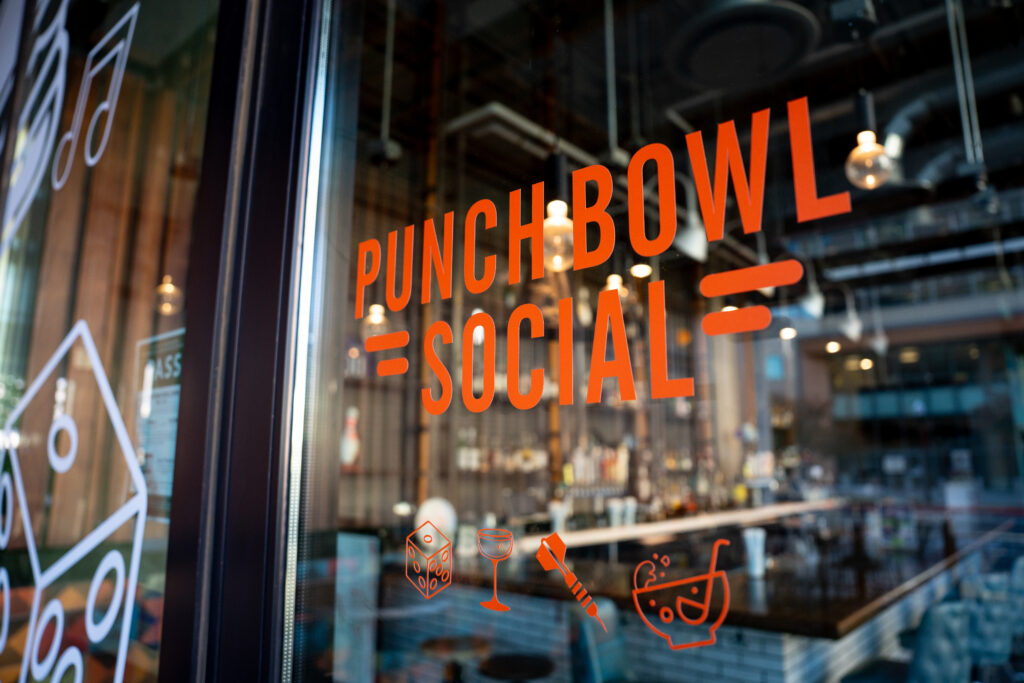
“In the playoffs, we really had a dramatic increase in people sticking around to watch the game,” Punch Bowl Social’s general manager Dennis DiLosa told The Sacramento Bee in 2023. DiLosa estimated a customer increase of 20% during the Kings’ playoff run. But late last month, Punch Bowl Social, billed as DoCo’s secondary entertainment option when it opened in December 2017, announced it would close by the end of 2025.
The beam itself may be a bellwether for the economic success of the area.
Ault said the office market has changed with more people working from home, making the downtown workweek more like Tuesday to Thursday.
A boost to downtown has come from visitors to Sacramento, who Ault says account for nearly half of the attendees at Golden 1 Center events.
But on most nights the arena sits empty, with an average of 127 ticketed events per year. So the key is to squeeze as much value as possible out of the public subsidy.
One possibility would be to try to bring a WNBA franchise back to town. Sacramento, home to the WNBA’s Monarchs from 1997 to 2009, could look to join expansion cities like Cleveland, Detroit and Portland, which will all see franchises return to their cities by 2030.
When the arena deal first came together, its advocates said it would help Sacramento attract a future NBA All-Star Game. Indianapolis, which hosted one in 2024, reported a local economic impact of $400 million.
Ault and Eadie both cite a shortage of hotel rooms standing between the city and a successful all-star bid, with estimates placing the city about 1,200 rooms short.
The city’s bid to host the event in 2022 fell short, with Cleveland ultimately being selected. Sacramento remains one of four NBA cities to have never hosted an All-Star Game.
Robert Ohman is a Sacramento-based freelance writer.