

The Abridged version:
- Brian Kirschenmann and Mark Johnson, both farmers and ski enthusiasts, have launched a business shuttling skiers and snowboarders in a helicopter to a spot high in the Sweetwater Mountains.
- The range is near the California-Nevada border, north of Bridgeport. Sweetwater Heli — the new company — wants to make the slopes accessible to those who can afford the $1,800 per-day cost.
- Johnny Norman, a longtime snowboard coach at Heavenly Lake Tahoe, said people in the region will “definitely jump on.”
Brian Kirschenmann grows potatoes on his farm near Bakersfield, but his passion is skiing in remote mountains around the world. Mark Johnson is a farmer too, growing lavender in the high desert at the base of the Eastern Sierra south of Lake Tahoe.
Now, the two men are joining forces to grow a new business that’s unique in California.
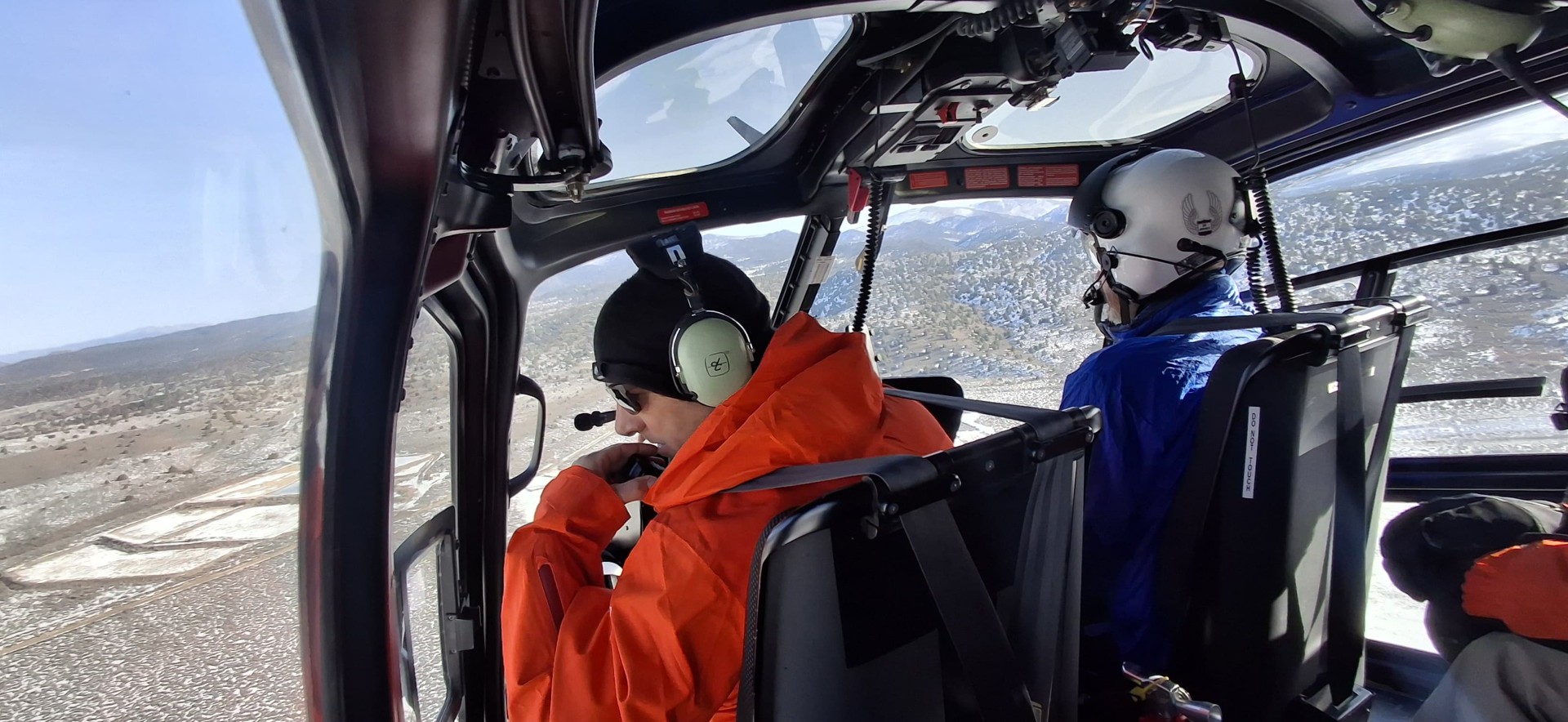
Their plan: ferry skiers and snowboarders in a helicopter to a spot high in the Sweetwater Mountains, pick them up after they ski or ride several thousand feet down the mountain, and then return them to the heights. Again and again.
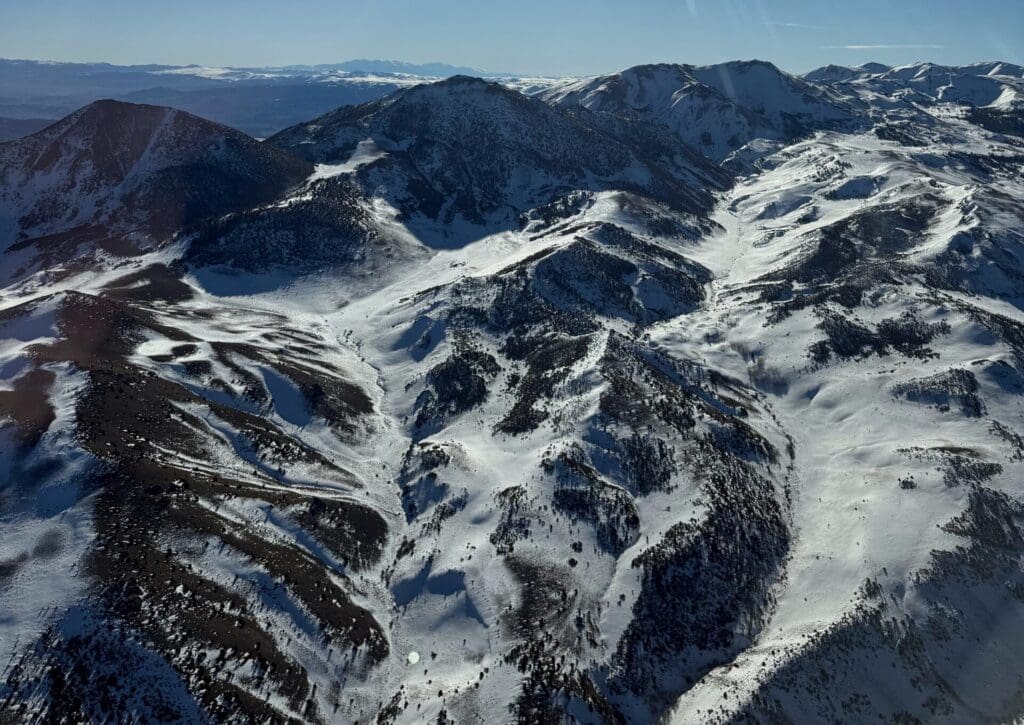
The little-known Sweetwater range is near the California-Nevada border east of the Sierra and the Walker River. The town of Bridgeport sits due south. A handful of skiers have been known to climb the mountains to ski down, but the trek is so long that most are lucky just to complete a single run in a day.
Sweetwater Heli – the company launched by Johnson and Kirschenmann this year – hopes to make those mountains accessible to almost any skier or snowboarder who can afford the experience.
Taking a helicopter to the slopes
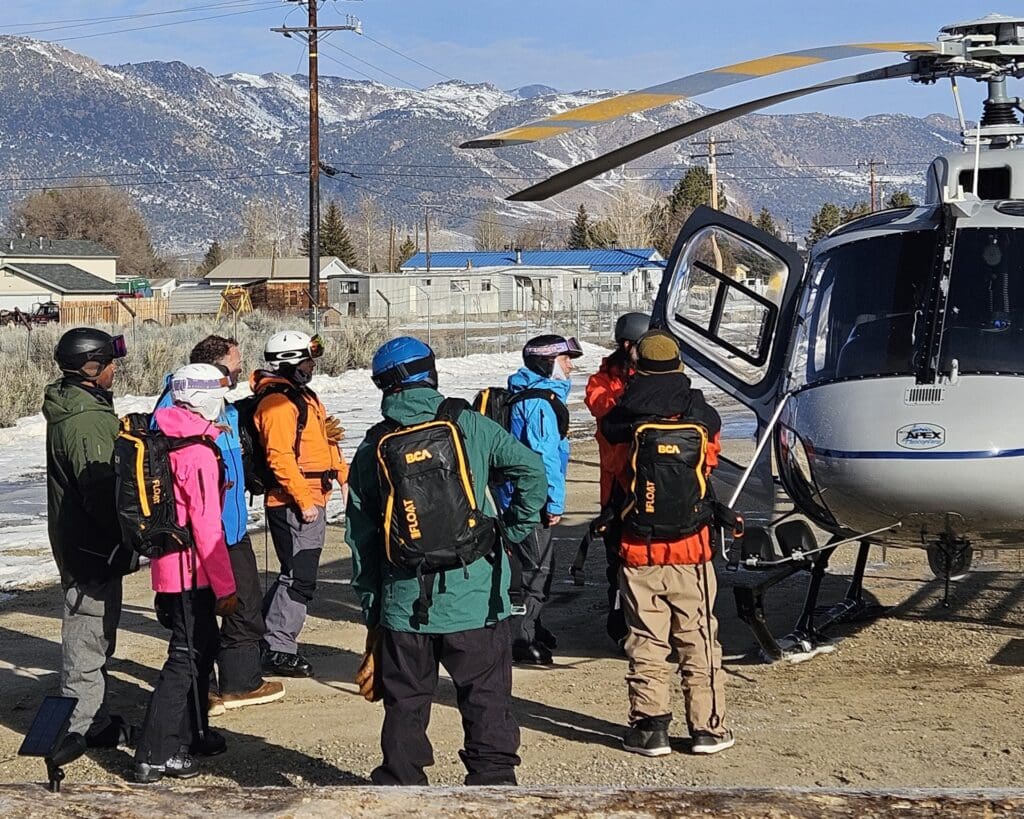
Guests gather in Bridgeport – a two-hour drive from Tahoe and about an hour from Mammoth Lakes. After completing an avalanche awareness class, they board the helicopter for a short ride to the mountains. Then they ski or ride down, typically in groups of four with two professional guides between them. They break on the mountain for a box lunch prepared by a local restaurant.
A typical day costs $1,800 per person and involves six to eight runs, each covering around 2,000 vertical feet. Unlike the kind of extreme terrain commonly associated with helicopter-assisted skiing, Sweetwater Heli describes its runs as similar to skiing off the groomed slopes at a Tahoe resort.
“There are some technical lines up there,” Kirschenmann said, “but the stuff we are focusing on is all intermediate. I call it ‘cruisy’ powder runs that anybody can ski.”
The firm is targeting locals as well as those traveling from far away to visit Tahoe or Mammoth. Helicopter skiing typically serves more remote areas. But the Sweetwaters are so close that visitors can experience this kind of skiing in a day.
From Tahoe to Sweetwater Mountains
While the experience isn’t cheap, it might still be attractive to visitors who plunk down several thousand dollars on air fare, lodging, food and lift tickets for a week at a Tahoe resort.
Johnny Norman, a longtime snowboard coach at Heavenly Lake Tahoe who leads helicopter trips north of Whistler in British Columbia, called it “insane” that Tahoe and Mammoth skiers and riders will be able to leave their homes or hotels and be in a helicopter two hours later — and at the top of a mountain a few minutes after that.
“We’ve been looking for this for quite some time,” said Norman, who was one of the first to ride with Sweetwater this month. “Especially when you have these days when you have super long lines at the resorts, to have access to this in California is something that our population that skis and snowboards will definitely jump on, for sure.”
Path the launch new company in California
It was a coincidence that the firm’s co-founders are both farmers. But they are a good match for each other.
In addition to his lavender farm, Johnson started and ran a solar power business and helped manage a stock car racing team. He was a ski racer in the Air Force before managing freeride skiers in Tahoe who were sponsored by Solomon. Those roles convinced him he had the skills needed to organize an adventure-based business and navigate the government regulations involved in skiing on federal land.
Kirschenmann had been helicopter skiing around the world but hadn’t thought of doing it in California until friends connected him with Johnson, who was looking for someone to help finance his idea. Kirschenmann thought it was a perfect way to spend some of the income from his successful farming operation.
“Brian brought the money and I brought the pathway to get us there,” Johnson said. “We come from two different worlds. And when you put us together, we become a really strong team.”
The Sweetwaters are in the Humboldt-Toiyabe National Forest, and Johnson said the Forest Service management guided him over the regulatory hurdles he needed to clear before opening the business.
After fulfilling requirements protecting endangered species and making sure that Native American tribes with ancestral lands in the area were OK with the heli-skiing plan, Johnson also had to arrange liability insurance – no easy task – and hire a team of guides. Kirschenmann helped recruit them from his contacts throughout the industry.
Safety is paramount, Johnson said, especially since many of their customers will be in the backcountry for the first time. Avalanche awareness and professional guides are a standard in helicopter skiing but are especially important with clientele who might be new to the sport.
“What makes the Sweetwaters nice is that we can provide this experience to a vast amount of people, not just people who can ski expert lines, but people who might feel overwhelmed going up and skiing in Alaska or Canada,” Johnson said. “We really want to create an experience that is open to everybody. People who ski maybe five or 10 days (per year) can go out there and have a good time.”
Daniel Weintraub is a regular contributor, writing Tahoe Loco for Abridged.