

The Abridged version:
- The California Museum’s new “Help Wanted/Leave Now” exhibit explores a century-long cycle of Mexican workers being recruited when their labor was needed, then targeted for removal.
- Personal stories, photographs, artifacts and an immersive bus experience put a human face on mass deportation and the families affected by it.
- The exhibit opens Thursday, Aug. 13, in Sacramento and runs through Jan. 10, 2027, before traveling nationwide.
The number keeps climbing — into the millions.
Among the first things visitors encounter inside a new exhibition at the California Museum are a ticking count and a map of global locations representing people deported from the United States across generations.
“Help Wanted/Leave Now: ‘Operation Wetback’ & the Revolving Door of Mass Deportation” opens Thursday at the California Museum in Sacramento. The exhibit examines a century of U.S. immigration policies and enforcement campaigns, with a focus on the coerced removal of Mexicans and Mexican Americans during the Great Depression and the Eisenhower administration’s 1954 deportation campaign, historically known by the slur “Operation Wetback.”
“Even though it’s shocking and it’s not the kind of language that one would like to use on a daily basis, it is the official governmental name,” said Pablo Espinoza, who championed the creation of the exhibit for more than a decade.
“And, it’s a word that is being used now,” Espinoza said.
Sign Up for the Morning Newsletter
The Abridged morning newsletter lands in your inbox every weekday morning with the latest news from the Sacramento region.
Take another step inside and the numbers give way to names and unforgettable faces.
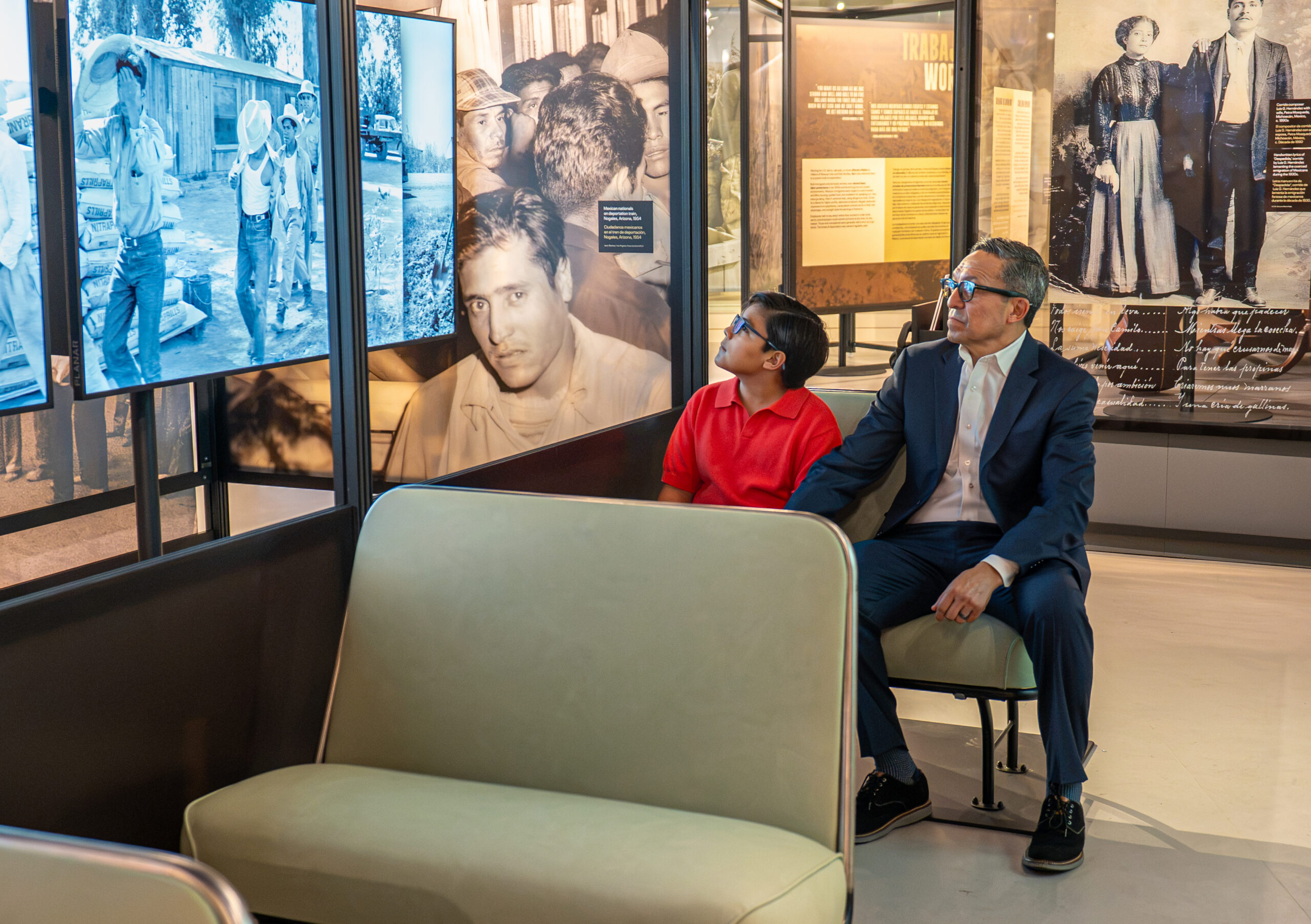
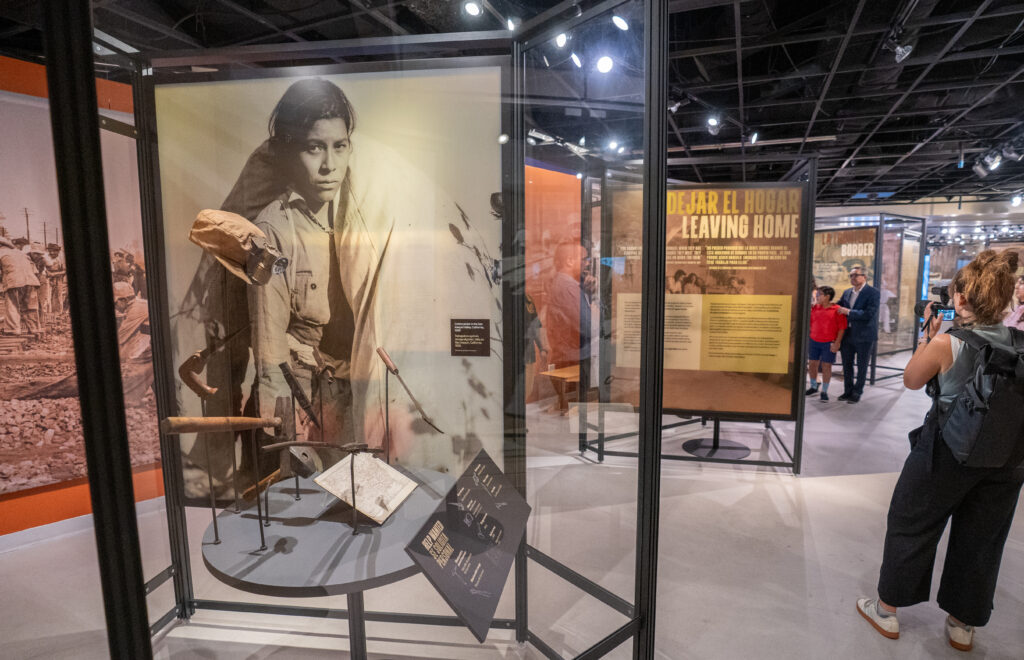
Walking through the exhibit for a preview on Wednesday, Espinoza and his 10-year-old son stopped at a photograph on large screens representing revolving doors. The face staring back at them from another time looked remarkably familiar. Espinoza said the person in the photograph looked exactly like his nephew today.
Just last week, Espinoza learned his wife’s grandfather was a bracero, one of the Mexican laborers brought to the U.S. to work through a guest worker program created during World War II.
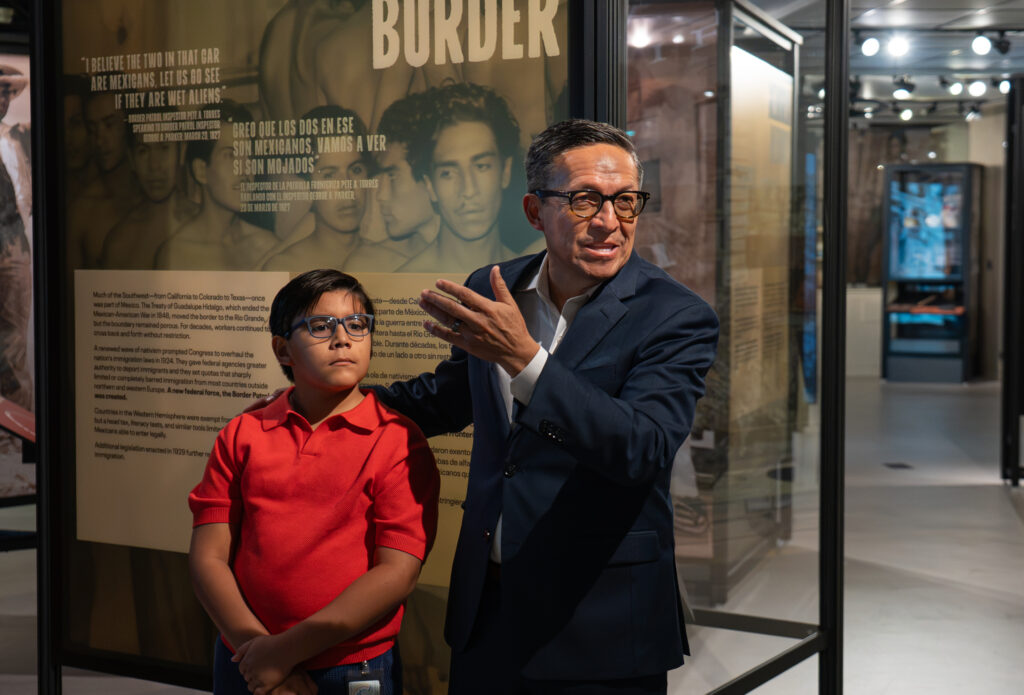
Step by step, the exhibit unpacks a century of American campaigns with the same conflicting message to Mexican workers: We need you, and now we want you gone.
“This is not about politics. This is about humanity,” Espinoza said. “This is about who we are, what we represent, and what we’re forgetting.”
Espinoza was emotional when asked what he would say if he could speak for the exhibit.
“Come and discover me,” he said. “Come with patience. Come with an open heart and an open mind.”
Four words tell a century of American history
Behind the words “Help Wanted/Leave Now” are generations of people whose labor was welcomed when America needed it and whose presence became unwanted when politics or economics changed.
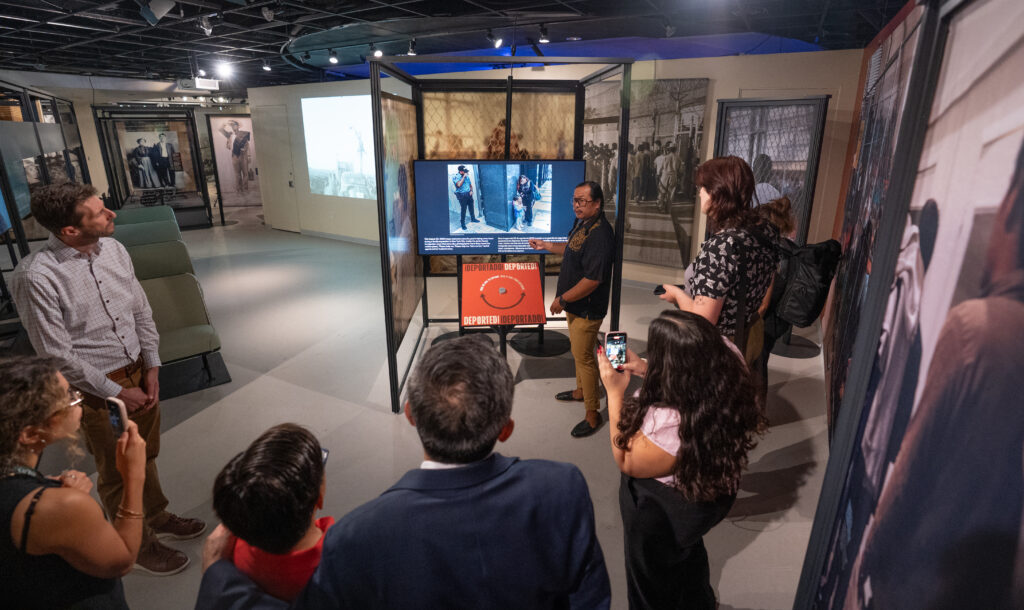
The exhibit covers half of the second floor at the California Museum. There are films of firsthand accounts of families separated and never reunited. There are stories of American citizens forced from their own country and displays of workers recruited to feed a nation and later targeted for removal. There are also people who lived long enough to remember what happened.
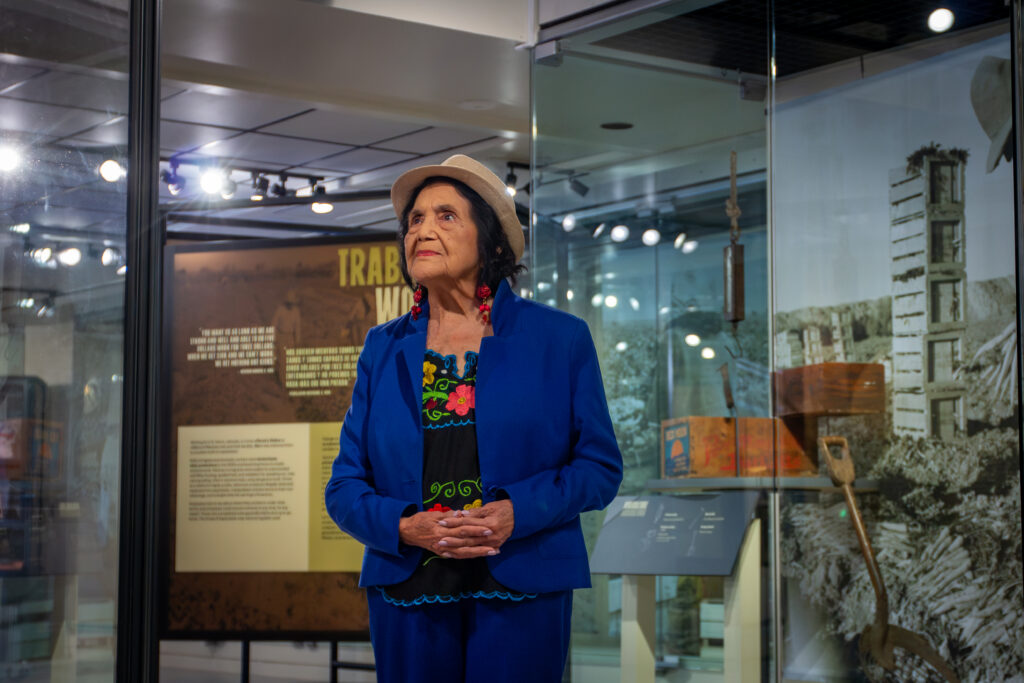
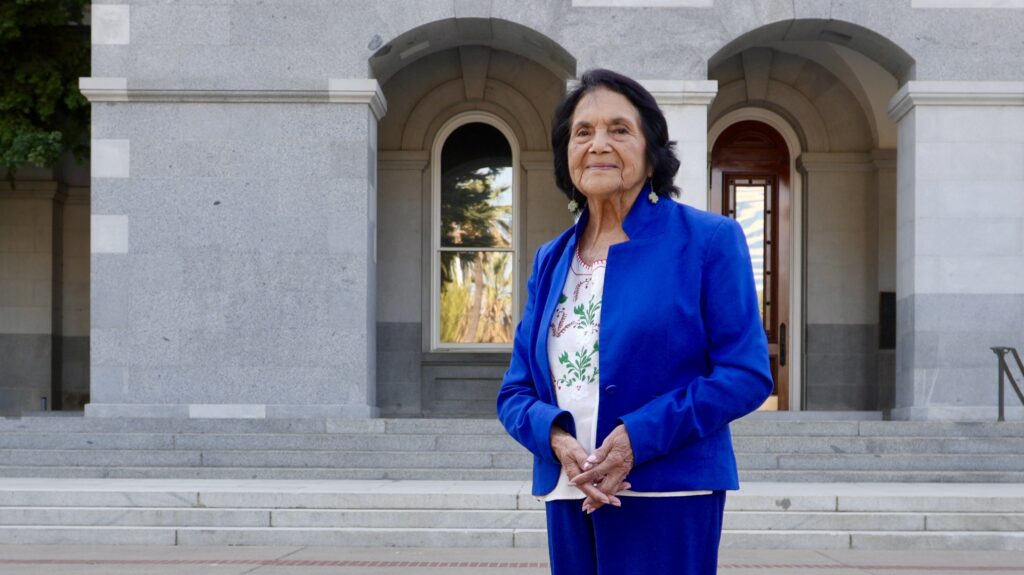
Dolores Huerta is one of them.
At 96, the civil rights and labor leader has lived through much of the history the exhibit explores.
“I grew up in the ’40s where we actually recruited hundreds of thousands of Mexicans to come to the United States,” Huerta said.
During World War II, Mexican laborers were brought north as American workers left for military service.
“It was supposed to be a very temporary program,” Huerta said, “but it went on and on and on for years.”
Huerta helped create the exhibit and said she remembers the recruitment and the exploitation.
What’s worse, Huerta said, is that she sees a pattern that workers were needed, brought in and put to work, then found themselves facing discrimination and deportation.
“I think it’s important so we can set the record straight,” Huerta said.
“This exhibit does that and is very, very, very important to me.”
Take a seat on the bus
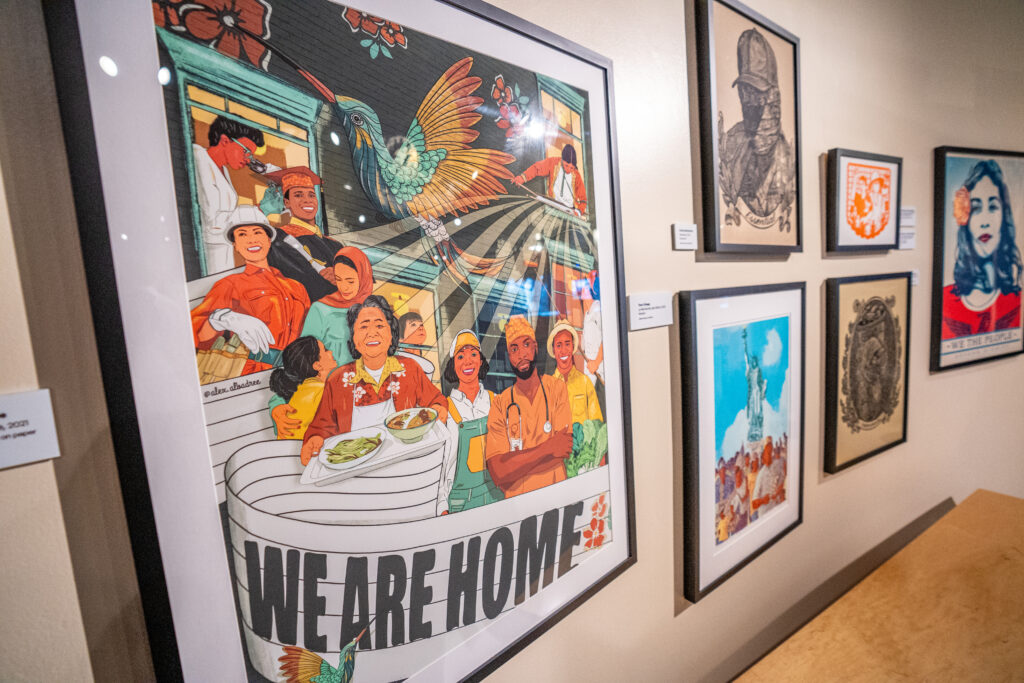
One of the most powerful experiences inside “Help Wanted/Leave Now” allows visitors to take a seat on what looks like a bus. Once seated, the stories come to life through video and audio placing visitors side by side with stories of people caught up in deportation campaigns.
People like Victor Ochoa, who tells his personal account of officers raiding his home when he was 7 years old, and what he saw his mother experience.
“They showed up at my house, and this one officer came in with his London Fog and opened his coat, and he was brandishing a .45,” Ochoa said. “My mom was completely broken down, and that made me more nervous because I was looking at my mom and seeing that gun and thought, ‘Oh my God, something bad’ is going to happen.”
Ochoa explained he eventually learned his family was liked before the mid-1950s because they were hard-working and had kids in school. Ochoa said he did not know what deportation meant as a child. The bus ride story shows how Ochoa learned a lived definition. His family was given three days to “get out of here.”
Some people on the bus were separated from families they would never see again. Others were born and raised in the U.S., only to be swept up and sent to a country they did not know.
“It’s heavy material and these are emotional stories, but these are humans,” said Danielle Wood of the California Museum. “And these are the stories of humans.”
Wood said the exhibit was designed with heart and humanity in mind.
“These are real people that are being affected by these deportation campaigns, and it will evoke emotion,” Wood said. “It will sit with you, and that is all intentional.”
‘History does repeat itself’
For Espinoza, the road to the exhibit began about 14 years ago in the same museum.
He was walking through the California Museum’s exhibit about the incarceration of Japanese Americans during World War II.
He was holding the hand of his late son, Adrian, learning about a chapter of history he had not fully understood.
At roughly the same time, Espinoza, then a journalist covering the state Capitol, was hearing lawmakers discuss California’s history of coerced removals and deportations of people of Mexican descent.
He said he had not learned much of that history either.
Wood understands that feeling.
“None of these things were taught to me in school and it is mind-blowing because it is heavy stuff,” she said. “That’s why telling these stories is so important.”
The exhibit will travel nationwide starting in January — a first for the California Museum, having curated the exhibit and sending it on the road, Wood said. She said it carries a crucial message.
“One thing I have noticed since I started working here is that history does repeat itself,” Wood said. “And it does often — and people have short memories.”