

The Abridged version:
- The former Land Park Bowl property on Freeport Boulevard with historic landmark status is up for sale following a fire that closed the building.
- The Sacramento community questions what’s next for the vacant bowling alley, with ideas of the type of business they’d like to see fill the space. Some people prefer the property reopen as a bowling alley, while others say they’d be satisfied with “any thriving business” taking the spot.
- The vacant bowling alley is part of a larger conversation of “crumbling” infrastructure on the Freeport Boulevard corridor, said Brian Ebbert, who sits on the board of the South Land Park Neighborhood Association.
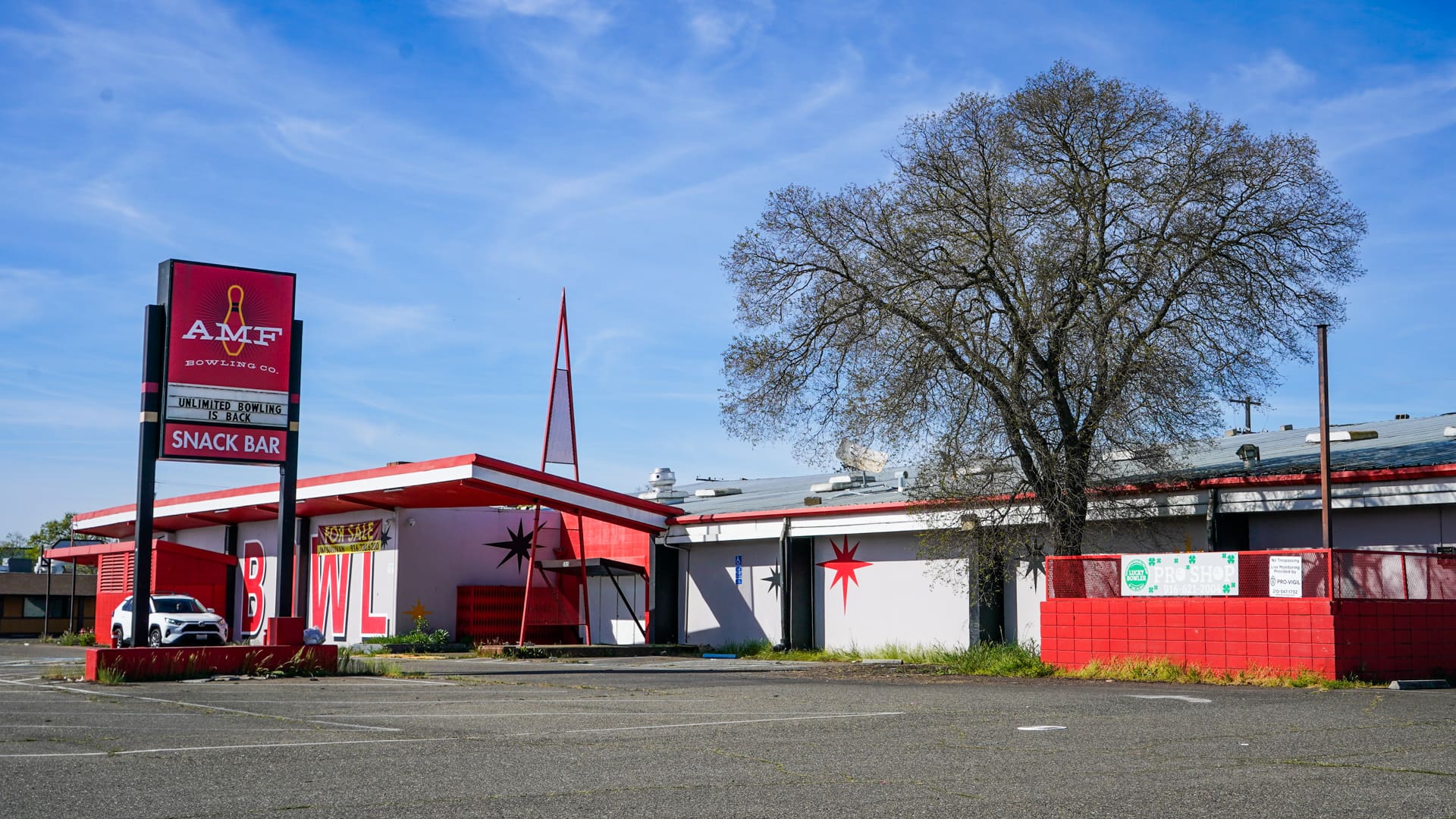
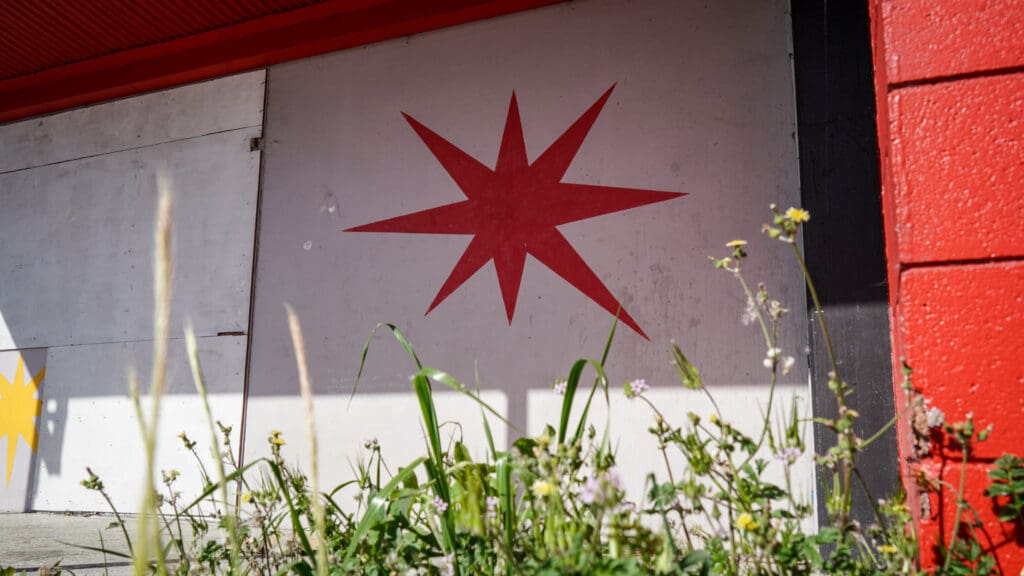
A vacant bowling alley washed in red and white in South Land Park drips with nostalgia and promise as it awaits a new buyer to strike.
The question is: What will (and will not) become of the treasured property that has historic landmark status?
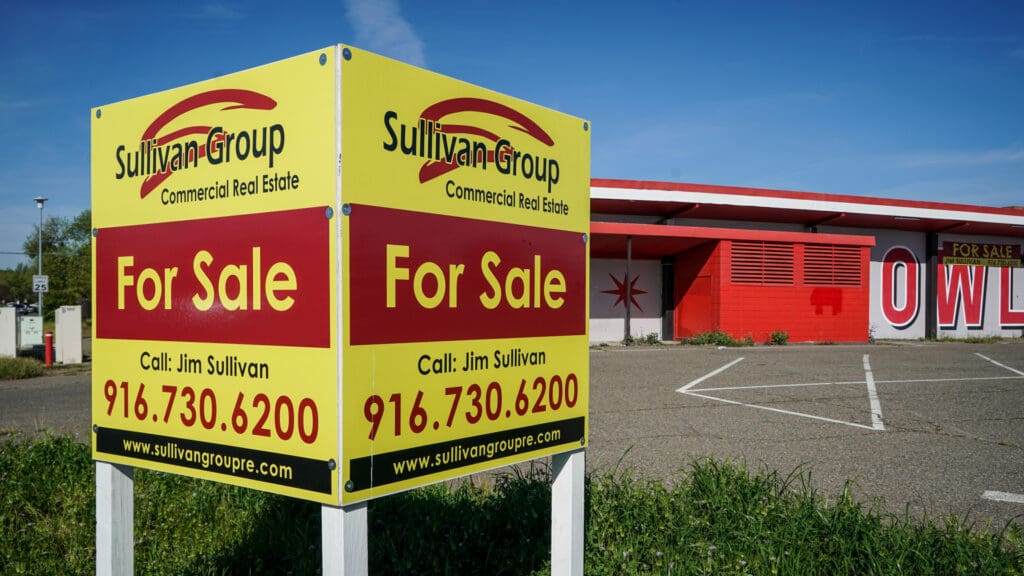
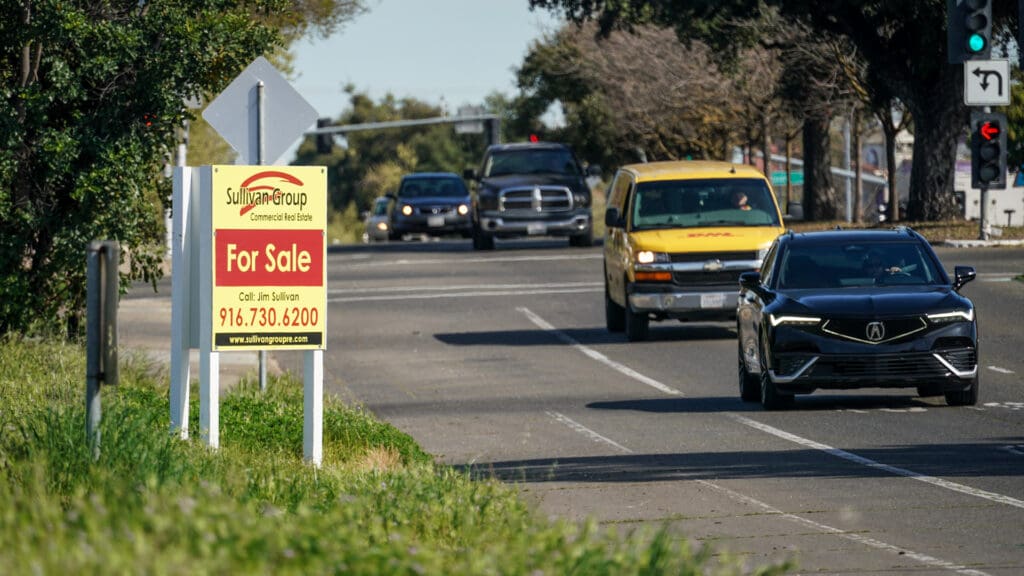
The now-closed AMF Land Park Lanes property at 5850 Freeport Blvd., which hit the market for $3.1 million earlier this year, remains a point of contention as residents eagerly await a buyer to fill the space that housed the only bowling alley in city limits. The future of the roughly 28,000-square-foot site remains undecided until a new owner moves in with a redevelopment plan.
“I think a lot of people want to see a bowling alley back,” said Sacramento City Councilmember Caity Maple, who shared sentiments of the building’s nostalgia and community ties.
“I don’t know if that’s going to happen.”
Fire prompted historic designation
The Sacramento City Council designated the former AMF Land Park Lanes a historic landmark in July after a fire triggered a closure several months before. The land was originally purchased in 1958 and opened as Land Park Bowl two years later, helping to transform Freeport Boulevard into a “bustling commercial corridor,” according to the city. The name was eventually changed to AMF Land Park Lanes.
Maple, who represents the area where the vacant private property sits, said the historic designation passed by the City Council preserves the bowling alley’s legacy. That doesn’t mean, she said, that the space will remain the same.
“Cities are growing living creatures … there’s no such thing as staying static, but there are ways that we can honor history and make sure that we’re preserving it — at least the elements of it that are important,” she said.
Sign Up for the Morning Newsletter
The Abridged morning newsletter lands in your inbox every weekday morning with the latest news from the Sacramento region.
The future of historic landmark property
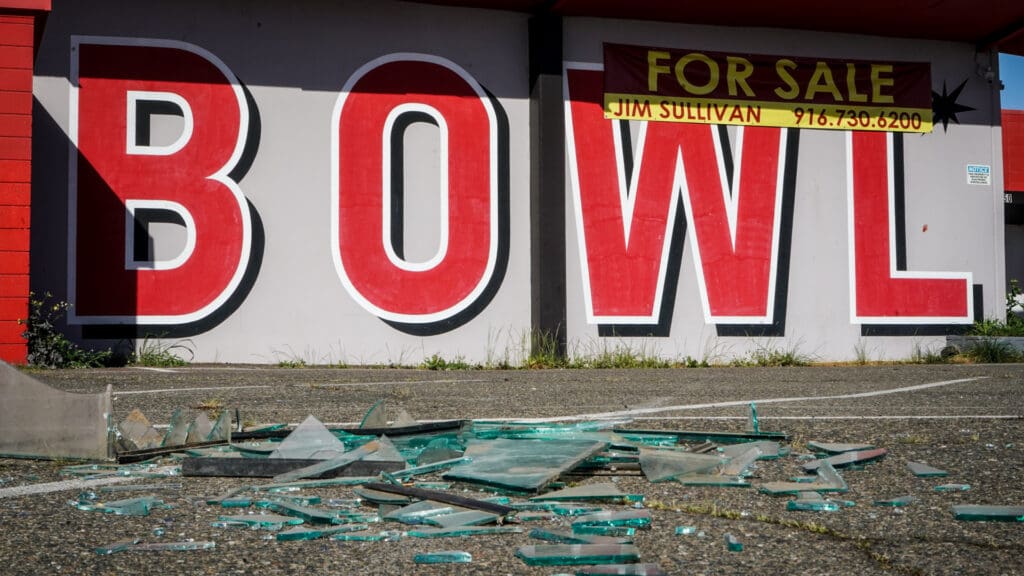
The word “bowl” is sketched in bold, enticing letters across the vacant building on Freeport Boulevard, juxtaposing signs of deterioration, like broken glass and scattered weeds.
The property is currently owned by Lucky Strike Entertainment, formally known as Bowlero Corp., which operates more than 360 entertainment spaces across North America. Representatives did not respond to requests for comment.
Lucky Strike Entertainment owns several regional bowling destinations, including locations in Sacramento County and Rocklin.
Whether the historic landmark site is an attractive sale depends on the buyer, said Ryan Lundquist, a local real estate appraiser and housing analyst. Interested buyers will weigh several factors, including costs, historic significance and zoning restrictions, he said.
“There are certain buyers who will look and say, ‘I don’t want to own something like that,’” said Lundquist, who simultaneously emphasized the property’s potential, including its ample parking and location.
Airport zone limits options
The site where the vacant blowing alley sits is within an airport overlay zone because of its proximity to the Sacramento Executive Airport, said Marcus Adams, senior planner with the Sacramento Community Development Department. Due to public health and safety concerns, several land uses are prohibited, including:
- Theme parks
- Racetracks
- Stadiums and arenas
- Jails and detention centers
- Hospitals
- Colleges and universities
- Auditoriums, concert halls and amphitheaters

Housing or ‘any thriving business’
Local demolition contractor David Yates, who maintains the property on behalf of Lucky Strike Entertainment, said he’s shown the property to a couple of potential commercial real estate buyers. One person, he said, was interested in turning the space into a community event center with bowling lanes and pool tables.
Maple, who serves several Sacramento neighborhoods in District 5 as a councilmember, said she’s a “big proponent” for housing taking the vacant space because the city is behind on its housing goals.
The South Land Park Neighborhood Association’s board members were surveyed earlier this month by Brian Ebbert, vice president of the board, on the future of the vacant property. The majority of the feedback backed “any thriving business” or service moving into the community of more than 14,000 residents. None of the polled members were in favor of converting the space into affordable housing or a homeless services center.
Several neighbors want the property to reopen as a bowling alley, said Ebbert, who’s served on the board since 2014 and recently as president.
“I think at this point the community will probably take what we can get,” he said.
Some people may be unhappy
Maple said “some people may be unhappy” with whatever the property reopens as under new ownership and “that’s just how it works.” She said an early redevelopment idea of the property included building housing on a portion of the site and turning the existing building into a community center. Other possibilities include a restaurant, retail shopping hub or even office spaces.
“My interest and goal and hope is that something can be done here quickly because I don’t think it benefits anyone … if it stays vacant,” she said. “And that’s just that truth.”
What historic landmark status means
Under the Secretary of the Interior’s Standards for the Treatment of Historic Properties, historic buildings can be repurposed as long as they continue to convey the reason they’re historically significant.
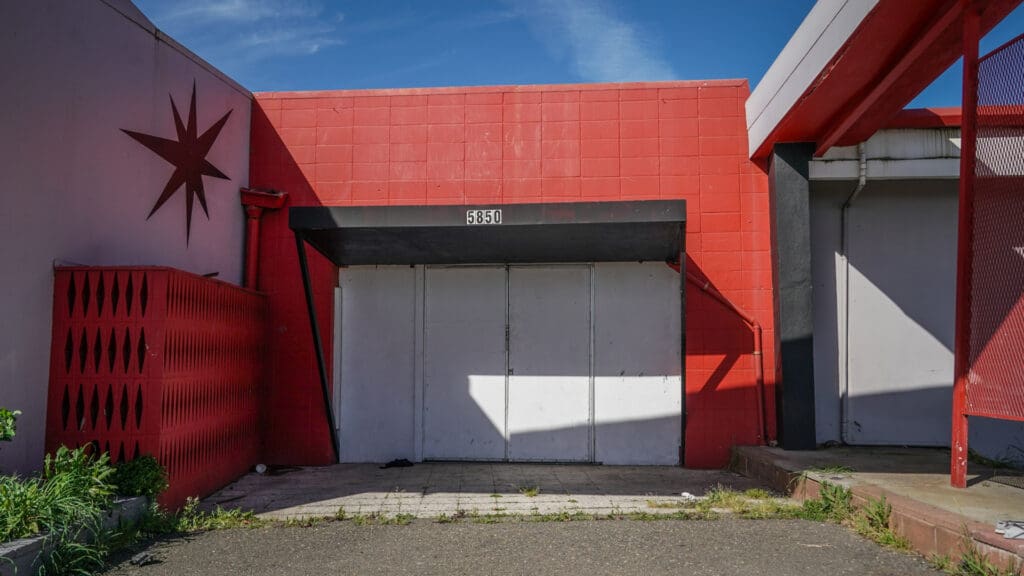
In South Land Park, the new property owner should maintain the architectural elements of the mid-century modern bowling alley that are essential in conveying its time period, place in history and community significance, said Sean de Courcy with the city’s Community Development Department. Those features include the building’s entryway, roofing and concrete block construction.
“There’s a lot of subjectivity to it … it’s not as simple as saying ‘OK, if you don’t touch these things, you can do these things,’” said de Courcy about property owners redeveloping historic landmark properties.
“We’ll sort of know it when we see it,” he said.
Several historic properties modified
There are several properties with historic significance dotted across the city that have been modified, including the building that currently houses several businesses including, Bike Dog Brewing Co., Sellands Neighborhood Cafe and Bar, and The Kitchen Sacramento on Broadway in Land Park. Similar to the bowling alley building, the property features mid-century modern flair with a large, horizontal footprint.
The property, now populated with food and drink destinations, was a former Safeway grocery store.
“We don’t want to lock these buildings in amber once they’re designated,” said de Courcy, who emphasized the city’s desire for historic buildings to be reused and maintained. “And so, there’s a lot of flexibility when it comes to adaptive reuse.”
City buildings stamped with historic landmark designations are eligible for monetary rewards, including the Mills Act property tax reduction program, which encourages ownership and restoration of historic properties.
Designations also preserve Sacramento’s history, including the properties and the people who gathered in them, according to the city.
However, it is possible — though more costly and complicated — to demolish a building with historic landmark status, de Courcy said.
The state of Freeport Boulevard
Gem. Cornerstone. Unique. Icon. Significant.
These were some of the words the community used to describe the bowling alley in the dozens of letters supporting its historic landmark designation. For many people who call the Sacramento region home, the bowling alley wasn’t merely a sporting destination — it was a community hub that fostered togetherness.
The bowling alley is especially significant for its connection to Japanese American and LGBTQ bowling groups, including the Nisei bowling leagues and the River City Bowlers.
The property highlights the Japanese American community’s contributions to Sacramento’s recreational and social landscape during the World War II era.
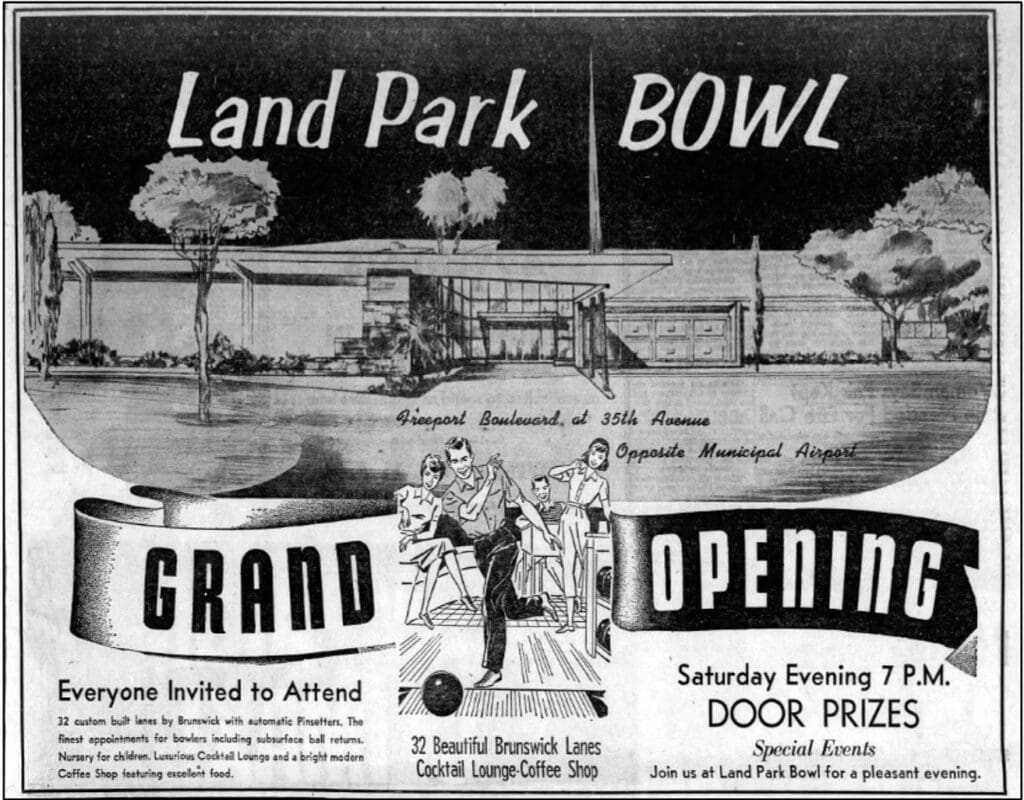
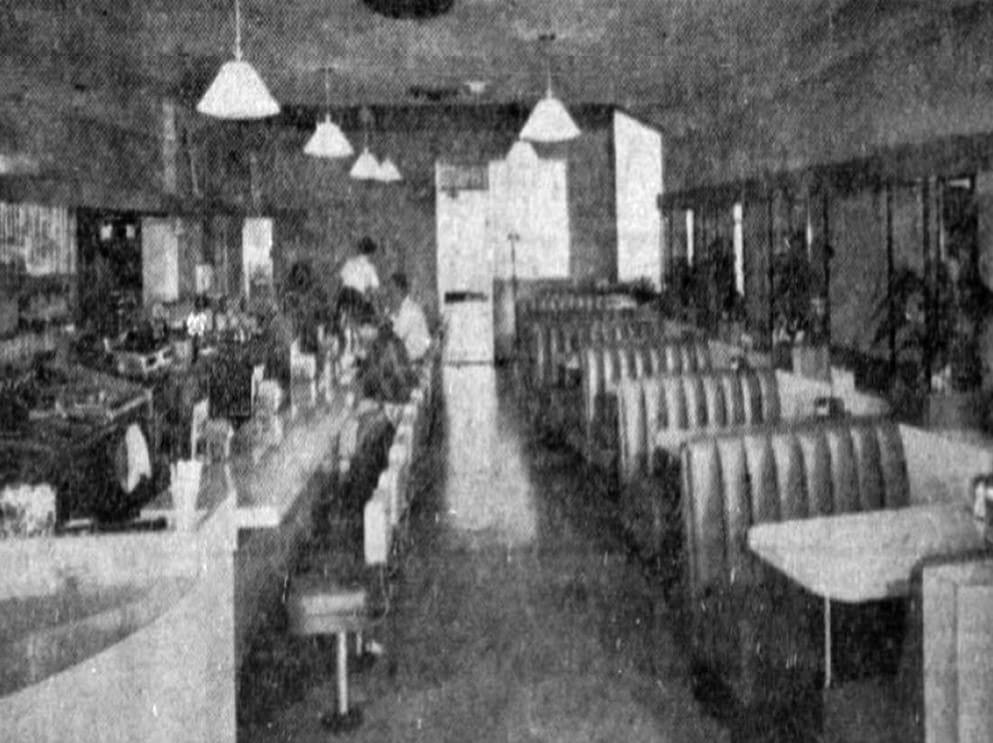
The land on which the vacant building sits was originally purchased in 1958 by Gonzo and Toki Sakai, according to a city staff report. Land Park Bowl opened in 1960 as a suburban bowling destination, decorated with a cocktail lounge, a coffee shop with “excellent food” and a nursery.
Popular for social gatherings
In recent years, the bowling alley housed social gatherings, from birthday parties and school events to bowling competitions and family outings.
Then, the business shut down.
Ebbert said the community is growing increasingly worried about the state of the Freeport Boulevard corridor, including crumbling infrastructure and vacant buildings that populate the strip.
The bowling alley closure “hits a little differently,” he said.
“I represent a district that unfortunately has a lot of vacant lots and empty buildings,” Maple said, “and it is something that I spend a lot of time and energy trying to resolve.”
As the community questions what’s next for the historic landmark property that holds decades of treasured memories, Lundquist said it might take a while for the right buyer to scoop it up.
“We always have to ask, ‘Is it the market where it just takes longer (to sell) or is it priced too high,'” he said.
Brianna Taylor is an audience engagement reporter for Abridged.