

The Abridged version:
- Recent water samples continue to show high levels of E. coli in Lake Natoma at the Black Miners Bar Swim Area and Nimbus Flat North Beach.
- Visitors can enter the water, but California State Parks recommends taking precautions such as showering after visiting the lake.
- Water officials have not been able to confirm the reason for the increase in E. coli at Lake Natoma, but a bacteria source study done on the Lower American River suggests that birds could be a factor.
Lake Natoma visitors looking for relief from the heat may want to reconsider swimming in the water after recent samples continue to show high levels of E. coli at the Black Miners Bar Swim Area and Nimbus Flat North Beach.
For the past five weeks, E. coli levels at parts of Lake Natoma have exceeded the threshold that the Environmental Protection Agency considers safe in recreational waters. The latest samples show that Black Miners Bar Swim Area is more than five times the limit, while Nimbus Flat North Beach is more than three times the limit.
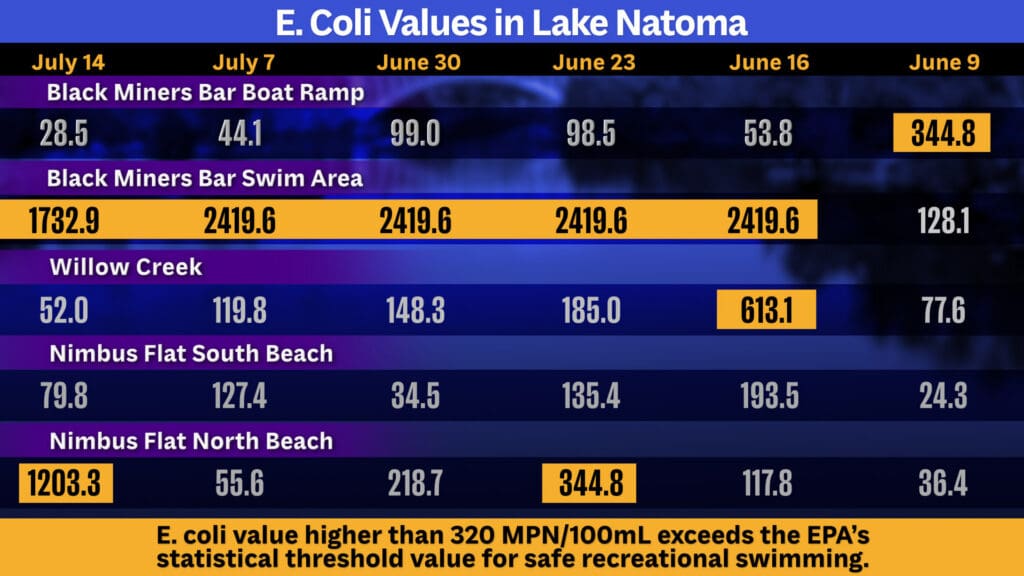
The Central Valley Water Board collects water samples at Lake Natoma on Tuesdays from mid-May to October. Results are posted online on Wednesdays.
The goal of monitoring E. coli levels is to “evaluate the levels of bacteria and share that information with visitors to help them decide where to recreate,” said Blair Robertson, spokesperson for the California State Water Resources Control Board.
Sign Up for the Morning Newsletter
The Abridged morning newsletter lands in your inbox every weekday morning with the latest news from the Sacramento region.
Most E. coli strains are harmless and exist at low levels in most water bodies. However, people who come in contact with water with elevated levels of E. coli are at an increased risk of becoming ill with symptoms such as stomach cramps, diarrhea, vomiting and a low-grade fever.
E. coli is found in the intestines of warm-blooded animals. High levels of E. coli indicate fecal pollution in the water.
What does this mean for visitors?

Despite posted advisories about the increase in E. coli, staff have not seen a significant change in the number of visitors to Lake Natoma, according to Barry Smith, chief ranger of the Gold Fields District of California State Parks. Smith said the agency is continuing to remind visitors to use caution in the water.
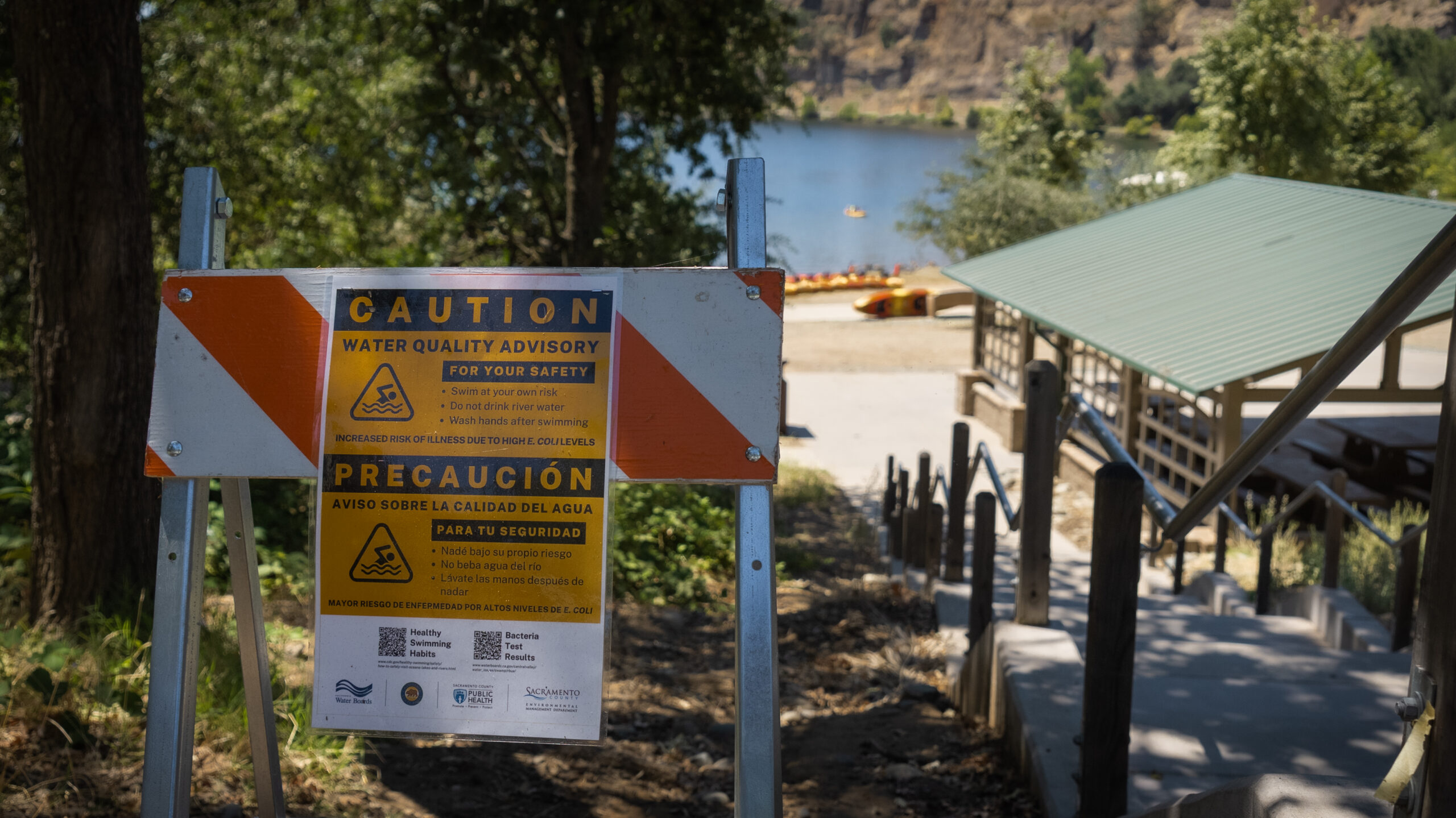
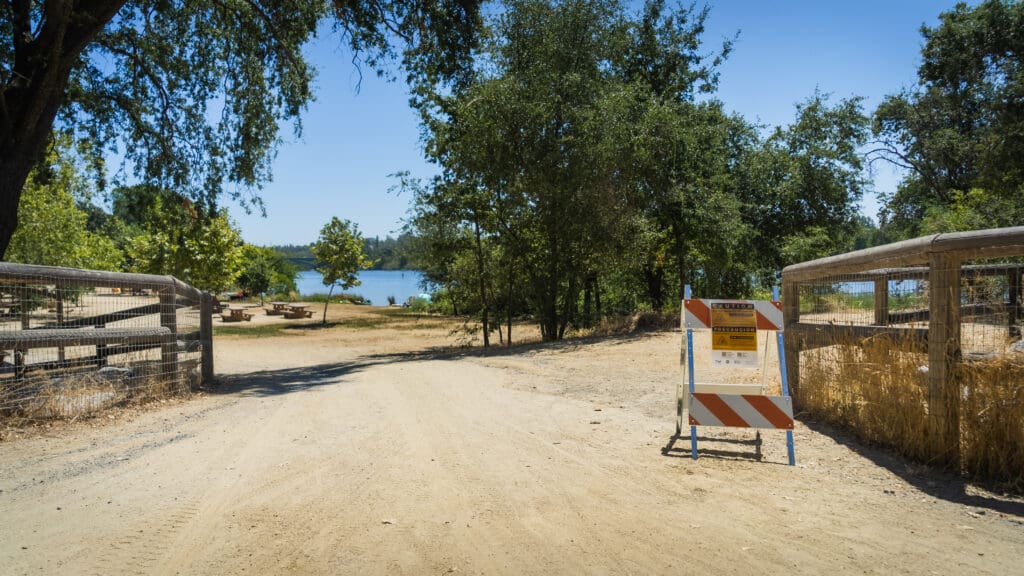
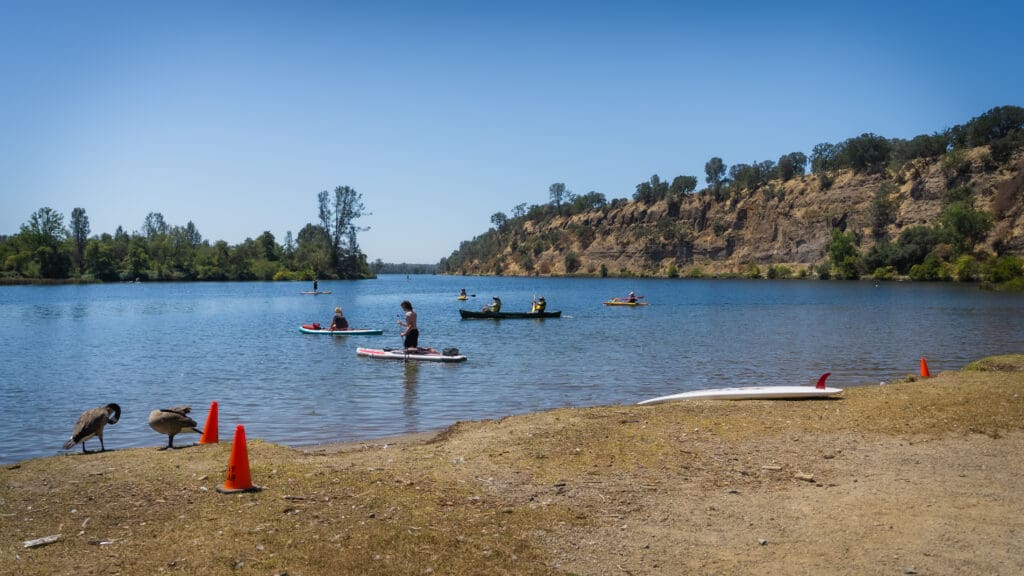
On Friday, a Water Quality Advisory sign was posted at one of the entrances to the Black Miners Bar Swim Area at Lake Natoma. Some visitors said they were aware of the E. coli levels, while others said they were not. Many people were paddleboarding, kayaking and taking a dip in the water.
Heather Miller of Roseville, whose daughters were paddleboarding in the lake, said she did not know about the E. coli before getting to the beach. Miller did not see the caution sign in the parking area and wondered why there were not more signs warning people about the bacteria closer to the beach.
For people who decide to enter the lake, California State Parks suggests the following:
- Do not drink from any body of water. This includes pets.
- Shower after going in the water. This includes washing pets after playing in the water.
- Avoid swimming with open wounds.
The agency also recommends looking at the Centers for Disease Control and Prevention’s Healthy Swimming Habits to reduce risk of exposure.
What is behind the surge?
A full investigation has not been conducted at Lake Natoma to confirm the cause of the elevated E. coli levels, but Robertson said birds could be behind the increase.
A bacteria source study completed between 2019-2022 found that birds are “the largest and most consistent source of fecal pollution on the Lower American River.” Dogs are the second largest source of fecal pollution while human sources are minimal.
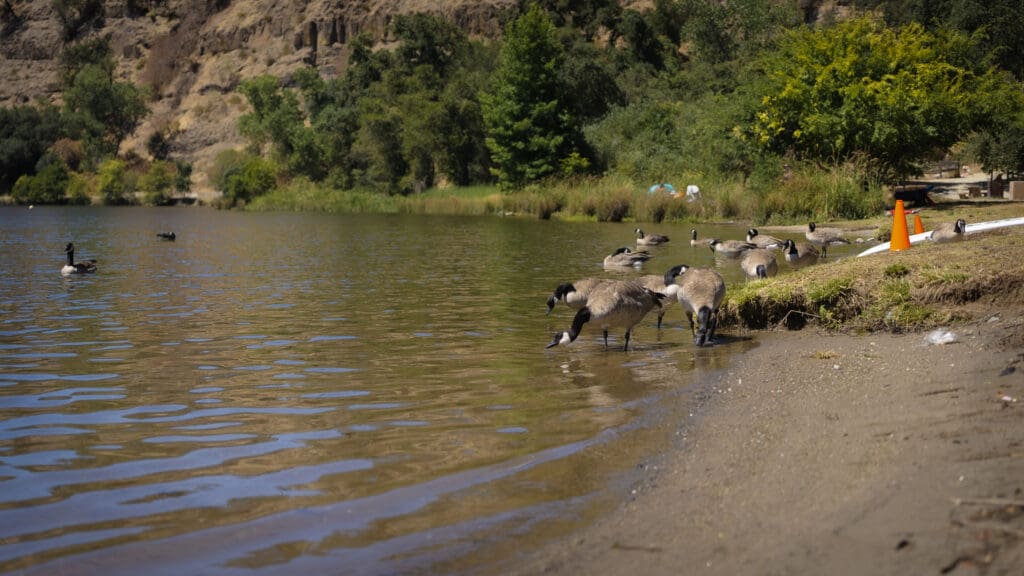
Ducks, geese, swans, cormorants and egrets are common sights at Lake Natoma.
Because Lake Natoma is a “natural, untreated water body,” Robertson said, “some level of bacteria and other microorganisms are commonly present from wildlife, domestic animals, soil, natural environmental processes.”
Shelley Ho is a multimedia journalist for Abridged by PBS KVIE. Visual journalist Virginia Michel contributed to reporting.