

The Abridged version:
- Each year, UC Davis researchers board a beloved boat and set out on Lake Tahoe to measure its clarity, a key indicator of the lake’s environmental health.
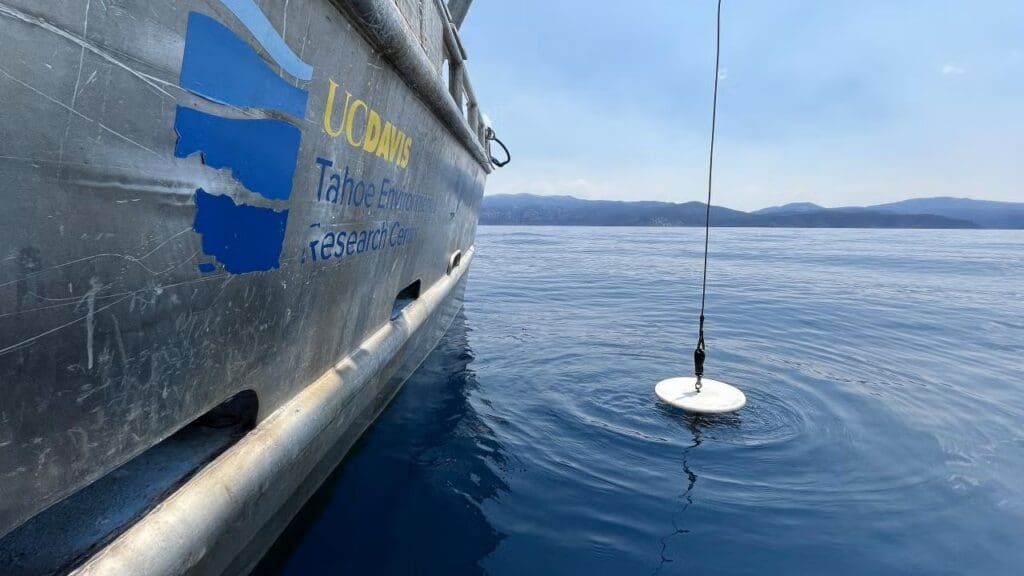
- From the Research Vessel John LeConte, they drop a 10-inch white disk, not much different than a dinner plate, into the water. In this year’s report, they recorded a relatively consistent water clarity level compared to recent years.
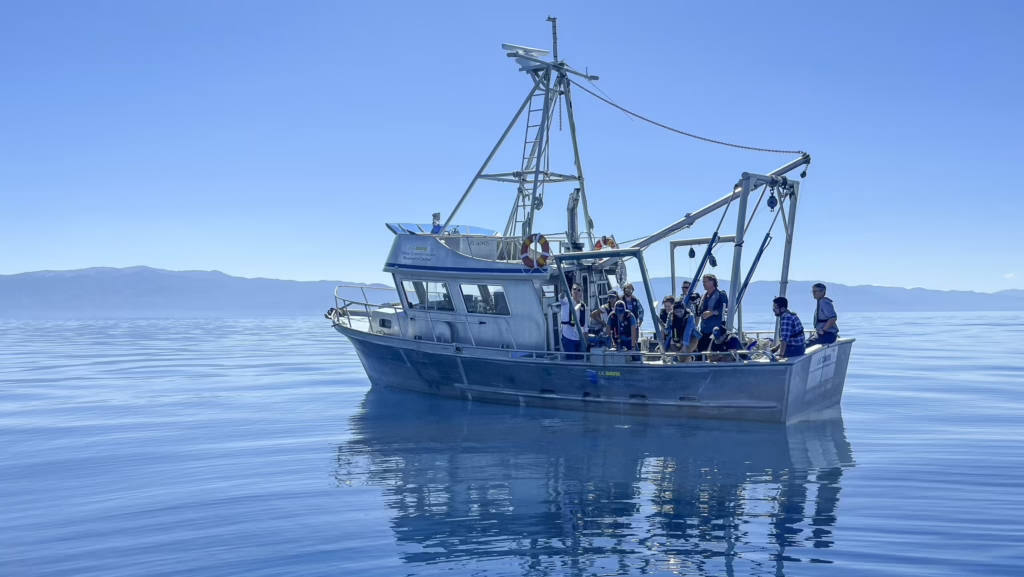
- After half a century of service in which it carried presidents and conducted thousands of trips, the John LeConte is retiring. Over the decades, it has seen the clarity of Lake Tahoe cloud and clear — recently plateauing and still far from where it was in 1960.
Each year for the last 50, researchers from UC Davis have boarded the Research Vessel John LeConte around midday and slowly motored out into Lake Tahoe’s vast expanse.
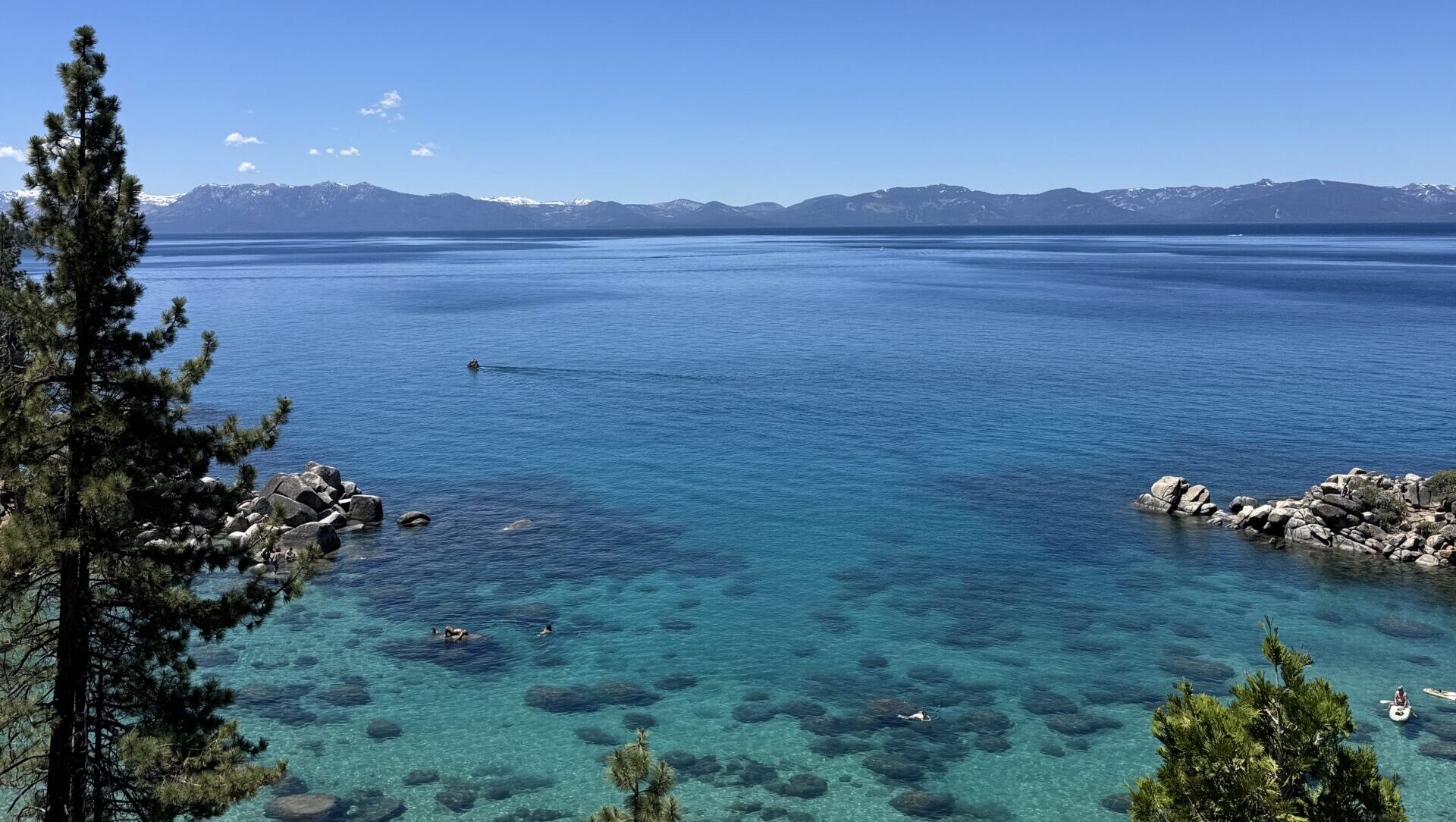
Somewhere in the middle, they come to a stop, bobbing on the turquoise surface. The researchers look over the side, down into one of the deepest lakes in the world and drop a 10-inch white disk, not much different than a dinner plate, into the water.
Then they watch it sink.
When it disappears to the eye, they measure the distance and pull it back up with a rope until they can see it again and measure once more. The reading in between those measurements is called the Secchi depth.
“It’s just been a really practical tool over decades or over a century for measuring water clarity,” said Stephanie Hampton, director of the Tahoe Environmental Research Center.
The Secchi disk, invented by an Italian Jesuit priest in 1865, is likely the lowest-tech tool used by researchers to measure Lake Tahoe’s famed water clarity.
Sign Up for the Morning Newsletter
The Abridged morning newsletter lands in your inbox every weekday morning with the latest news from the Sacramento region.
“We have a lot more complicated ways to measure water clarity, and we do use other methods, but it’s just been around so long that we can compare a Secchi depth today to a Secchi depth that was taken in the 1960s,” Hampton said.
Measurements taken for this year’s State of the Lake report show a water clarity of just under 70 feet, roughly 30 feet less than in 1960.
Though researchers are cautiously optimistic about that reading because it indicates clarity levels are stabilizing after decades of decline, Hampton said plateauing is not the goal.
“It represents success that that water clarity has at least stabilized,” she said. “But up here, the management and, really, the whole community wants to see the clarity get back to its historical level.”
Decades of efforts
In Lake Tahoe’s complex ecosystem, water clarity has been used as an indicator of environmental health since the late 1960s.
“It doesn’t tell you everything about what’s going on, but if you see a big change in clarity, that can tell you that something is going on,” Hampton said.
But in the Tahoe Basin, the lake’s crystal blue water has taken on importance that goes beyond science.
“Clarity is also of practical importance up here, because we know that one of the iconic values of Lake Tahoe, one of the things that brings people here and really drives this economy up here is just the unworldly clarity of this lake, how blue it is,” Hampton said.
In part because of that, locals have taken steps over the years to preserve lake’s water.
“This community diverted sewage out of the basin back in the ’70s,” Hampton said. “That’s just incredible. I think you’ll find very, very few lakes, in particular in North America where sewage has been totally diverted outside of the watershed.”
Those efforts have proven meaningful, Hampton said, but the lake still struggled with dropping clarity through the 1980s and 1990s.
Read next: Lake Tahoe wouldn’t be the same without this scientist’s quest to keep it blue
In response, managers conducted detailed studies and concluded that sediment was a major driver of clarity loss. Through the early 2000s, they focused on controlling the amount of sediment entering Lake Tahoe, likely contributing to the leveling off of clarity.
But readings haven’t yet rebounded, and researchers are reevaluating contributing factors.
“I think that they were studying a lake that was in a different state than it is now,” Hampton said.
Whereas sediment was the main focus 25 years ago, the increase of phytoplankton, microscopic organisms at the bottom of the food chain, in the lake is getting more attention now. The availability of nutrients in the water can cause a population boom, affecting clarity.
But that doesn’t mean past efforts weren’t important.
“Even so, we’re at a better place now because we’ve managed some of the nutrients coming in with sediment than if we had not done that at all,” Hampton said.
A new vessel
Aside from the relative consistency of this year’s water clarity reading, not everything at the Tahoe Environmental Research Center is staying the same.
After half a century of service in which it carried presidents and conducted thousands of trips, their the John LeConte is retiring sometime this year.
“I’m very sentimental about it,” Hampton said. “She is just iconic.”
Despite the nostalgia, the team is looking forward to having a boat that can move a bit faster.
“I have to keep reminding myself that she reaches a max speed of 6 knots,” Hampton said. “You can walk that.”
With the new vessel, the work that has been ongoing for the better part of 60 years will continue.
“I’m really, really excited about that,” Hampton said.
And among all the shiny implements onboard the faster boat, there will almost certainly be a Secchi disk.
Daniel Hennessy is a reporter covering Yolo County for Abridged by PBS KVIE. He joined Abridged through the California Local News Fellowship.