

The Abridged version:
- Scientists at UC Davis have named a new species of trapdoor spider.
- The spider looks a lot like its relative but is genetically distinct.
- The distinction will help scientists evaluate specific conservation needs for spiders that were once considered one part of the same species.
For millions of years, a nameless creature has been hiding behind a trapdoor and ambushing unsuspecting prey wandering through California’s coastal dunes. Until very recently, it lived in relative anonymity, emerging from its underground burrow only to catch its quarry and drag it back into the sandy depths.
This Halloween season, the reclusive creature finally got a name.
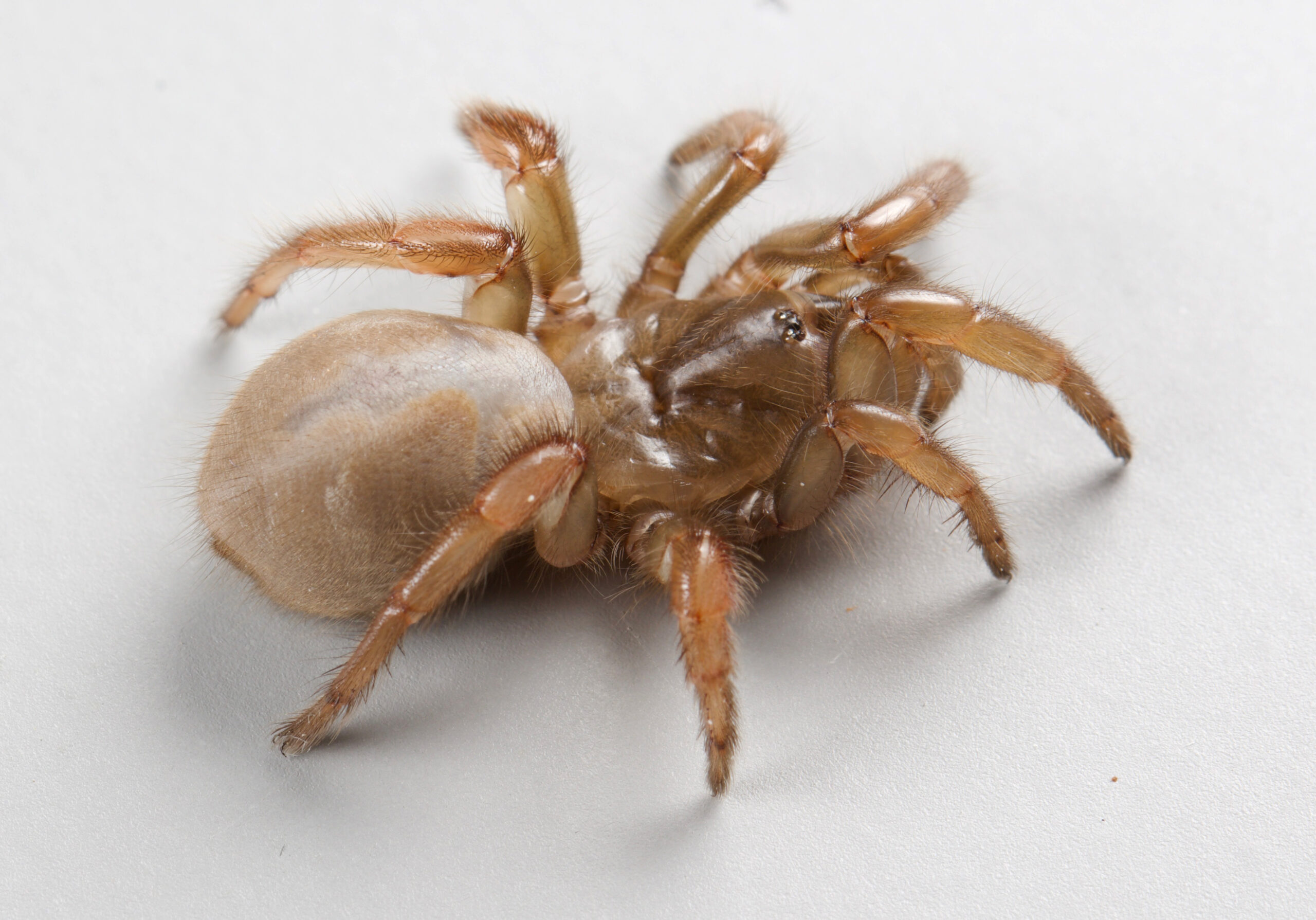
In a study published last week, scientists at UC Davis gave a name to a species of trapdoor spider that had previously gone without. Aptostichus ramirezae, a brown, quarter-sized arachnid, looks nearly identical to its known relative Aptostichus simus, but it is genetically distinct.
Some similarities, but fundamentally different
The spider — named after a respected arachnologist and dean of the College of Science at California State University, Stanislaus, Martina Giselle Ramirez — is one of many recently discovered species.
“There is a lot of undescribed, undiscovered diversity, so new species are being described basically every day,” said Emma E. Jochim, a doctoral student in the UC Davis Department of Entomology and Nematology. “But in the group that we work on, which includes trapdoor spiders and tarantulas, it doesn’t happen quite as often just because of their lifestyle — they live in burrows their whole lives. They’re really secretive.”
These kinds of spiders can also look very similar, so scientists can’t just rely on appearance.
In order to make the distinction, Jochim and Jason Bond, a professor in the UC Davis Department of Entomology and Nematology, gathered up Apostichus simus spiders across their range and closely analyzed their genomic DNA. What they found was a new cryptic species of spider, meaning it is reproductively isolated from other populations and therefore has a different genetic makeup.
“Even if they could come in contact with each other, they probably would not be able to reproduce at this point,” Jochim said.
Why it’s important
When it comes to spiders, precision is important.
“It’s a step towards understanding Earth’s biodiversity,” Jochim said.
If a species has a name, it can also help with conservation efforts. Previously, this spider was considered a single, widespread species. As a result, it hasn’t typically been a priority for conservationists.
But distinguishing between smaller, distinct groups allows scientists to evaluate more specific needs.
“It helps target in on the locations that are important for conservation efforts,” Jochim said.
As the planet’s climate continues to change and habitats disappear, those efforts will prove increasingly crucial for the survival of species like Aptostichus ramirezae.
For now, though, Californians can go into the Halloween weekend knowing there’s a whole new species of spider out there — whether they like it or not.
Daniel Hennessy is a reporter covering Yolo County at Abridged.