The Abridged version:
- Sacramento Mini-Forest Project wants to enhance the local tree canopy and raise community awareness of the benefits of native landscapes.
- Several native tree species including oak, redbud and manzanita will be densely planted on a corner lot visible to the public.
- “We read a book about the mini-forest revolution and it just seemed like this was something that needed to happen here in our community,” said Cindy Fowler, a project leader.
Sacramento has long been colloquially known as the “City of Trees” based on its vast tree canopy that covers much of the area’s sprawling urban landscape.
A water tower along Interstate 5 even used to greet motorists entering Sacramento with the slogan “Welcome to Sacramento, City of Trees,” until the water tower was rebranded with the current “America’s Farm-to-Fork Capital” slogan in 2017.
While in many ways Sacramento is a tree-friendly city, there are still sections around town in need of the environmental and societal benefits an urban tree canopy provides.
One volunteer group, the Sacramento Mini-Forest Project, is working to enhance the area’s tree canopy and raise community awareness of the benefits of native landscapes by planting mini forests. A mini-forest is a dense planting of native trees in a small, urban area intended to mimic the structure and benefits of a traditional forest.
The local project is part of a larger worldwide movement that utilizes the planting methods of the late Japanese ecologist and botanist Akira Miyawaki to restore and beautify degraded land in urban areas.
Sign Up for the Morning Newsletter
The Abridged morning newsletter lands in your inbox every weekday morning with the latest news from the Sacramento region.
The Miyawaki method involves relying on native species and local knowledge, decompacting and naturally enriching the soil, planting densely to encourage competitive growth, adding a thick layer of mulch, and a multi-layered design comprising canopy and sub-canopy trees, shrubs and groundcover plants. The amount of external maintenance required is supposed to decrease over time as the mini-forest matures.
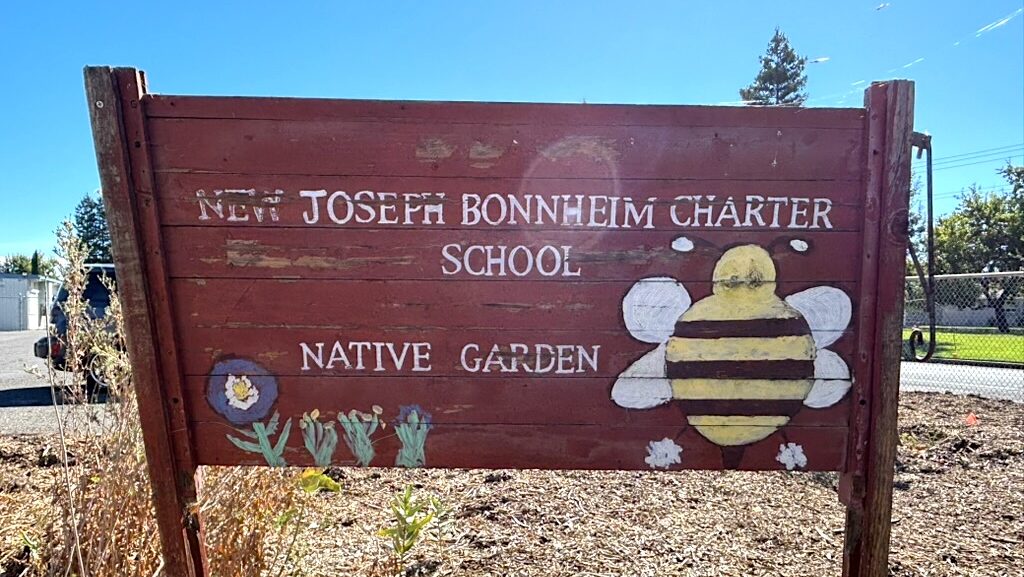
The Sac Mini-Forest Project will plant the first mini-forest in Sacramento at New Joseph Bonnheim Elementary School, a charter school located in the Colonial Manor neighborhood, on Saturday, Nov. 14. The project needs additional volunteers for the planting day, To volunteer, register online.
Origins of the Sacramento Mini-Forest Project
The Sacramento Mini-Forest Project was initiated by the Sacramento Friends Meeting of Quakers.
“We are all very concerned about what’s happening with our climate and our environment here in Sacramento,” said Cindy Fowler, a Quaker and one of the project leaders. “We read a book about the mini-forest revolution and it just seemed like this was something that needed to happen here in our community.”
The group sought out communities and locations that would benefit from a mini-forest and ultimately connected with Dianne Wiley, the principal of New Joseph Bonnheim Elementary School.
“It can serve not just us but our whole community,” Wiley said of her support for the project, “and that’s the beautiful thing, you know, building a peaceful environment … kids see it and they feel it.”
The effort expanded to a community-wide project involving elementary school staff, Sacramento Municipal Utility District, the Sacramento Tree Foundation, the California Native Plant Society and local plant nurseries, among others.
The estimated cost of the project is $12,000, which includes prep work, purchasing of plants, the Planting Day celebration, permanent signage installation and follow-up care. Fowler said in an email that the project received an initial $2,500 from the Friends Meeting as seed money, a SMUD Shine Award grant of $9,000 and private donations from individuals. A portion of the trees to be planted were donated by the Sacramento Tree Foundation. The elementary school will provide some of the ongoing care as the forest grows, Fowler said.
“It’s no longer a Quaker project, it’s a community project,” Fowler said.
CNPS volunteers connected Fowler with Cornflower Farms, a native plant nursery based in Elk Grove, where most of the native plant varieties will be sourced from. “So it’s plants that have been cultivated and come from the Central Valley,” Fowler said.
The mini-forest will be planted on the west side of the school’s campus at the corner of 21st Avenue and 73rd Street. Several tree species of varying heights, including oak, redbud and manzanita, will be densely planted in an area that borders a small parking lot and is visible from the public street. In total, 950 trees, shrubs and groundcover native plants will be planted for the project, requiring many helping hands of volunteers.
“The plot on the back corner is perfect because the whole community can see it,” Wiley said.
The planting location is also important to spread knowledge of the project and inspire others to restore other natural spaces around them.
“We want the community to know what’s happening and why, and we’ll continue to keep the community engaged,” Fowler said. “Even if they’re just walking their dogs by, they can watch the trees grow.”

A hands-on approach to elementary education
The mini-forest project complements New Joseph Bonnheim Elementary School’s hands-on, agriculture-based curriculum in which students are empowered to participate in other environmentally beneficial projects such as propagating native plants, growing crops, composting, fruit tree harvesting and rainwater capturing for reuse on campus.
Ben Driscoll, the school’s science and gardening teacher, is involved in the mini-forest project and teaches students the benefits of working with their hands and strengthening their relationship with the natural world. For one project, students harvested over 100 pounds of plums from established fruit trees on campus, collected data, and used math to weigh and distribute the plums into bags to share among their classmates.
“It’s that visceral kind of experience that cements that learning and makes it authentic for them,” Driscoll said.
On job boards posted on school grounds, students volunteer during recess to participate in other projects on campus that allow them to share a sense of purpose.
“They’re learning the skills of, OK, if I sign up for this job, I have to be responsible for the tools that I need for this job, and then I have to put them away at the end if I want to come back and do this. We really try to get the students to create this campus with us,” Driscoll explained.
Driscoll sees the mini-forest project and on-campus garden projects as spaces for “social and emotional decompression” for students while also increasing biodiversity of their campus. Students’ involvement also grants them an opportunity to reflect on their relationship to the environment and discuss environmental issues like climate change.
“They are aware of climate change, and I think they are really interested in talking about it if you take a moment to,” Driscoll said. “It can be scary, but it doesn’t have to be.”

The future of campus learning and mini-forests in region
Along with the mini-forest project, the school plans to expand its hands-on learning opportunities for its students in the future. Some of the school’s proposed projects involve removing underutilized areas of blackscape, creating additional spaces for student art projects, introducing a chicken coup for students to help manage and building a pumpkin patch for students to grow their own jack-o-lanterns.
“Why not make this school a hub?,” Wiley said. “I think there is so much potential, and I think that’s what the (mini forest) is for. We need to look outside what we already know and embrace the community.”
More mini forests may be coming to the greater Sacramento area as well. According to Fowler, the Woodland Tree Foundation is undergoing a mini-forest project study, and Fowler said she hopes to see the mini-forest initiative expand further. “This is the first one, and not the last one.”