
The Abridged version:
- The Washoe Tribe partnered with federal wildlife workers to reintroduce up to 2,000 Lahontan cutthroat trout in Lake Tahoe.
- Called immgi by the Washoe people, Lahontan cutthroat trout are the only native species of fish to Lake Tahoe. Their return to the lake has been an uphill climb.
- The Washoe tribe was displaced along with the animals and plants native to Tahoe, and currently the tribe does not own land in the Tahoe Basin.
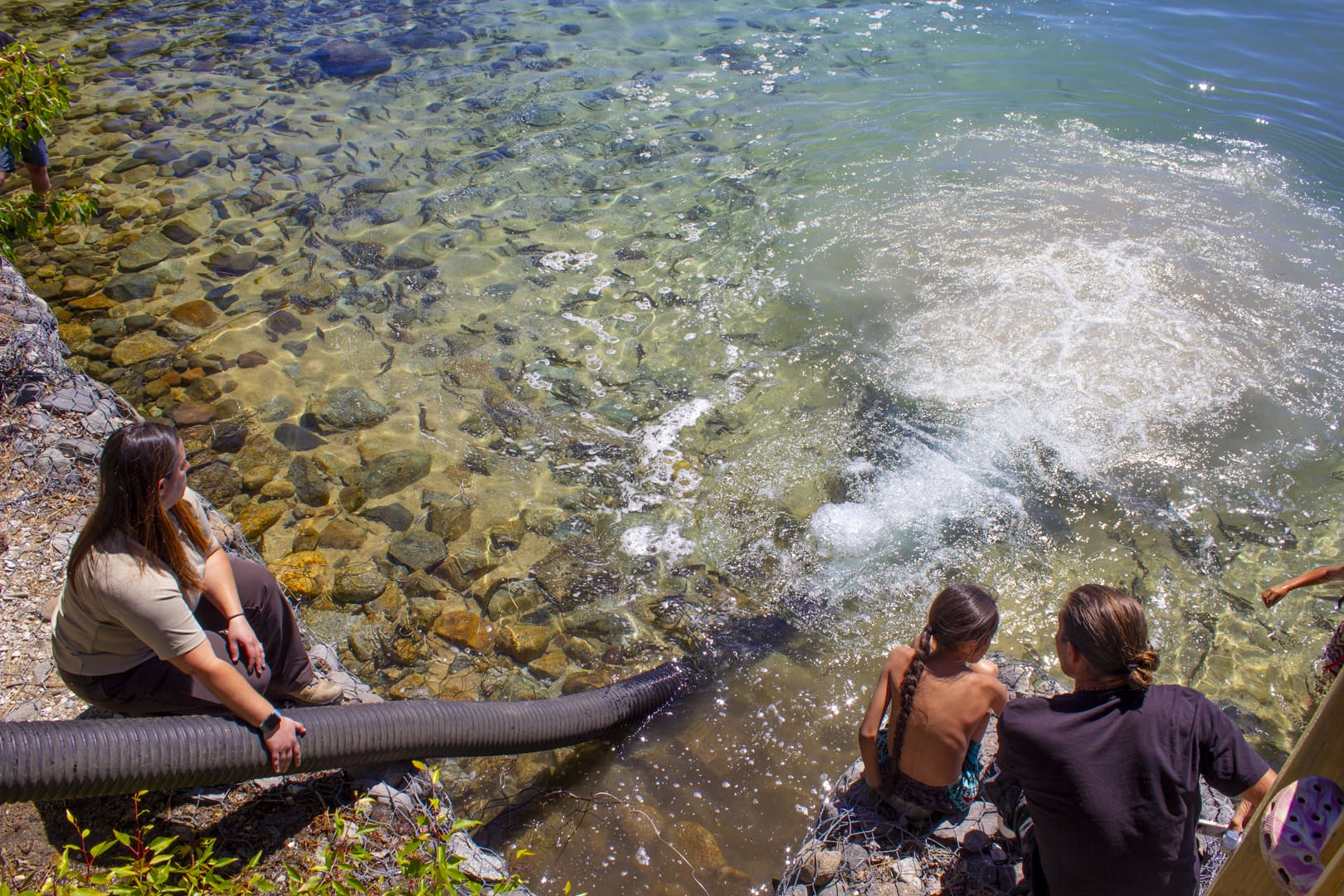
A speckled brown and pink trout darted into the crystal clear water of Tahoe from a blue five-gallon bucket—the first of thousands in the largest reintroduction of native fish to the Lake Tahoe Basin.
Through partnership between the Washoe Tribe, its environmental protection department and the U.S. Fish and Wildlife Service, the Lahontan cutthroat trout is slowly returning to its natural habitat.
Cale Pete, tribal member and environmental director at the Washoe Environmental Protection Department, spoke to a crowd gathered Tuesday at Lake Tahoe about the historical importance of the species and its sustenance for the Washoe people.
“This historic day will be the first time for this kind of large-scale release,” he said.
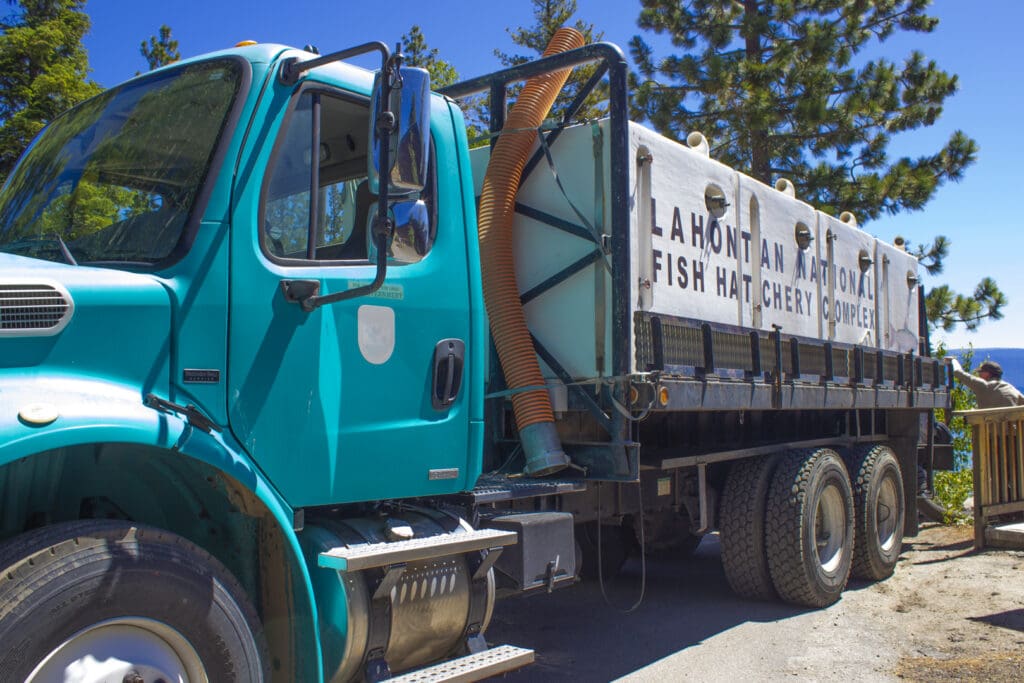
After a blessing from a tribal elder, Pete invited Washoe elders and youth to release 25 of the cutthroat trout from buckets from the shore before releasing 1,000-2,000 more from the hatchery’s truck.
“To the youth, cherish this moment,” he said. “You’ll be the ones to step up and carry our roles in the future.”
An uphill climb
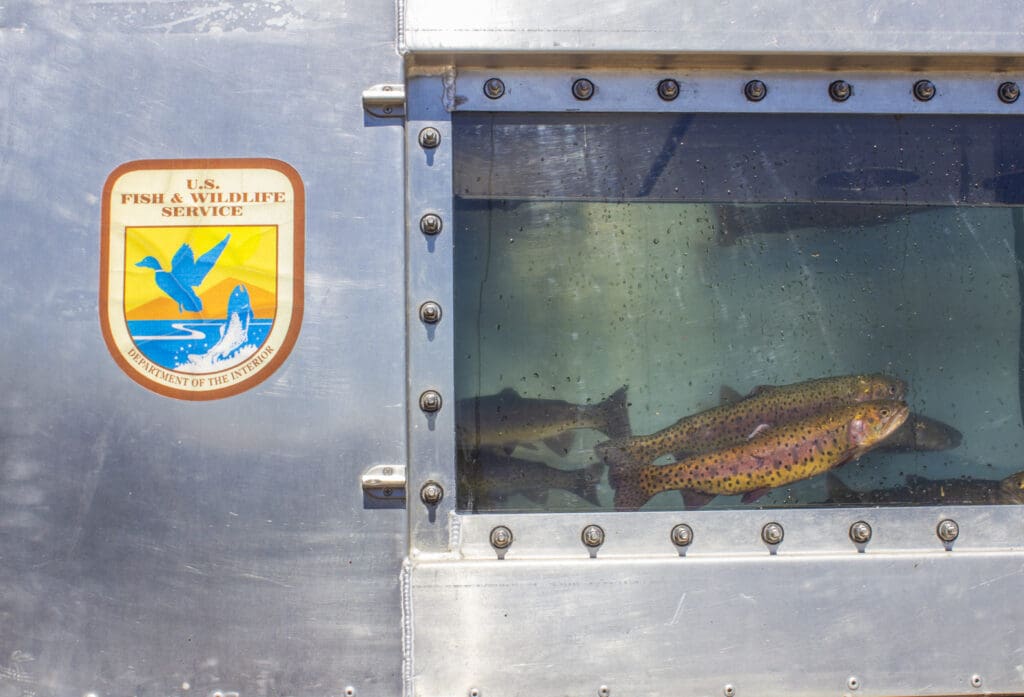
Lahontan cutthroat trout are so named for the red-orange slashes seen on the lower jaw of adult fish. Called immgi by the Washoe people, they are the only native species of fish to Lake Tahoe. Their return to the lake has been an uphill climb.
Settlers who came to the area stocked the lake with game fish like rainbow, brook and brown trout. By the late 1930s, the Lahontan cutthroat trout was wiped out from Lake Tahoe as well as the nearby Pyramid and Walker lakes.
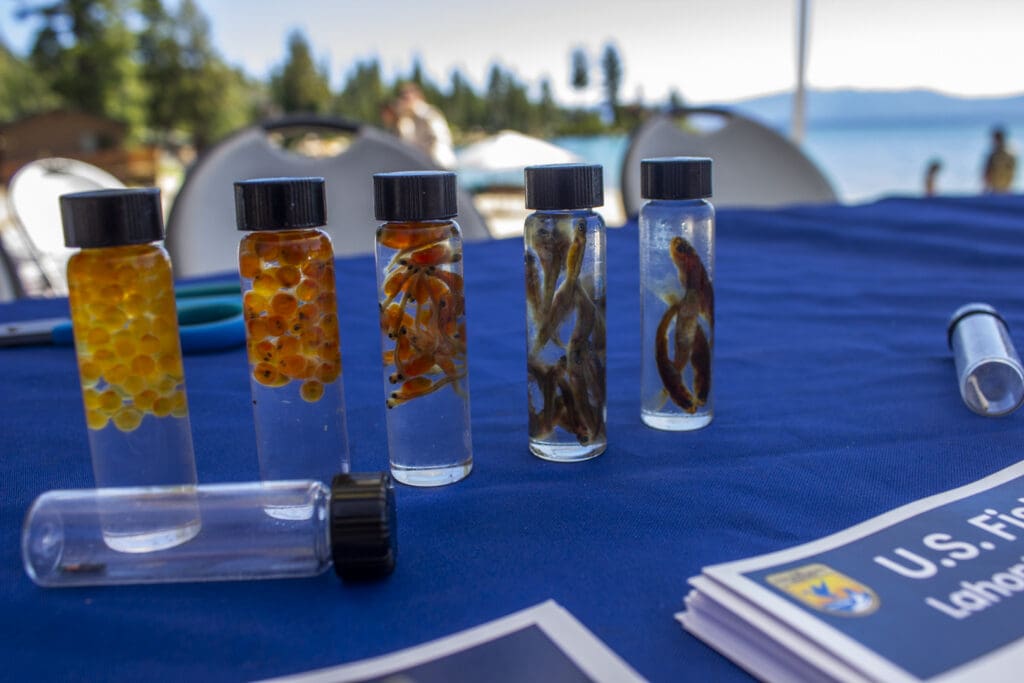
Since 1992, the Lahontan National Fish Hatchery has worked with the fish and wildlife service to begin restoring the threatened species to its natural range in local watersheds. They maintain a broodstock of a unique strain called the Pilot Peak, which evolved in ancient Lake Lahontan and is the largest inland cutthroat trout in the world.
While federal wildlife workers have been reintroducing and studying these fish since 2002, the Washoe Tribe became involved in 2022 through the Washoe Environmental Protection Department. This year marks the third release at Meeks Bay, a beach on the west shore of the lake, and the beginning of Meeks as a new stocking and monitoring location.
Meeks Bay and the nearby meadow (called Máyala Wáta by the Washoe) are historic and culturally important sites to the Washoe people, and the meadow’s restoration is one of the first Washoe-led environmental restoration projects in the Tahoe Basin.
“Lahontan cutthroat trout recovery is important not only to the Washoe Tribe, but also to the overall health of Lake Tahoe,” Kristina Burnette, environmental manager, said in an email. “Returning these trout to their original waters supports ecosystem restoration and aligns with the Tribe’s goals of protecting culturally important species, natural resources, and water quality for future generations.”
‘Fix mistakes of the past’
Benjamin Fillmore, a Washoe tribal elder and environmental technician with the tribe’s environmental protection department, told Abridged that the project made him proud.
“It’s really great to put our native fish in this lake and fix the mistakes of the past,” he said.
Fillmore emphasized the importance of the partnerships with the Washoe Tribe.
“These departments like Fish and Wildlife and the Forest Service are listening to us now,” he said. “That’s what it takes to make change.”
Amanda George from the fish and wildlife service agreed.
“This is another chapter in the ongoing restoration of this trout that wouldn’t be possible without the Washoe Tribe,” she said.
Fillmore, his son Hunter and his grandchildren were among the tribal members who carried buckets into the cool water, waving to the fish as they swam out from the shore.
“You can’t separate the Washoe connection to the land, and right now, everything on our traditional homeland needs help,” Fillmore said. “We want our youth to get involved with the work up here, any chance we can get.”
‘Doing it for the future’
The Washoe tribe was displaced along with the animals and plants native to Tahoe, and currently the tribe does not own land in the Tahoe Basin.
Fillmore, who got involved with the environmental protection district through his community garden, is also growing culturally important plants like the pinyon pine outside of the area. These pines, which served as a food source before being decimated, will be planted in burn scar areas as part of environmental restoration projects.
“We’re not just doing this work for a job, we are doing it for the future,” Fillmore said. “These trees take many years to grow, these fish will take years to really come back.”
Even the return of thousands of fish each year is just a drop in the bucket. But the persistent work, Fillmore said, is an important step.
“We want to get our young people involved to make a whole new way of life,” he said. “My grandchildren and generations beyond will have pine nuts, will have the immgi in the lake. We’re trying to think one hundred years in advance to what the environment will look like. We do this work in service of the future.”
Eli Ramos (they/them) is a science reporter and freelance journalist from the Sacramento area.