

The Abridged version:
- As Martin Luther King Day approached, a Lake Tahoe-area man received a cold case file that filled in some details — not all — about an incident involving his mother during the civil rights era.
- Jonathan King’s mother and father were involved in the movement when the incident occurred in 1962 and were friends with the famous civil rights leader.
- The files Jonathan King received have answered some questions, but mystery still surrounds the death of the baby his mother was carrying during the incident.
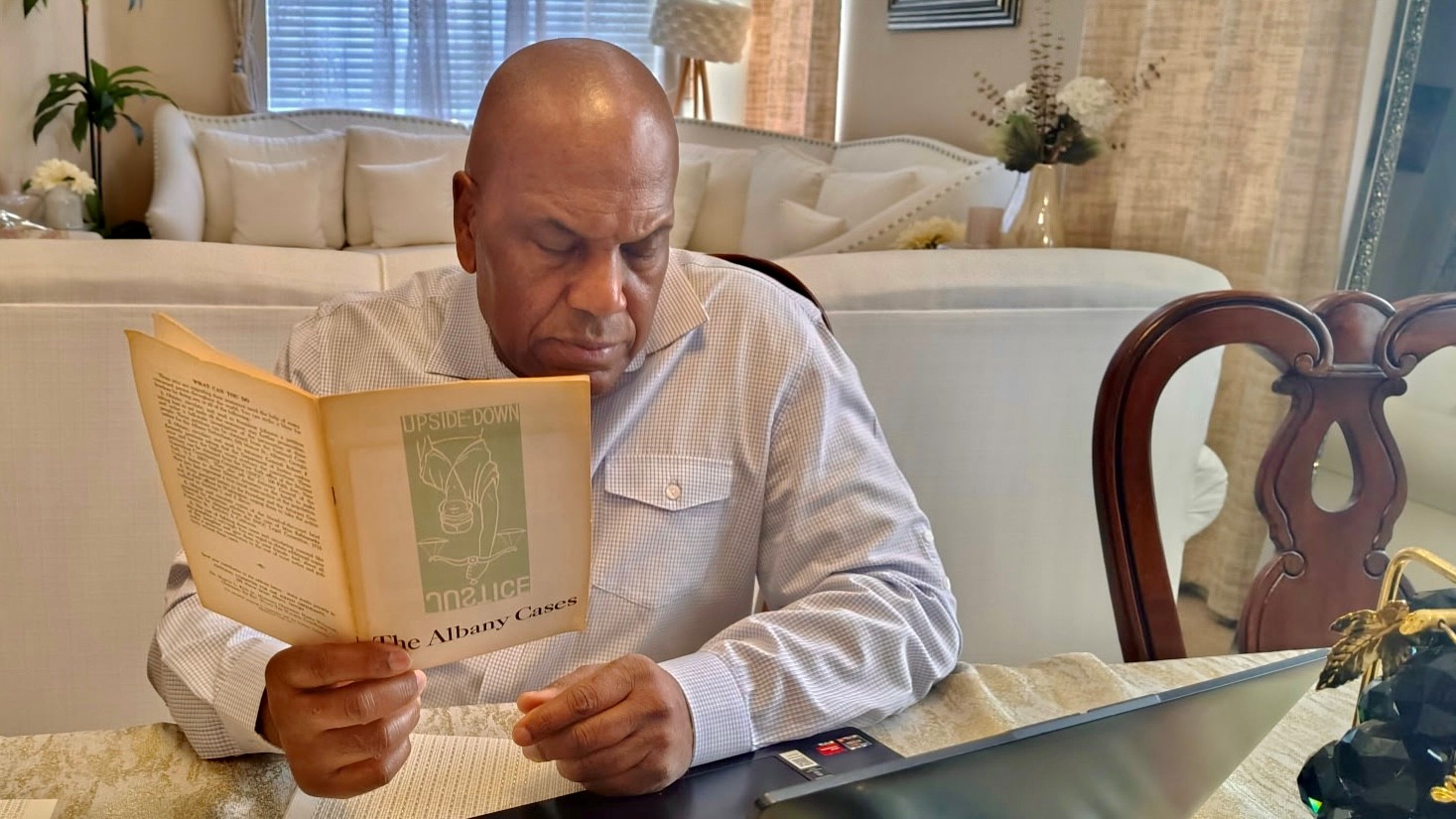
Jonathan King was not searching for answers when the email arrived a few weeks ago.
“I’m minding my own business,” he said, “and I get an email from somebody from the National Archives Division.”
The message explained that the federal government was preparing to release a small number of civil rights assault cases pulled from tens of thousands of FBI and Justice Department investigations, files and cases. Only a fraction would ever be made public.
“Your mother’s records are going to be released out of thousands,” King recalled reading. “These were cases where people were harmed. They were assaulted. There were bombings. Lynchings. Nobody was ever indicted. Nobody knew what happened.”
Including him.
For King, a retired Lake Tahoe-area educator and former vice president of Lake Tahoe Community College, the moment carried weight he immediately understood.
His mother had lived through horrifying history. Her full story was never shared.
“All the stuff the FBI was supposed to do, they never shared with anybody,” he said. “It was kept in a vault.”
Then came the invitation.
“We want to give you the option to see it first.”
A mother in a movement that changed a nation
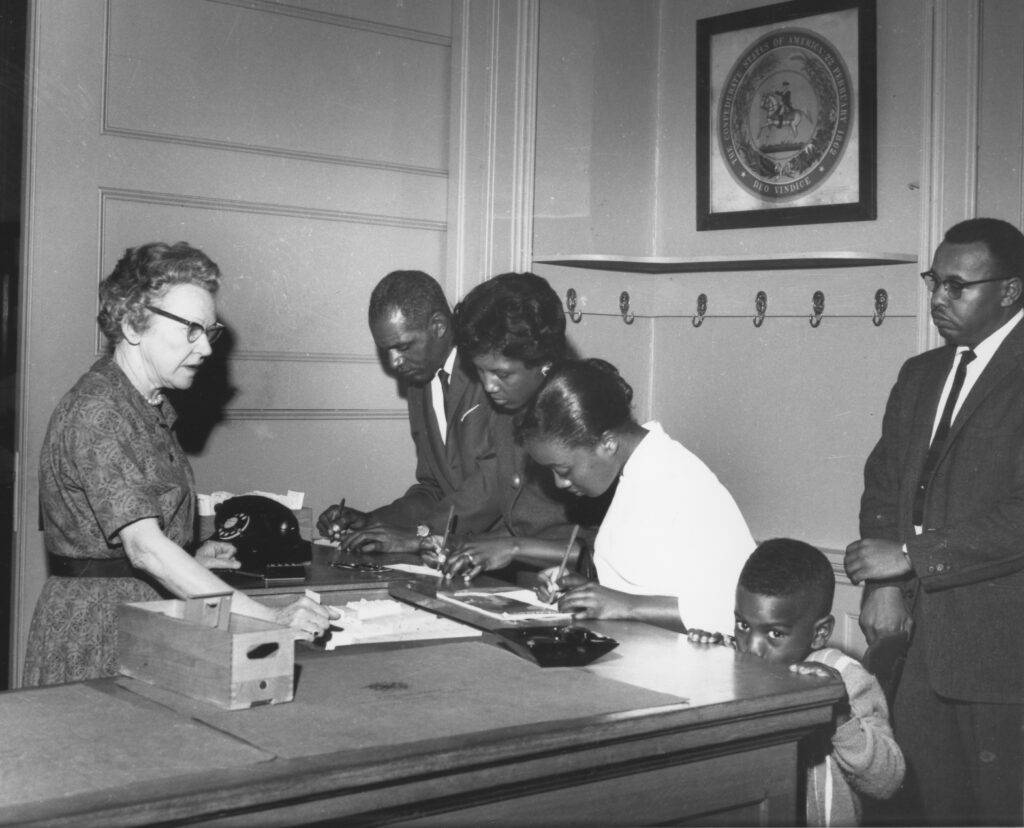
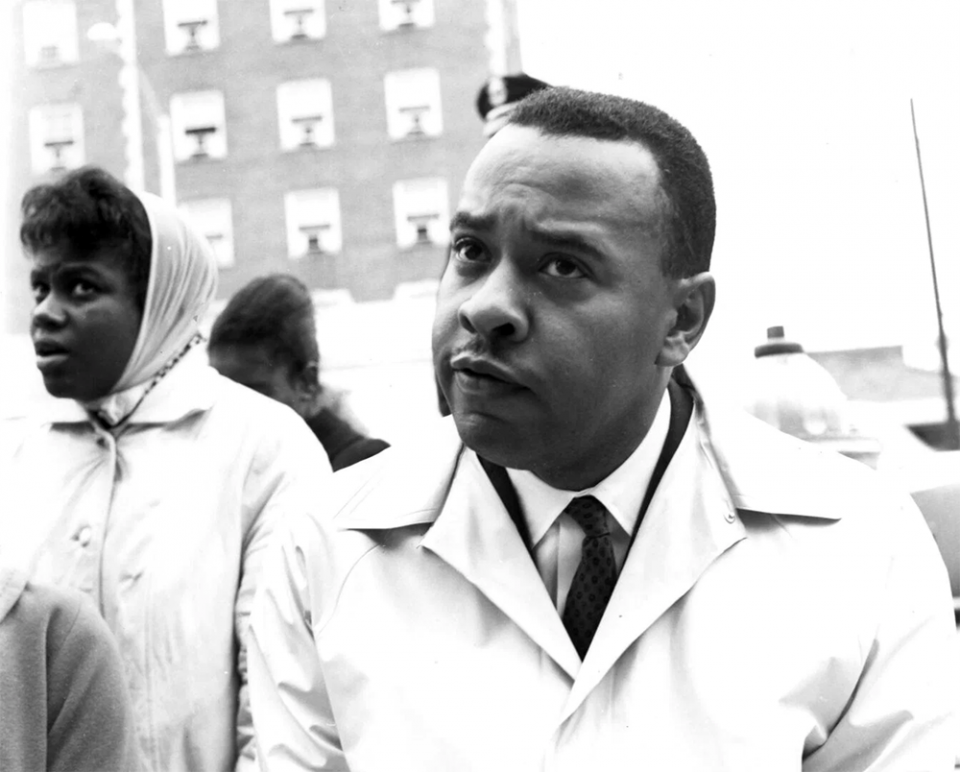
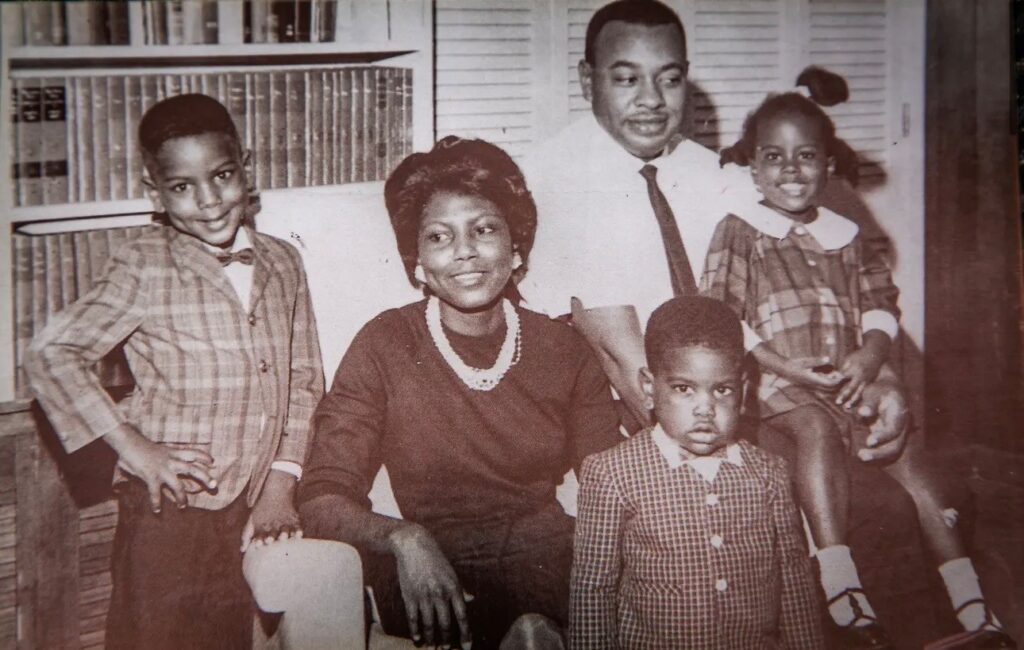
Marion King was 29 years old in the summer of 1962 and raising three children in Albany, Georgia. A graduate of Spelman College, she was married to Slater King, a co-founder of the Albany Movement, a pivotal civil rights campaign.
The Kings were not just participants in the civil rights struggle. They were trusted figures within it.
The Rev. Martin Luther King Jr. (no relation to Marion King or her family) was a close friend of Slater and Marion King. When he came to Albany, he often stayed in their home. Their house was a place of conversation, strategy, prayer and refuge, where movement leaders rested and planned amid rising danger across the South.
Jonathan King grew up inside that reality.
“This wasn’t just politics,” he said. “This was our life.”
Sign Up for the Morning Newsletter
The Abridged morning newsletter lands in your inbox every weekday morning with the latest news from the Sacramento region.
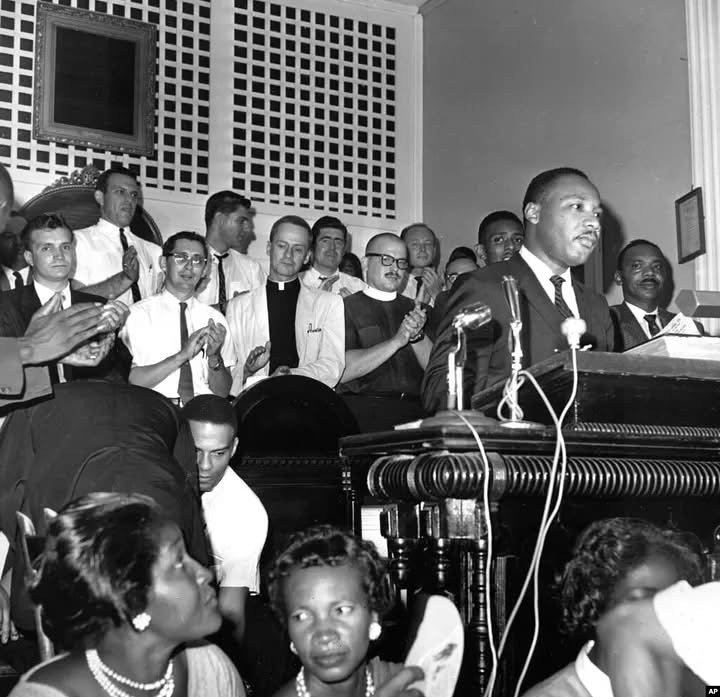
Rev. Martin Luther King Jr. arrested in Albany
Albany had already become a national flashpoint in the fight for civil rights. On July 27, 1962, Rev. King was arrested during a prayer vigil at Albany City Hall. Five days before, Marion King became an unwilling centerpiece.
The Albany Movement, launched in the fall of 1961, sought something broader than many civil rights campaigns of its time. It did not aim to desegregate a single lunch counter or bus line. It aimed to dismantle segregation across an entire city and establish voting rights.
For Marion King, activism was inseparable from care. On July 23, 1962, Marion King — who was 5½ months pregnant — drove to Camilla, Georgia. Dozens of Black teens were jailed in Camilla after protesting for voting rights. King and her three children — including 5-year-old Jonathan King — traveled to the Mitchell County Jail to visit the teenage daughter of King’s housekeeper, who was one of the children in jail. When Marion King arrived, there were about 30 family members and friends of the jailed teens in Camilla to visit.
“She went to take food and clothes to children,” Jonathan King said. “That’s all she was doing.”
“No one told us about the danger,” King said. “We were just told, ‘We’re going to take some things to Ella Mae.’”
The Camilla courthouse steps
Outside the courthouse and jail in Camilla, a crowd of roughly 100 white residents gathered. Some were armed.
According to Marion King’s sworn statement to the FBI, she was shoved from behind, kicked, threatened with arrest and then struck in the head while carrying her child. She fell onto gravel and briefly lost consciousness. Multiple Black witnesses corroborated her account.
Law enforcement officers told a sharply different story. They claimed King refused orders, used profanity and fell while resisting attempts to escort her away. Two white witnesses supported their version.
Those accounts would never be reconciled.
“When I read the files,” Jonathan King said, “it’s like the trauma didn’t stop for her. It just kept going on and on.”
What happened on those courthouse steps did not end when Marion King was helped to her car. It followed her home. It followed her into federal files. It followed her family for decades.
What government knew and chose not to do
The federal response was immediate and incomplete.
That evening, Martin Luther King Jr. personally contacted the FBI to report an assault on Marion King. Agents went to the King home and obtained a sworn statement. A physician went to the home to evaluate Marion King and her unborn baby. Within days, the case reached the highest levels of the Justice Department.
“I saw the letters,” Jonathan King said. “My father wrote the president, wrote Attorney General Robert Kennedy, who asked what was going on with the case. And that was it.”
By October 1962, the Department of Justice closed the case, citing insufficient evidence to prosecute under civil rights statutes.
“It was mind-boggling all the things the federal government knew,” King said. “They didn’t do one freaking thing to protect us.”
His anger, he said, is not rooted in vengeance.
“I hold my anger more in the federal government,” he said. “These guys who did this to Mom didn’t know any better. But the federal government did.”
Civil Rights Cold Case Records Review Board
The Civil Rights Cold Case Records Review Board is an independent federal body created by Congress in 2018 to examine and authorize the release of investigative records. There are thousands of files, mostly sealed and all related to unresolved civil rights violations that occurred between 1940 and 1979.
Its purpose is to bring transparency to cases of beatings, killings, lynchings, intimidation and other racially motivated crimes that were never fully investigated, prosecuted or publicly disclosed. Although the statute of limitations has passed and perpetrating parties involved are long deceased, the goal is far beyond legal justice.
“That’s part of the relevance,” said Steve Fennessy, communication manager for the Civil Rights Cold Case Records Review Board. “Most of these cases, it’s not a question of whodunit. There’s not much that can be done legally. But there is also the judgment of history. And I think that’s no small thing.”
The files are released online to give families and the nation a clearer understanding of what happened in some of the darkest chapters of American history. In December 2025, the U.S. Senate passed bipartisan legislation to extend the board’s authority until January 2031. The measure is now pending in the House of Representatives and would still require House approval and the President’s signature before becoming law. During Senate floor debate, Georgia Senator Jon Ossoff highlighted its work, using the case of Marion King to show why the effort matters. Speaking directly to his colleagues, Ossoff said, “There is no expiration date on justice, and Mrs. King still deserves justice. And the work of the Civil Rights Cold Case Records Review Board is helping take a step toward justice in this case.”
“What the records show me,” King said, “is that our own federal government did not protect us.”
The loss and the silence that protected everyone
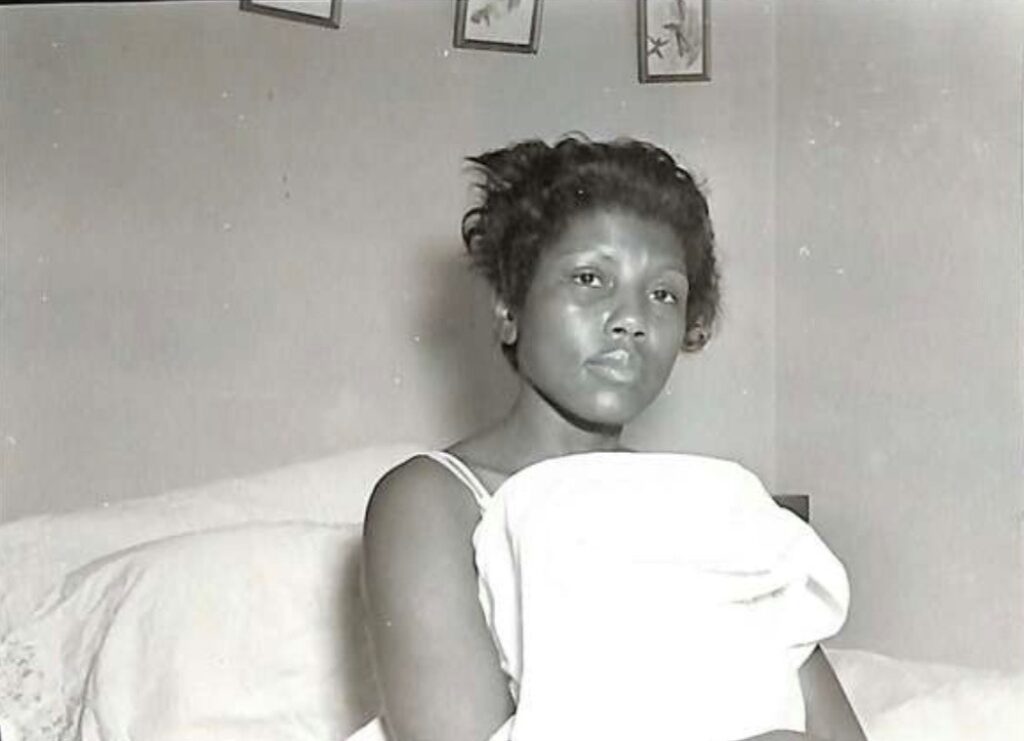
In November 1962, Marion King delivered a child the family was told was stillborn.
In a letter to President John F. Kennedy, Slater King wrote that their physician believed the beating was a major cause of the baby’s death. The letter entered the federal record. The case remained closed.
Inside the King household, the loss was never discussed.
Jonathan King recalls the day he and his family went to bring home his mother and her newborn child. “She got out of the wheelchair and into the car. There was no baby. And no one said a single word. Ever.”
“I think she knew if we talked about it, it would never end,” Jonathan King said. “My mom might have been trying to save her own sanity.”
The silence was not accidental. It was protective. It was survival.
It also lasted more than 60 years.
A question heard but never answered
In 1963, at the March on Washington, John Lewis stood before the nation and asked what the federal government had done when police assaulted a pregnant woman and she lost her baby.
The question hung in the air then.
It still does.
That’s why Jonathan King flew to Atlanta earlier this month to search for more answers. He went to the Office of Vital Records and entered a date into a kiosk computer. He had searched for years and been told the records were destroyed.
“After about an hour,” he said, “they found the birth certificate.”
The document altered everything the family thought it knew. The baby weighed 3 pounds, 11 ounces. The baby was not stillborn.
The baby was alive.
“And the baby was not a boy,” King said. “It was a girl.”
Details of baby’s death remain a mystery
The birth certificate indicated the baby lived several days. The family is still searching for a death certificate.
“If the baby had come out stillborn, that might have been a normal ending,” King said. “But knowing the baby was alive is haunting.”
He began imagining his mother arriving at a segregated hospital after months of trauma, holding onto the fragile possibility that her child might live.
“They couldn’t leave that baby with the mom,” he said. “They had to take it somewhere. And that hospital was segregated.”
The baby died five days later.
The records raised questions that remain unanswered. Where was the baby taken? What care did she receive? Where is she buried?
“I read that my mother was told the baby would be buried,” King said. “That’s also haunting to me.”
The knowledge that the family had been told an incomplete story deepened the pain.
“They had to make up a story for us kids to stop the trauma,” he said. “We were already traumatized and anxious children.”
Forgiveness and the long work of peace
Jonathan King says his mother forgave the men who she says assaulted her long ago.
He has reached out to their families, not with accusation, but with an offer to talk.
“I really want to be a peacemaker,” he said. “I don’t want anything. Just acknowledge what happened. I would love to sit down with them and have a conciliation meal. I have not heard back — yet.”
For him, reconciliation is not forgetting. It is naming the truth together to heal generations to come.
A life that refused to be defined by violence
Marion King went on to earn a law degree from Mercer University and became an assistant city attorney in Atlanta, serving under Maynard Jackson and Andrew Young.
She died in 2007 during heart surgery. She was 74.
Her children remember a woman who chose forward motion, even when justice did not come.
The Cold Case Records Review Board cannot undo what happened in 1962. It cannot bring prosecutions. The perpetrators are dead.
What it can do is tell the truth.
“This work is elevating these victims, an untold number of victims, hundreds and hundreds that otherwise would have been lost to history are now getting elevated,” Fennessy said.
“You have the families of the victims who had a lot of questions invariably and often, what I found speaking with the family members of the victims, is that it wasn’t really discussed, a lot of times it was just sort of swept under the carpet. We’re trying to flesh out what is still a chapter in American history that’s being written.”
For Jonathan King, finding that truth — for his family and others — is an act of honor.
“This is a defining mark in the movement for civil rights,” he said. “Not just for my mother. For all the families who never knew what happened.”
Marion King carried her story quietly for a lifetime.
Now it is being told.
Rob Stewart is an executive producer for PBS KVIE and reports for Abridged.